How Do Koreans Say Hi in Text? ㅎㅇ vs. Annyeonghaseyo
In a Korean text, very close friends can send the shorthand ㅎㅇ, which stands for ha-i (하이), the Korean pronunciation of English "hi." The standard…
Learn Korean › Hangul Basics — the Korean alphabet, pronunciation, reading and writing basics for beginners. · Learn Korean › Words & Phrases — what Korean words, slang and expressions mean and how to use them (thank you, oppa, aegyo, daebak), phrases for travelers.
Latest 9 of 22 stories · newest first
In a Korean text, very close friends can send the shorthand ㅎㅇ, which stands for ha-i (하이), the Korean pronunciation of English "hi." The standard…
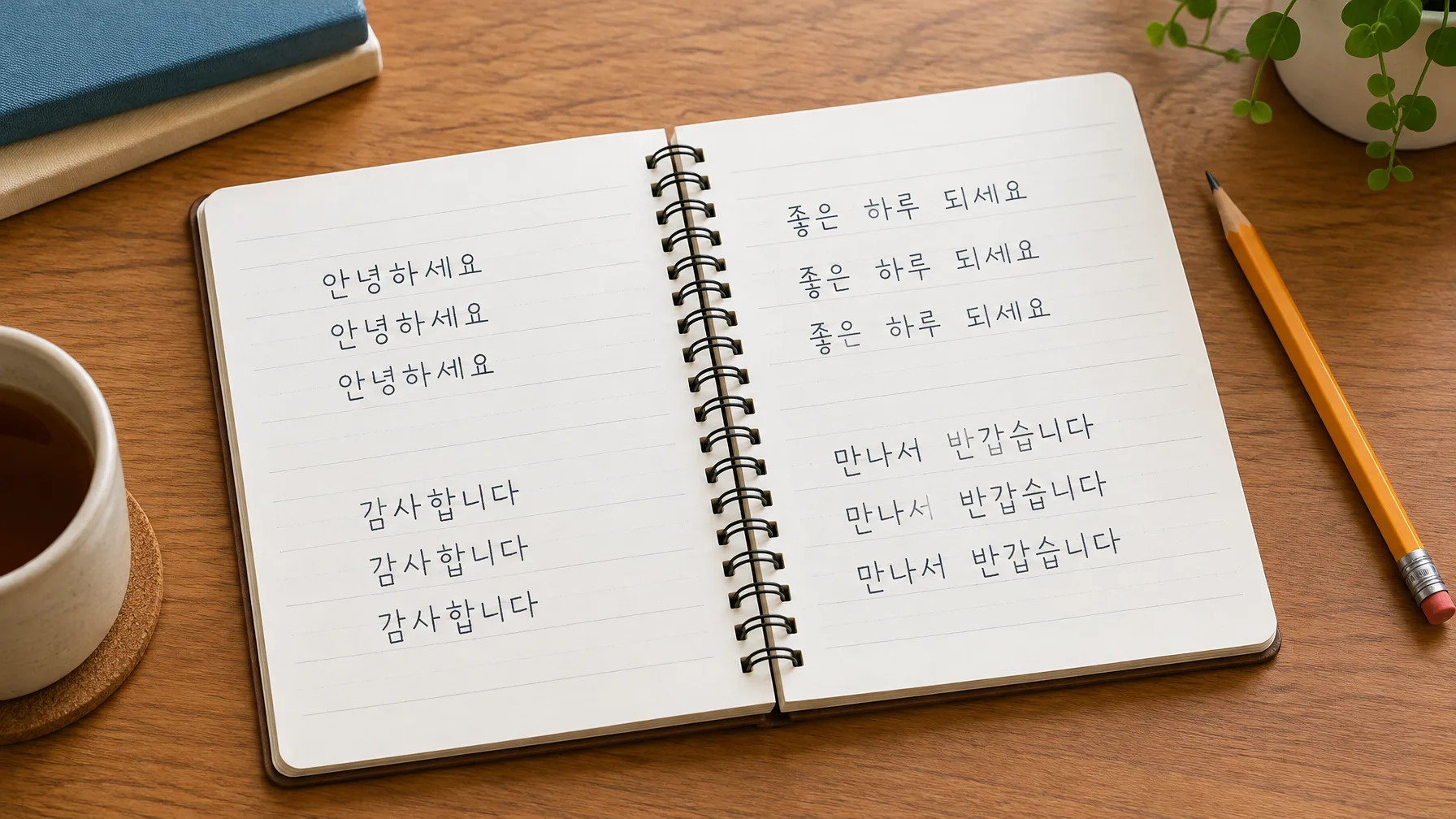
Annyeonghaseyo (안녕하세요), the formal “hello,” is the Korean phrase you hear most often on Korean streets and in K-dramas.
Beginner-friendly Korean sentences usually come in three lines: Hangul, romanization and English.
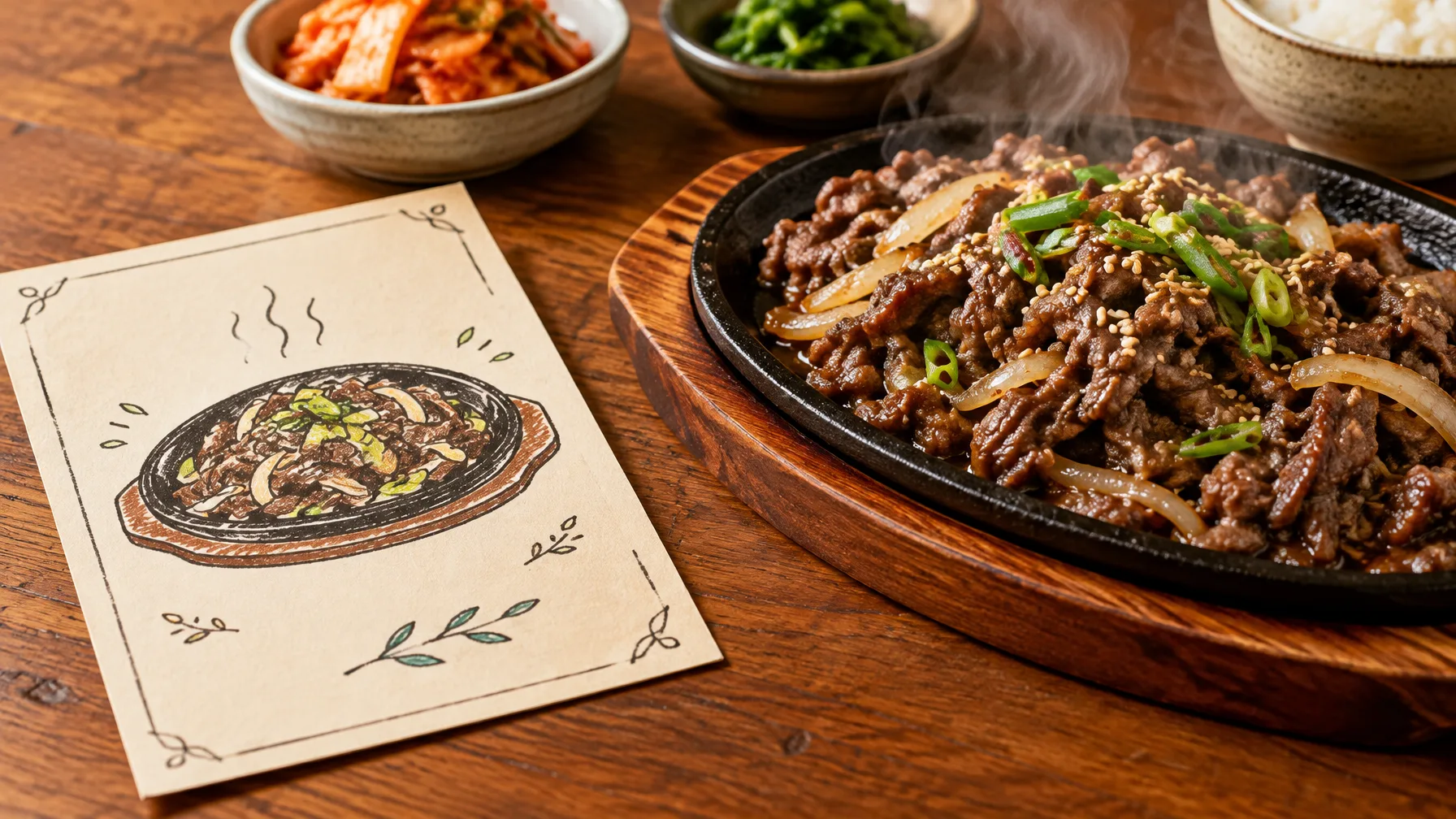
In American English, bulgogi is pronounced /bʊlˈɡoʊ.ɡi/, roughly bul-GOH-gee. The stress falls on the middle syllable.
Korean sentences so often end in -imnida or -ieyo because that ending is the Korean copula, the word for "am/is." Korean also puts the verb at the end of…
Hangul letters don't sit on their own. They pack together into square syllable blocks, and every block holds at least one consonant and one vowel.
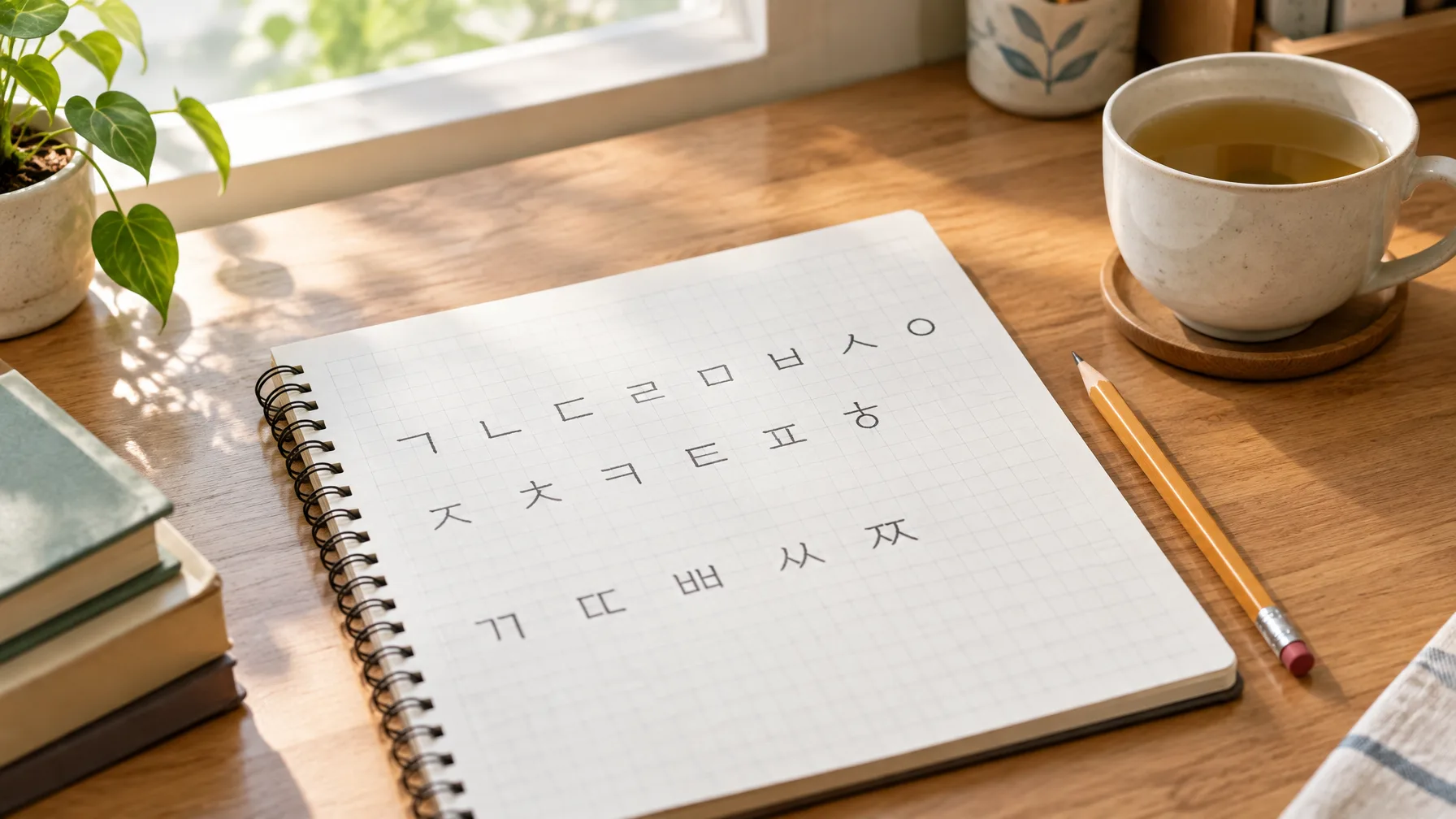
Korean has 19 consonants. There are 14 basic ones (ㄱ, ㄴ, ㄷ, ㄹ, ㅁ, ㅂ, ㅅ, ㅇ, ㅈ, ㅊ, ㅋ, ㅌ, ㅍ, ㅎ) and 5 double, or tense, ones (ㄲ, ㄸ, ㅃ, ㅆ, ㅉ).
Seo-jun and Ha-jun were the most popular Korean boy names in 2024.
In Korea, Kim is a family name, not a first name. Korean names usually put a one-syllable surname first and a two-syllable given name after it.