
Korean Sentences to Read: How to Sound Out Mannaseo Bangapseupnida
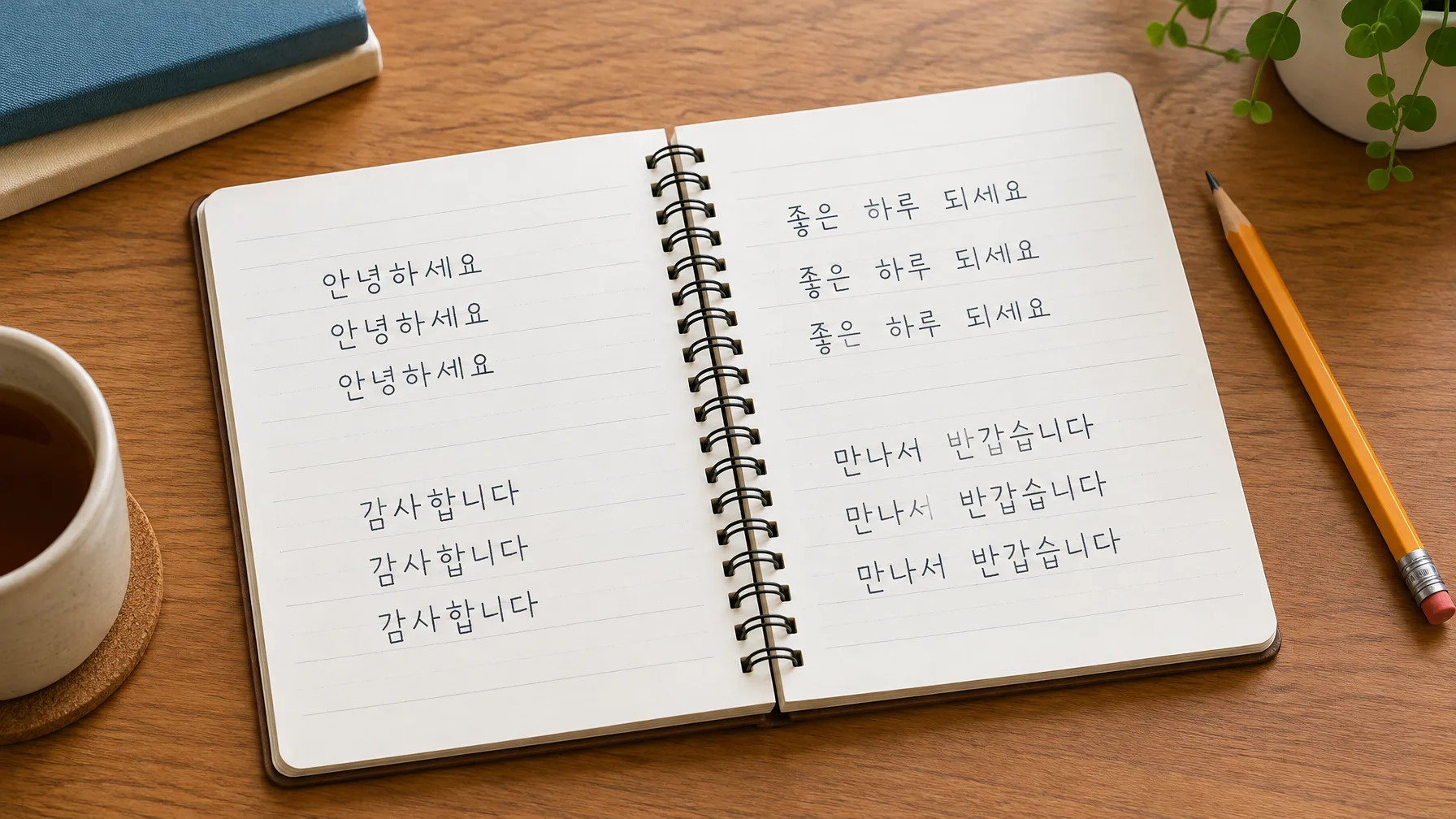 AI-generated image
Beginner-friendly Korean sentences usually come in three lines: Hangul, romanization and English. Take Man·na·seo ban·gap·sseum·ni·da (만나서 반갑습니다), “Nice to meet you.” Or Hwa·jang·si·ri eo·di·e i·sseo·yo? (화장실이 어디에 있어요?), “Where is the bathroom (toilet)?” Want Korean sentences practice with the sounds spelled out? Five short lines are enough to start, and all five are below.
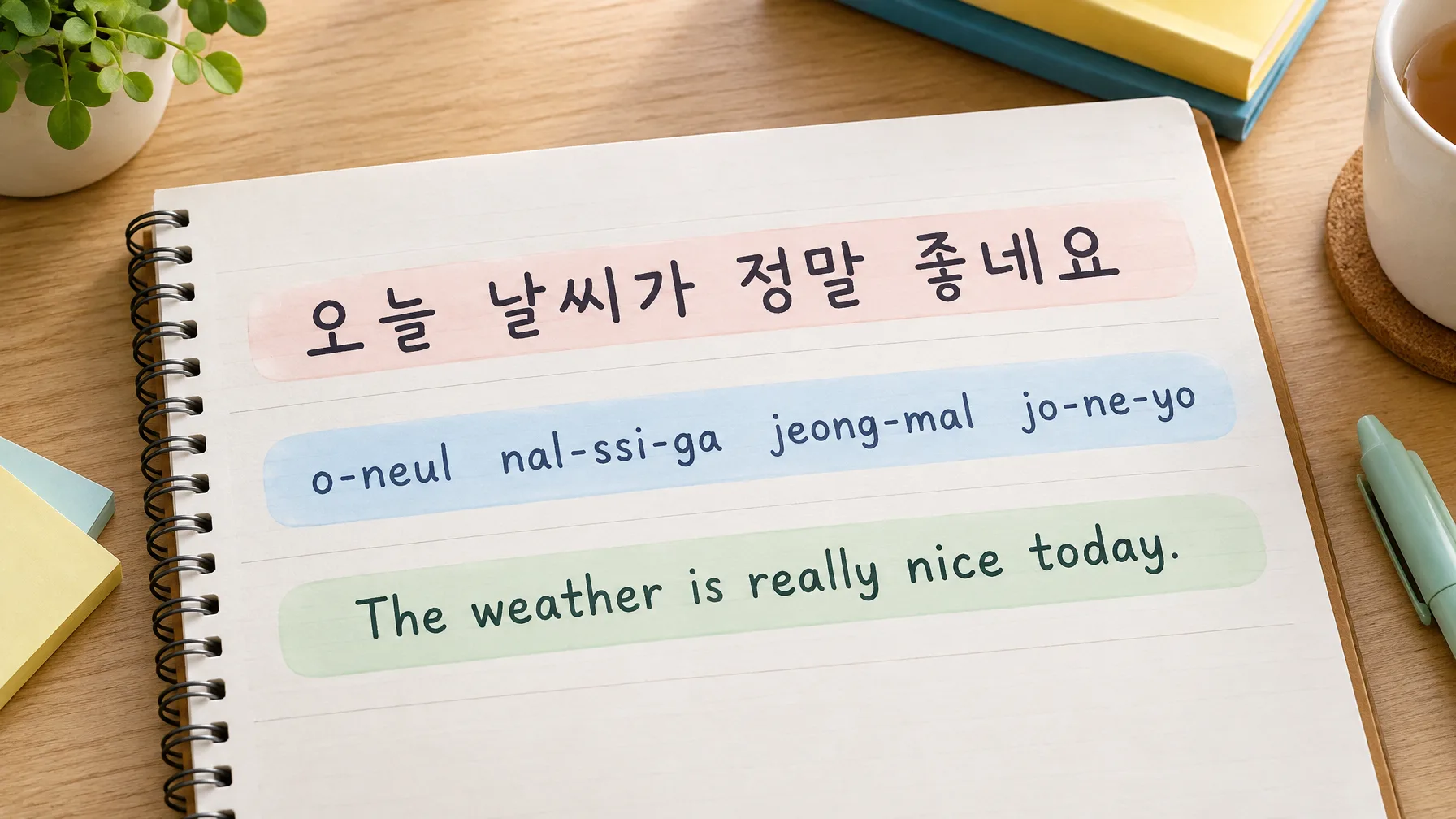
Beginner Korean sentences come in three lines: Hangul, romanization, English
 AI-generated image
Hangul is the script Korean is normally written in, so the top line is the real sentence. The middle line, the romanization, spells the sound with English letters to help you say it. The bottom line gives the meaning.
- Look at the Hangul line first and try to sound it out.
- Check the romanization line to see how close you were.
- Read the English line so the sound and the meaning stick together.
The dots in the romanization mark where one Hangul block ends and the next begins. One block is one syllable, so the dots tell you how many beats to say. A plain space in the romanization matches a space in the Hangul. Korean sentences to read romanized like this look busy at first. But the dots make long words much easier to take apart.
One thing trips up first-timers: the romanization follows the sound, not the letter-by-letter spelling. The word ban·gap·sseum·ni·da (반갑습니다) has five blocks, yet it comes out with a doubled s in sseum. In the same way, hwa·jang·si·ri (화장실이) shows the last sound of the third block moving over to the fourth. When the two lines seem to disagree, trust the romanization.
Want the letters inside those blocks? The lesson on Korean consonants covers them.
Five short sentences to read first
 AI-generated image
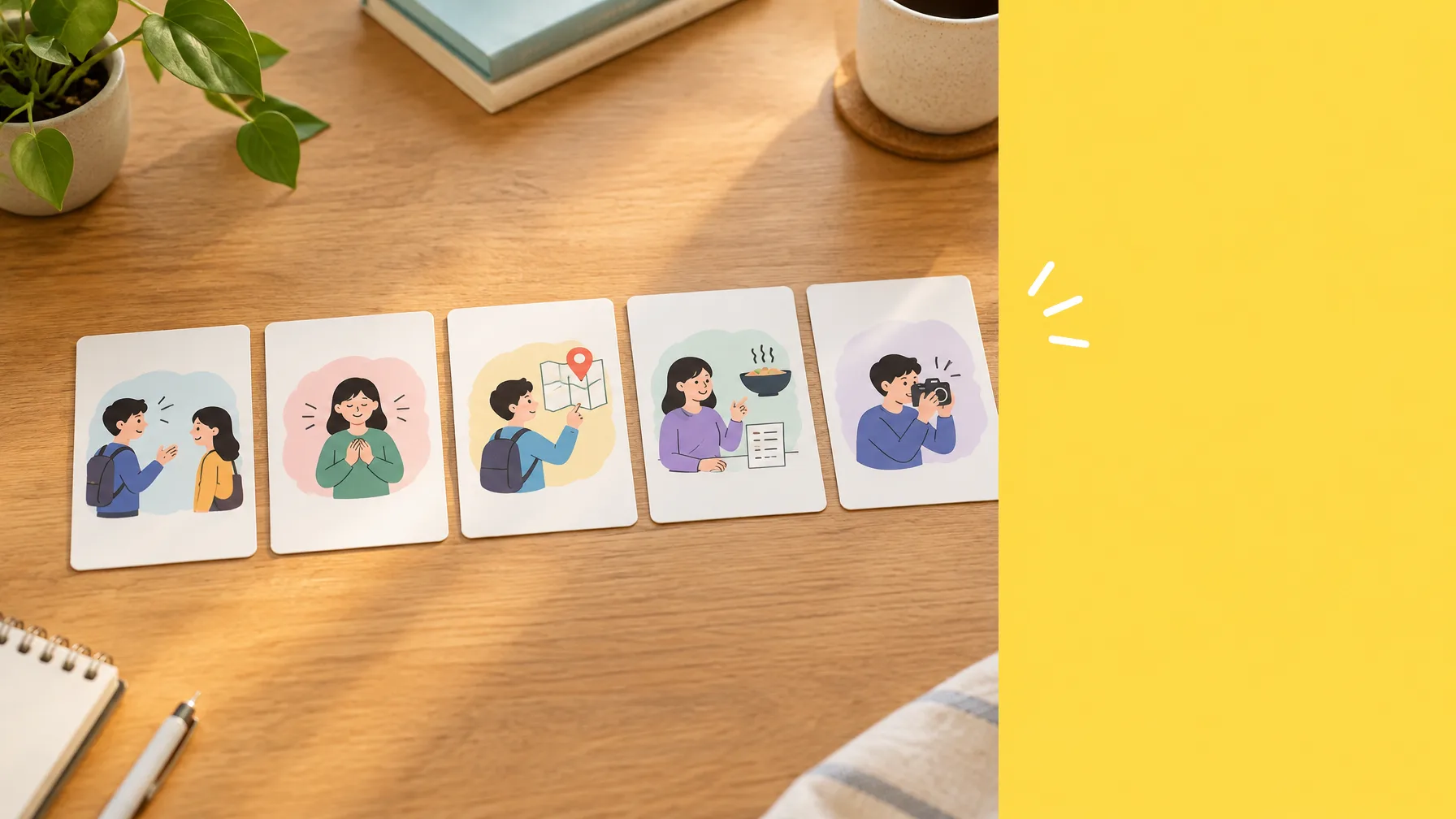
Tie basic Korean phrases to a situation and they stick. This list of Korean sentences examples runs from meeting someone to asking for a photo. Every line is short enough to learn in one sitting.
| Situation | Hangul | Romanization | English |
|---|---|---|---|
| Meeting someone | 만나서 반갑습니다 | Man·na·seo ban·gap·sseum·ni·da | Nice to meet you |
| Asking for the bathroom | 화장실이 어디에 있어요? | Hwa·jang·si·ri eo·di·e i·sseo·yo? | Where is the bathroom (toilet)? |
| Asking someone to wait | 잠시만 기다려주십시오 | Jam·si·man gi·da·ryeo·ju·sip·ssi·o | Please wait a moment |
| Saying thanks | 정말 감사합니다 | Jeong·mal gam·sa·ham·ni·da | Thank you very much |
| Asking to take a photo | 제가 사진을 찍어도 될까요? | Je·ga sa·ji·neul jji·geo·do doel·kka·yo? | Can I take a photo? |
These make a good set of Korean sentences to read for beginners. Cover the two right-hand columns with your hand and read the Hangul aloud. Then slide your hand away: romanization first, English second. Go through the list in the table's order, then shuffle it and go again.
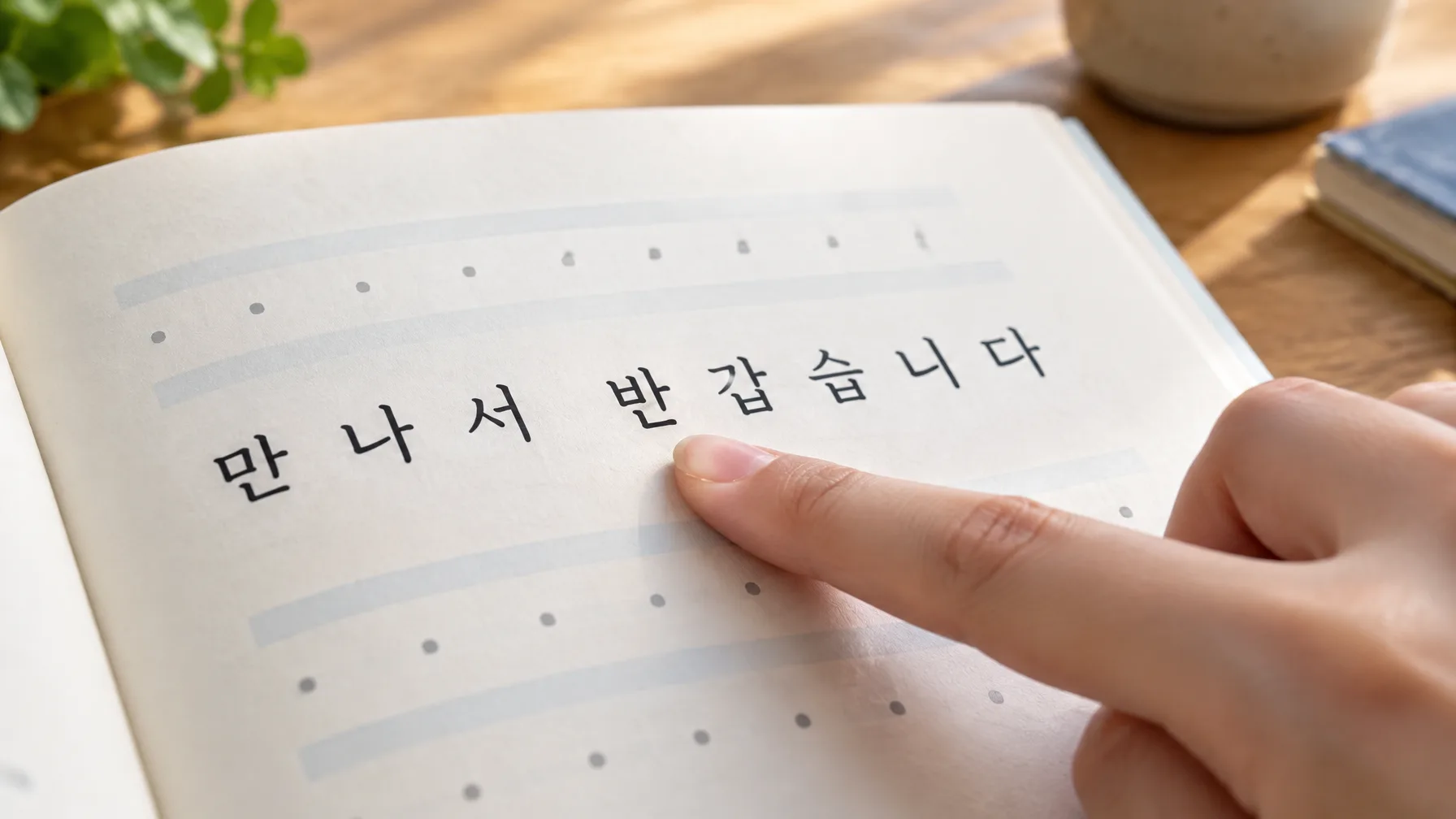
Sounding out Man·na·seo ban·gap·sseum·ni·da (만나서 반갑습니다) block by block
 AI-generated image
This greeting has eight blocks in two word groups, split by a space. Take it one chunk at a time.
- Man·na·seo: three blocks, 만 · 나 · 서. Say them one at a time, with even beats.
- Ban·gap·sseum·ni·da: five blocks, 반 · 갑 · 습 · 니 · 다. The third block is written sseum.
- Join the two groups with a tiny pause at the space.
- Check the meaning: “Nice to meet you.”
Once the blocks come easily, stop looking at the dots and read the Hangul line on its own. When your eyes skip the middle line and land on the Hangul, the romanization has done its job.
What Jeong·mal gam·sa·ham·ni·da (정말 감사합니다) and Jam·si·man gi·da·ryeo·ju·sip·ssi·o (잠시만 기다려주십시오) mean
Jeong·mal gam·sa·ham·ni·da (정말 감사합니다) means “Thank you very much.” Two word groups, seven blocks. The ham block (합) follows the sound, so say what the romanization shows. The ending, ni·da, is the same one from the greeting.
Jam·si·man gi·da·ryeo·ju·sip·ssi·o (잠시만 기다려주십시오) means “Please wait a moment.” It's the longer of the two: a three-block group, then a seven-block group. Read the second group in small pieces: gi·da·ryeo, then ju·sip·ssi·o. Same as sseum earlier, one block is written sip (십) and the next is written ssi (시).
How to ask permission to take a photo
At eleven blocks, it's the longest of the five, so split it into four chunks, the last two being jji·geo·do and doel·kka·yo. The romanization writes a doubled j in jji and a doubled k in kka, so follow those spellings. Read it chunk by chunk, then join the chunks and finish with the rising question at the end.
Comments
No comments yet.