
Korean Alphabet: How Hangul Letters Build Syllable Blocks
 AI-generated image
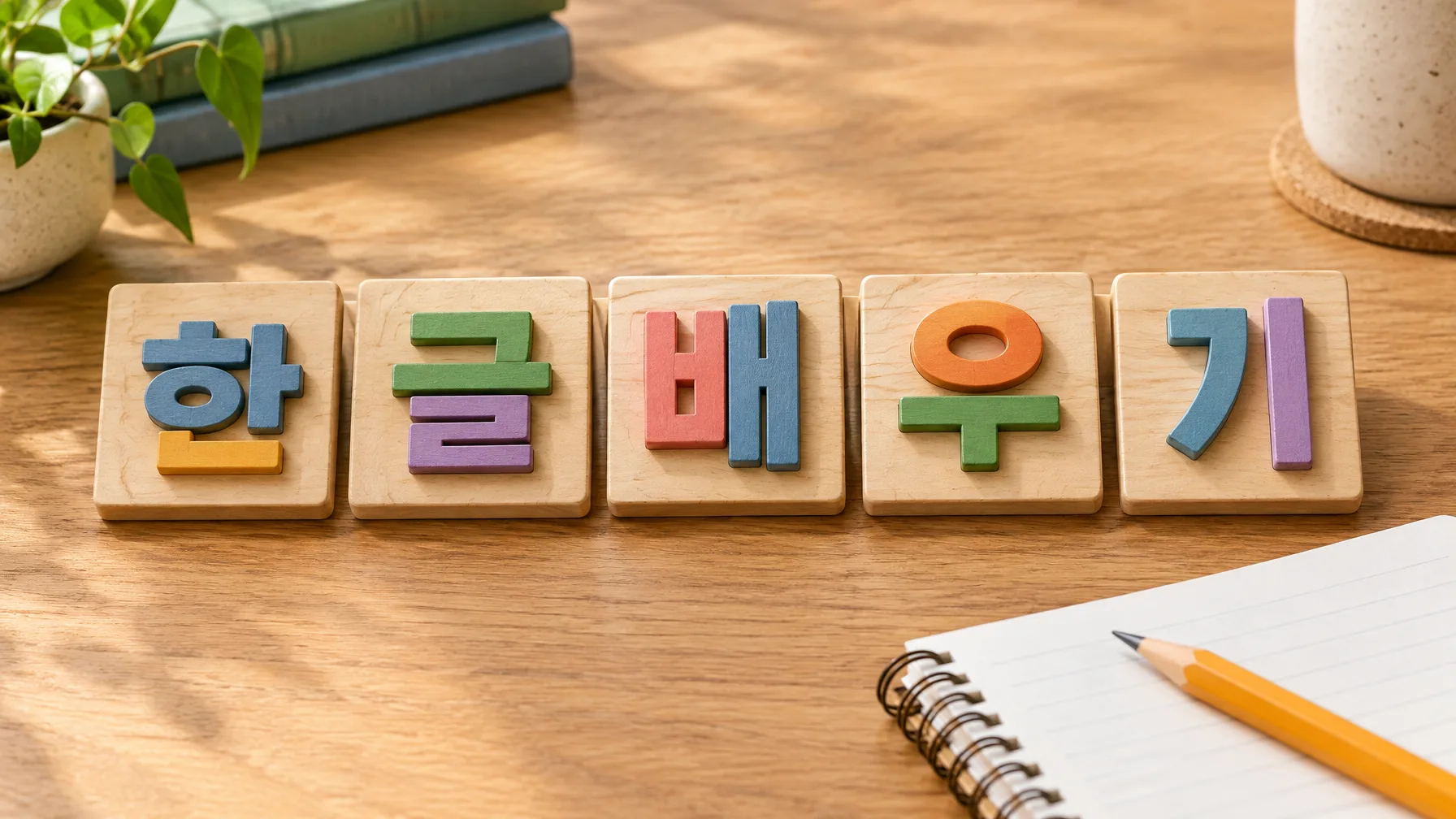
Hangul letters don't sit on their own. They pack together into square syllable blocks, and every block holds at least one consonant and one vowel. Take the name Hangul (한글) itself: it's two blocks, han (한) and geul (글). The Korean alphabet has 10 basic vowels and 11 double ones. Pronunciation traps catch most beginners. Learn the pattern, though, and a line of Korean turns from a wall of symbols into a row of tidy little boxes.
Hangul letters always travel in square syllable blocks
 AI-generated image
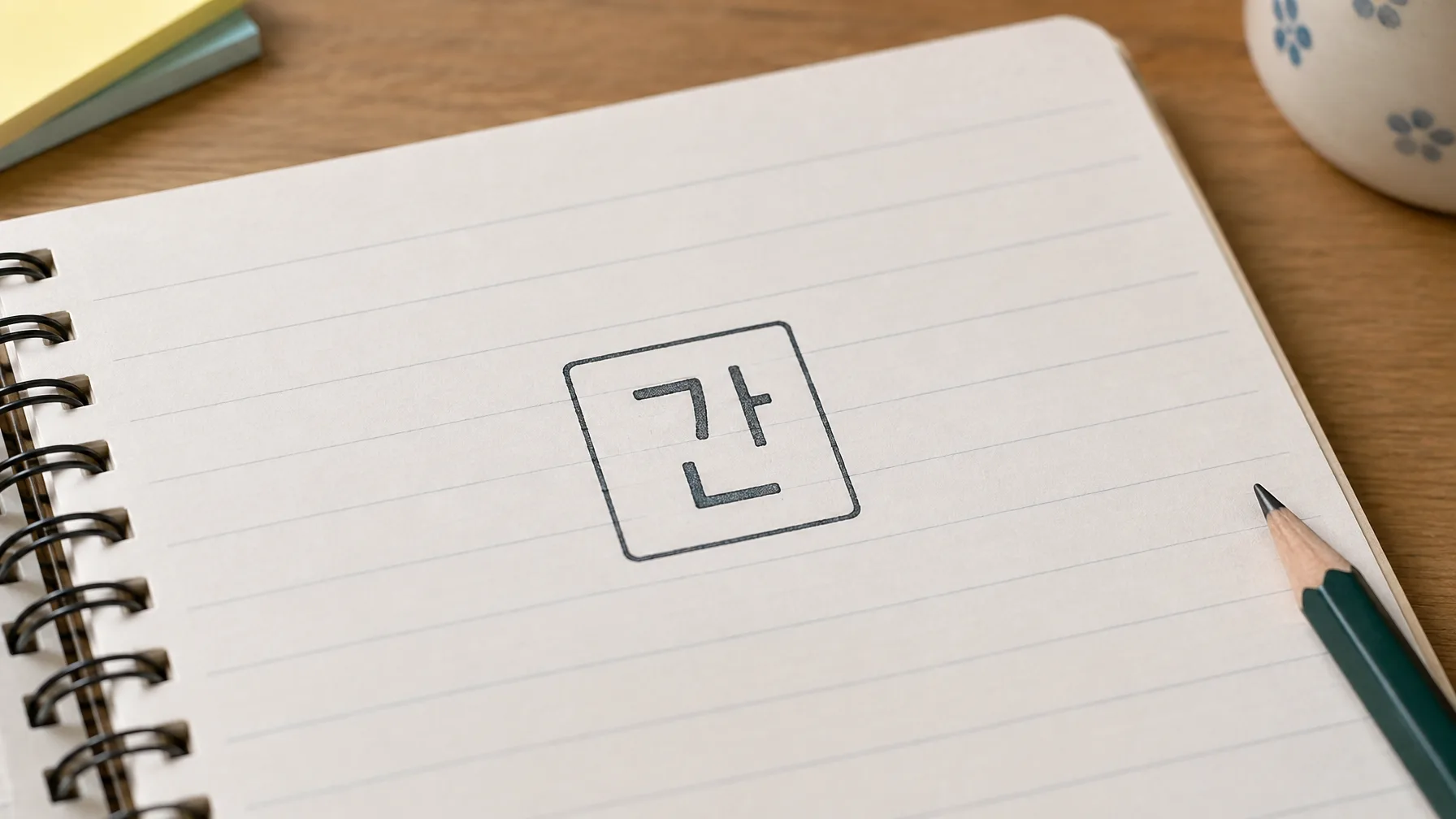
Here's the short version. There are around 24 basic letters, and you stack them into blocks that each stand for one spoken syllable. Start every block with a consonant. Add a vowel beside or below it, and tack on a final consonant if the syllable needs one. Then listen for sound changes, because a few letters shift depending on their neighbors. The steps below walk through that routine one move at a time.
Hangul is the alphabet; hangeugeo is the language
 AI-generated image
These two words are easy to mix up. Hangul (hangeul) is the Korean writing system, the alphabet. Hangeugeo is the Korean language itself. Hangul is the official script of Korea, and its letters stand for sounds rather than meanings. Modern Korean is written horizontally, left to right, so reading direction won't throw you.
Why a first-timer can pick up the letters quickly
 AI-generated image
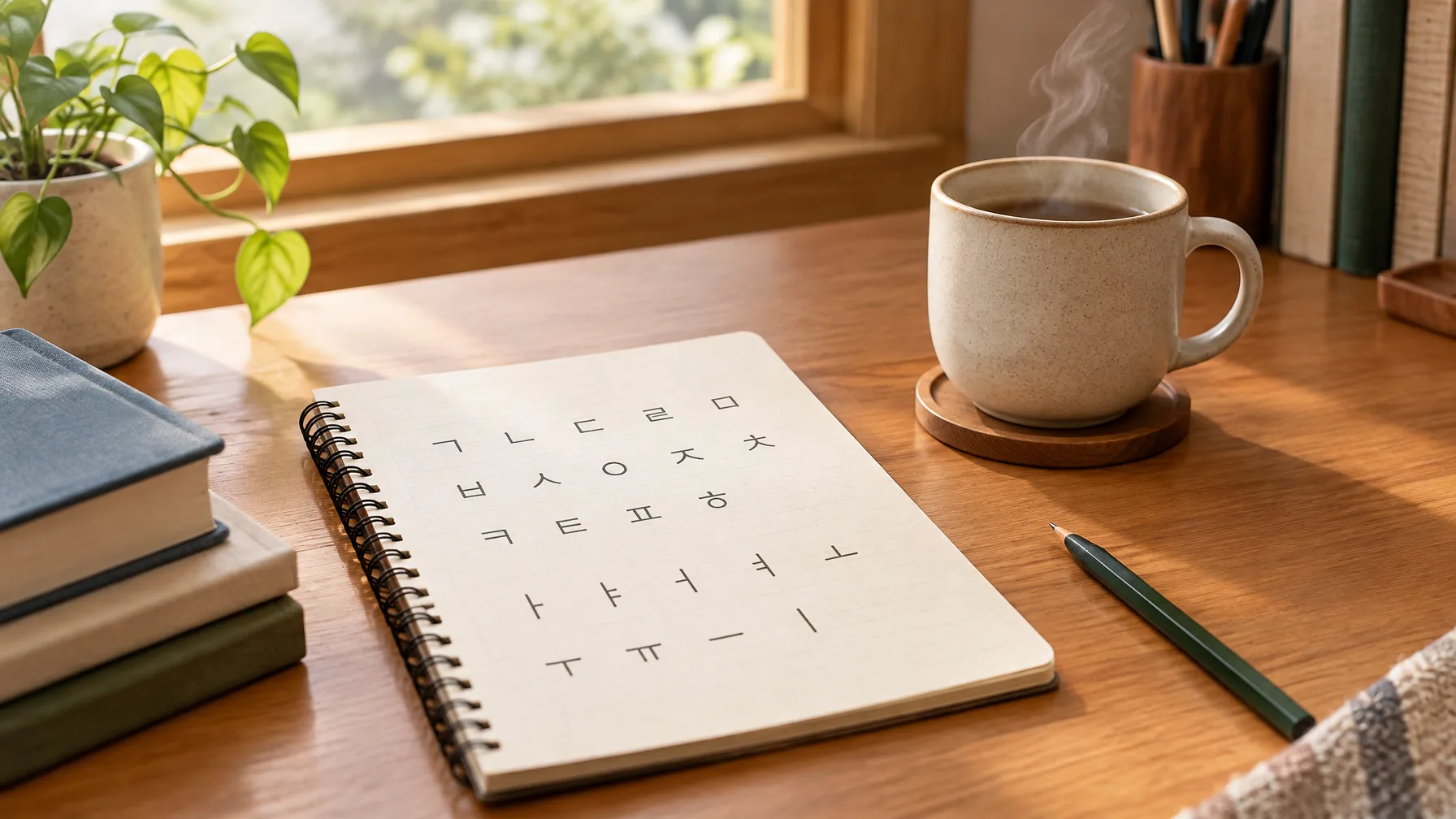
Compare the effort with Chinese writing, which uses thousands of characters. Hangul asks you to memorize only around 24 basic letters. The system was created in the 15th century under King Sejong the Great. Before that, ordinary Koreans had to write with Chinese characters, so he wanted something easy to learn. Because the letters are purely phonetic, you're learning sounds, not a stack of separate meanings.
Even the vowel shapes follow a plan. The basic vowels are built from three elements. A horizontal line stands for flat earth, a vertical line for an upright person, and a dot for the round sky. There's a separate walkthrough of the full letter set if you want a deeper look. Hangul: What Korean Writing Is Called, and Its 24 Letters
Four steps to read any Hangul block
- Find the starting consonant. If the syllable begins with a vowel sound, the block still opens with the silent placeholder consonant (ㅇ).
- Place the vowel. A vertical vowel (ㅣ ㅓ ㅏ) sits beside the consonant. A horizontal vowel (ㅗ ㅜ ㅡ) sits below it.
- Add an optional final consonant at the bottom of the block.
- Check for sound changes, such as the written form (죄송합니다) being read "jwesonghamnida."
The silent letter (ㅇ) surprises most beginners. A block has to start with a consonant, so a word that begins with a vowel gets the placeholder (ㅇ) with no sound. That's why the word for baby, agi, is written (아기) and never (ㅏ기). Strip away the placeholder at the start of a block and you hear just the vowel.
| Vowel type | Letters | Where it sits | Example block |
|---|---|---|---|
| Vertical | ㅣ ㅓ ㅏ | Beside the consonant | 가 (ㄱ + ㅏ) |
| Horizontal | ㅗ ㅜ ㅡ | Below the consonant | 구 (ㄱ + ㅜ) |
Try it on the example from the top. The first block, han (한), is a starting consonant (ㅎ), a vowel (ㅏ) and a final consonant (ㄴ). The vertical vowel sits beside the starting consonant, and the final consonant closes the block underneath. The second block, geul (글), is a consonant (ㄱ) with the horizontal vowel (ㅡ) below it, then a final consonant (ㄹ) at the very bottom. Two blocks, two syllables, one word.
Which consonants to learn first, in two rounds
Korean sounds break down into consonants, vowels and diphthongs, which are gliding double sounds. You don't need them all at once. A friendly order is two rounds. The first round teaches the consonants ㄱ ㄴ ㅁ ㄷ ㅇ together with the vowels ㅣ ㅗ ㅜ ㅏ. The second adds the consonants ㅅ ㅂ ㅈ ㄹ and the vowels ㅓ ㅐ ㅔ ㅡ.
| Round | Consonants | Vowels |
|---|---|---|
| First | ㄱ ㄴ ㅁ ㄷ ㅇ | ㅣ ㅗ ㅜ ㅏ |
| Second | ㅅ ㅂ ㅈ ㄹ | ㅓ ㅐ ㅔ ㅡ |
The first round is enough to build real words right away. The word agi (아기) uses only letters from that round: the silent placeholder (ㅇ), the consonant (ㄱ) and the vowels (ㅏ, ㅣ). That's a nice early win. Practice stacking and unstacking these blocks before you touch the second round.
Pronunciation pitfalls that trip up beginners
Reading a block is easy. Saying it the way it sounds in a sentence is where people stumble. When the consonant (ㅂ) is followed by (ㄴ), it turns into an (ㅁ) sound. That's why the written form (죄송합니다) comes out as "jwesonghamnida." The consonants (ㄲ) and (ㄸ) are stronger and firmer than (ㄱ) and (ㄷ). The vowels (ㅓ) and (ㅕ) have no direct English match, so English speakers need extra practice with them.
Romanization, which spells Korean in English letters, is not accurate for Hangul. To read and pronounce Korean correctly, you have to learn to read Hangul itself first. The letter ㄱ is a good case study, and there's a full explainer on it. How Koreans Pronounce the Letter K: ㄱ, ㅋ and ㄲ Explained
Be a little skeptical of the claim that Hangul is simple and consistent. A single letter can sound different depending on where it sits in a syllable, which confuses newcomers. You can technically sound out nearly every word. But reading letters and pronouncing them naturally aren't the same skill. Steady practice still matters even though the alphabet is small. Going through all the letters first can be tiring, so a first few beginner phrases and basic words can be mixed in alongside the alphabet.
Flashcards and apps that make practice stick
Digital flashcards work well for letters and blocks. Quizlet and Anki both let you build decks of consonants, vowels and whole syllables, then quiz yourself in short bursts. Mobile apps like Drops and Memrise add a game-like layer for repeat exposure. Pick one flashcard tool and one app, and use them for a few minutes a day instead of cramming.
Read the blocks directly and expect some sound shifts
Hangul is about 24 basic letters that you stack into square syllable blocks. Each block has a consonant and a vowel. If the sound starts with a vowel, the consonant is a silent ㅇ. Learn to read the blocks directly instead of leaning on romanization. Expect some letters to sound different depending on their neighbors. Start with the first round of letters and run the four-step routine on every word you meet. The rest will fall into place.
Comments
No comments yet.