
Korean Consonants: 19 Letters, 14 Basic and 5 Double
 AI-generated image
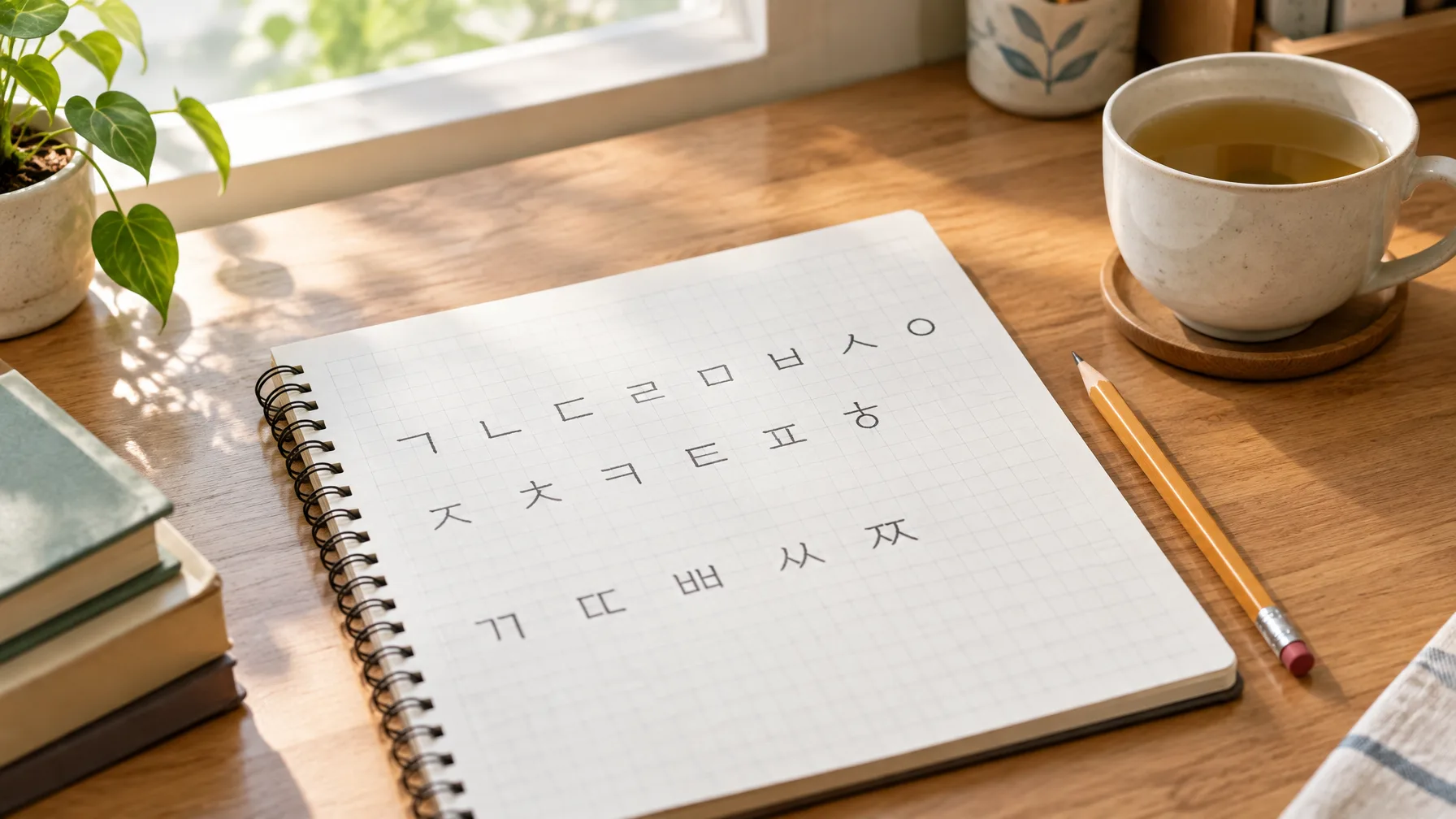
Korean has 19 consonants. There are 14 basic ones (ㄱ, ㄴ, ㄷ, ㄹ, ㅁ, ㅂ, ㅅ, ㅇ, ㅈ, ㅊ, ㅋ, ㅌ, ㅍ, ㅎ) and 5 double, or tense, ones (ㄲ, ㄸ, ㅃ, ㅆ, ㅉ). The rest of this guide shows how they're grouped and how to say them. If you're meeting the Korean alphabet for the first time, the count is smaller and friendlier than it looks.
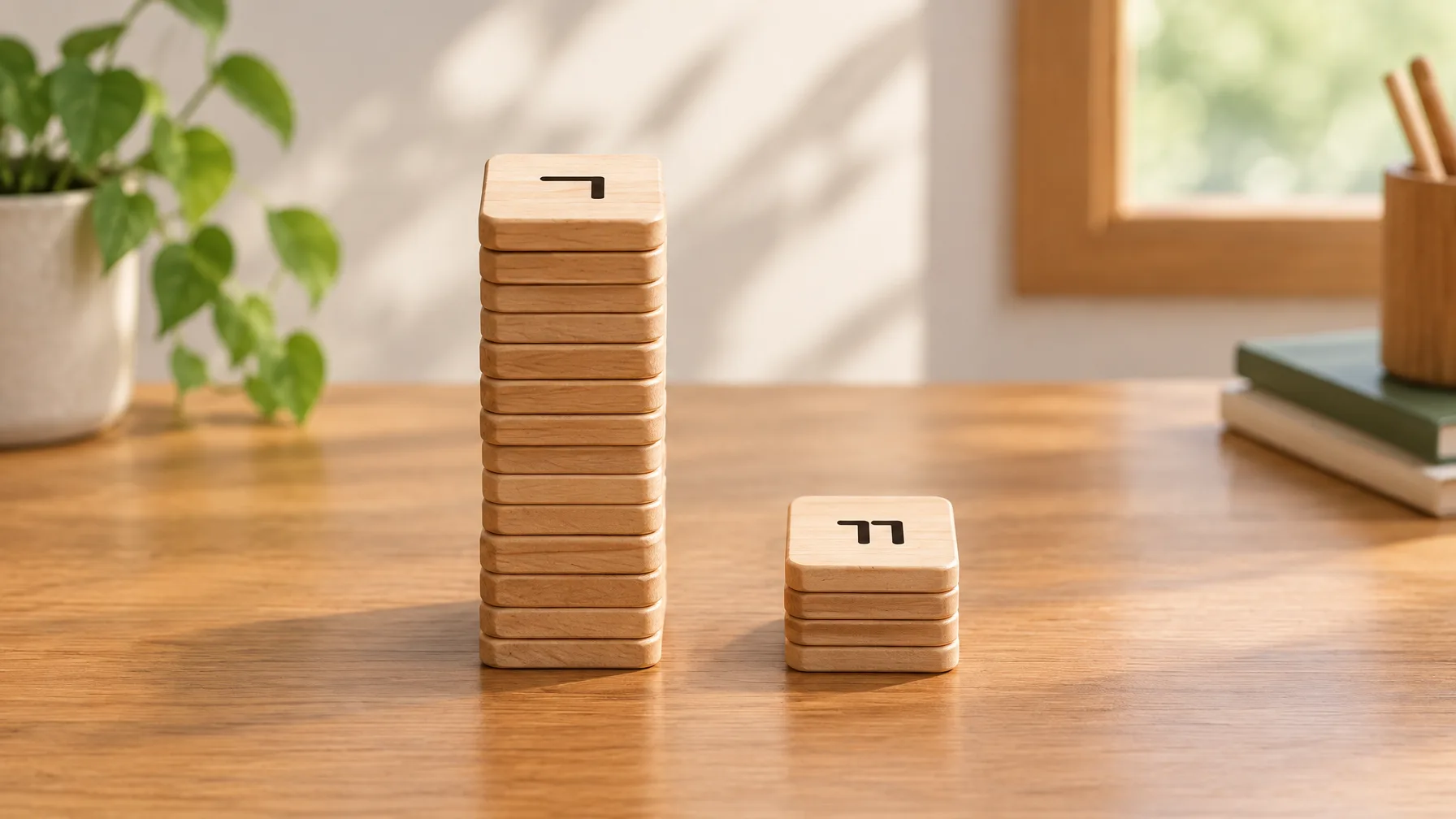
Korean has 19 consonants: 14 basic and 5 double
 AI-generated image
Think of it as one family. The 14 basic letters come first, and the doubled ones are built from them. Keep one rule in your pocket from the start: a Korean consonant can't make a sound on its own. It always needs a vowel after it.
Consonants and vowels together make up Hangul, the Korean alphabet. For the bigger picture, see Hangul: What Korean Writing Is Called, and Its 24 Letters.
The 14 basic letters are the ones to learn first
 AI-generated image
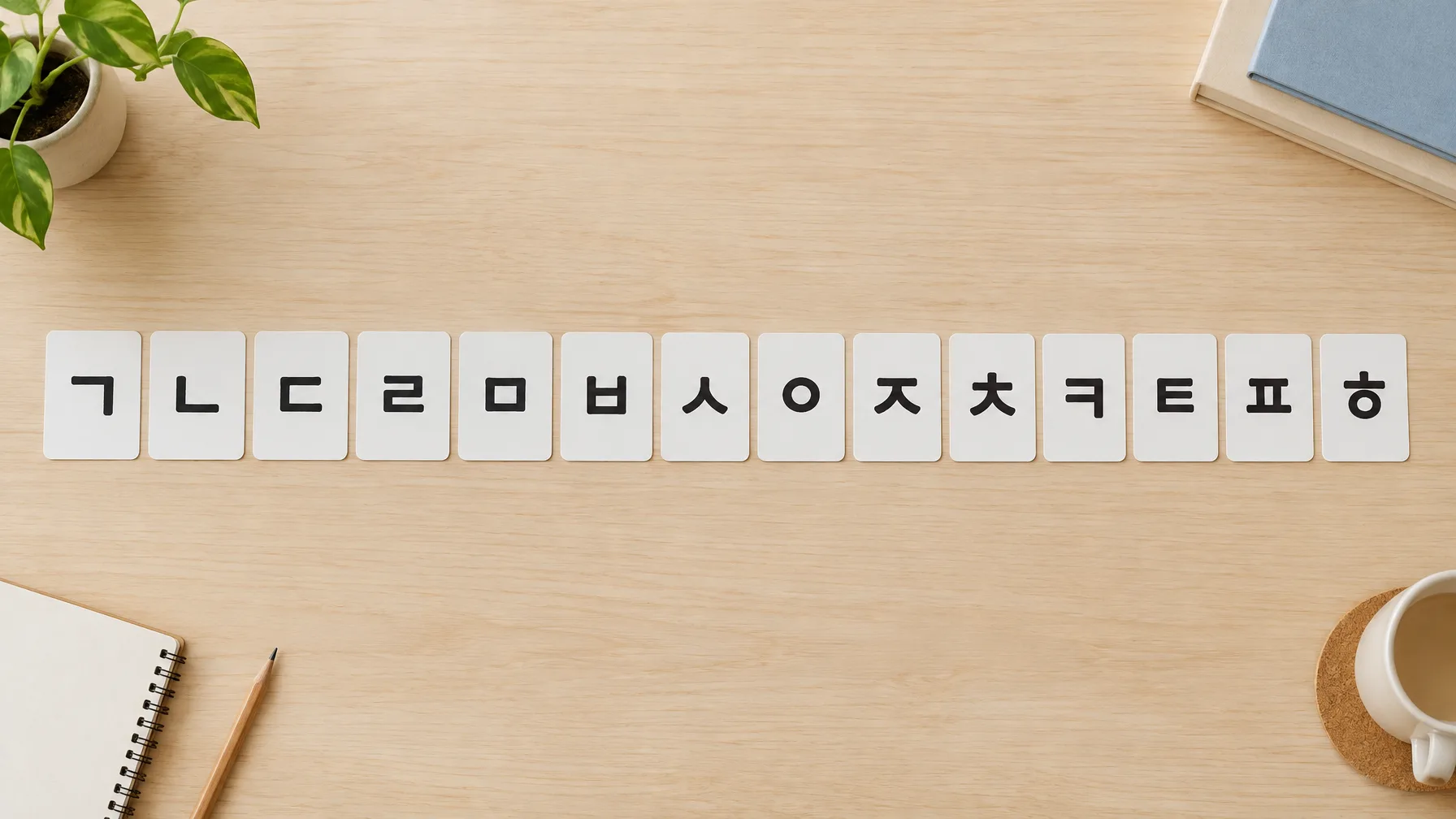
Here they are in a single line: ㄱ, ㄴ, ㄷ, ㄹ, ㅁ, ㅂ, ㅅ, ㅇ, ㅈ, ㅊ, ㅋ, ㅌ, ㅍ, ㅎ. If you only have an evening to spare, spend it on these.
The shapes help too. You only need to learn five base shapes (ㄱ, ㄴ, ㅁ, ㅅ, ㅇ), and the other consonants are made by adding strokes to them. Seen that way, the alphabet is a lot less like memorizing 14 unrelated symbols. Hangul's basic letters come to just 24 in total, and many beginners find that count a relief.
Five doubled letters push the count past 14
 AI-generated image
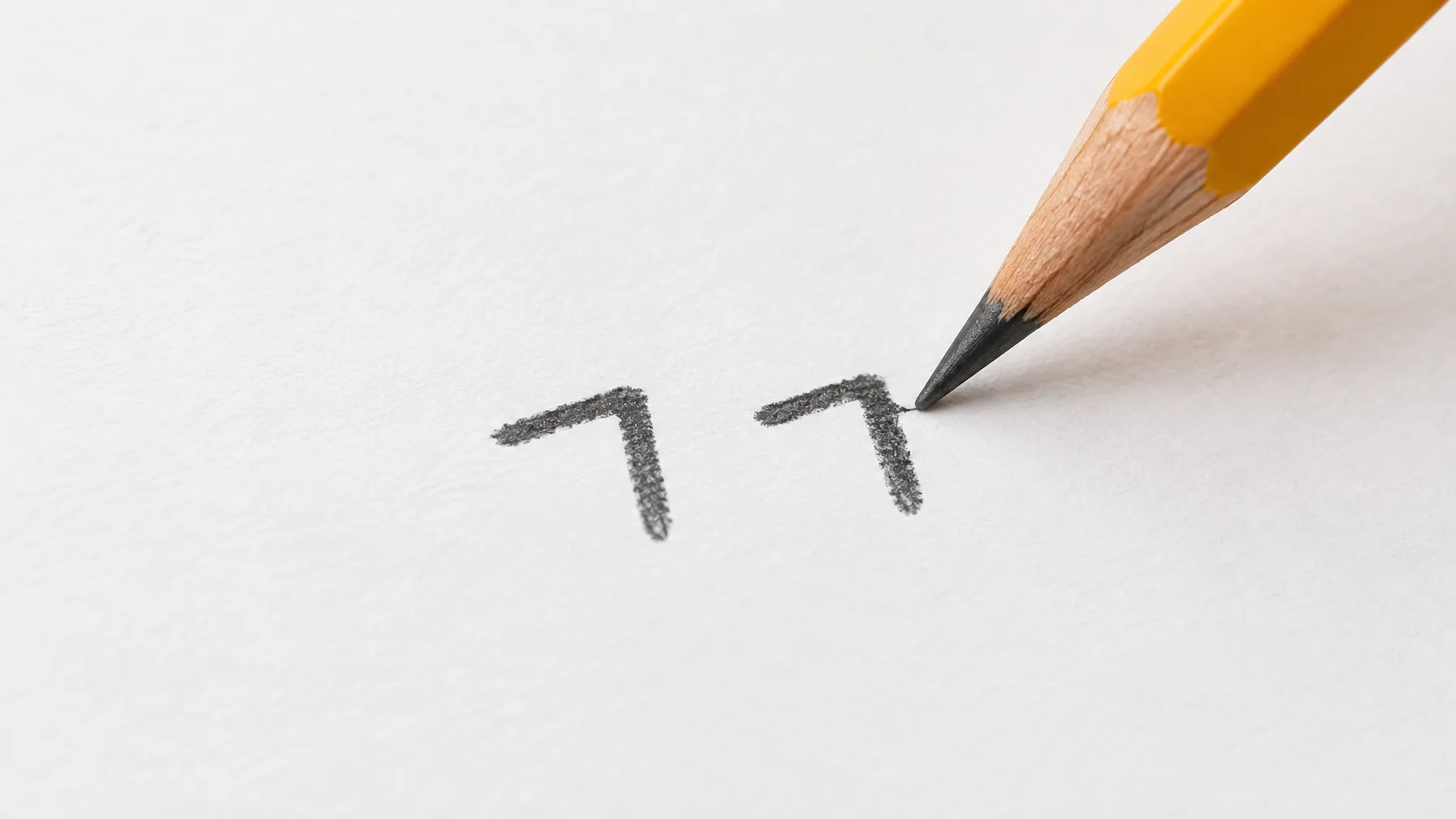
The extra five come from one simple trick. Write a consonant twice and you get a tense sound. That gives ㄲ, ㄸ, ㅃ, ㅆ and ㅉ. Only five of the basic letters can be doubled this way: ㄱ, ㄷ, ㅂ, ㅅ and ㅈ.
The other nine basic letters don't have a double. If you're asking why people say 19 and not 14, here is the reason. The doubles are counted as their own letters, even though they're built from basic ones.
A one-glance table shows how 14 grow into 19
Four of the basic letters (ㄱ, ㄷ, ㅂ, ㅈ) each have an aspirated partner and a double partner. The letter ㅅ has a double but no aspirated partner. The table below groups the related sets.
| Basic letter | Aspirated partner | Double (tense) partner |
|---|---|---|
| ㄱ | ㅋ | ㄲ |
| ㄷ | ㅌ | ㄸ |
| ㅂ | ㅍ | ㅃ |
| ㅈ | ㅊ | ㅉ |
| ㅅ | none | ㅆ |
Read each row left to right and you can see the pattern. Learn the first column and the other two columns feel like variations rather than new letters. For a closer look at one row, see the guide to how Koreans pronounce the letter K: ㄱ, ㅋ and ㄲ.
The 14 basic letters fall into 5 groups by where the sound is made
Korean grammar guides sort the 14 basic consonants into five groups, based on where in your mouth the sound is made. It's a handy way to study. Instead of one long list, you learn five small clusters of letters that feel similar when you say them.
The aspirated partners fit this idea well. ㅋ goes with ㄱ, ㅌ with ㄷ, ㅍ with ㅂ and ㅊ with ㅈ. Each pair is made in the same place, and only the strength of the sound changes.
ㄹ, the aspirated four and the doubles each have their own trick
Start with ㄹ, since it trips up many English speakers. Bring your tongue forward as if you're about to say an English L. Then keep it from touching your teeth, and don't push it too far forward.
ㄹ is a single flapped sound, not an English R or an English L. Ask whether it's R or L and the honest answer is "sort of both." It also shifts a little depending on where it sits in a word. Don't hunt for one perfect rule. Saying ramyeon (라면, instant noodles) a few times makes a good drill. It may make you hungry.
Next come the aspirated four, ㅋ, ㅌ, ㅍ and ㅊ. Treat each one as the stronger partner of ㄱ, ㄷ, ㅂ and ㅈ. Then there are the doubles, which sound much stronger than the basic letters they're built from. That gap is what "tense" means.
One small surprise: ㅎ can nearly disappear between two vowels. So the number of letters you learn isn't always the number of consonant sounds you hear.
At the end of a syllable, several consonants sound the same
This is where the "one letter, one sound" idea breaks down. When ㅅ, ㅆ, ㅈ, ㅊ, ㅌ or ㅎ closes a syllable, they all collapse into the same ㄷ sound. On paper they're different letters, but in your ears they're one.
The aspirated and tense strength also fades in that spot. So don't expect a final ㅋ or ㄲ to carry the punch it has at the start of a syllable. And three letters, ㅃ, ㅉ and ㄸ, never appear in that closing position at all.
Another common slip is counting the silent ㅇ. When it opens a syllable, it's only a placeholder with no sound of its own. Don't count it as a sound-making consonant when you're working out how many sounds Korean has.
English W, X and Y have no single Korean twin
People often try to line Korean up against English, and the match is rough. There's no one Korean consonant that replaces W, X or Y. Korean makes those sounds by combining a consonant with a vowel.
The same goes for any chart that pairs Korean letters with English ones. Treat those pairings as close approximations, not exact translations. Hangul is its own system, so listen to real speech whenever you can.
Start with the 14, then let the rest grow
Korean has 19 consonants: 14 basic ones and 5 double ones, made by writing a consonant twice for a tense sound. Learn the 14 basic ones first, because the aspirated and double ones build on them. Take it one row of the table at a time, and you'll be reading Korean sooner than you think.
Comments
No comments yet.