
Hangul: What Korean Writing Is Called, and Its 24 Letters
 AI-generated image
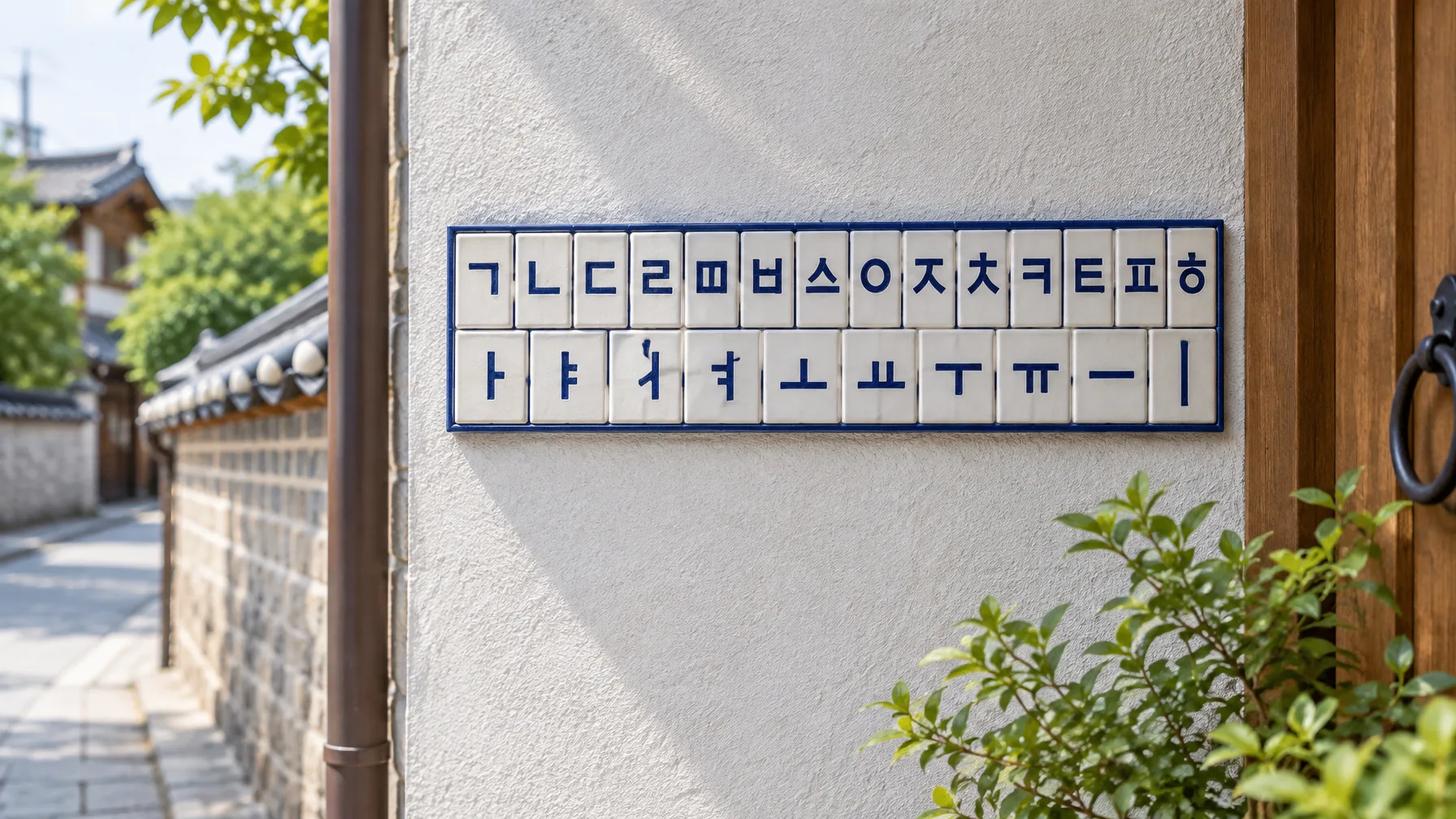
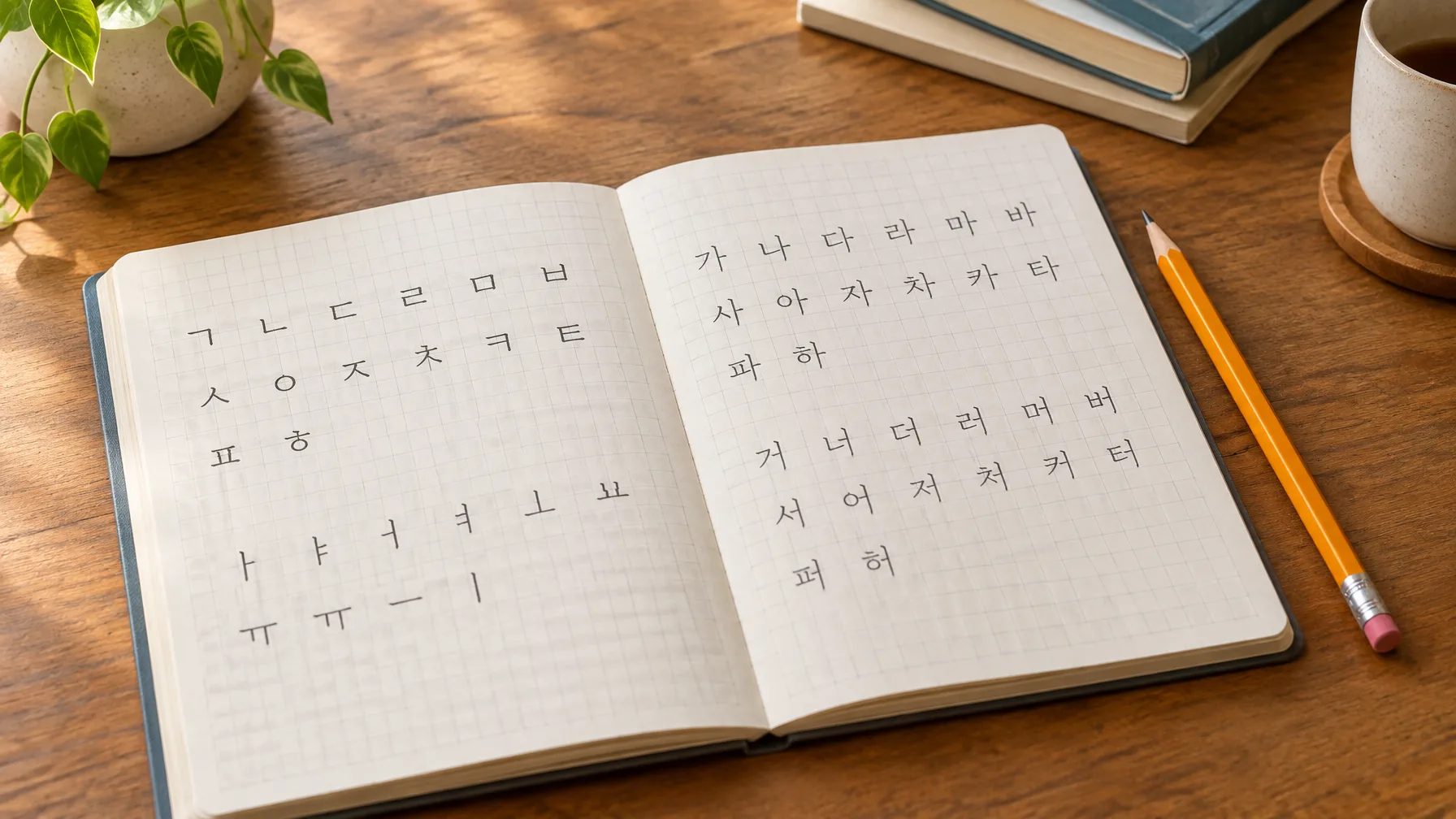
Korean writing is called Hangul (spelled Hangeul in South Korea). It is an alphabet of 24 letters: 14 consonants and 10 vowels. The rest of this page covers the names, the history, and the look-alikes people mix it up with.
Korean writing is Hangul, a 24-letter alphabet
 AI-generated image
Hangul is the script used for the Korean language. It is a writing system, not a language, so "Korean" is the language and Hangul is how it gets written down.
Scholars under King Sejong built it
 AI-generated image
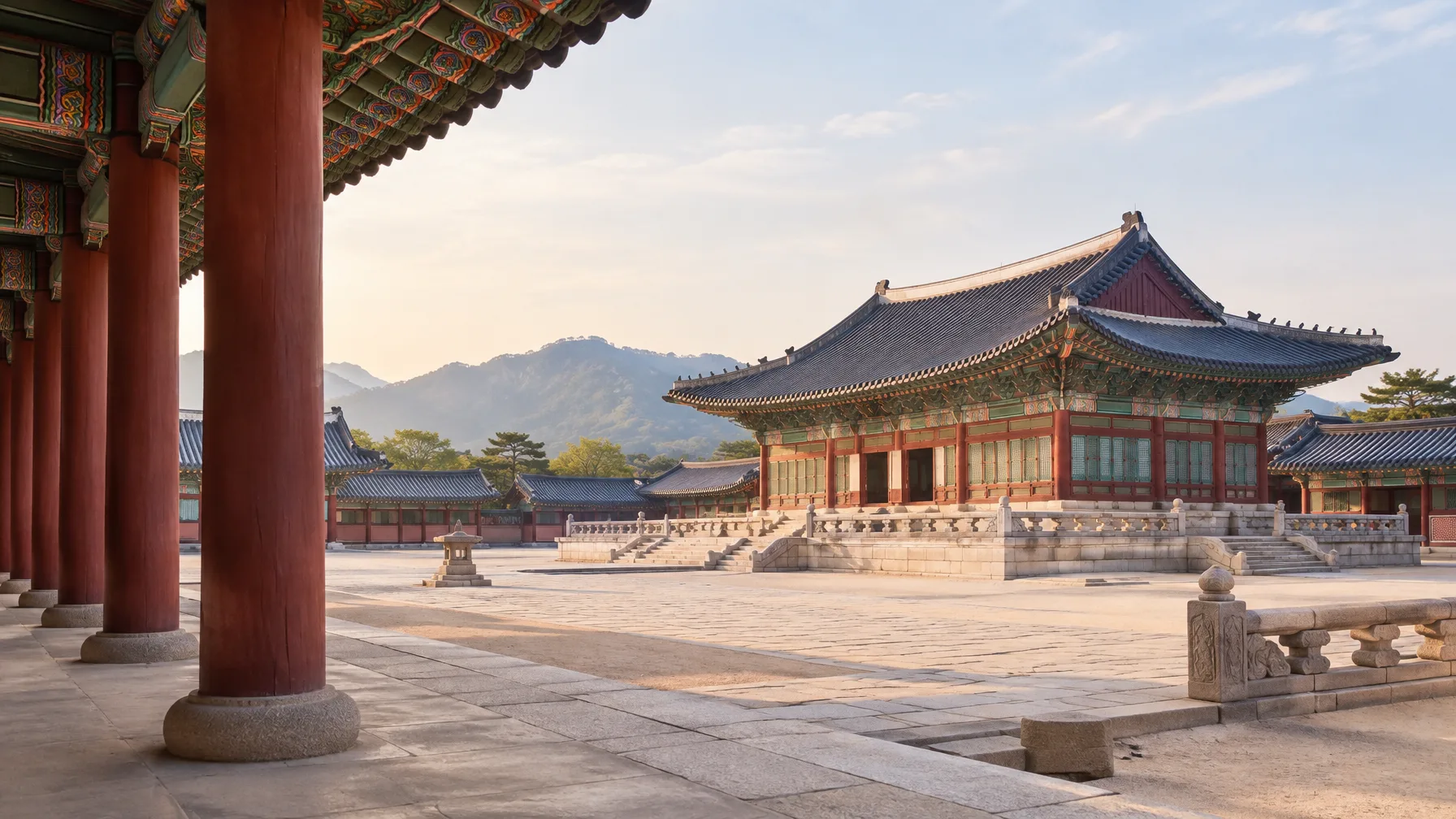
The Korean word Hangeul (hangul) refers to the alphabet that scholars created on King Sejong's order. They made it between 1444 and 1446, and it was introduced to the public in 1446.
People wrote it with characters borrowed from Chinese, choosing the ones that came closest to Korean sounds. Hangul replaced that workaround with letters built for the sounds of the language itself.
Hangul, Hangeul, Chosŏn'gŭl and more: a name cheat sheet
 AI-generated image
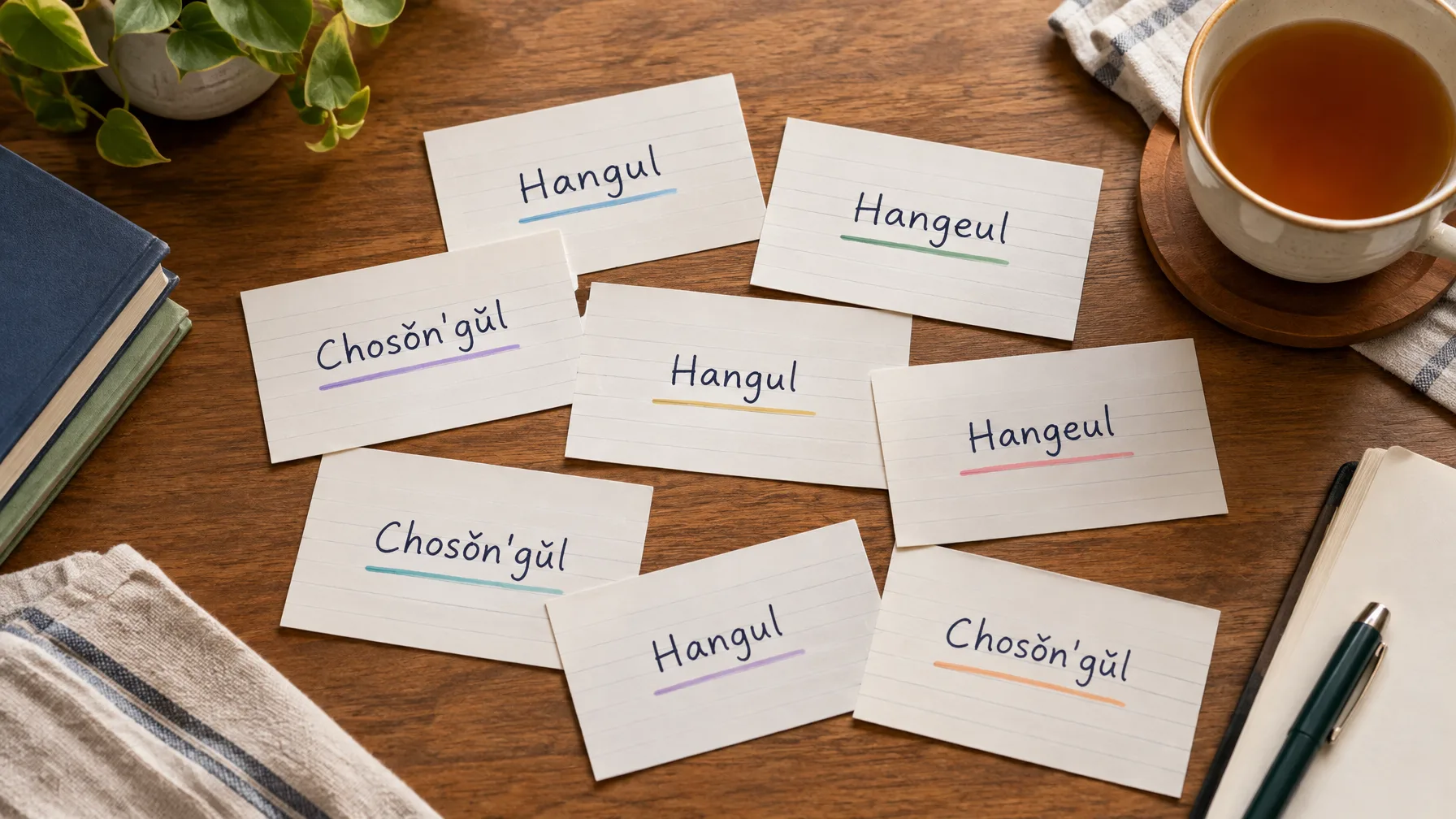
One script has several names because of spelling, geography and history. The differences are about who is speaking and when, not about different alphabets. Here is every name you are likely to run into.
| Name | What it means | Who uses it |
|---|---|---|
| Hangul | The Korean alphabet, spelled the way English usually writes it | International usage |
| Hangeul | The same script, spelled the South Korean way | South Korea |
| Chosŏn'gŭl | The same script under its North Korean name | North Korea |
| Hunminjeongeum | The original name, also the name of the document that introduced the script | Historical name |
| eonmun | An older name for the script | Older alternate name |
| banjeol | Another older name for the script | Older alternate name |
| gukmun | Another older name for the script | Older alternate name |
Hangul was used there briefly, then replaced by Chosŏn'gŭl in 1949. So if a book or news story says Chosŏn'gŭl, it is talking about the same alphabet from a North Korean point of view.
Letters stack into syllable blocks of two to five
Hangul is phonetic: each symbol represents a specific sound. That is the big difference from writing systems built on pictures of ideas. Korean words are made of syllable blocks, each formed by two to five simple letter shapes.
The name itself is a good first example. Hangeul (한글) is two blocks. The first block packs three letters into one square, and it reads "han". The second block is the other half of the name.
- Find one block. Each block is one syllable.
- Read the letters inside it as sounds, one by one.
- Blend those sounds into a single syllable.
- Move to the next block, and watch for spaces, which mark where one word ends and the next begins.
Hangul isn't hanja, and it isn't Japanese kana or kanji
The first common mix-up is between Hangul and hanja. Hanja is the Korean name for Chinese characters, which Koreans used to write their language before Hangul existed. They are a separate system with their own shapes.
The second mix-up is with Japanese. The relationship between Hangul and hanja matches the relationship between Japanese kana and kanji. One is a sound-based alphabet, and the other is borrowed Chinese characters. Hangul also puts spaces between words, while Japanese writes words together.
Nearly all Korean text today is written in Hangul
Yes, Koreans use Hangul every day. Most Korean writing today is in Hangul alone. Hanja sometimes appears in parentheses after a word to make its meaning clear, but it is the exception.
If you want to start writing it yourself, one learner-friendly method is simple. Look at a short sequence of pictures and write the story in Korean. Seeing the words in context helps them stick, and you end up with your own vocabulary list while practicing grammar.
The one line to keep in your pocket
Korean writing is called Hangul, a phonetic alphabet of 24 letters, 14 consonants and 10 vowels, which you stack into syllable blocks of 2 to 5 letters.
Comments
No comments yet.