
Famous Korean Phrases in KDrama: Annyeonghaseyo and Beyond
 AI-generated image
Annyeonghaseyo (안녕하세요), the formal “hello,” is the Korean phrase you hear most often on Korean streets and in K-dramas. The casual version for friends is annyeong (안녕). If you want one famous Korean phrase with its meaning, start there, then pick up a thank-you, a cheer and a few slang words. Each phrase below comes with what it means and who you can say it to.
Annyeonghaseyo is the formal hello; annyeong is for friends
 AI-generated image
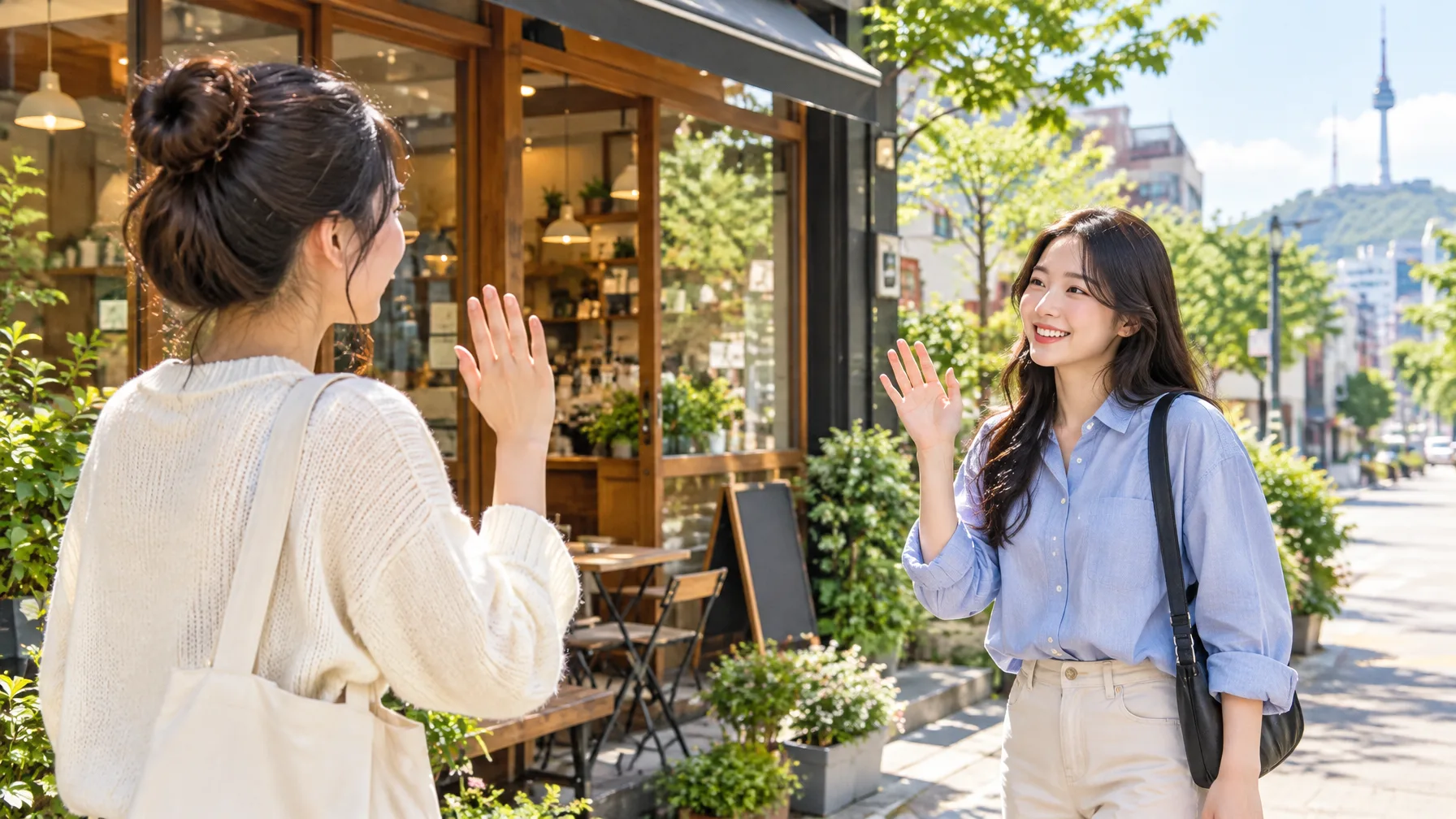
The annyeonghaseyo meaning is simply “Hello” or “Hi.” Because it is polite, it is the safe pick whenever you don't know someone well. Annyeong is the one to use when you're talking with a friend.
Once the greeting is out, friends often follow with Eotteoke jinae? (어떻게 지내?). It means “How are you doing?” or “How have you been?” It sounds relaxed and friendly. For a longer look at the pair, see Basic Korean Words: Formal vs Informal Hello, Thank You and Sorry.
Gamsahamnida is the safe way to say thank you
 AI-generated image
Gamsahamnida (감사합니다) is the well-known way to say “thank you” in Korean. You will also see it romanized as kamsahamnida. It shows up first in most lists of basic Korean sayings, right next to the hello.
Is it always the right choice? Nearly. It's a formal, polite expression, so it works in formal settings and with strangers or people older than you. It also fits most everyday situations, which is why a first-timer can lean on it without worrying.
How Koreans say cool: daebak, plus heol for shock
 AI-generated image
For “cool” in the sense of “awesome,” the word is daebak (대박). It expresses big excitement and sits close to English “awesome” or “amazing.”
Heol (헐) covers a different feeling. Say it when something is hard to believe, whether the news is good or bad.
Both are slang, and slang may not appear in a textbook. They suit casual talk, not a formal setting or a textbook-style answer.
Hwaiting is what you say to cheer someone on
Hwaiting (화이팅) translates word for word as “fighting.” In real use it means “let's do our best.” Say it to encourage someone, wish them luck or urge them to give it everything.
It's most common right before a performance or an exam. If a friend has a big day coming, this one word does the job. Like daebak and heol, it's casual and expressive.
Match the phrase to the person: formal or casual
The easiest slip is using a casual phrase with the wrong person. Gwaenchana (괜찮아) means “fine” or “okay,” and it's for close friends or people younger than you. Annyeong has the same limit. So does Jal ga (잘 가), a casual “bye” that only works with friends or people you know well.
On the formal side are two set phrases. Mannaseo bangapseumnida (만나서 반갑습니다) is “Nice to meet you.” Joheun haru doeseyo (좋은 하루 되세요) is “Have a nice day!” Both are safe with anyone. The table sorts the whole set at a glance.
| Phrase | Korean | English meaning | Register |
|---|---|---|---|
| annyeonghaseyo | 안녕하세요 | Hello / Hi | Formal |
| annyeong | 안녕 | Hi / Hello | Casual, for friends |
| gamsahamnida | 감사합니다 | Thank you | Formal, polite |
| mannaseo bangapseumnida | 만나서 반갑습니다 | Nice to meet you | Formal |
| joheun haru doeseyo | 좋은 하루 되세요 | Have a nice day! | Formal |
| gwaenchana | 괜찮아 | Fine / Okay | Casual, for close people and younger people |
| daebak | 대박 | Awesome / Amazing | Casual slang |
| hwaiting | 화이팅 | Fighting! / Let's do our best | Casual, cheering |
| heol | 헐 | OMG / Oh my god | Casual slang |
| aigoo | 아이구 | Oh dear | Casual exclamation |
| saranghae | 사랑해 | I love you | Casual |
Gwaenchana, like annyeong, belongs with friends and younger people. Heol and hwaiting, like daebak, fit casual, expressive moments.
Aigoo and saranghae keep turning up in dramas
Aigoo (아이구) is a famous drama expression, often heard from ajumma characters, meaning middle-aged women. It translates as “oh dear.” Listen for it when someone sighs over a mess, a worry or a bit of bad luck.
The politer forms are covered in another guide.
Comments
No comments yet.