
Bulgogi Pronunciation in American English: Say It bul-GOH-gee
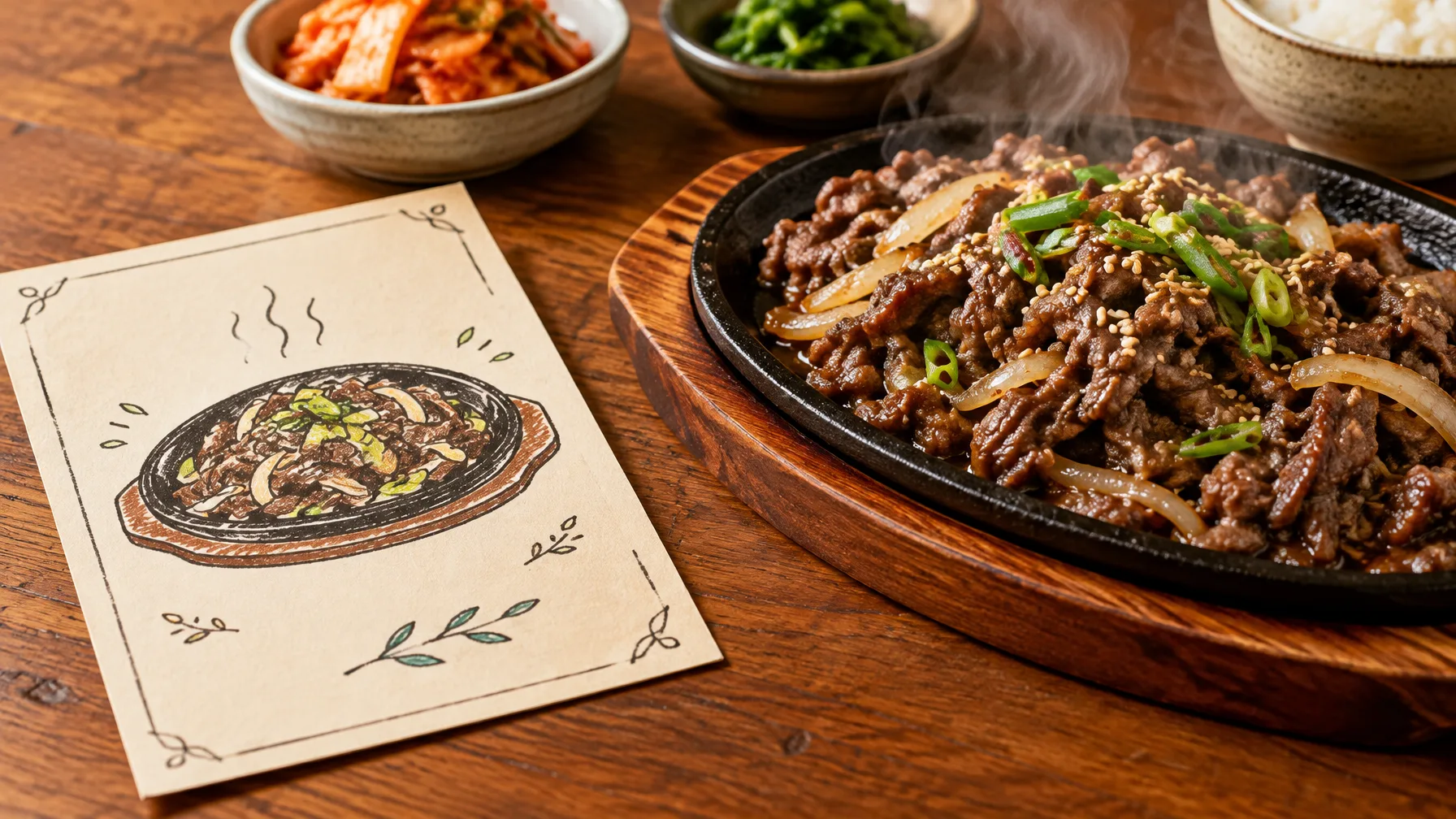 AI-generated image
In American English, bulgogi is pronounced /bʊlˈɡoʊ.ɡi/, roughly bul-GOH-gee. The stress falls on the middle syllable. The o sounds like the o in nose, and the final i sounds like the y in happy. That is the pronunciation to use when you say the word aloud. The sections below take it apart one sound at a time.
Bulgogi is bul-GOH-gee, with the stress in the middle
 AI-generated image
Think of the word as three beats with one loud one. The first and last beats are light. The middle beat carries the weight, the way "guitar" or "banana" lands on its second syllable. If you can say "bul-GOH-gee" in one smooth breath without pausing between the pieces, you're there.
Two English words that unlock the vowels
 AI-generated image
Reading phonetic symbols isn't necessary here. Two everyday English words are enough: nose and happy. The vowel in the middle of bulgogi is the same one heard in nose. The vowel at the very end is the one heard at the end of happy.
Say each of those two words out loud once before you start. Hold the oh of nose for a moment, then notice how happy ends on a short, bright ee rather than a long, stretched-out one. Those two sounds are the whole trick. It's a quick thing to learn if you only want to know how to pronounce bulgogi before dinner.
Say it one syllable at a time
 AI-generated image
- Start with bul. The vowel is a short oo. The word opens with a plain b and ends on an l, so your tongue touches the roof of your mouth behind your top teeth.
- Go straight into GOH, the louder beat. Use the long oh of nose, and keep the hard g of go.
- Finish with gee. Use the quick ee you hear at the end of happy, and keep it light.
- Now run them together: bul, GOH, gee. Speed up until the three pieces sound like one word.
Both g sounds are the hard g of get and go, never the soft g of gem. Say the word a few times slowly, then once at normal speed, and it settles quickly.
The middle syllable rhymes with go, not cow
The most common slip is bul-GOW-gee, where the middle sounds like cow or now. That version is wrong. The vowel is the oh of go, nose and toe, so aim for GOH every time.
A second slip is flattening the stress so all three syllables sound equal. That makes the word sound like three separate chunks. Lean on the middle one and let the other two get quieter.
Why some guides write pool-goh-gee
You may run into the respelling pool-goh-gee and wonder where the p came from. In Korean, the b in this word often sounds close to a p. The first vowel is a doubled oo, so some guides write it that way to get nearer to the Korean sound.
Treat pool-goh-gee as an English-style approximation, though, not a fixed rule. The Korean b is often p-like, though not always, and the standard English form keeps a b. If you're asking how do you pronounce bulgogi in Korean, lean toward a lighter, slightly softer opening b. The middle and last syllables stay the same as above.
The British version differs by one vowel symbol
The UK transcription is /bʊlˈɡəʊ.ɡi/. Set beside the American /bʊlˈɡoʊ.ɡi/, the only visible change is the middle vowel, /əʊ/ in place of /oʊ/. The stress mark sits in the same spot, before the g.
In practice those two symbols stand for the same sound, the o of nose. An American and a British speaker therefore land very close together on this word. Some British-style entries also list a form with the stress on the first syllable, /ˈbʊlɡɒɡi/. Others list one with a long first vowel, /ˈbuːlɡəʊɡi/. Those are variants rather than mistakes, but the middle-stress form is the one to copy.
Fire meat: what the Korean name says
What does bulgogi mean? The Korean name, bulgogi (불고기), breaks into two parts: bul is fire and gogi is meat.
On a menu, the word refers to meat that has been marinated in soy sauce, oil and other seasonings and then cooked. It comes into English straight from Korean. As an English noun it is uncountable, so the natural forms are "some bulgogi" or "a plate of bulgogi" rather than "two bulgogis".
Comments
No comments yet.