
How Do Koreans Say Hi in Text? ㅎㅇ vs. Annyeonghaseyo
 AI-generated image
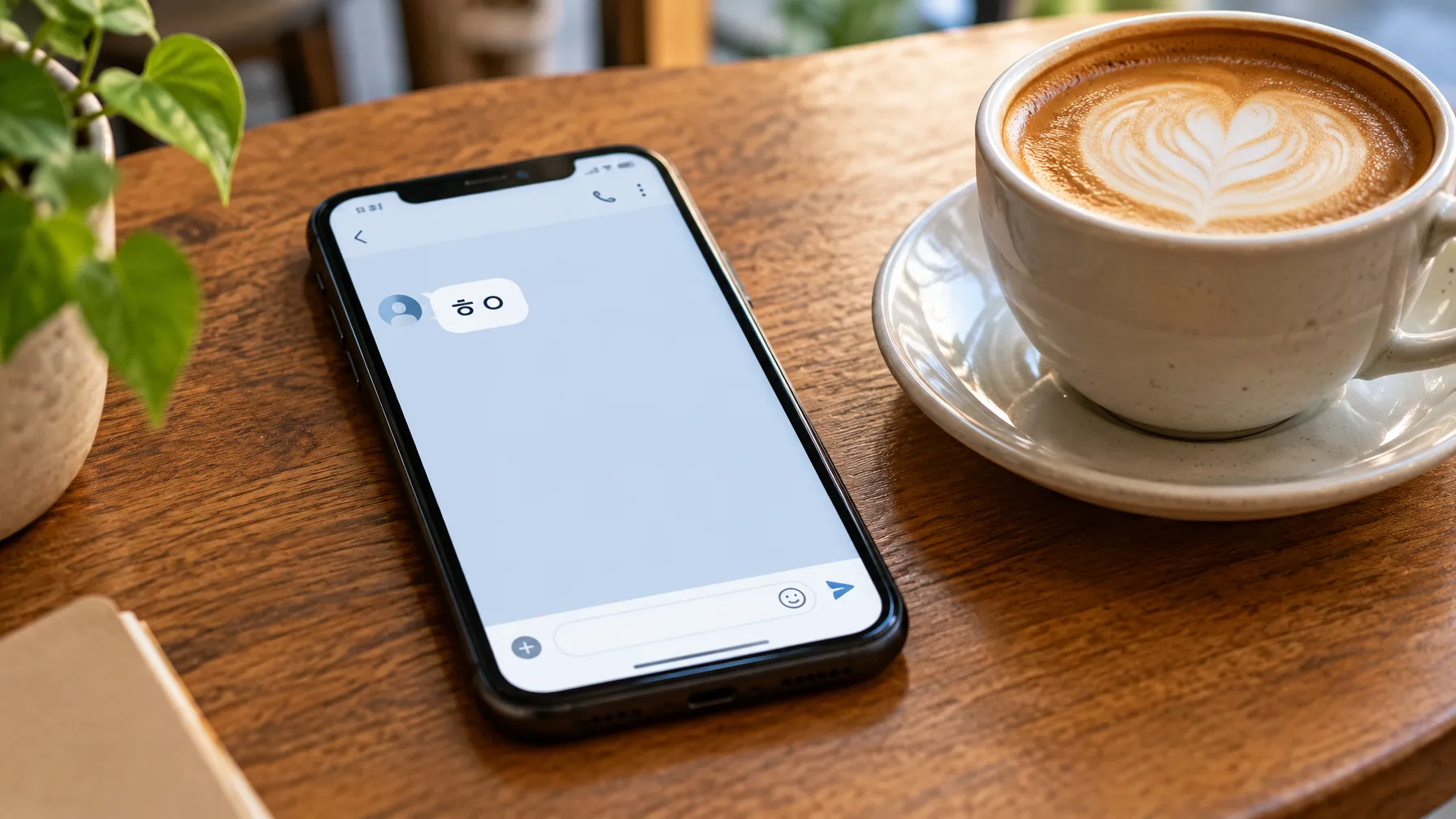
In a Korean text, very close friends can send the shorthand ㅎㅇ, which stands for ha-i (하이), the Korean pronunciation of English "hi." The standard greeting that works in any situation is annyeong haseyo (안녕하세요). That's the short version of how Koreans say hi in text messages. The rest is a ladder: the closer you are to someone, and the younger they are, the more casual your opener can get.
ㅎㅇ for close friends, annyeonghaseyo for anyone
 AI-generated image
Here is the whole ladder, ordered from safest to most casual. Each rung is explained below.
| Greeting | Tone | Who it suits |
|---|---|---|
| annyeonghaseyo (안녕하세요) | Standard, works in any situation | Anyone, including people older than you |
| annyeong (안녕) | Casual hi or hey | Close friends or people younger than you |
| annyong (안뇽) | Cute | Anyone you want to sound cute with |
| ha-i (하이) | English "hi" in Korean sound | Very close people |
| ㅎㅇ | Texting shorthand for ha-i | Very close friends |
| ha2 (하2) | Number-mixed shorthand for ha-i | Very close friends |
| yeoboseyo (여보세요) | Phone greeting | Calls, not texts |
Two things to know before you type
 AI-generated image
You need no special app or Korean fluency. You need two facts about the person you are texting: how close you are, and whether they are older than you. Korean greetings shift with age and status, and texting does not change that.
The age question matters most. The casual hi, annyeong, only fits someone your age or younger. If you cannot tell, you cannot safely use it. Reading the slang is easier, since ha-i is just the English word hi said with Korean sounds.
Annyeonghaseyo is the proper greeting, and Koreans really use it
 AI-generated image
A proper Korean greeting is annyeonghaseyo, the most common way to say hello in Korean. It also covers formal settings, and because it works in any situation, it's the one phrase you can send without checking anything first.
It's common enough to be a punchline. In one drama scene, a character answers the greeting with a sharp retort. The joke is built on the greeting itself. For more on formal and casual pairs, see Basic Korean Words: Formal vs Informal Hello, Thank You and Sorry.
Drop the ending and annyeong becomes a casual hey
Cut the back half off annyeonghaseyo and you get annyeong, a friendlier and less formal hi. It translates as either hi or hey, and it is how to say hi in Korean informal speech. Linguists call it a casual speech form, used with friends rather than strangers.
This is how Koreans say hey to a friend. It suits close friends and people younger than you, but not anyone older.
Slang hi: ha-i, ㅎㅇ and ha2
Korean texting slang for hi starts with ha-i (하이), which is literally hi in Korean, borrowed from English. It appears in text messages often. It carries the same limit as the shorthand: keep it for people you know very well.
ㅎㅇ shrinks ha-i to the first consonant of each syllable. It sounds exactly like ha-i, and it counts as a texting acronym, not a spoken level of speech, which makes it a quick way to greet a friend.
The third form mixes a number into the word. In ha2 (하2), the first syllable is ha. The 2 is read as the Korean word for two, which sounds like "ee." Together they say ha-i.
Annyong is the cute version
To sound cute in a text, change annyeong to annyong (안뇽). It is the greeting people choose when they want a softer, more playful tone. Treat it as a flavor of annyeong, so the same age caution applies.
Pick your greeting in three questions
- Ask whether the person is older than you, or whether you don't know their age. If yes, send annyeonghaseyo and stop there.
- If they're a close friend or younger than you, annyeong works. Swap in annyong when you want a cute tone.
- If they're a very close friend, ha-i or ㅎㅇ is fine. ha2 is the same word written with a number.
Older, or age unknown? Annyeong is the wrong hi
The usual stumble is sending annyeong to someone older. It fits only people your age or younger, never anyone above you in age or status. Texting does not loosen the rule, so no single casual hi works for everyone.
The fix is simple. Elders get the formal greeting, annyeonghaseyo, and so does anyone whose age you don't know. Send ㅎㅇ only to very close friends.
Yeoboseyo belongs to phone calls, not texts
Yeoboseyo (여보세요) is a hi, but it is the one you say when you pick up the phone. It does not belong at the top of a message. On a call it works whether or not you know the person on the other end.
Comments
No comments yet.