
Most Popular Korean Boy Names: Seo-jun and Ha-jun Explained
 AI-generated image
Seo-jun and Ha-jun were the most popular Korean boy names in 2024. Like most Korean given names, each has two syllables, placed after a one-syllable surname. Hanja are the Chinese characters Korean uses to write many names. They decide what a name means.
Seo-jun and Ha-jun top 2024: two-syllable names placed after a one-syllable surname
 AI-generated image
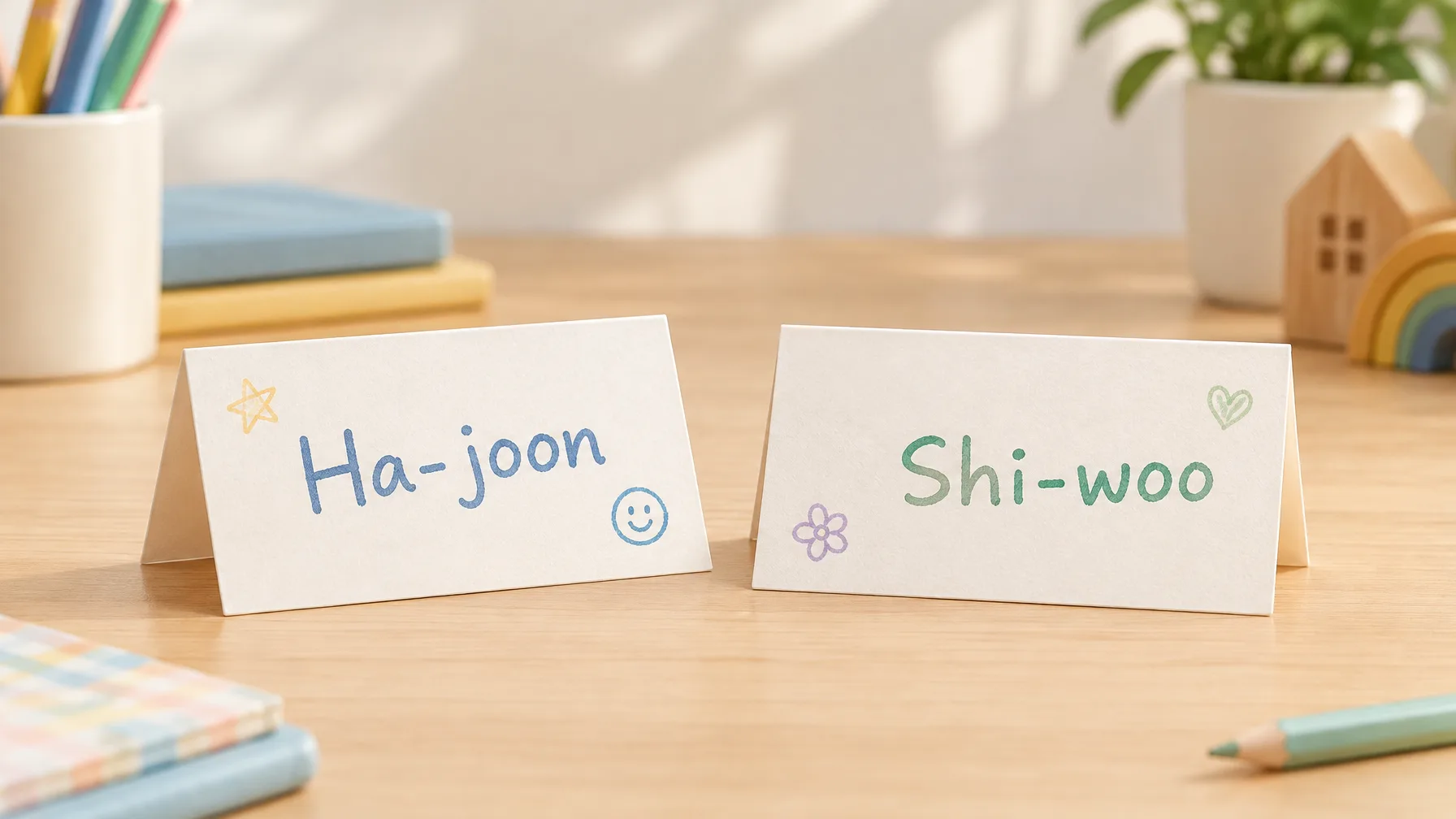
Ha-joon and Shi-woo also turn up often on lists of popular boy names in Korea. So if you are building a shortlist, those two are worth a look next to the leaders.
Parents say the names of friends and daycare classmates all appear in recent rankings. A single class can hold several children with the same name. A ranking is a snapshot: a celebrity or a TV character can send a name up or down fast.
Surname first, given name second, written joined or hyphenated
 AI-generated image
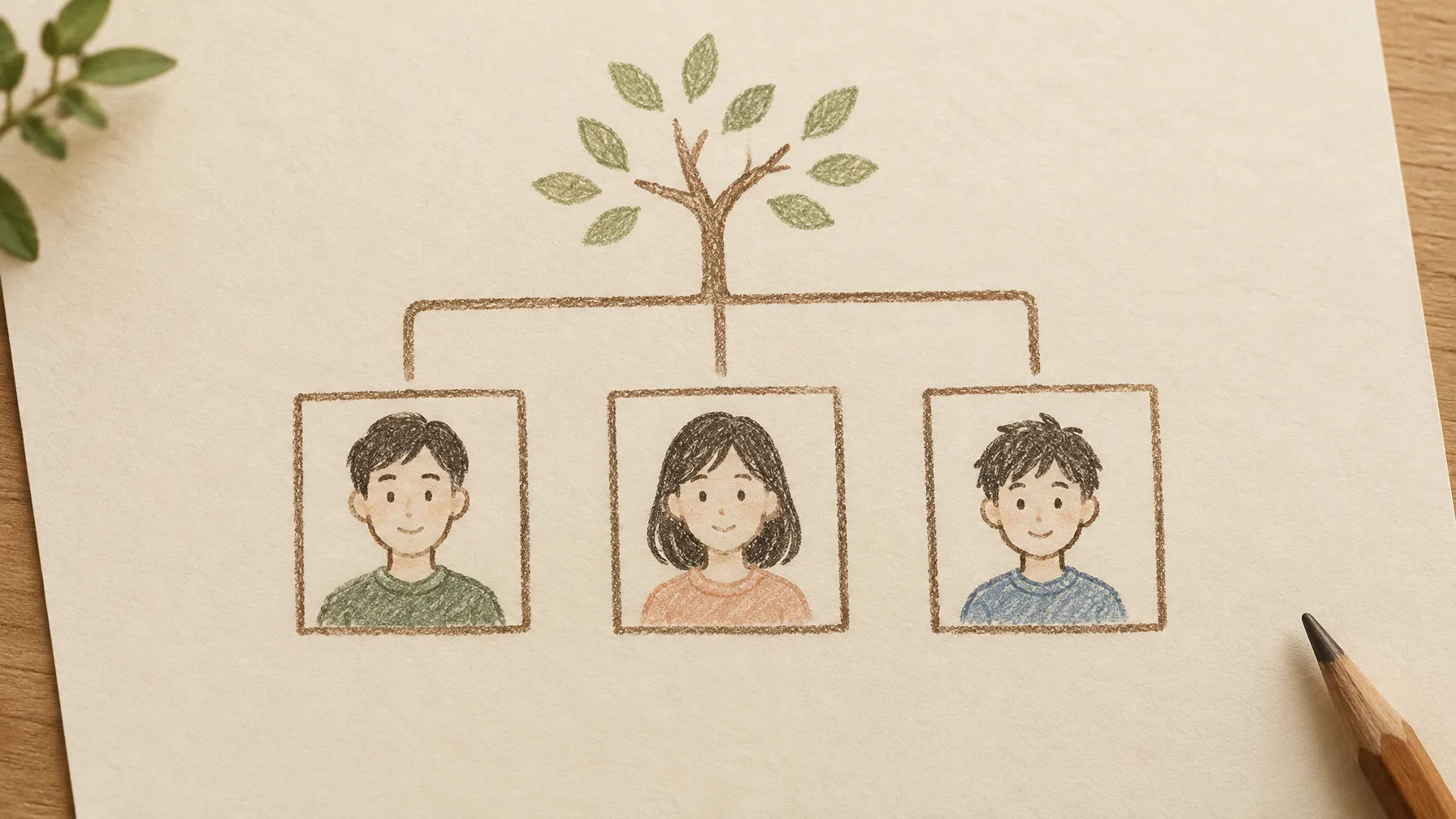
A Korean name has two parts, and the family name comes first. The personal name follows it. That is the reverse of the usual US order, so a name like Kim Seo-jun puts the family name at the front.
The usual shape is three syllables in total: one for the surname and two for the given name. The two-part given name can be written as one joined word or split with a hyphen. Both styles appear in English spellings, so treat the hyphen as a spelling choice.
One syllable traditionally marks the generation, and that is the dollimja
 AI-generated image
The short reason given names have two syllables is that they are built from two hanja, one character per syllable. The dollimja, or generation syllable, is one of those two. Traditionally it showed which generation a child belonged to, and siblings shared that character.
It was originally given to sons who carried on the family line. Today daughters may receive it too, and some families leave it out. A few families talk it over with the elders and skip it, choosing one easy-to-pronounce name instead. When two boys share a syllable, that is usually the generation marker at work.
Jun, Ho and Seok have common meanings, but the hanja pick the real one
Some syllables show up again and again in boys' names. Jun is glossed as talented, Ho as brave, and Seok as stone or strong. Boys' names lean toward strength, intelligence and leadership. The hanja behind them often stand for strength, long life and success, and in traditional society for honor too.
| Syllable | Common gloss | What to keep in mind |
|---|---|---|
| Jun | talented | One romanized syllable can stand for several characters |
| Ho | brave | Meaning follows the hanja the parents chose |
| Seok | stone or strong | Same sound, different character, different meaning |
| Maru | peak | A native Korean word, so no hanja behind it |
Each hanja has its own meaning, so parents pick characters that carry a hope or a good trait. The meaning of a Korean name depends on the hanja used to write it. Not every name is built that way, though. Maru is a pure Korean word meaning peak, given to a boy in the hope he will be the best at whatever he does.
Kim, Lee, Park, Jeong and Choi are the five most common surnames
Korea has about 300 common surnames, and Kim, Lee and Park are the biggest three. Jeong and Choi complete the top five. Kim alone covers roughly one person in eight. So a single syllable gets you a long way before the given name has to do the work of telling people apart.
The count of surnames in use rose about 800% between 2000 and 2015, as naturalized citizens joined the population.
Chul, bong and pil endings sound dated, while Ji-min and Hyun-woo suit any child
Old-fashioned names are easy to spot once you know the pattern. In current trends, names ending in chul, bong or pil feel very old-fashioned and are the least favored. A parent choosing today will usually steer away from them.
Some names work for both boys and girls. Ji-min and Hyun-woo can go to either, so a name on a boy list isn't always a boy-only name. Modern naming also leans toward names that are easy to say and pleasant to hear, with meaning in second place.
The law caps a name at five syllables and limits hanja to an approved list
Korean law requires a name to come from an approved hanja list of about 8,300 characters. A name also cannot run past five syllables in total, surname included. With a one-syllable surname, a given name can have up to four syllables, though two is the usual choice.
Four steps for reading any Korean boy name
- Split the surname from the given name. The surname comes first and is one syllable.
- Look for a shared generation syllable, the dollimja, among siblings.
- Ask which hanja carries the meaning, because one romanized syllable can stand for several characters.
- Check the ending (chul, bong and pil sound old-fashioned) and see whether the name is on current popular lists.
Try it on Kim Seo-jun. Step one gives Kim and Seo-jun. Steps two and three need information the romanization can't give you. That's whether a sibling shares a syllable, and which hanja the parents chose. Step four tells you the name is current, not dated.
A romanized syllable has no single fixed meaning
The most common mistake is trusting one gloss for one syllable. Meanings split by hanja, by combination and by pronunciation. A name-list entry is a typical reading, not the final one. The same Min appears as clever, jade and heaven. Some lists give Joon and Soo the same gloss, handsome.
Even for one family, the meaning is whatever those parents chose. That may differ from a list. Dialect can change pronunciation and sense, and some origins stay uncertain. The Yu in Yu-jun has no known origin. Certain names could come from Sino-Korean roots or from older Korean. One syllable people worry about gets its own look. Read Korean Names With Dark Meanings: Is Hyeon Really Dark?.
Writing a name in hangul comes next
Once you have a name you like, the next job is spelling it in Korean letters.
Start with Seo-jun and Ha-jun, then check the hanja
Seo-jun and Ha-jun are the names Korean parents pick most often these days. Both follow the usual pattern: a one-syllable surname, then a two-syllable given name. The hanja behind each name settle its meaning.
Comments
No comments yet.