
Is Kim a First Name or Last Name in Korea? It Comes First
 AI-generated image
In Korea, Kim is a family name, not a first name. Korean names usually put a one-syllable surname first and a two-syllable given name after it. Kim, Lee and Park alone cover nearly half the population. So Kim is a last name in Korea. A few details decide whether you read a name correctly in real life, and they are below.
Kim is the family name, and it leads
 AI-generated image
If you remember one rule, make it this: the first word of a typical Korean name is the family name.
Family name first, the reverse of the US habit
 AI-generated image
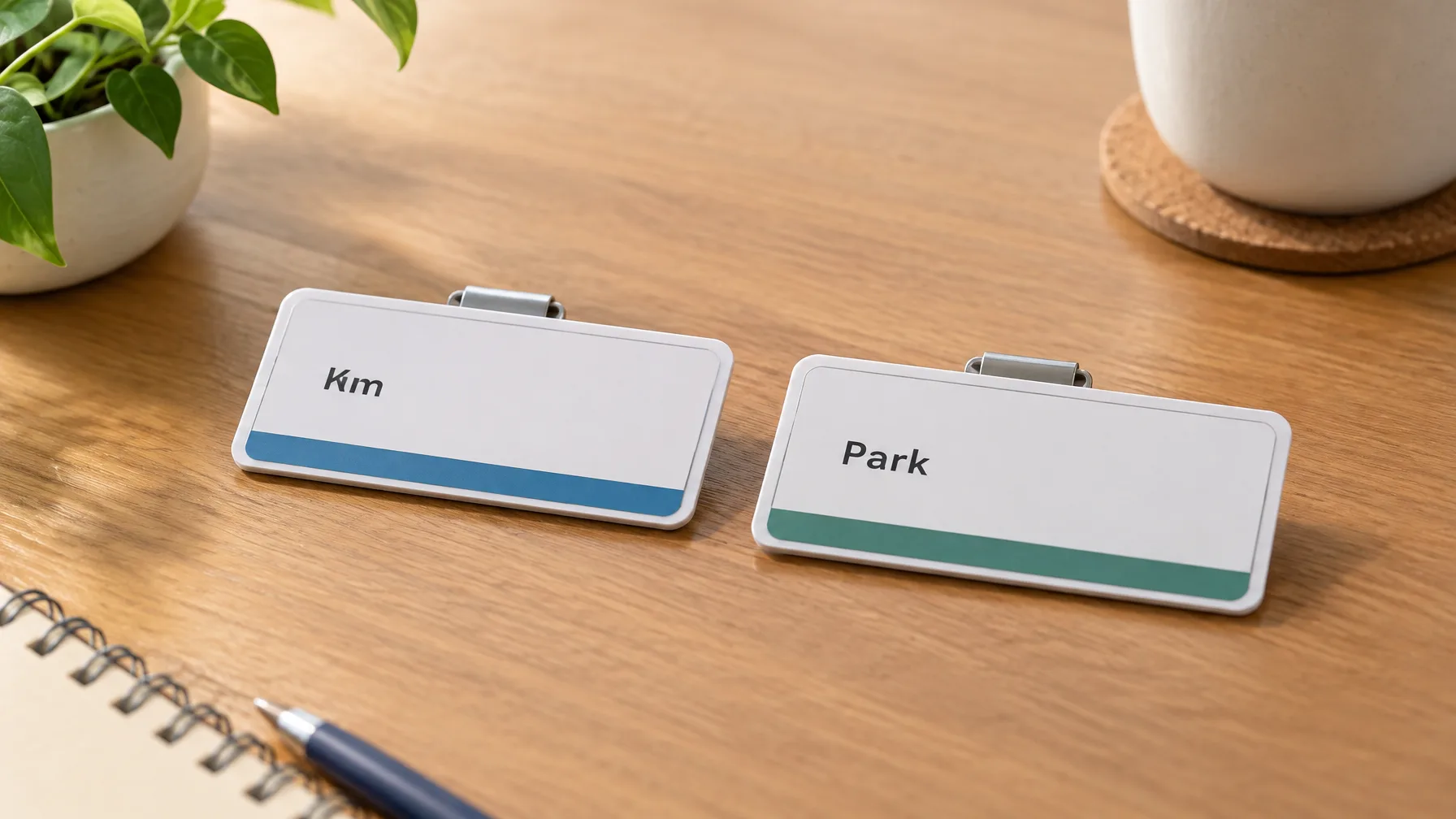
So, do Koreans put last names first? Yes. Americans say a given name and then a surname. Korean order runs the other way, with the family name at the front and the personal name after it.
The order also shapes how people address each other. Take a small group where the surnames are all different and nobody could be confused. There a person can be called by surname alone, with a title, as in "Assemblyman Kim." The given name drops out because the family name already points to one person.
Three syllables is the pattern, not a rule
 AI-generated image
Are Korean names always three syllables? No. Three is the usual shape: one syllable for the surname, then two for the given name. That is why most Korean names look so compact on paper.
The exceptions are real, though. Some Korean surnames have two syllables, such as Namgung, Jegal and Seonu. A given name can also be shorter or longer than two syllables. Put a two-syllable surname together with a two-syllable given name and you get a four-syllable name. So counting syllables alone won't always tell you where the surname ends.
Fewer than 300 surnames, which is why so many people share one
How many Korean surnames are there? Fewer than 300. A list that short, topped by Kim, Lee and Park, explains why Korean names seem so similar to newcomers. Lots of unrelated people simply share a family name.
Surnames also became universal by law. Under new household registration (census) rules in 1904, every Korean had to register a surname. The popular names still draw people today. Naturalized Korean citizens who choose a Korean surname often pick Kim, Lee, Park or Choi.
Abroad, many Koreans flip the order
This is the most common source of mix-ups. Outside Korea, many Koreans reverse their names so the surname comes last, matching local forms and cards. That helps with paperwork, but it can confuse even other Koreans.
| Where the name appears | How Kim Eebak is written | Which part is the surname |
|---|---|---|
| In Korea | Kim Eebak | Kim (first) |
| On many documents and cards used abroad | Eebak Kim | Kim (last) |
A name written "Eebak Kim" doesn't show on the page alone whether the person uses Korean order or the flipped one. Ask which order they use before you decide which part is the family name.
Korean women keep their own surname after marriage
A Korean woman keeps her surname after marriage, unlike the common US habit of taking a spouse's name. A married woman's surname does not change to match her husband's.
Kim has one Hangul spelling but several hanja
Can Kim be written more than one way? In Hangul, the Korean alphabet, there is only one way to write it. In hanja, the Chinese characters used in Korean names, several different characters can be used for Kim. So two people named Kim may write the surname differently in hanja while it looks identical in Hangul and in English.
Curious how your own name would look in Korean letters?
A three-step checklist for reading a Korean name
- A typical three-syllable name is a one-syllable surname plus a two-syllable given name. The first syllable is the family name.
- Watch for the rarer two-syllable surnames such as Namgung, Jegal and Seonu, which push a name past three syllables.
- Expect the order to be flipped on documents and cards used abroad, and check which order the person uses.
Verdict: Kim is the surname, so it comes first
Kim is a last name in Korea, and it comes first. Abroad many Koreans flip the order, so check which order a person uses before you decide which part is the surname. With that in hand, Korean names stop looking like a puzzle, and you can greet the next Mr. or Ms. Kim you meet with confidence.
Comments
No comments yet.