
Translate My Name in Korean: Write It in Hangul by Sound
 AI-generated image
Translating your name into Korean means writing it in Hangul by its closest sound. Examples are Michael (마이클) and Jeff (제프). Hangul can't reproduce every English sound, and you only have a true Korean name if someone gave you one. Plenty of pages promise to translate your name in Korean as if it were a word swap. What you actually get is a spelling. Once you know that, the rest of this guide is easy to follow.
Your name in Korean is a Hangul spelling by sound, not a translation
 AI-generated image
Common English names already have a settled spelling. Michael is written (마이클) everywhere, so nobody has to invent anything. Short names are the easiest case, because Korean speakers can say them without stumbling. Jeff (제프) is a good example.
The official rulebook for this job is the standard for writing foreign words in Hangul (외래어 표기법). Name converters follow it, which is why their answers for common names agree with each other. Think of the result as your name in Korean letters. It's not a different name.
A Korean name is built differently from an English one
 AI-generated image
A traditional Korean name is a one-syllable family name (seong) plus, most often, a two-syllable given name (ireum). Some families add a shared generation syllable called hangnyeolja, but it is optional. The family name comes first, the reverse of the usual English order.
Korean names can be written in Hangul or in hanja (Chinese characters), though Hangul is by far the most common today. Korea also has relatively few family names. Kim, Lee and Park are the three you will meet most often.
R and L both land on ㄹ, and extra vowels creep in
 AI-generated image
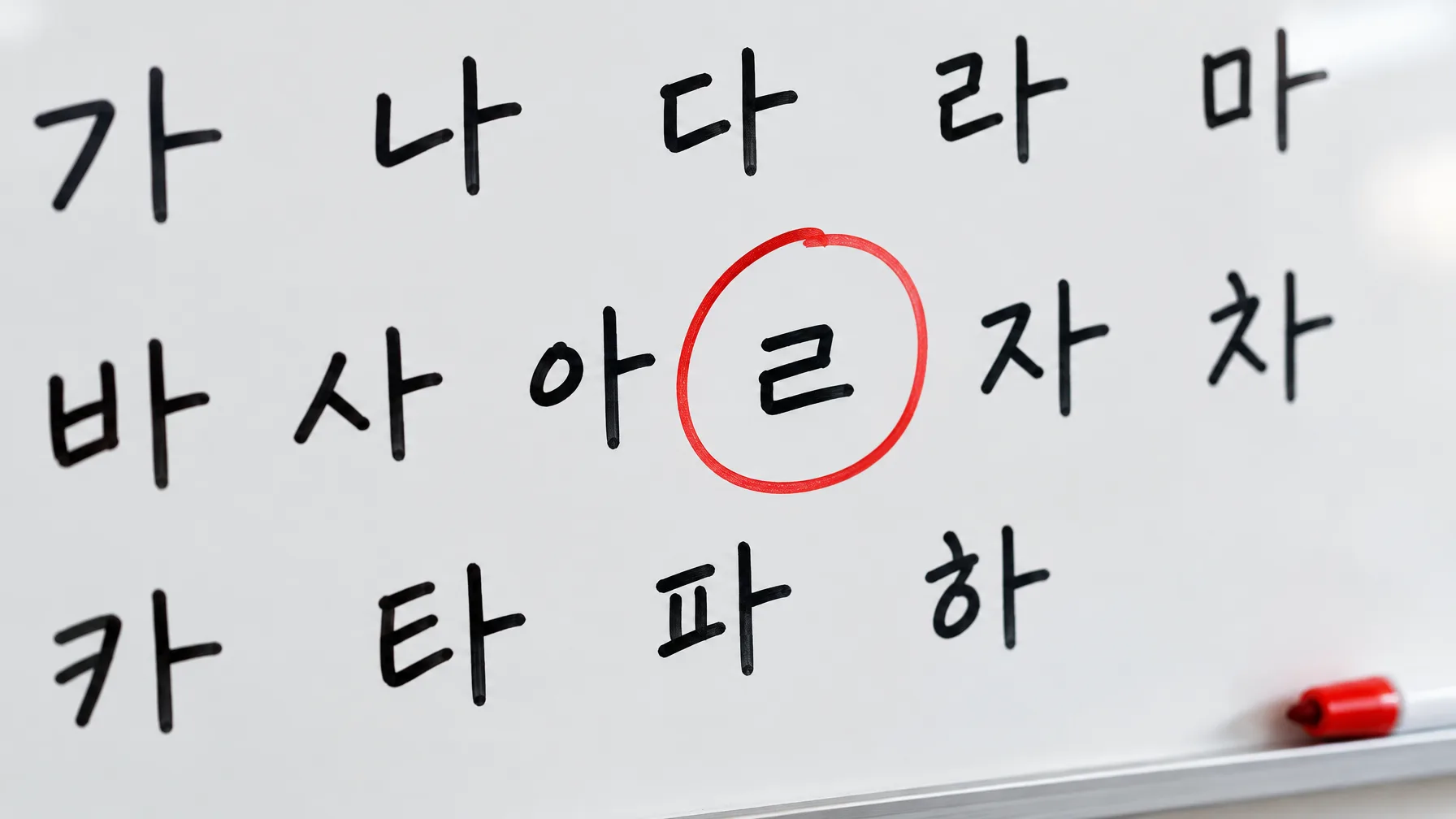
English has two sounds, R and L, where Korean writes one letter, ㄹ. In Hangul spelling the two sounds merge, and a reader cannot tell which one your name started with. That is the clearest example of why the result is a close match rather than an identical sound.
Korean syllables are built differently too. Clusters of consonants and final consonants get vowels added so they can be written. That makes the name longer in syllables than it is in English. A one-beat name can come out as two or three beats.
Rarer names get a best guess instead of an official spelling
Fixed spellings exist for popular names, not for every name. If yours is uncommon, there may be no official Hangul version at all. What you get is a spelling worked out from the rules. Two people can reasonably land on different versions.
Longer names raise the same problem. Every extra consonant cluster is another place where a vowel gets added. The guess drifts further from what you actually say. Pick one version and use it consistently.
Finding a Korean name means choosing one yourself
Making a real Korean name is a different job from spelling your own. It means creating a brand-new name, not converting the one you have. You can also skip it entirely. A short name is easy for Koreans to say, so you may not need a separate one.
If you do want one, the simplest route is to pick it yourself, the way a parent would. Choose a family name plus a given name you like. How Koreans choose English names is the reverse direction. See Korean English Names: John, Grace, Hannah and Eugene.
Only a few names carry a meaning you can translate
Some Korean names are also ordinary Korean words, so they can be translated by meaning. Frost (서리), wisdom (지혜), grace (은혜) and sky (하늘) are examples. This works only for names that have a meaning in Korean to begin with, and your English name almost never will.
Even then, the English meaning may not work as a name. Take Jihye (지혜): rendering it as "Wisdom" in English sounds odd. A meaning-based name suits a Korean name you pick, not your English one. How readers interpret what Korean names mean is a separate topic. See Korean Names With Dark Meanings: Is Hyeon Really Dark?.
Name generators do the spelling and stop there
A Korean name generator is a transliteration tool. You type a first name, middle name and surname. The Hangul spelling comes back right away, often with a Romanized version based on Revised Romanization. Some sites will email you a name card. Some generators use a large language model to weigh letter choice, pronunciation and cultural context.
The output is meant to be a fairly accurate guide to how the name sounds in Korean. It's not a replacement for professional name translation, and for rare names it's still a rule-based guess. Treat it as a useful first draft.
Three assumptions that cause trouble
The first mistake is treating a generator result as official. A name can also have several romanized spellings depending on the system and personal preference. So there's rarely one single right answer. The second is assuming that a Korean name and an English name that sound alike match each other. Often that's just coincidence.
The third mistake matters most: using any spelling on official papers. Certified translation of documents such as a name-change certificate is a paid service. One provider charges $24.95 per page of up to 250 words. It doesn't give you a new Korean name. You have to supply the Korean names and terms already on the related documents.
You need to check whether the receiving office will take the translation. Any refund or correction promise covers only the offices on the provider's own list. Inconsistent spacing, hyphens or name order can also hold up a visa or leave records that don't match. Keep one version across your documents.
Sorting out which version of your name you need
| Kind | What it is | What it can do | What it can't do |
|---|---|---|---|
| Hangul spelling by sound | Your name written in Hangul | Lets Korean speakers read it aloud. Short names like Jeff work well | Can't match every English sound. R and L merge into ㄹ |
| Meaning-based Korean name | A Korean name you pick. An example is 하늘 (sky) | Gives you a name with a real Korean meaning | Isn't your English name translated. The meaning can sound odd in English |
| Official-document rendering | Certified translation | Translates your papers | Creates no name. Acceptance isn't guaranteed |
- If you want Koreans to read your name aloud, spell it in Hangul and keep that one version.
- If you want a name with a Korean meaning, choose it yourself rather than expecting a conversion.
- If you need paperwork, use a certified translation and give it the Korean names already on your documents.
You can't translate your name into Korean the way you translate a word. What you get is a Hangul spelling of its closest sound. A real Korean name is a separate thing that you would have to choose yourself.
Comments
No comments yet.