
Korean Names With Dark Meanings: Is Hyeon Really Dark?
 AI-generated image
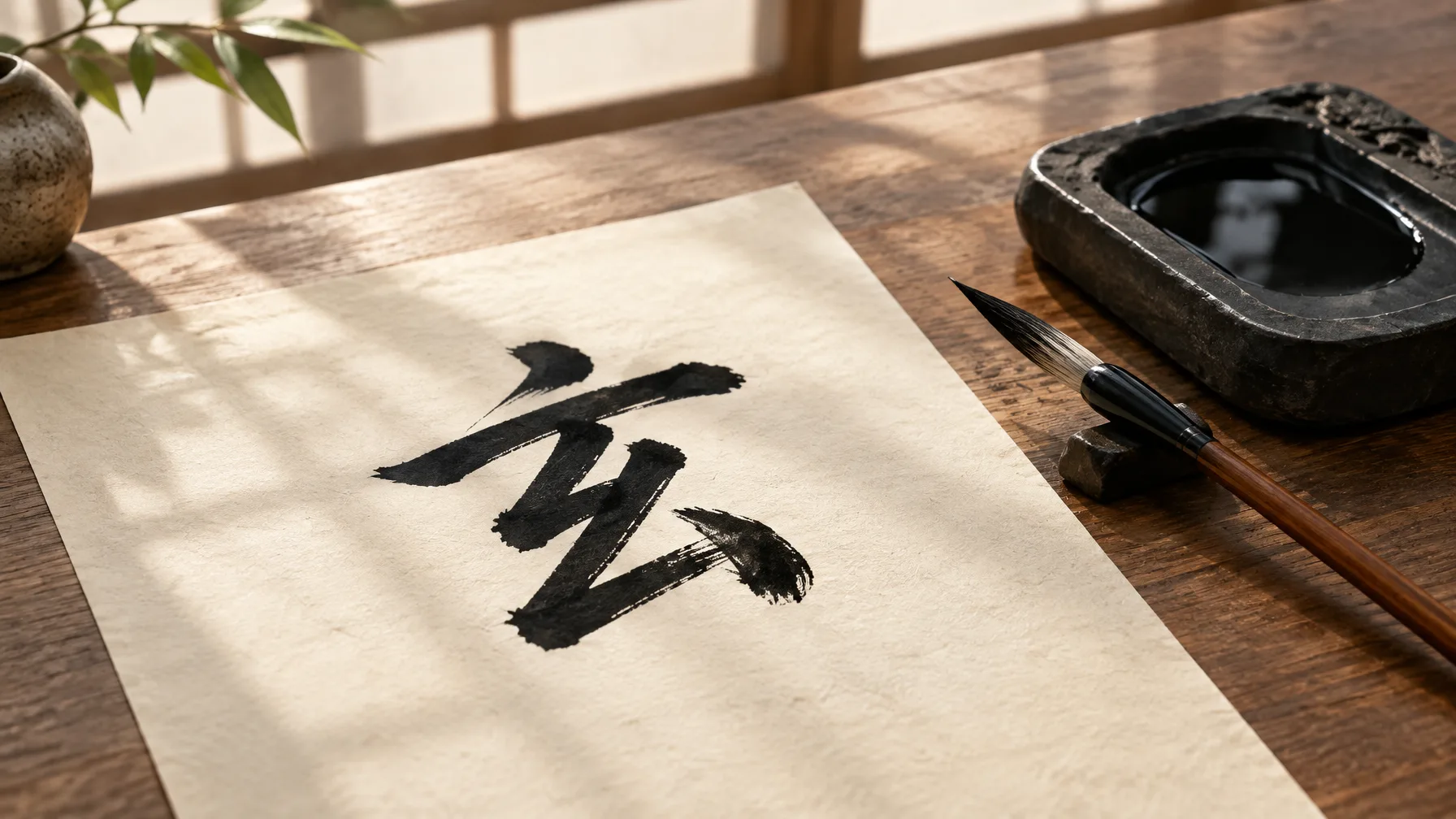
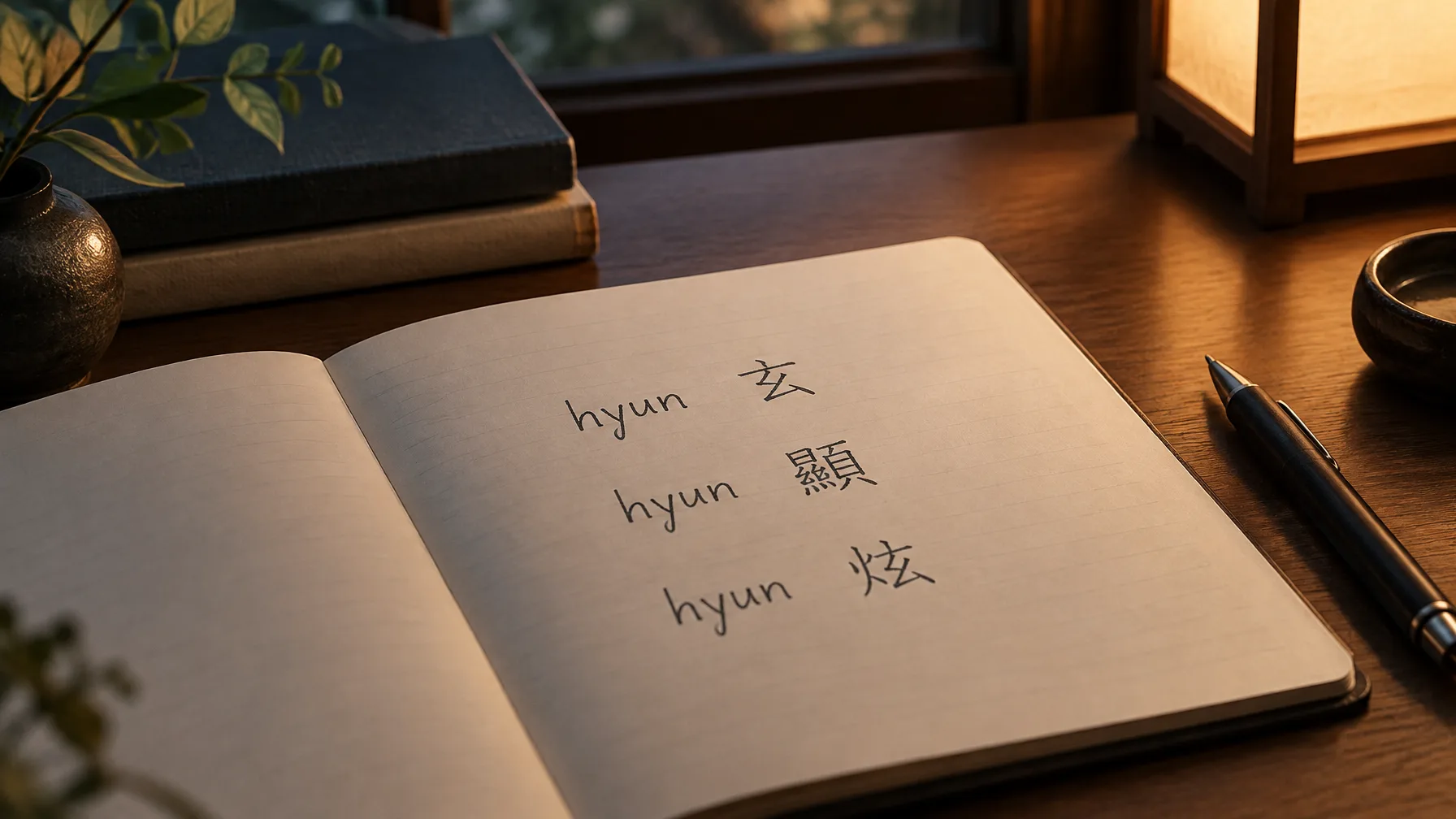
A Korean name like Hyeon-seok can be written with 玄 (hyeon), a hanja, one of the Chinese characters many Korean names are built from, that carries the sense of dark, black, mysterious. But the same sound can also be written with 賢, which brings in wisdom, or 鉉, the hook for lifting a cauldron. So the sound alone doesn't tell you the name is dark. That's the catch with Korean names with dark meanings. The darkness lives in a character, not in the syllable you hear. Many names that look dark turn out to be bright once you see the hanja. A few really do carry a night or shadow character. Below you'll find a small sound-to-hanja table and a quick check you can run on any name.
Hyeon is dark only when the family writes it with 玄
 AI-generated image
So, are there Korean names with dark meanings? Yes, a few. But very few Korean names are dark in themselves. A dark reading comes from one specific character, and that character has to be the one the family picked.
Each syllable of a Korean name often comes from a hanja, and one sound can map to several characters. Read a name off a list by sound alone and you are guessing which character sits behind it.
What 玄 means in Hyeon-seok and Gwang-hyeon
 AI-generated image
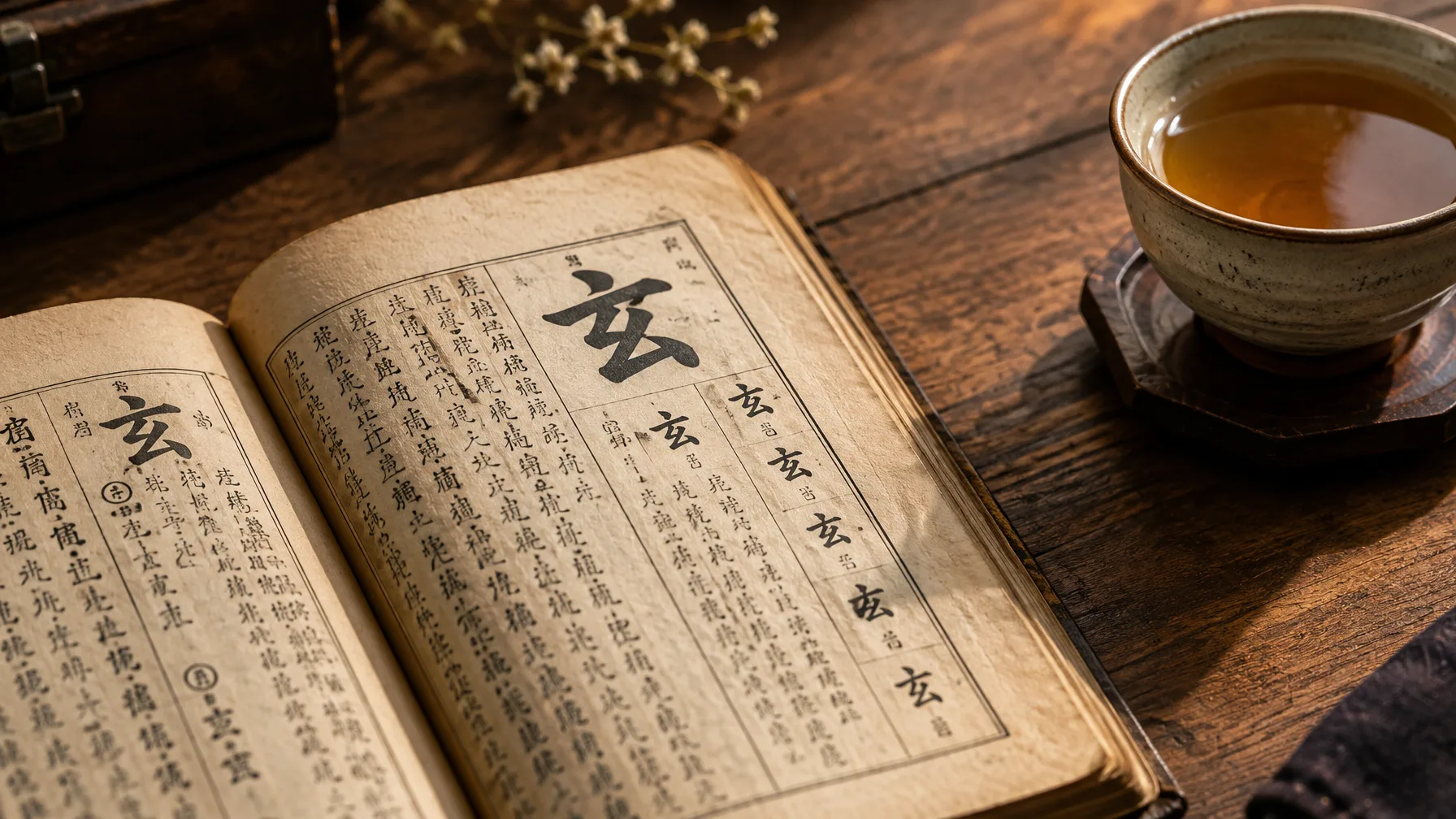
Start with the character itself. In Hyeon-seok (현석), 玄 reads as "dark, black, mysterious." In Gwang-hyeon (광현), the same 玄 is glossed as "dark; profound, mysterious." Notice how "profound" and "mysterious" come along with "dark." The character leans toward depth as much as gloom. That is why it can sit comfortably in a name.
Hanja are only one source of Korean name meanings. A name can also be a plain Korean word with no Chinese character behind it. Seori (서리), for example, is just the Korean word for "frost." So the first question for any name is whether it comes from hanja or from native Korean. The answer changes how you read it.
One sound can read dark in one family and bright in another
 AI-generated image
The table below lines up Korean name hanja with their meanings, for the sounds that come up most often when people hunt for dark names. Read it row by row, and the same sound turns up under very different characters.
| Sound | Hanja | Meaning | Reads dark? |
|---|---|---|---|
| Hyeon | 玄 | dark, black, mysterious | Yes |
| Hyeon | 賢 | wise | No |
| Hyeon | 鉉 | a tool for lifting a cauldron | No |
| Gwang (in Gwang-hyeon) | 光 | light | No |
| Hyeon (in Gwang-hyeon) | 賢 | wise or virtuous | No |
| Hyeon (in Gwang-hyeon) | 玄 | dark; profound, mysterious | Yes |
| Jae | 宰 | kill, rule | Depends on the reading |
| Man | 晩 or 晚 | night, evening | Night reading |
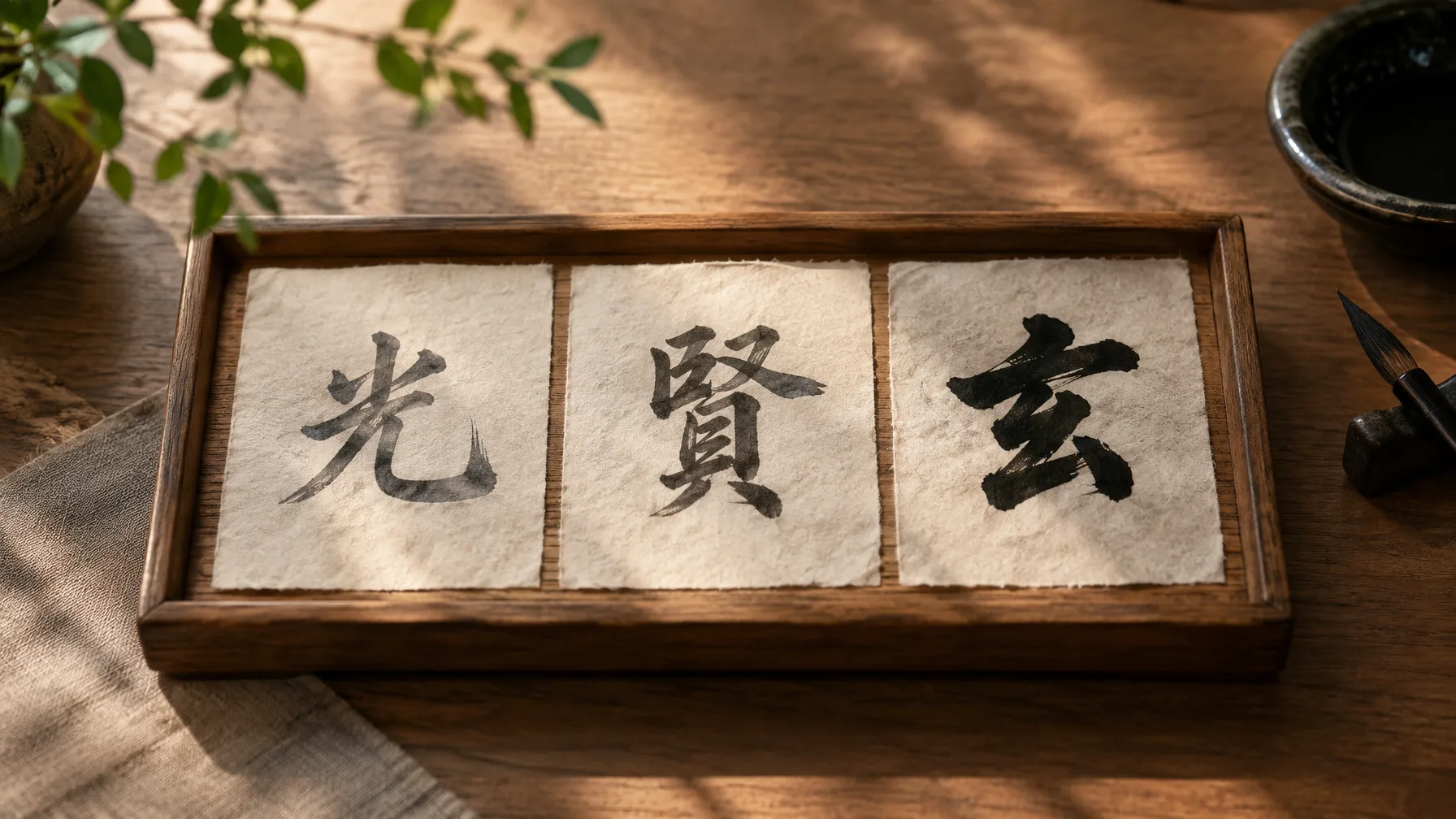
Look at Gwang-hyeon. The options are 光 (light), 賢 (wise or virtuous), and 玄 (dark). Most of those are bright or positive, so calling the name dark would be a stretch. The "dark" label only applies if the family chose 玄, and a bare list can't tell you that.
The same logic holds for Korean names meaning dark or Korean names that mean darkness. A few characters fit those labels, but each is only one option among several for its sound, and the family's choice decides which one the name really uses.
If you are scanning dark Korean boy names, three come up often. Jae-seong (재성) can use 宰 (jae), a character that can mean both killing and ruling. The ruling half is the milder one, and it's easy to see why a family might pick the character for that sense.
Seung-man (승만) pairs 承 (seung) with 晩 (man), which means night. The best-known bearer is Syngman Rhee (1875-1965), the first president of South Korea. Korean names meaning night, like this one, are mostly a matter of that single character.
Jeong-man (정만, 情晚) sets 情 (jeong), the character for feeling, sentiment, or emotion, beside 晚 (man), the character for evening or night. The whole name pairs feeling with evening, so it doesn't read as gloomy. A search for the word night simply caught the 晚 and pulled the name along with it.
Kud comes from Korean myth, where it stands for darkness and evil
Kud is a different case. In Korean myth it is a figure that stands for darkness and evil. One name list sorts it among boys' names that mean darkness, and no other Korean entry appears on that list. Treat it as a mythic figure first, not as a name you would expect among everyday Korean given names.
One extra letter in the romanization can change a name's meaning
Spelling matters too. Kwan means "strong person," but add a g and you get Kwang, which means "rough, wild." A single letter changes the name. Before you read meaning into a name, make sure you have the right spelling.
A name's meaning is part of how it feels to live with it.
Why online name lists can steer you wrong
Plenty of lists of name meanings are submitted by users, and accuracy isn't guaranteed. That makes them a shaky basis for calling a name dark. Treat what you read there as a lead to check, not as the final word.
Keyword searches add their own errors. A search for "white" can catch Baek-hui (백희), where 白 means "white, pure," which is a positive meaning. It can also catch Rina, where "white" comes from white jasmine. Neither name is dark. They landed on the list because of one word.
Lists of "darkness" names also blend cultures. One mixes Japanese, Welsh, Greek, and Sanskrit entries, so it says little about Korean names in particular. The word dark does appear in names elsewhere. Douglas, for instance, comes from Gaelic dubh ("dark, black") joined to glas ("stream"). That tells you nothing about Korean hanja.
Many baby-name articles show only Korean names with deep meanings, drawn from nature, virtue, and stars. Their examples are all auspicious: luck, beauty, good fortune. That's accurate as far as it goes, but it gives you no way to test a dark reading.
Ask for the hanja before you call a name dark
Only a specific hanja, such as 玄, with its dark, mysterious sense, or 晩, with its night, makes a name read dark. The same sound usually has brighter hanja options too. Check which hanja a name actually uses before calling it dark.
- Get the exact spelling, since one letter can change the name.
- Ask whether the name uses hanja or a native Korean word.
- Look up the hanja for each syllable separately.
- Find the full meaning of each character, not just the first gloss.
- Read the whole name together before deciding it is dark.
Curious about the English names many Korean families choose? Korean English Names: John, Grace, Hannah and Eugene makes a good companion read. Names are small stories. The next time one catches your eye, ask about the character behind the sound. People usually love to explain it.
Comments
No comments yet.