
Korean Banchan Explained: What Are They and What's on the Table?
 AI-generated image
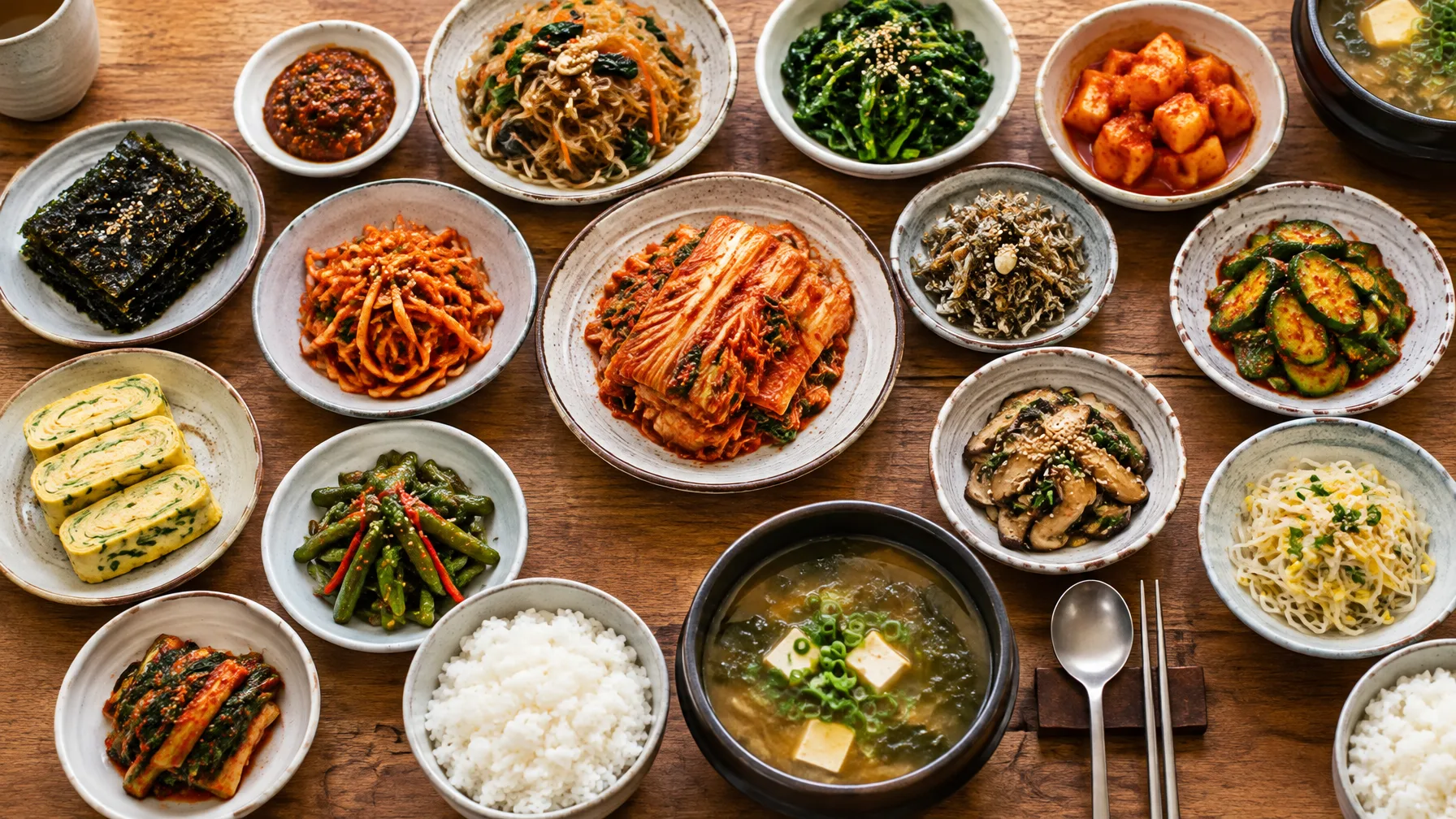
Banchan are the small side dishes served alongside rice in Korean meals. A table setting is named by how many dishes it holds: 3, 5, 7, 9 or 12 cheop. The 12-cheop spread comes from Korean royal court cuisine. If you've only seen a Korean table in photos, it can look like a puzzle of tiny plates. It's easier to read than it seems, and the pieces below show you how.
Banchan are the side dishes, and the cheop number counts them
 AI-generated image
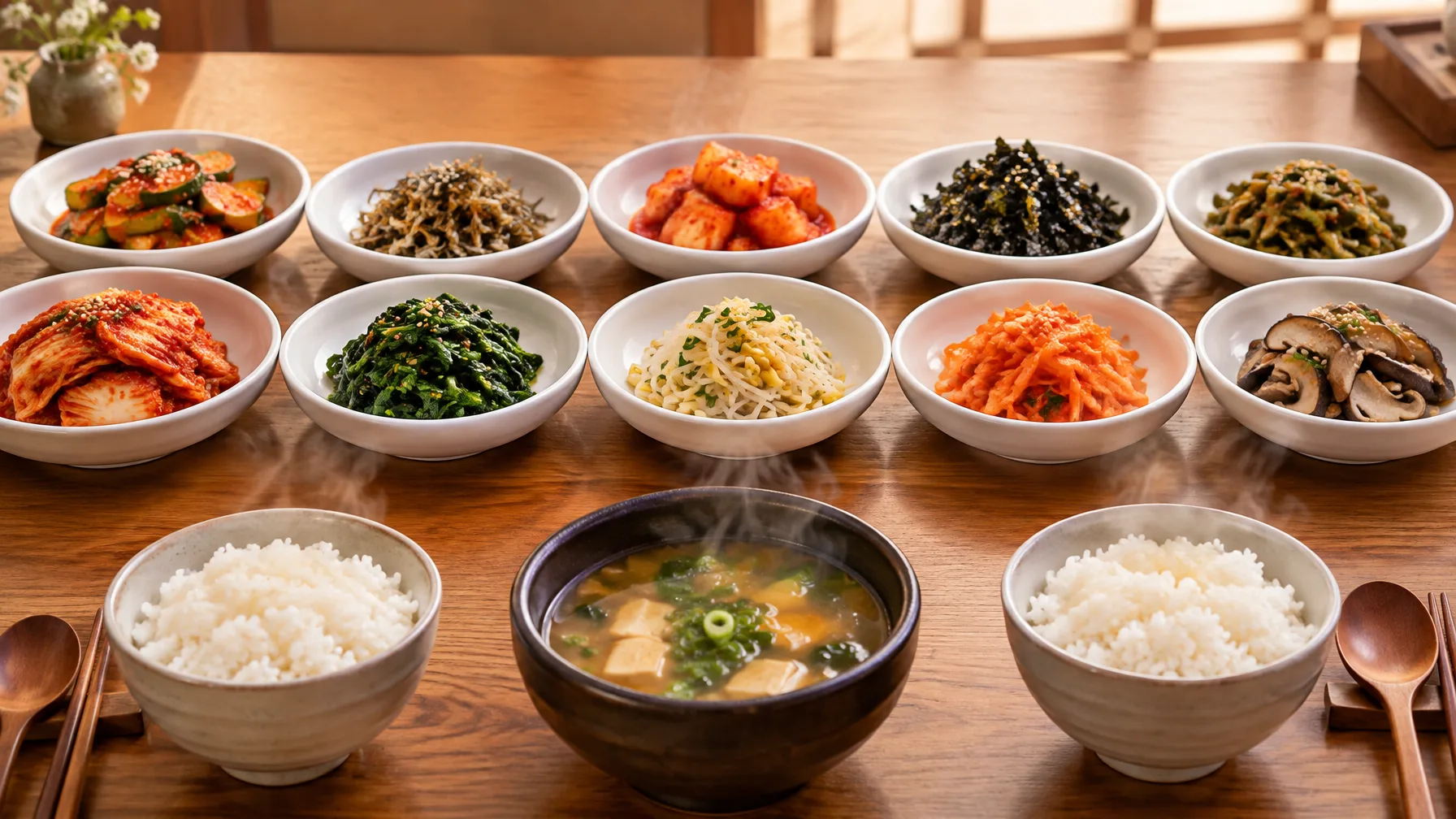
Banchan (반찬) are the small dishes that land around your rice and soup, and everyone at the table shares them. Koreans count a full table in cheop (첩), by how many dishes are on it. A 3-cheop table is the simplest. A 12-cheop table is the royal-court spread.
So what lands on the table? Kimchi, namul (seasoned vegetables), jeon (pan-fried pancakes) and braised dishes. Tofu and seafood show up too. Three things you shouldn't assume: that every restaurant brings them free, that every restaurant refills them, or that they come vegetarian or gluten-free. Each of those gets its own section below.
Rice, soup and kimchi anchor the table, and banchan fill in the rest
 AI-generated image
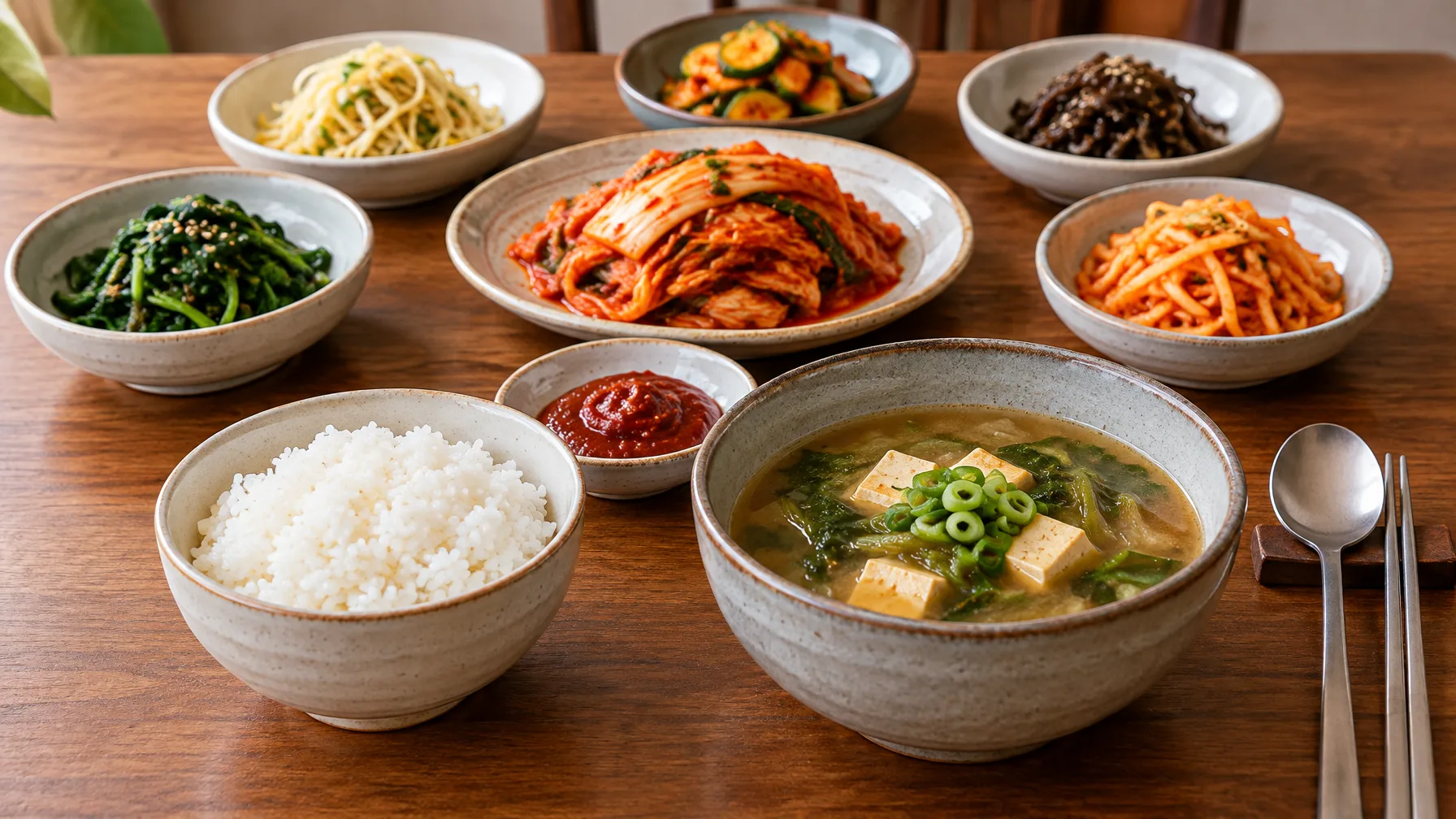
A basic Korean table is rice, soup, gochujang (a red chili paste), kimchi and several banchan. Rice and soup are the core. The small dishes are what make it a full meal: small, flavorful plates that finish it off. In many Korean homes the table is crowded with them at every meal.
Why do formal meals come with more of them? Because the number of banchan is how a table shows its formality. The more formal the meal, the more banchan you get.
Making them takes effort. Say you cook bulgogi or doenjang jjigae (a soybean paste stew) at home. Dinner can end up as rice, that one main dish and kimchi. Preparing a spread of banchan is steady, unglamorous work that nobody notices until it's missing.
Home cooks have workarounds. When the usual plates start to feel repetitive, a bibimbap week or a gimbap week helps. You slice and stir-fry the fillings ahead of time and keep them in the fridge. Then you mix them into rice or roll them up, and the banchan become the meal itself.
Kimchi, namul, jeon and braises make up the usual cast of small plates
 AI-generated image
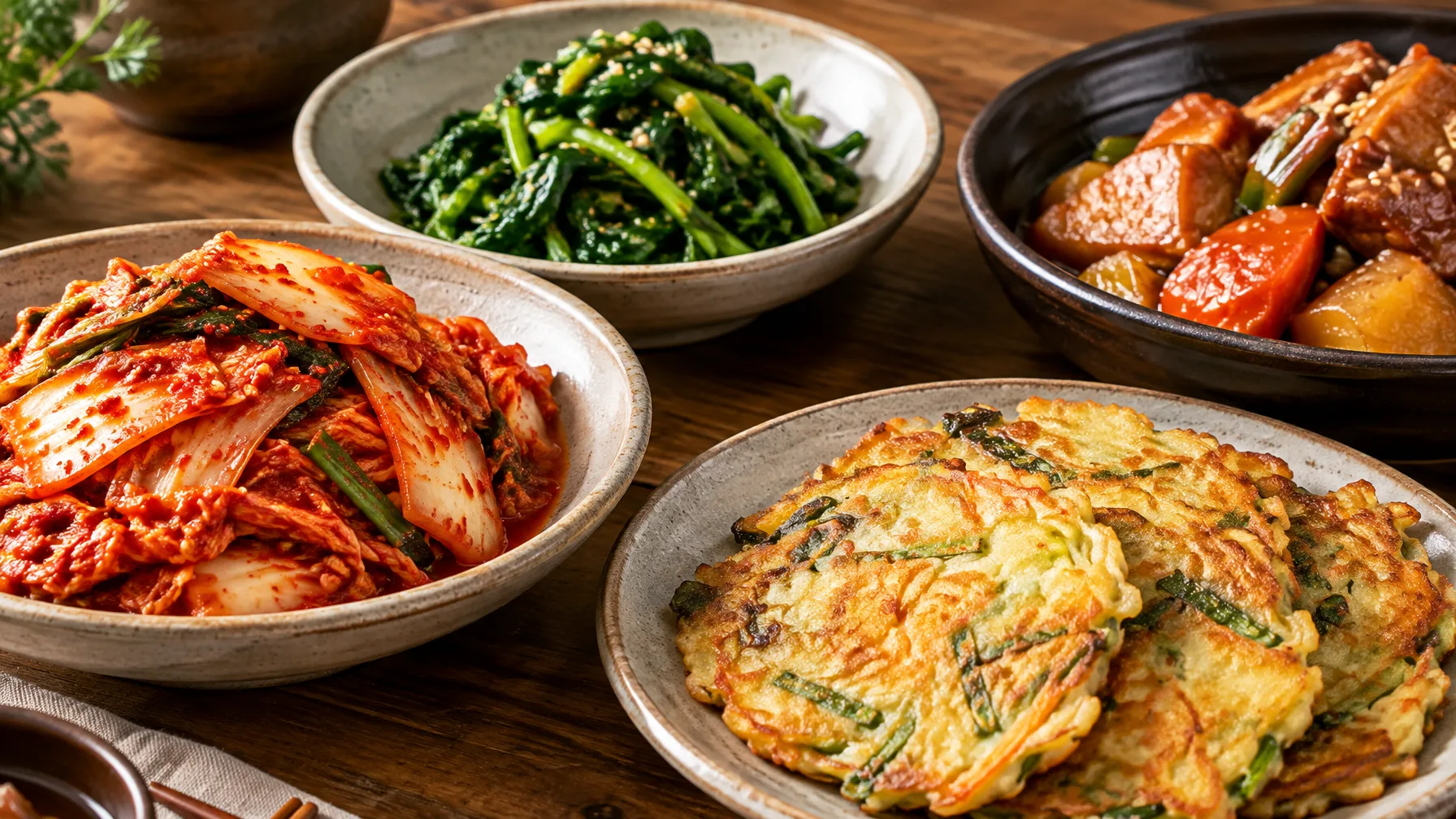
Start with kimchi, the best-known banchan. It is vegetables fermented with a mix of Korean seasonings. Kimchi counts as banchan, but it is so central that some lists treat it as a separate category. There are many kinds. Pa kimchi, made with green onions, is among the boldest and most strongly flavored. Bok choy kimchi is a good use of a garden that produces a lot of it.
Namul is the vegetable side. Cooks steam it, blanch and toss it, or stir-fry it, and the seasoning can be sesame oil, salt, vinegar, soy sauce, dried chili, minced garlic or minced scallion. Seasoned soybean sprouts, spinach and carrot are the ones you'll meet most. Radish strips and seasoned cucumber count as namul too. It goes well with plain rice or grilled meat. It's cheap, too: a bag of soybean sprouts costs about ₩2,000 at most grocery stores.
Jeon is a broad family of pan-fried food, anywhere from savory pancakes to battered bites. The ones you'll meet most are pajeon (green onion), kimchi-jeon and gamja-jeon (potato). Donggeurangttaeng are little Korean meat patties dipped in egg and fried until golden. Baechujeon is a traditional napa cabbage jeon, and hobak mari is zucchini served rolled. Home cooks fry big platters of mixed jeon before major holidays like Chuseok. The meat patties and kimchi-jeon come out crisp outside and soft inside, and they're worth eating straight from the pan.
Then come braised dishes, tofu, eggs and seafood. Jangjorim (a soy-braised side) or braised mackerel with rice, kimchi and a few vegetable banchan makes an easy dinner. Dubu jorim, braised tofu, takes about 20 minutes. Pan-fried tofu and steamed egg are the quick protein plates. Mayak eggs are a seasoned egg dish. Stir-fried anchovies, seasoned shredded squid and stir-fried zucchini round things out. The list isn't fixed, either: japchae (glass noodles) is a dish on its own, and it's also a side that turns up.
| Family | What it is | Typical examples |
|---|---|---|
| Namul | Steamed, seasoned or stir-fried vegetables | Soybean sprouts, spinach, carrot, cucumber |
| Jeon | Pan-fried pancakes and battered bites | Pajeon, kimchi-jeon, gamja-jeon, baechujeon |
| Braised (jorim) | Savory simmered dishes | Jangjorim, braised mackerel, dubu jorim |
| Tofu and eggs | Quick protein plates | Pan-fried tofu, steamed egg, mayak eggs |
| Seafood and stir-fries | Small cooked or seasoned plates | Stir-fried anchovies, seasoned shredded squid, stir-fried zucchini |
Want to go deeper on the headline dish? Korea's National Dish: Kimchi and How It Fits Every Meal covers why it turns up at nearly every table. If you cook, more than 60 authentic banchan recipes are out there. Some, like a bok choy and shrimp stir-fry, take only 15 minutes.
Counting plates tells you which cheop table you are sitting at
Cheop is just a count of side dishes. It climbs through 3, 5, 7 and 9 and tops out at 12, and every step up means a more formal table. The families of dishes stay the same at every level. A namul, a braised dish and a jeon make a good picture of a modest table. A bigger table has room for the rest, like tofu and seafood.
Here is a simple way to read a table when you sit down:
- Find the rice and the soup first. They are the core, not part of the side-dish count.
- Spot the kimchi and the red gochujang.
- Pick out the namul, the seasoned vegetables.
- Look for a braised dish and a pancake.
- Count the remaining plates to see how formal the spread is.
Not sure when to start eating them? Are you supposed to eat banchan first? The short answer deals with that. Typical Korean Dinner: What's on the Table and How to Eat It walks through a regular evening meal.
Free refills are common, but they are not a rule
Plenty of restaurants serve banchan free and refill them, but not all. Some charge extra for special banchan, limit refills, or serve them only with certain meals. A free first round doesn't mean a free second one. Free refills of basic banchan aren't a universal rule.
There is a business reason for the variation. Unlimited refills can push a cheap meal like gukbap (rice soup) into the red. Free banchan also lead diners to order too much and leave food behind, which adds waste. Many traditional restaurants are closing under high ingredient prices and the labor of preparing banchan. Charging for refills feels stingy to some diners, so owners worry about losing customers.
The experience varies from place to place. Asking staff for a refill can feel awkward, and at busy times the wait can be long. Quality differs a lot between restaurants, so you can't predict what will arrive. Self-serve banchan bars are exposed to many hands, so they can look less appealing, and freshness is uneven. With table service, leftovers pile up because diners only refill their favorites. Reusing banchan left by another table is a repeated hygiene violation, and owners who get caught can be suspended.
One more thing. Banchan do not arrive the same way with every Korean meal. A simple snack or a particular menu item may come with fewer sides.
Vegetable banchan are not automatically vegetarian, healthy or gluten-free
A plate of greens does not guarantee a vegetarian dish. Ingredients and cooking methods vary from restaurant to restaurant. If you avoid meat or seafood, ask before you eat.
Gluten is a similar story. Soy sauce and store-bought sauces can contain wheat, and cross-contact is possible in the kitchen. Anyone on a strict diet should ask the restaurant directly.
Are banchan healthy? Some are, and plenty of them are vegetable-based. But claiming the whole spread is balanced is too neat. Banchan can be spicy or salty, so they won't suit every palate. For a fuller look, read Is Korean Food Healthy? Mostly Yes, Once You Watch the Sodium.
Counting the plates is the whole trick
At a Korean meal, banchan come with the rice and soup, and the more formal the meal, the more of them you get. A 3-cheop table is the simplest. A 12-cheop table is the royal-court spread. Expect kimchi, namul, jeon and braised dishes. Don't assume a restaurant serves them free, refills them, or makes them vegetarian or gluten-free. Count the plates, and ask when you're unsure.
Comments
No comments yet.