
Kimchi Jjigae Ingredients: What Goes Into the Stew?
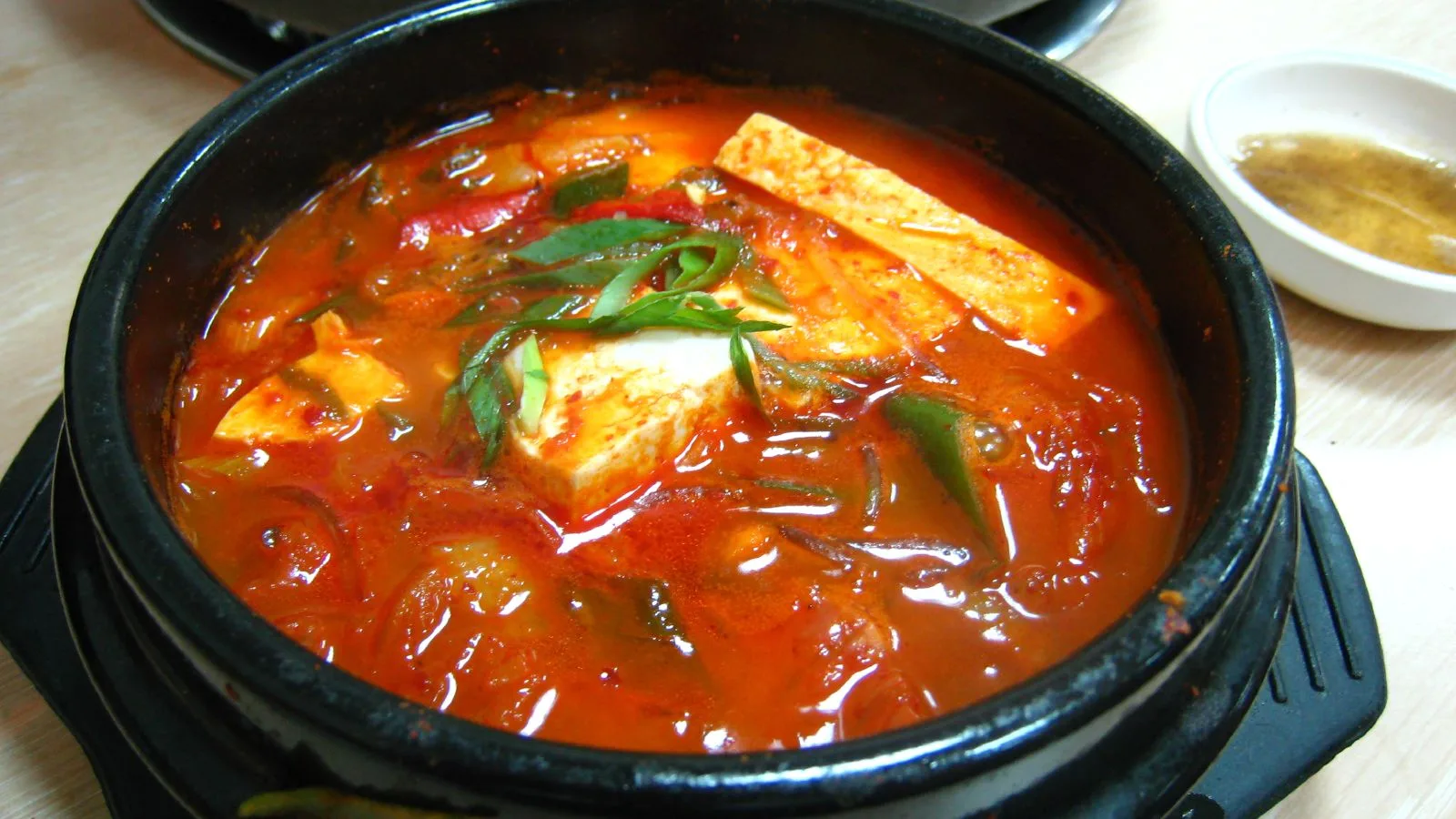 Photo: by miyagawa / Wikimedia Commons (CC BY-SA 2.0)
Kimchi jjigae is a Korean stew simmered from kimchi, pork, scallions, onion and cubed tofu. It tastes best with well-fermented, sour kimchi. If you're new to Korean cooking, it's a friendly place to start, because the ingredient list is short and easy to find. Here's what always goes in, what people add or swap, and where the salt hides.
Sour, aged kimchi, pork, tofu, scallions and onion make the pot
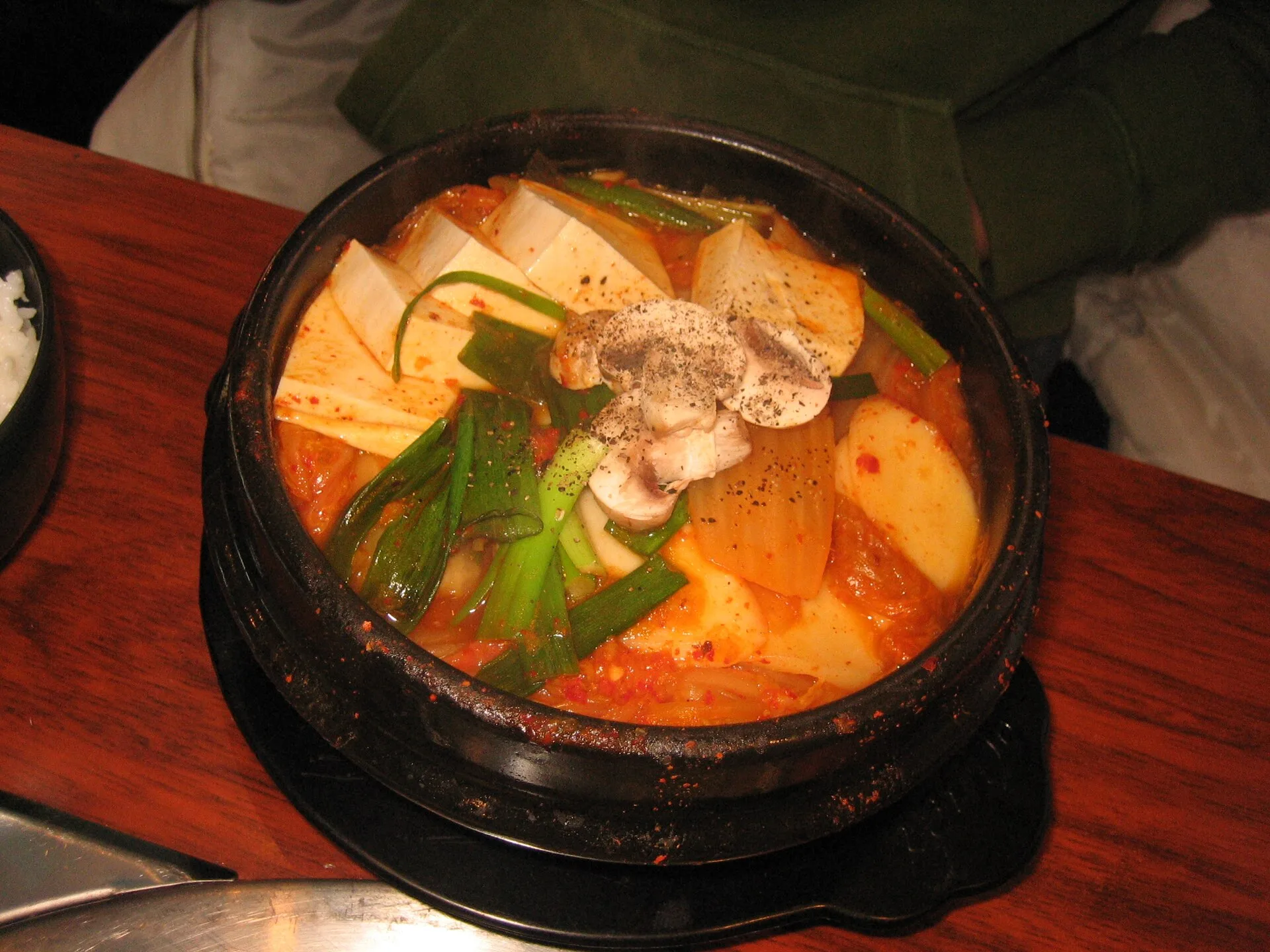 Photo: by The Wong Family Pictures / Wikimedia Commons (CC BY 2.0)
A handful of ingredients are fixed; everything else is a choice. The table below separates the two groups and flags the salt in each add-in.
| Ingredient | Always or optional | What it does | Salt note |
|---|---|---|---|
| Aged, sour kimchi | Always | Sets the flavor of the whole pot | Already salty, so taste before you season |
| Pork (belly, neck or ribs) | Always | Gives fat and body | — |
| Tofu, cubed or sliced | Always | Soft contrast to the sour broth | — |
| Scallions, sliced | Always | Fresh bite on top | — |
| Onion | Always | Simmers into the broth | — |
| Garlic | Always | Aroma | — |
| Canned tuna | Optional | Quick, easy protein | Canned fish adds salt, so use a little |
| Canned fish or deli meats | Optional | Extra savory weight | Stacks salt on salty kimchi, so go light |
| Anchovy broth instead of water | Optional | Deeper base | Broth itself is mild; it just stops the stew tasting flat |
| Gochujang or doenjang | Optional | Seasoning and body | Both are salty, so add in small spoonfuls |
| Kimchi brine | Optional | Extra tang and heat | Can push the pot too salty and too spicy |
| A splash of apple cider vinegar | Shortcut for younger kimchi | Adds some depth | Brings sourness, not salt |
An everyday Korean stew with a long family tree
 AI-generated image
It is one of the most common jjigae (Korean stews) in the country, a home-cooking staple made with whatever kimchi is sitting in the fridge. The liquid is water or anchovy broth. Doenjang (fermented soybean paste) or gochujang (fermented chili paste) can season it.
The history is a little fuzzy. Chili peppers reached the Korean peninsula in the middle of the Joseon dynasty. The red kimchi we know today took shape after that, and the stew is thought to have developed around the same time. A late-Joseon cookbook called Siuijeonseo gives the first written mention of stew-type dishes, under the name jochi. Its kimchi jochi was chopped kimchi simmered with seasoned shredded beef and pyeonyuk (sliced boiled meat), seasoned with soy sauce.
If you want to see how the pot comes together, this is the usual order. The timings are a guide for a pot of about a liter.
- If you want anchovy broth, start it at least 30 minutes before you cook.
- Marinate pork belly in mirin (sweet rice wine) and pepper for about 15 minutes.
- Stir-fry the kimchi, pork, chili flakes and garlic over medium-high heat for 5 to 7 minutes. Cook until the kimchi softens and the pork cooks.
- Add water or broth and bring it to a boil. Lower the heat to medium and simmer 10 to 15 minutes, until the pork's cooked through.
- Lay sliced tofu on top and cook about 5 more minutes.
Weeks of fermenting give kimchi the sourness the stew needs
 AI-generated image
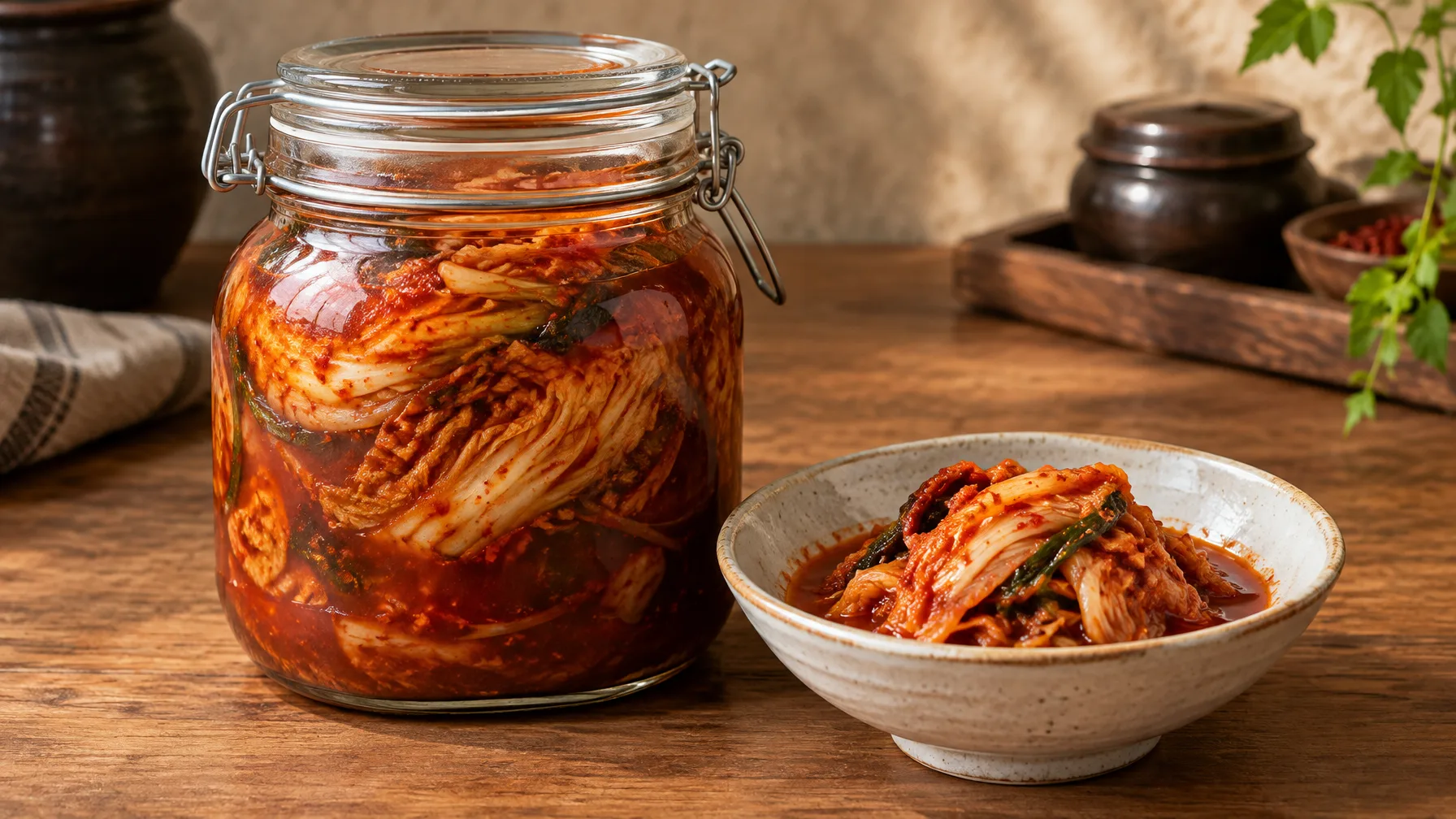
Aged kimchi has a stronger flavor than fresh kimchi and carries more probiotics. When a stew recipe calls for kimchi, it means kimchi that has fermented for at least two to three weeks. A typical pot uses about three-quarters of a cup, and the kimchi should be properly sour.
The reason is plain taste. Young kimchi in the pot gives a stew that is bland and a bit sweet. The sourness has to come from the fermenting, and the older the kimchi, the better the result. Restaurant versions often use less-sour kimchi in small amounts, and they can lack depth for it.
If your kimchi is still young, there is a shortcut. A little apple cider vinegar mixed into it can bring out depth, something like kimchi that has aged for years. It will not fully copy real aging, but it helps.
Fatty pork belly is the favorite, and ribs need a head start
In Korea, fatty pork is the preferred meat for the stew. Pork belly is the classic choice. Big chunks of it balance the sharp kimchi nicely, and the fat melts into the broth as it simmers. Pork neck also works. Oil, pork neck, garlic, rice wine and kimchi alone can make a very good pot, with no seasoning packets at all.
Pork ribs are a different story. They are tougher, so they get boiled on their own for 20 to 30 minutes before they join the kimchi. That makes them tender. Pork belly skips that step, though a short soak in mirin and pepper cleans up its flavor. The trade-off is fat: pork belly is high in saturated fat, which matters if you are watching your diet.
Tuna and budae jjigae change the pot without changing the method
Tuna kimchi jjigae swaps the pork for canned tuna made for stews. It is quick to cook and easy to carry, which makes it a favorite for camping and picnics. Canned fish adds salt on top of salty kimchi, so use only a little. Budae jjigae follows the same cooking method as kimchi jjigae, with more ingredients added to the pot.
Other add-ins are smaller tweaks. Perilla oil and anchovy fish sauce make the stew taste fuller. A half spoonful of beef bone powder gives a bone-broth depth. Gochujang adds a restaurant-style richness. Fish cake and scallion oil make a milder pot that kids tend to like. Anything salty should go in a little at a time.
Bring plain rice, because the pot is salty and spicy
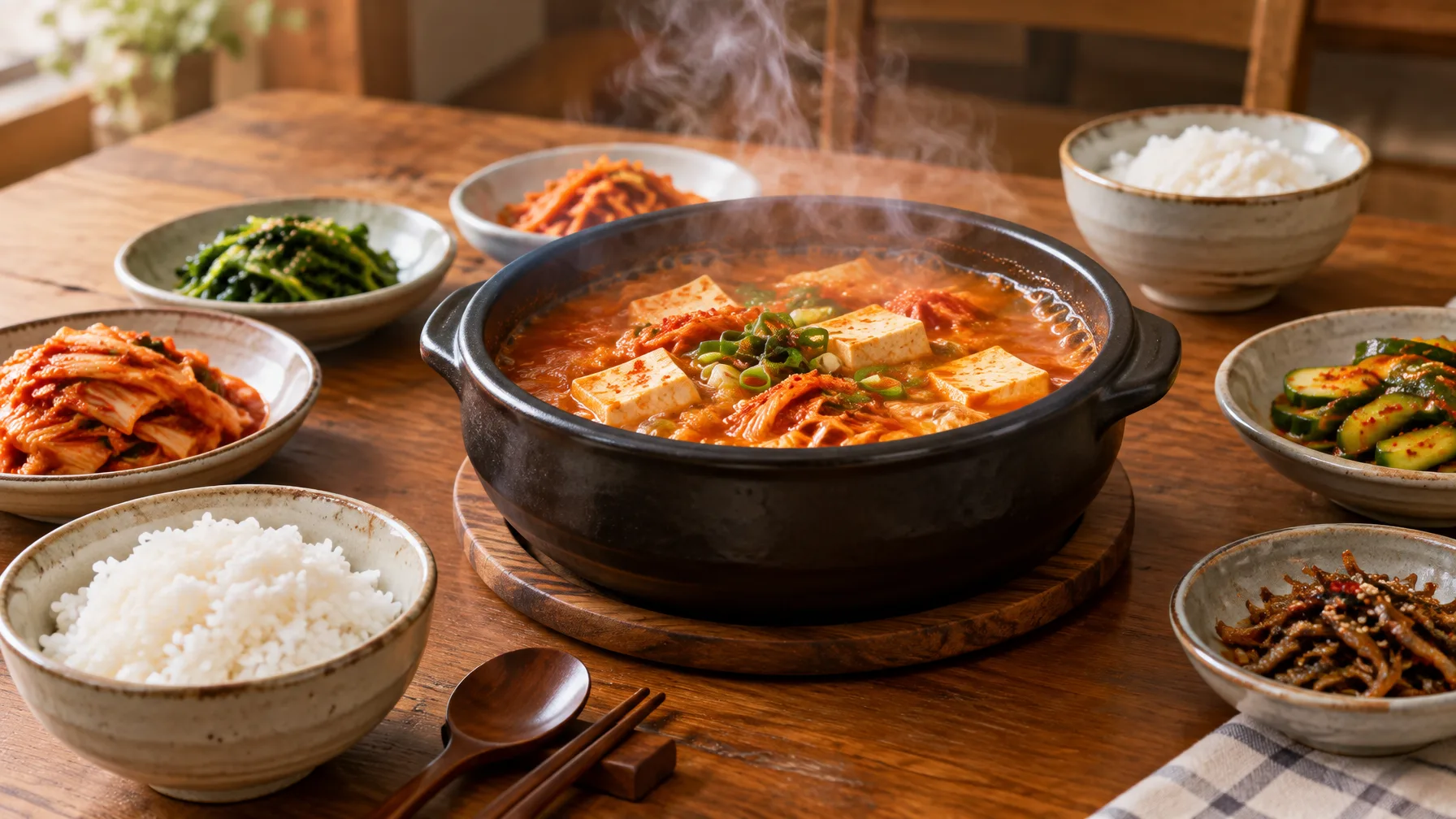
The stew itself is fairly salty and fairly hot. That is why it suits heavy foods like grilled meat, and why plain white rice is its best partner. A bowl of the stew with rice can be enough even without banchan (the small shared side dishes of a Korean meal). The ideal bite is rice and stew solids scooped up together.
It's also a stew people don't tire of. It's often cooked in a thick pot, such as a ttukbaegi (Korean earthenware pot) of a little over a liter. Leftovers keep three days in a sealed container in the fridge, or up to a month in the freezer. Take the tofu out before freezing, because it turns unpleasant when thawed.
Where the pot goes flat, too salty or too hot
The most common letdown is a flat, watery pot. Without broth, the stew can taste like plain boiled kimchi, and without chili flakes it can feel thin. Simmering longer helps, and so does a bit of gochugaru (Korean chili flakes). Kimchi differs from jar to jar, so the result will too. Kimchi brine adds punch but can make the pot too salty and too spicy, so season gradually.
The heat is the other surprise. A pot that seems just right to the cook can be too spicy for someone who avoids chili. Salt matters too: kimchi is high in sodium, and eating too much of it can raise heart risks. People with high blood pressure or certain heart conditions may want to skip it. The trade-offs are covered in more detail in our kimchi health guide.
If you avoid gluten, know that soy sauce goes into some recipes. Some kimchi also contains wheat flour, fish sauce or soy sauce. Check the label.
Look for old, sour kimchi and keep the rice plain
Eat it with plain rice. Want more on kimchi itself? See Korea's National Dish.
Comments
No comments yet.