
Korea's National Dish: Kimchi and How It Fits Every Meal
 AI-generated image
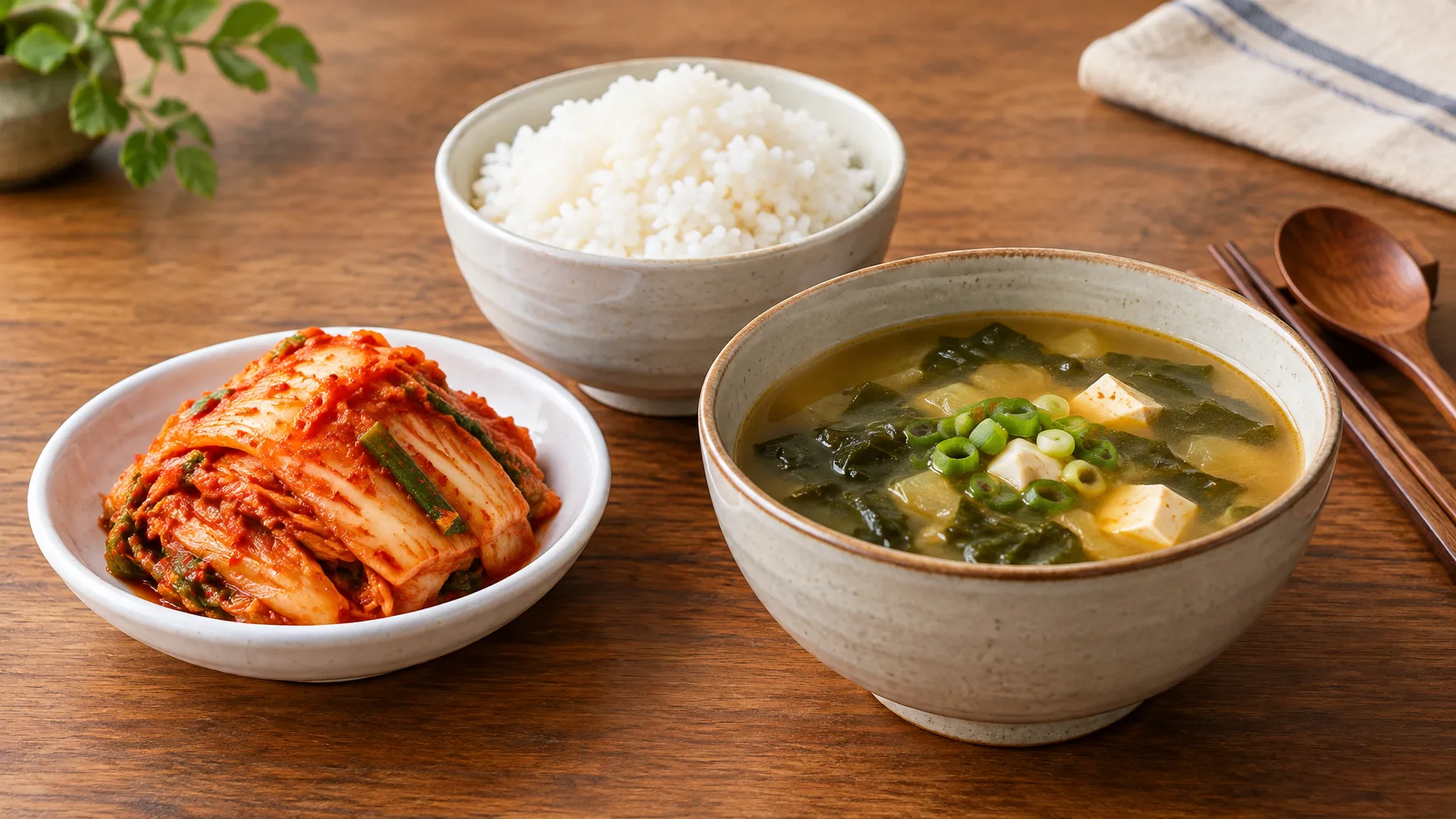
Kimchi is the dish people most often call Korea's national dish. It is salted and fermented vegetables, most often made with napa cabbage. It shows up as a side dish (banchan, the small plates served alongside rice) at almost every Korean meal.
Kimchi, the side dish on almost every Korean table, is the usual answer
 AI-generated image
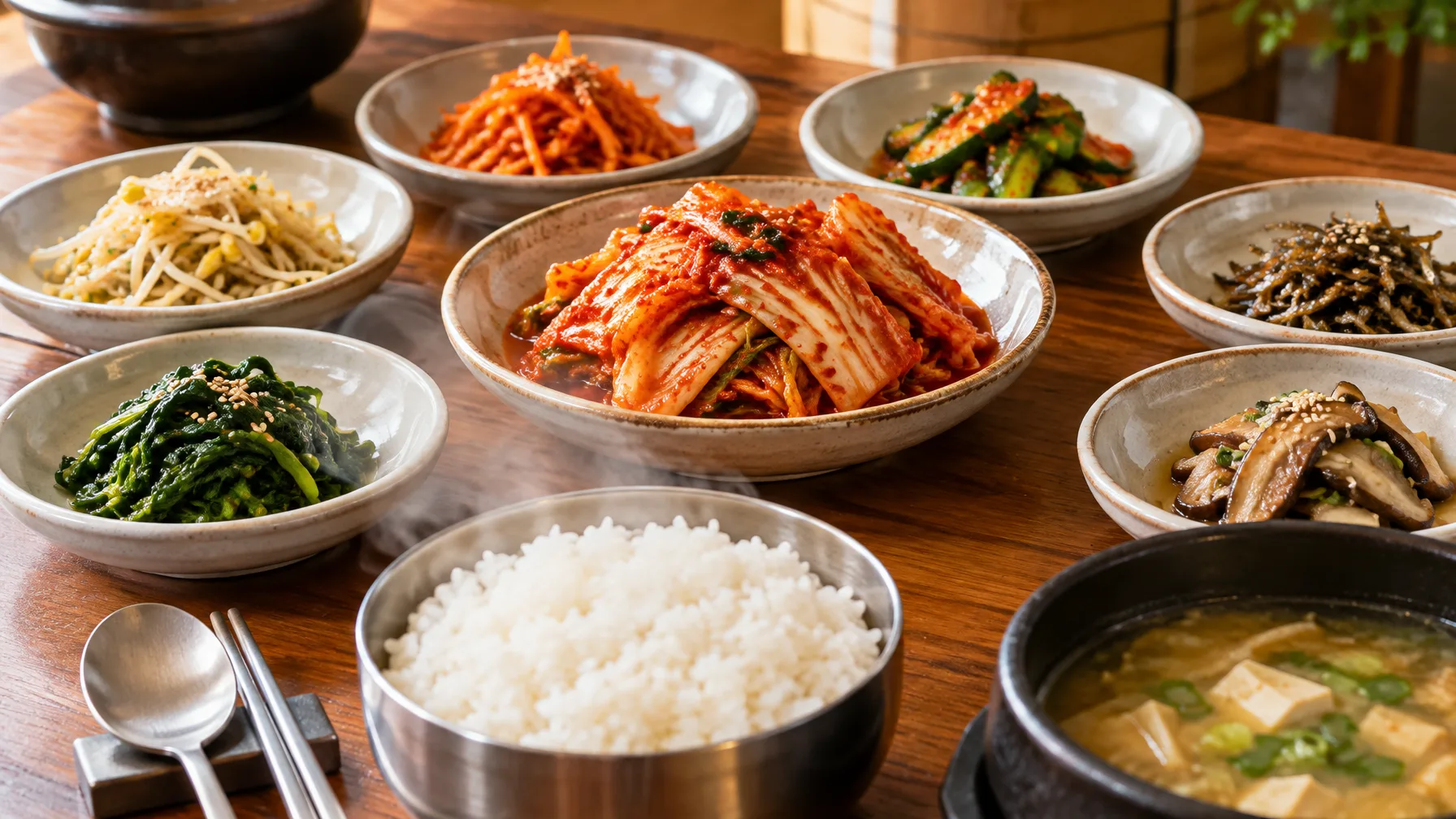
Ask Koreans which food best stands for Korea, and the reply is usually kimchi. Treat that as a favorite people agree on rather than a ruling from any official body. You rarely have to hunt for it. At your first Korean meal, look at the small plates around the rice bowl.
Salt, time and vegetables: what kimchi really is
 AI-generated image
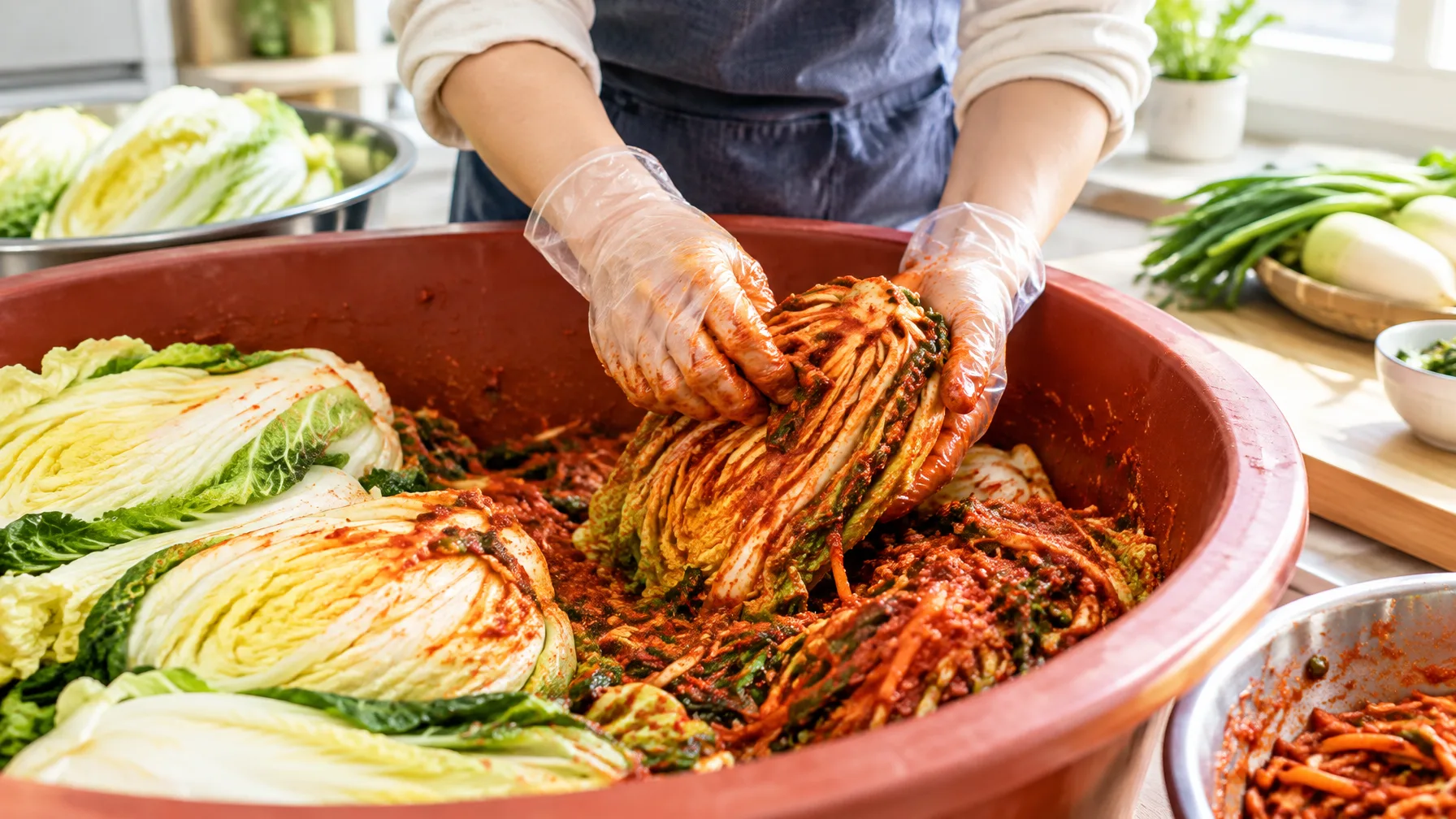
Kimchi is a traditional Korean side dish of salted vegetables left to ferment. Napa cabbage is the best known, radish is the other common main vegetable, and cucumber and scallion get the same treatment. Few dishes in South Korean traditional food are this simple in idea and this wide in range.
A traditional Korean meal is built around short-grain rice, and the table is named for how many banchan come with it. Kimchi is one of those plates, and a good one to start with if the spread looks like a lot. Unfamiliar ingredients can make Korean home cooking seem like a big step, but it is friendlier than it looks.
To see how it is made, there is the Kimchi Field Museum in Seoul. It teaches the story of the national dish and runs a short kimchi-making class. Each person gets a container of their own kimchi, so plan to carry it around for the rest of the day. Visitors say the language barrier can be large, but the class is fun and informative. For more on why the dish matters so much at home, see Why Do Koreans Love Kimchi So Much? A Winter Survival Story.
A UNESCO listing and a staple's reputation back the title
 AI-generated image
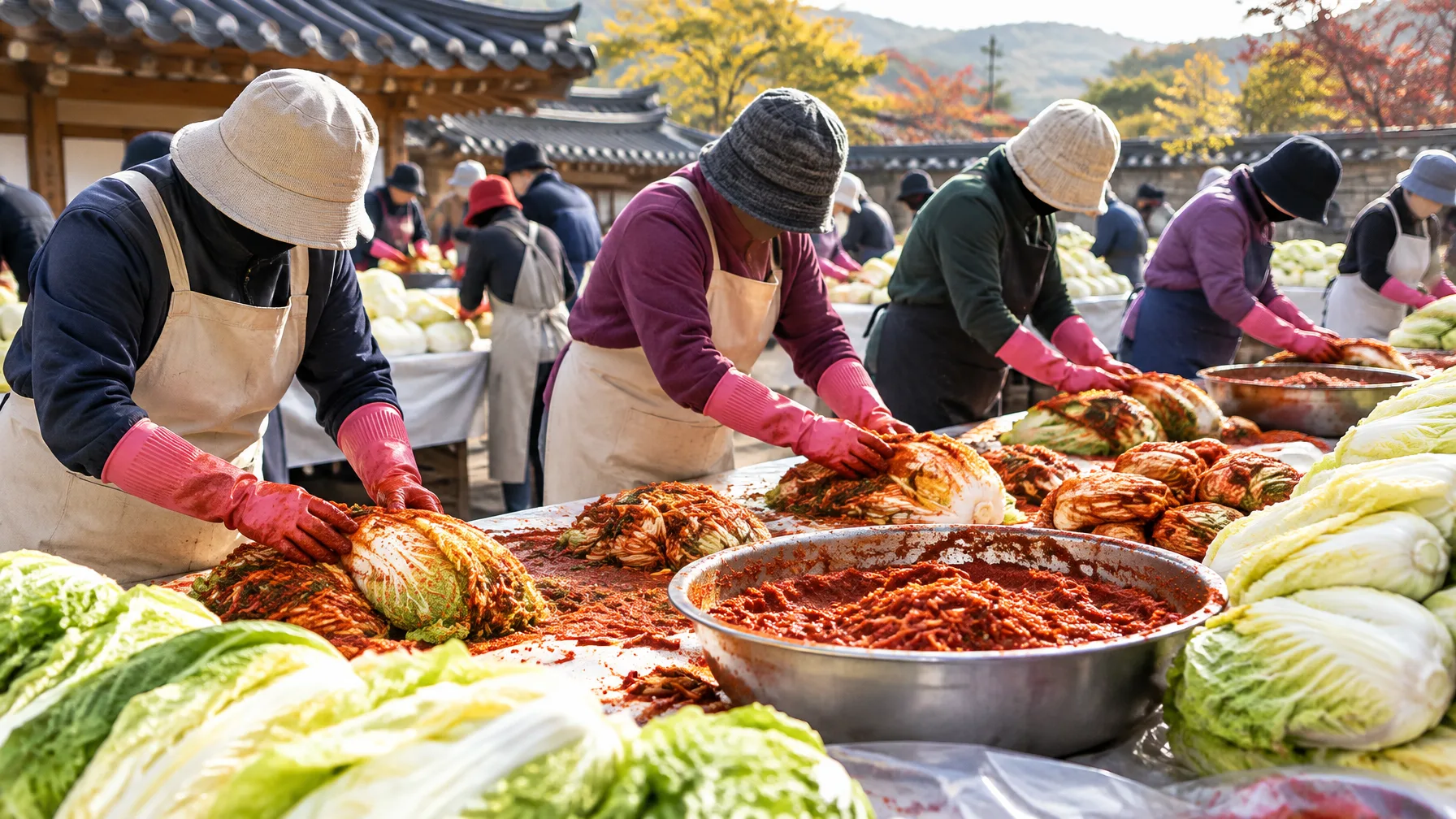
Kimchi is a staple of Korean cooking, and it has outside recognition too. Kimjang, the tradition of making and sharing kimchi, was inscribed on UNESCO's Representative List of the Intangible Cultural Heritage of Humanity in 2013, after South Korea submitted it. The listing covers the practice, not just the finished jar, which fits how Koreans think about the food.
Kimchi is also a fermented food prized for its nutritional value, which gives it a place in South Korean food culture that goes beyond flavor. For a closer look at the salt side of that story, see Is Korean Kimchi Healthy? Good Fiber, Real Salt Trade-Off.
Sweet, sour and spicy, in hundreds of versions
Kimchi is known for sweet, sour and spicy flavors. Napa cabbage is the most popular of its many kinds. There are hundreds of varieties, and the main vegetable changes from one to the next. Which ones are popular depends on the season and the region you are in.
The practical lesson for a first-timer: do not judge kimchi by one plate. Two kitchens can serve very different versions of the same dish. A single bite tells you about that kitchen, not about kimchi as a whole.
Bibimbap, bulgogi and Korean BBQ are the other names in the running
Korean food is broad, and kimchi has company. Bibimbap is one of the best-loved dishes in Korea. Plenty of people would put it forward as a Korean national dish. Bulgogi and Korean BBQ are also popular, and all three are easy to find. Want to compare them? Most Popular Korean Dishes: Bibimbap, Japchae, Bulgogi walks through the favorites.
Outside Korea, many people first meet kimchi as the spicy fermented cabbage next to Korean BBQ. That is a fair introduction, but it undersells a dish with this many versions.
Cold on the plate or simmered into soups and stews
Kimchi is mostly served as a side dish, but it also goes into soups and stews. At a first Korean meal, a spread of small plates may land on the table. That is banchan, and it is part of how the meal is served. For a full picture of a Korean dinner table, see Typical Korean Dinner: What's on the Table and How to Eat It.
| Form | Where you meet it | What to expect |
|---|---|---|
| Cold napa cabbage kimchi | Banchan plate | Crunchy and garlicky in some kitchens, softer and much sourer in others |
| Radish kimchi (kkakdugi) | Alongside soup | The radish stays crunchy and pairs especially well with soup |
| Kimchi in stew | Hot pot at the table | Sourness that can feel sharp when cold turns deeper and more balanced once simmered |
If the sourness is too much for you at first, the stew is the version to try next. Cooking changes it more than you might expect.
Where the national-dish claim gets shaky
The biggest catch is that kimchi is a side dish, not a main. Calling a banchan a national dish stretches the usual idea of a dish you order and sit down to. The sheer number of versions makes it harder still to point at one fixed recipe.
The second misunderstanding is about age. The red, spicy napa cabbage kimchi most people picture is thought to be only about 200 to 300 years old. Before chili peppers arrived, kimchi was white and not spicy. The kimchi in your head and the kimchi in old history are not quite the same food.
Finally, kimchi's visibility abroad owes something to a long-running government campaign to promote Korean food. Traditional recipes can also be too spicy and strong for some tastes. That is why milder, less salty versions are being developed. None of this makes kimchi less Korean. It just means the title comes from popularity and habit.
Kimchi is the answer you will hear, and not the only good one
Kimchi is the answer you will hear most often, though it is a popular title rather than an official one. Try it cold on the side, then cooked in a stew, and decide which dish gets your vote. Happy eating, and save a little room for the plates on the side.
Comments
No comments yet.