
Typical Korean Dinner: What's on the Table and How to Eat It
 AI-generated image
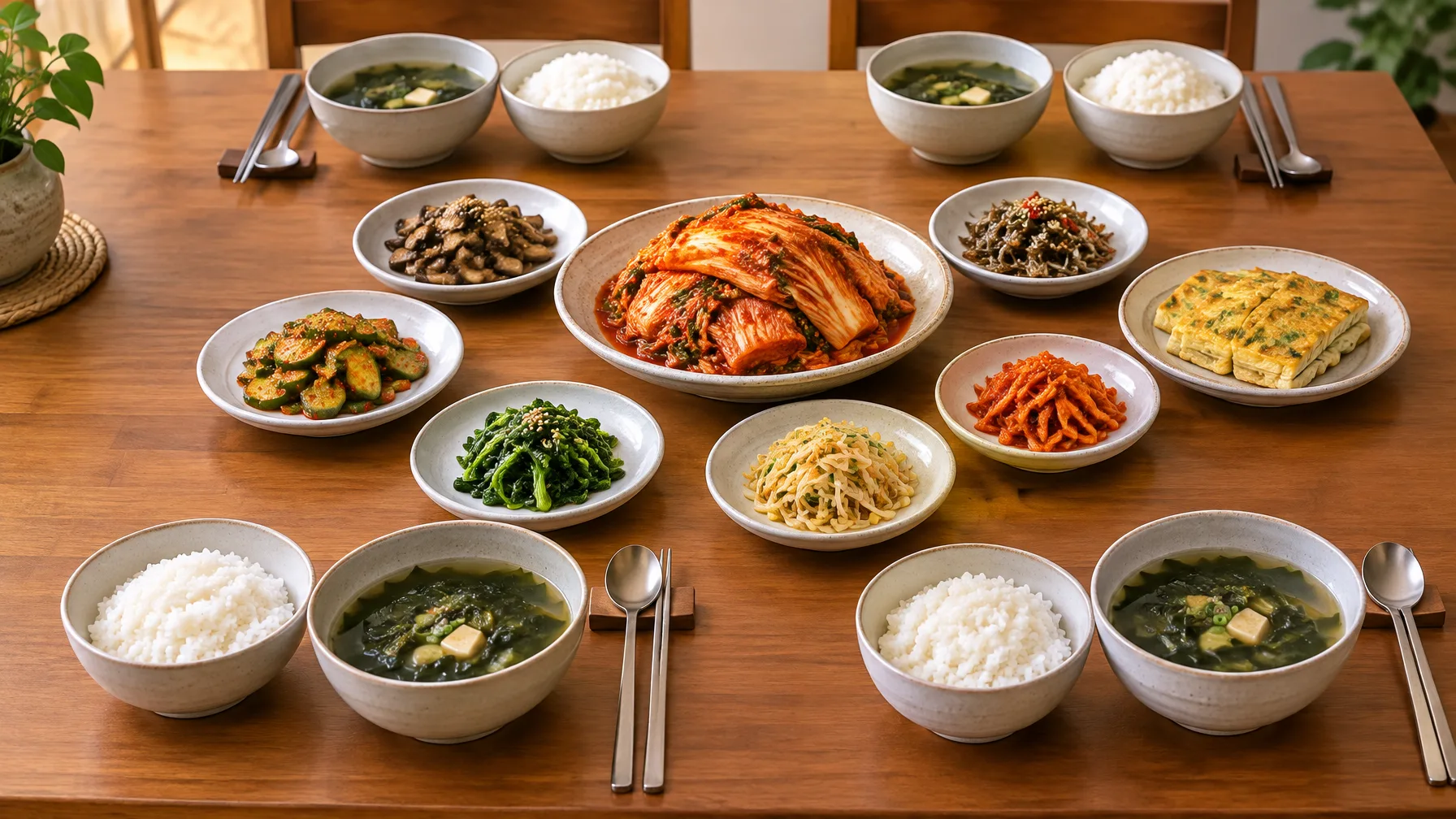
A typical Korean dinner puts rice, soup and several small shared side dishes (banchan, the little plates set out to go with the rice) on the table all at once. Kimchi sits in the center, and each person has a personal bowl of rice and soup. This is a beginner's guide to popular Korean meals: the most common dishes and how they're eaten, starting with bibimbap, bulgogi, kimchi jjigae and gimbap.
Rice, soup and banchan arrive together, with kimchi in the middle
 AI-generated image
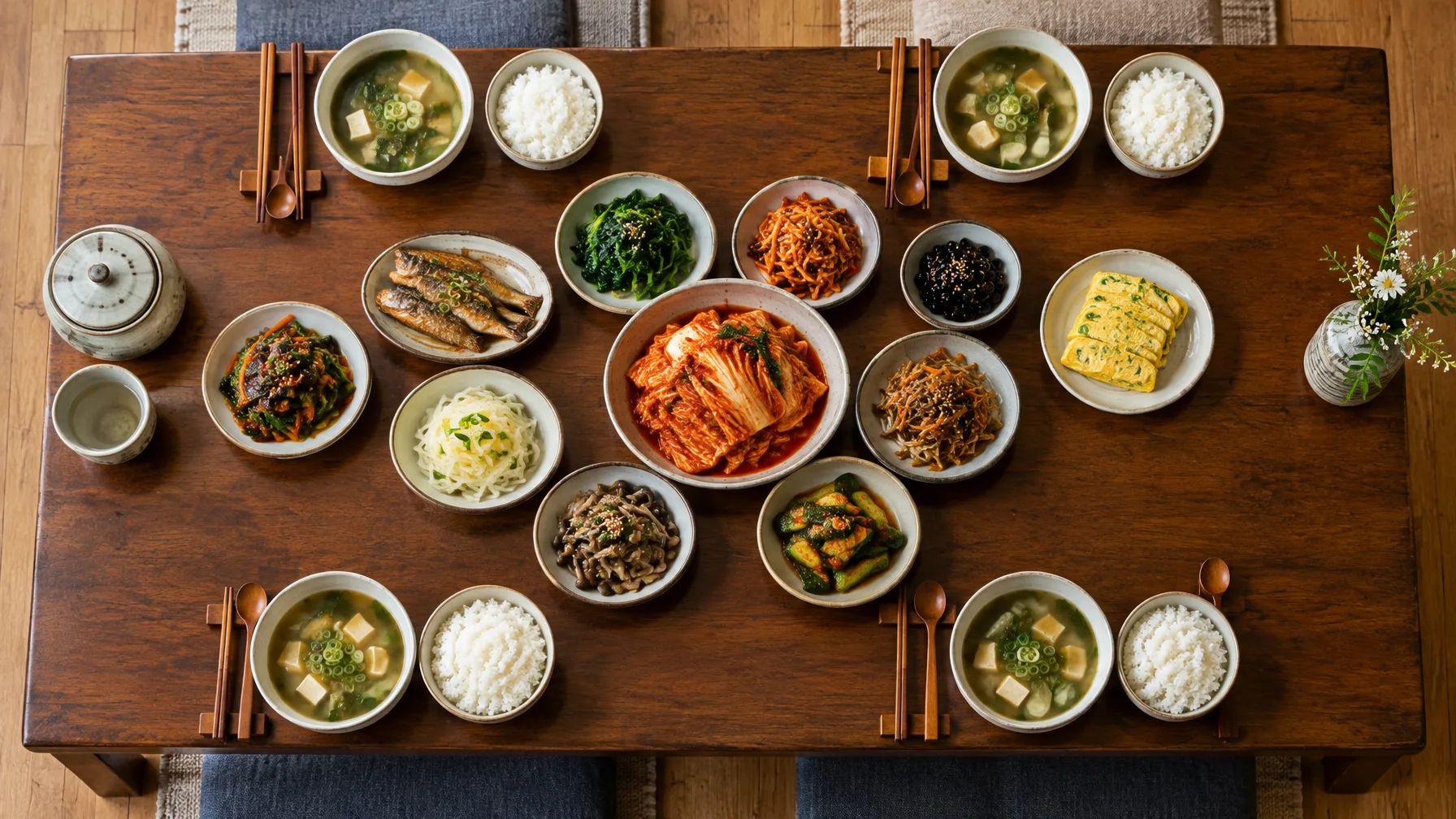
Nothing here comes in courses. There is no appetizer, then a main, then a soup. Everything is set out together and eaten together, so you can move between bites however you like.
The personal bowls are the one thing that isn't shared. Rice and soup go in front of each person. A traditional table may also add a tiny dish for a dipping sauce such as sesame oil or ssamjang. Every other dish sits in the middle for everyone to reach. Wondering if there's a right order for the small dishes? There's a short answer in Are you supposed to eat banchan first?
Banchan change with the season. The small dishes set around the table include namul (blanched vegetables), braised dishes and jeon (pan-fried pancakes), all shared alongside the rice and soup.
Kimchi is fermented napa cabbage seasoned with chili, garlic and ginger, and it is the best-known banchan. It shows up at every meal, and the kind changes with the season, such as cucumber kimchi in summer or wild garlic kimchi in spring.
Fermentation is why kimchi, doenjang and gochujang are everywhere
 AI-generated image
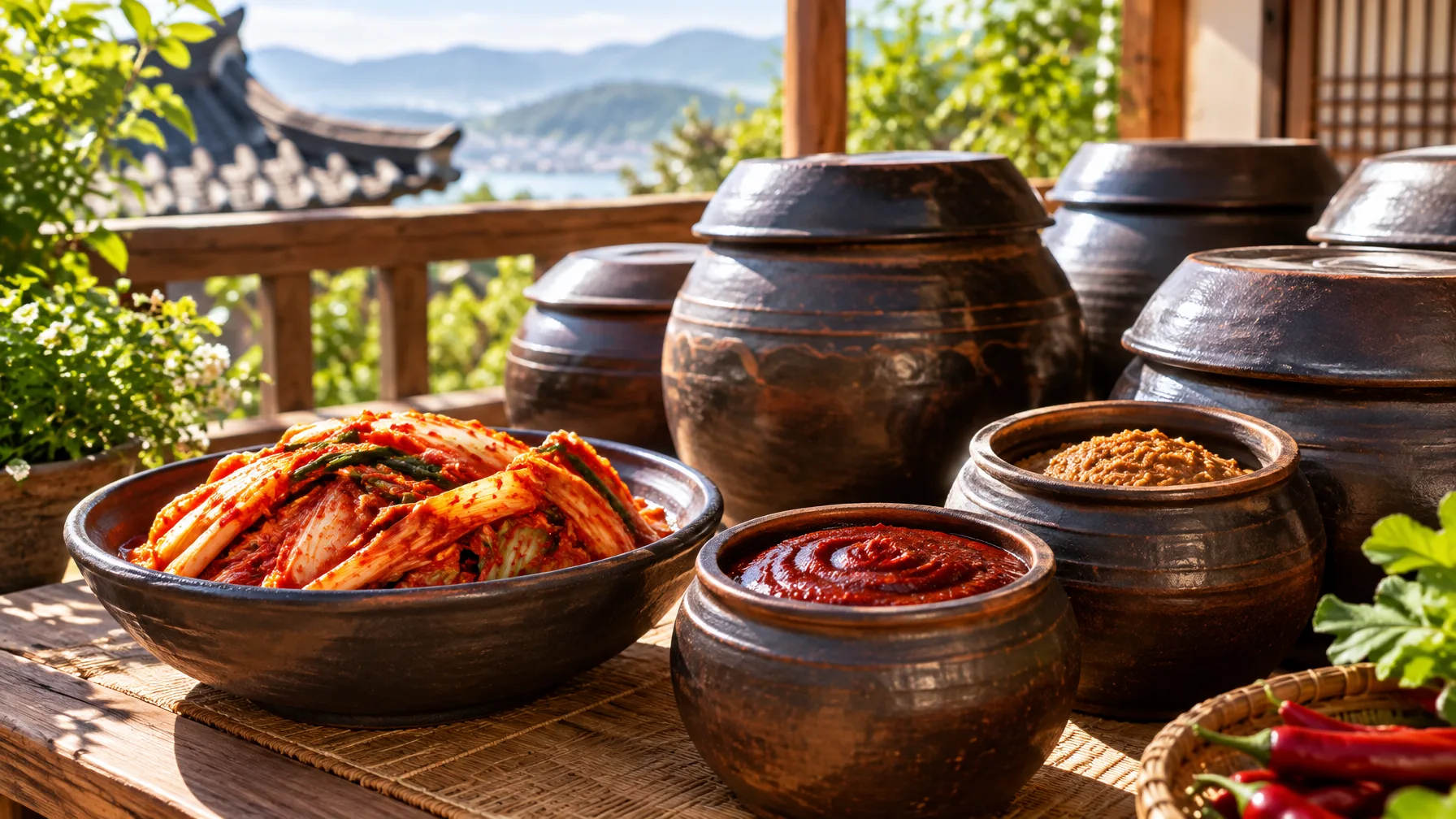
Korean cooking leans heavily on fermentation. Three staples come out of it: kimchi, doenjang, a fermented soybean paste, and gochujang, a fermented chili paste. Keep that in mind and the table makes more sense. The sauces, the soups and the side dishes all build on a fermented base.
Gochujang colors the bibimbap below. Ssamjang is the dip you'll use with lettuce wraps. Want the kimchi side of the story? Why Do Koreans Love Kimchi So Much? goes deeper.
Bibimbap, bulgogi and kimchi jjigae each have a right way to eat them
 AI-generated image
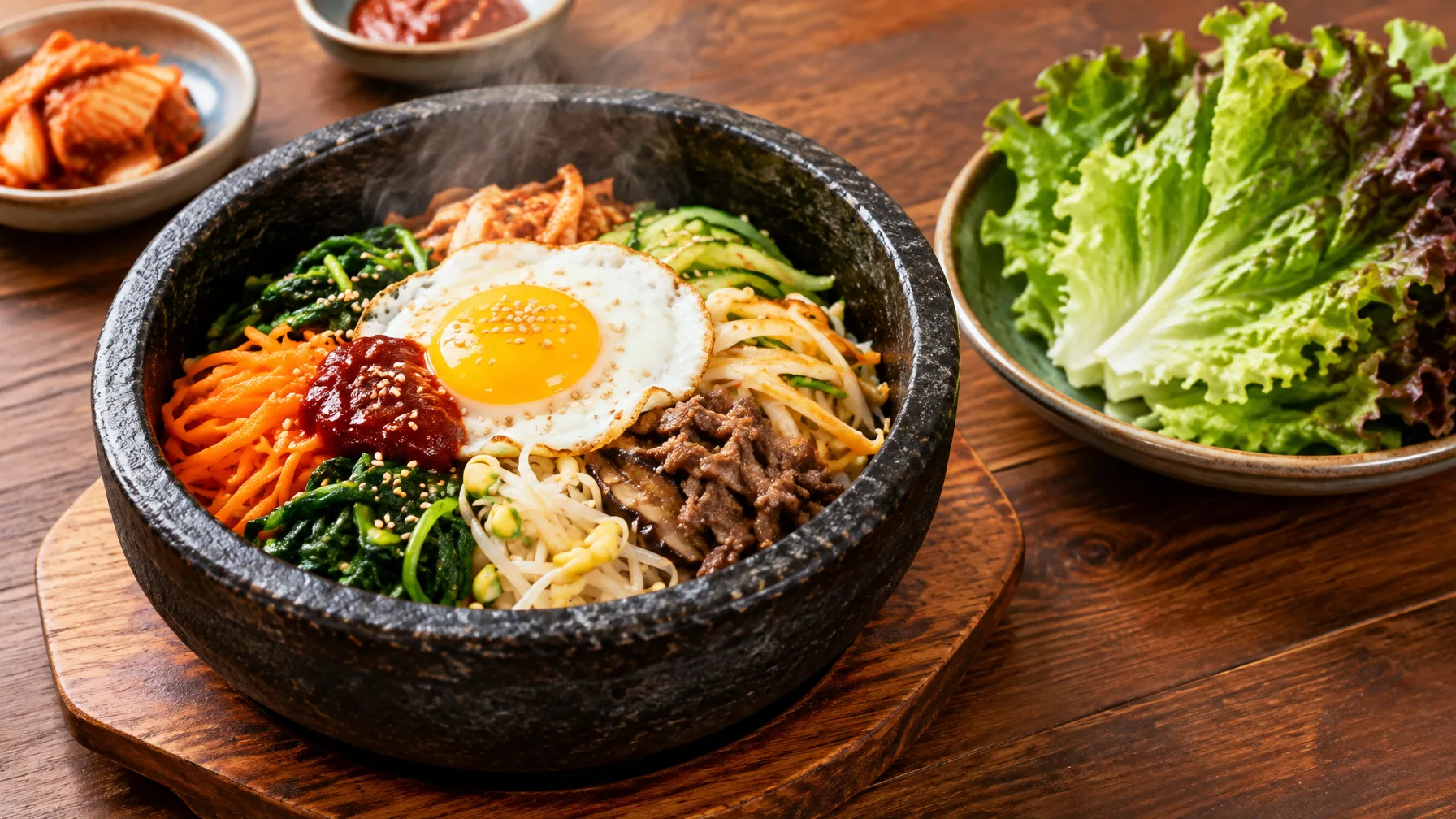
Bibimbap is rice topped with sliced vegetables, gochujang and a raw or fried egg. It's often called a national dish of Korea. The dolsot version arrives in a hot stone bowl. Mix it right away. If it sits, the rice on the bottom burns and hardens, and you lose the best part.
Bulgogi is thinly sliced, marinated meat, and beef is the favorite. The best way to eat it is wrapped in a lettuce leaf with ssamjang and a bit of rice, so each bite is a small bundle of meat, sauce and rice inside the leaf.
Kimchi jjigae, the kimchi stew, is meant to be eaten with rice. Scoop a small spoonful of rice, dip it into the broth, and eat. Want a wider tour of the big names? See Most Popular Korean Dishes: Bibimbap, Japchae, Bulgogi.
| Dish | How to eat it |
|---|---|
| Dolsot bibimbap | Mix right away so the bottom rice doesn't harden |
| Bulgogi | Wrap with ssamjang and rice in a lettuce leaf |
| Kimchi jjigae | Dip spoonfuls of rice in the broth |
| Naengmyeon | Add vinegar and hot mustard |
| Gimbap | Grab it at a convenience store and eat it by the slice |
Naengmyeon comes in two types, and the sauced one is the gentler start
Naengmyeon is a cold noodle dish. Mul naengmyeon comes in a cold broth, and bibim naengmyeon is tossed in a gochujang sauce. It is a classic finish to a grilled-meat meal, and a few splashes of vinegar and hot mustard suit it well.
For a first bowl, bibim is the easier pick. The mul version has ice in the broth, and it can make you shiver partway through. The noodles are also tough to cut, so take small bites. As for cost, a lunch-special bowl can be as low as ₩5,000.
Gimbap is the easy, familiar food to try first
Gimbap packs rice, vegetables and a protein into a tight roll of dried seaweed, then slices it into neat rounds. You can find it at convenience stores everywhere, in many flavors. Fillings range from smoked chicken and spicy pork to beef bulgogi and crispy tofu.
If you know sushi, expect something different. Gimbap rice is seasoned, the fillings are cooked, and sesame oil goes in. That gives it a nutty, toasty flavor (Koreans call it goso) rather than the vinegar tang of sushi.
Street food is the other easy entry point. It works mostly as a snack, and as a starchy bite late at night after drinks.
Gejang, sundae and icy mul naengmyeon can wait for a later trip
Popular doesn't always mean beginner-friendly. Gejang, raw crab cured in soy sauce, isn't for everyone. Sundae, a Korean blood sausage, splits opinion too. Neither is an easy first-night order.
Cold mul naengmyeon, with its icy broth and chewy noodles, is another dish to approach with care. Spicy stews like dakdoritang (braised chicken) can also be hard on a sensitive stomach. Save them for when you know how much heat you like.
Start with bibimbap, wrapped bulgogi, jjigae or gimbap
Expect rice, soup and a spread of shared banchan with kimchi in the middle, all served at once rather than in courses. Start with approachable dishes: bibimbap, bulgogi wrapped in lettuce, kimchi jjigae with rice, or gimbap. Take your time and pass the kimchi around.
Comments
No comments yet.