
Why Do Koreans Love Kimchi So Much? A Winter Survival Story
 AI-generated image
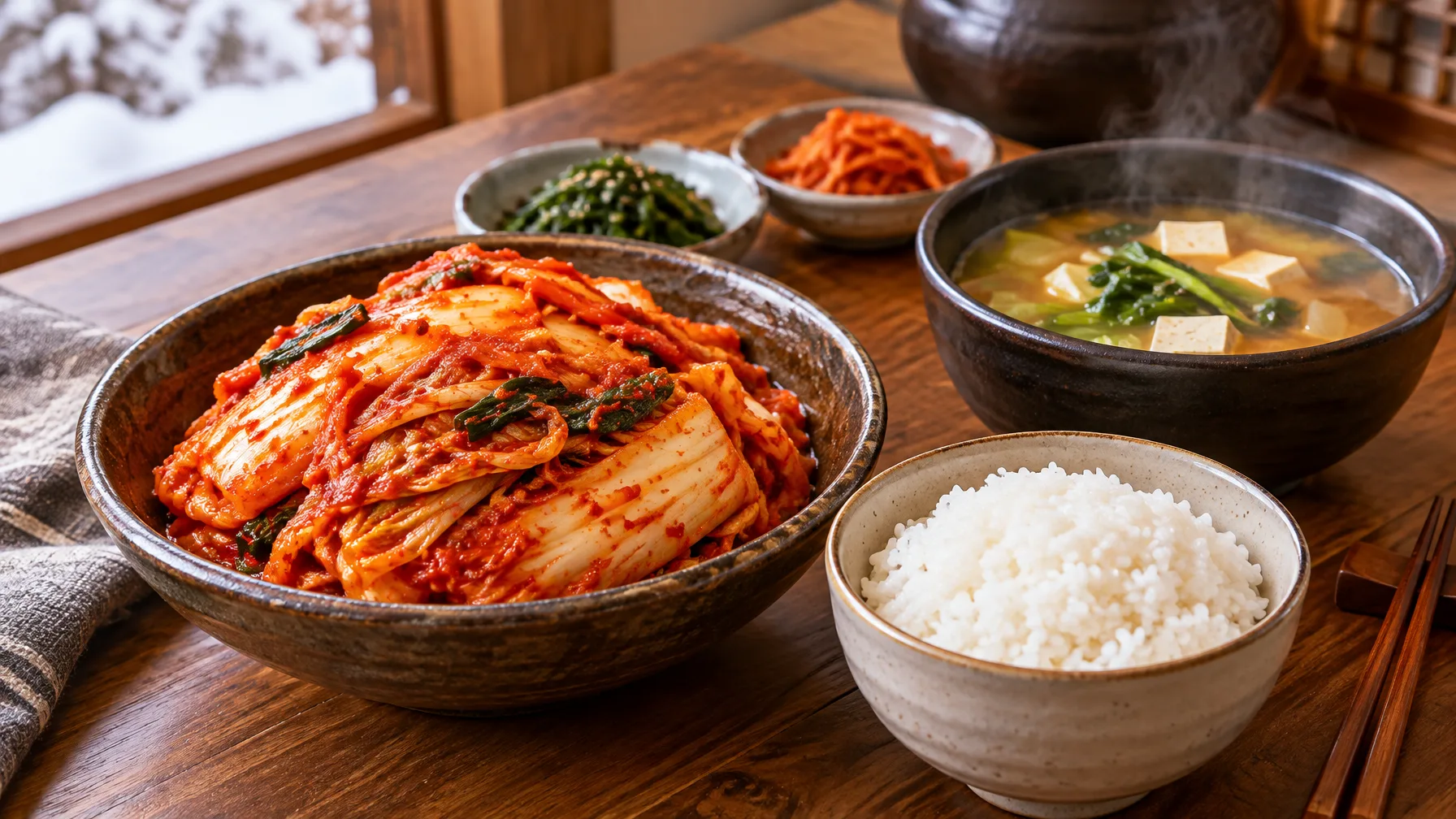
Kimchi began as a way to keep vegetables through Korea's long, harsh winters. Now it is a side dish at nearly every Korean meal. Koreans eat an estimated 27.6 g of it per person a day. So why do Koreans love kimchi so much? Survival came first, then habit, then pride. This piece covers where kimchi came from, how it shows up at the table, and where it can disagree with the people who eat it.
Kimchi started as winter storage and now sits beside almost every meal
 AI-generated image
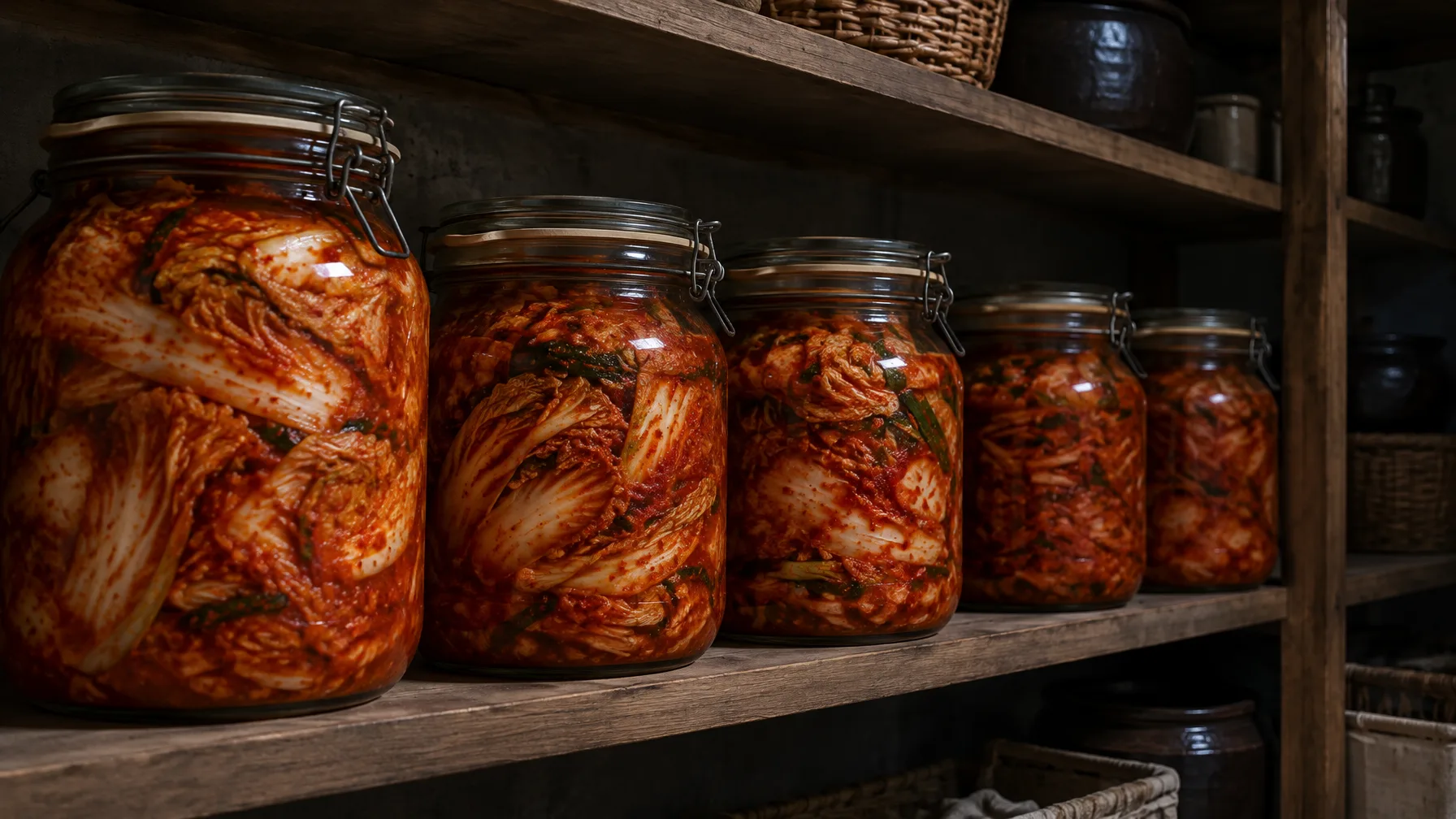
Kimchi is salted, fermented vegetables, most often napa cabbage or radish. It is a traditional banchan, one of the small side dishes that arrive with rice, and it is the staple among them. There are hundreds of types, each built around different vegetables.
Rice is the only thing that outranks it. A traditional meal without kimchi is considered incomplete. For many Koreans it is the most common side dish at two meals a day. It is never the star of the table. But when it is missing, the gap is the first thing you notice. For the full side-dish routine, see Are you supposed to eat banchan first? The short answer.
Before refrigerators, a buried clay pot kept winter vegetables
 AI-generated image
Kimchi was born of necessity in Korea's cold, dark winters. Before modern times, fresh vegetables and their nutrition were hard to come by for months. For many people the winters were deadly, and putting food away was the difference between eating and going hungry.
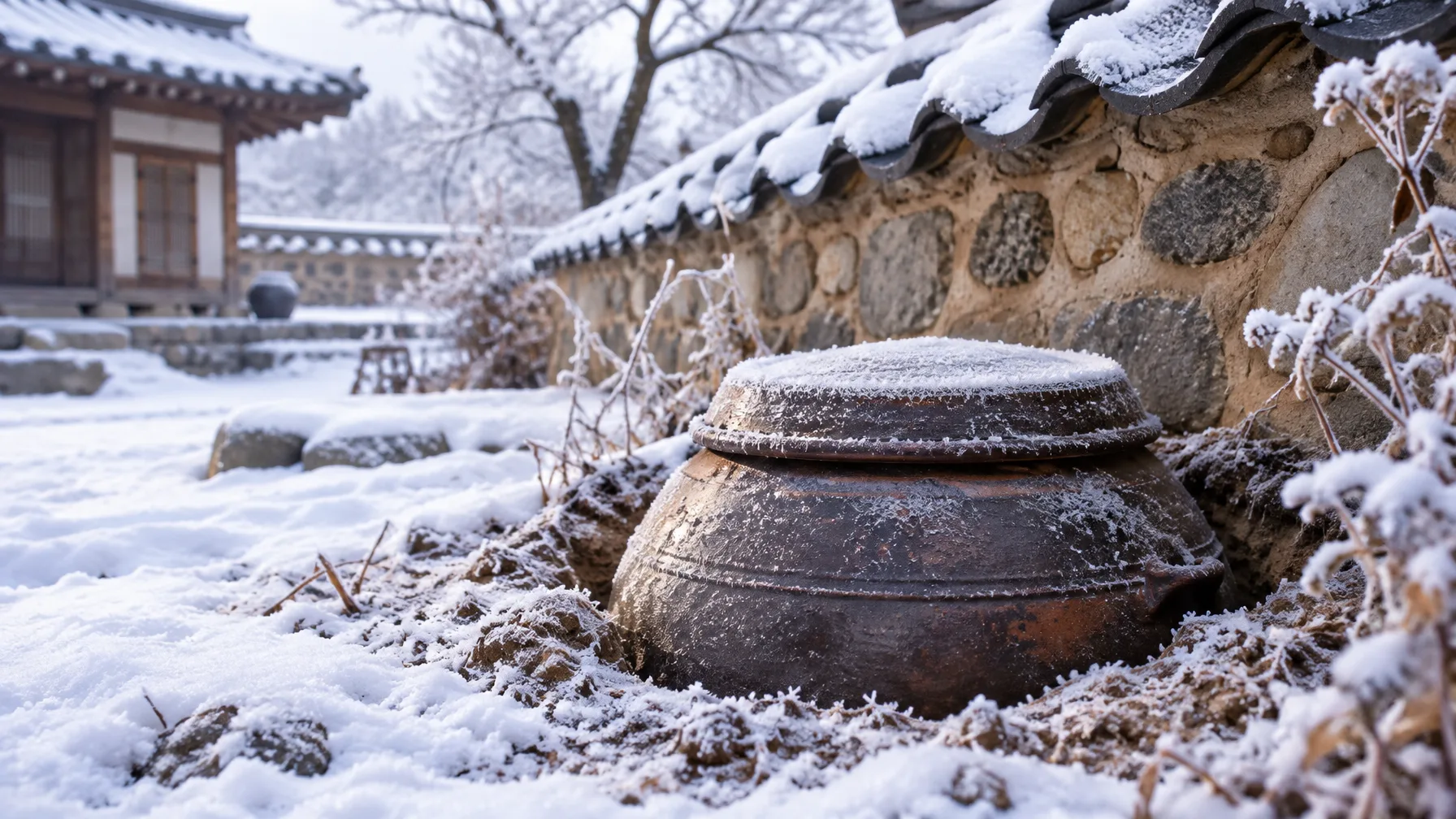
Without refrigerators, pickling was the ideal way to extend how long food would last. Koreans fermented vegetables in winter, packed them into onggi (earthenware pots), and buried the pots in the ground. Later, during the Silla period (57 BCE to CE 935), kimchi spread widely. This happened as Buddhism and a vegetarian lifestyle took hold across the country.
Making it was a group job. Kimjang, the big seasonal kimchi-making, involved a whole village, and inside families it created bonds among the women.
Many Koreans eat kimchi at two meals a day
 AI-generated image
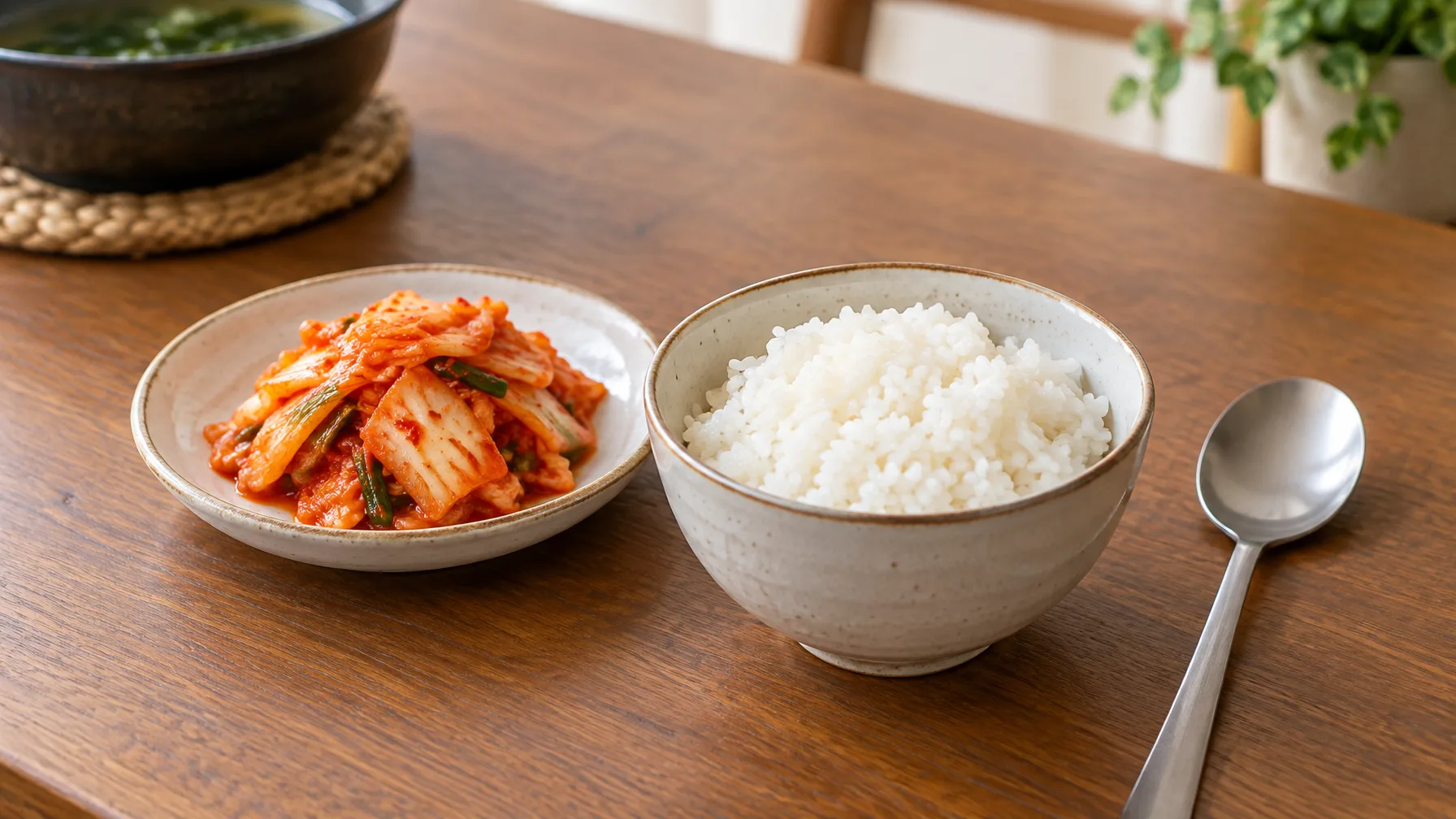
Men average about 25.0 g a day and women about 29.9 g. That is a modest portion, not a bowlful. So why do Koreans eat kimchi every day? Because it is a fixture of the meal itself, the way bread is on some tables, and nobody has to decide to order it.
The habits below come from one Korean-American's table, so read them as habits, not rules. With most Korean food, a few pieces over the whole meal are plenty. Families also differ on taste. Some prefer kimchi that is less fermented, while others like it more fermented. Baek-kimchi (white kimchi) is a common thing to make at home.
When kimchi shows up: a short table-side guide
| At the table | What kimchi does |
|---|---|
| Most Korean meals | A few pieces over the whole meal |
| Grilled pork belly (samgyeopsal) or other fatty grilled meat | More than usual, as a reset between bites |
| Seolleongtang or gomtang (beef-based soups) | Eaten without it, the meal feels almost odd |
| Tonkotsu ramen or cream spaghetti | A bite in the middle becomes a craving |
Rich food is where kimchi does its best work. After a few bites of pork, a piece of kimchi shifts the flavor in the mouth, and the following bite of meat tastes better. This is why the kimchi plate empties sooner at a barbecue than at a regular dinner. The same pairing likely works with other heavy dishes, even away from Korean restaurants.
Eating it every day has downsides, mostly sodium and sensitive stomachs
Is there a downside to eating kimchi? Yes. Kimchi can be high in sodium, and a lot of it may raise the risk of heart problems. Its fiber and probiotics can cause bloating and stomach pain. Fermented foods contain histamine, so people with histamine intolerance may get headaches, hives, or nausea. Anyone sensitive to garlic, chili, or onion may also react.
Safety records are not spotless either. Kimchi has been linked in the past to E. coli and norovirus outbreaks, though such cases are rare. If you are pregnant or have a chronic illness, ask a medical professional. Ask whether probiotics and fermented foods are safe for you. For the bigger picture on salt, see Is Korean Food Healthy? Mostly Yes, Once You Watch the Sodium.
As for kimchi healthy claims, the proof is thinner than the hype. The studies behind lower inflammation are mostly in mice, and heart benefits need more research. Heart-friendly effects also belong to all fruits and vegetables, not just kimchi. Kimchi varies so much that its nutrition varies too, so general promises about kimchi benefits are hard to make. The fermentation methods are family traditions with no strict standard, so taste and quality differ from batch to batch.
Fermenting alone doesn't explain the love
It is tempting to say Koreans love kimchi because it keeps vegetables through winter. But fermenting vegetables is common in many parts of the world, so preservation alone is not the reason. Other ferments are loved in Korea too. Cheonggukjang, a fermented soybean dish, is one of the country's favorite traditional foods. So kimchi is not the only ferment with a fan base.
What sets kimchi apart is what grew around it. For Koreans it is more than food. It stands for national pride and identity. It is revered enough to be part of collective identity, not just the diet. Chef Chris Oh calls it the glue of the Korean community and a safe blanket. Some Koreans abroad say kimchi is the first thing that comes to mind when they leave home.
A Korean-American writer recalls a jar of kimchi breaking in his mother's van when he was ten. He reached in to save the kimchi and cut his right thumb on the glass. When he sucked the cut, he tasted only kimchi, and he asked himself how much of him was kimchi.
A winter survival food that grew into shared identity
So here is the verdict. Koreans love kimchi because it began as winter survival food and became part of almost every meal. Today it stands for national pride and shared identity. Fermenting vegetables happens all over the world, so the method alone doesn't explain it. The habit and the meaning that grew around it do.
Next time a plate of kimchi lands beside your rice, take a few bites and see how it changes the meal. Enjoy it, and go easy if your stomach is sensitive.
Comments
No comments yet.