
Is Korean Kimchi Healthy? Good Fiber, Real Salt Trade-Off
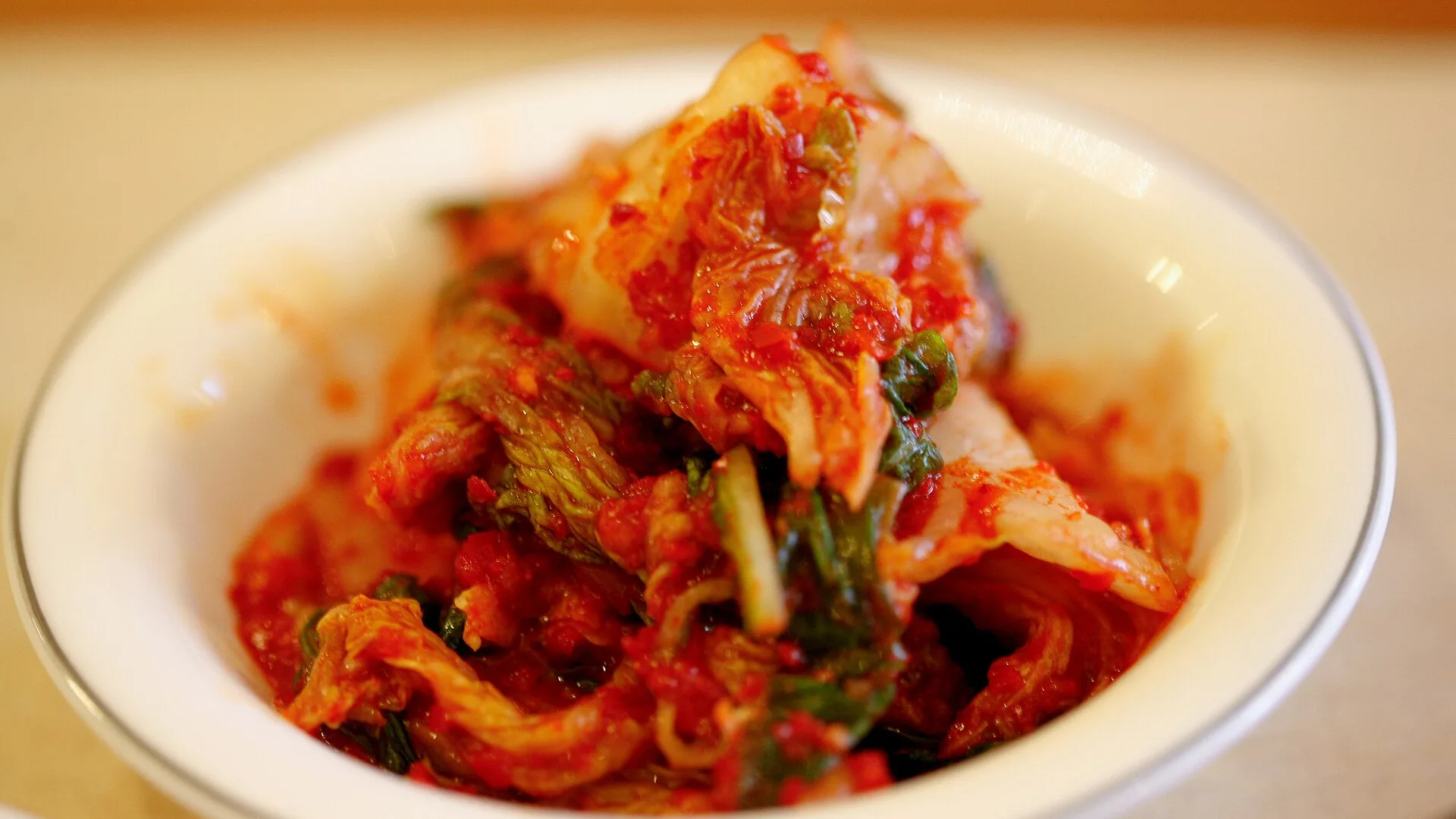 Photo: Charles Haynes Nate Beaty / Wikimedia Commons (CC BY-SA 2.0)
Kimchi is a fermented vegetable dish rich in fiber, vitamins, lactic acid bacteria and minerals. Eaten as a daily side dish, it adds roughly 500 mg of sodium. A low-sodium jar or a homemade batch lets you control the salt. Is Korean kimchi healthy? For most people it fits well on a plate, as long as you treat it as a tangy vegetable side and not a cure-all. If you're about to try it for the first time, here is what's solid, what's still early, and who should slow down.
Fiber and fermentation bacteria are the draw, and salt is the price
 AI-generated image
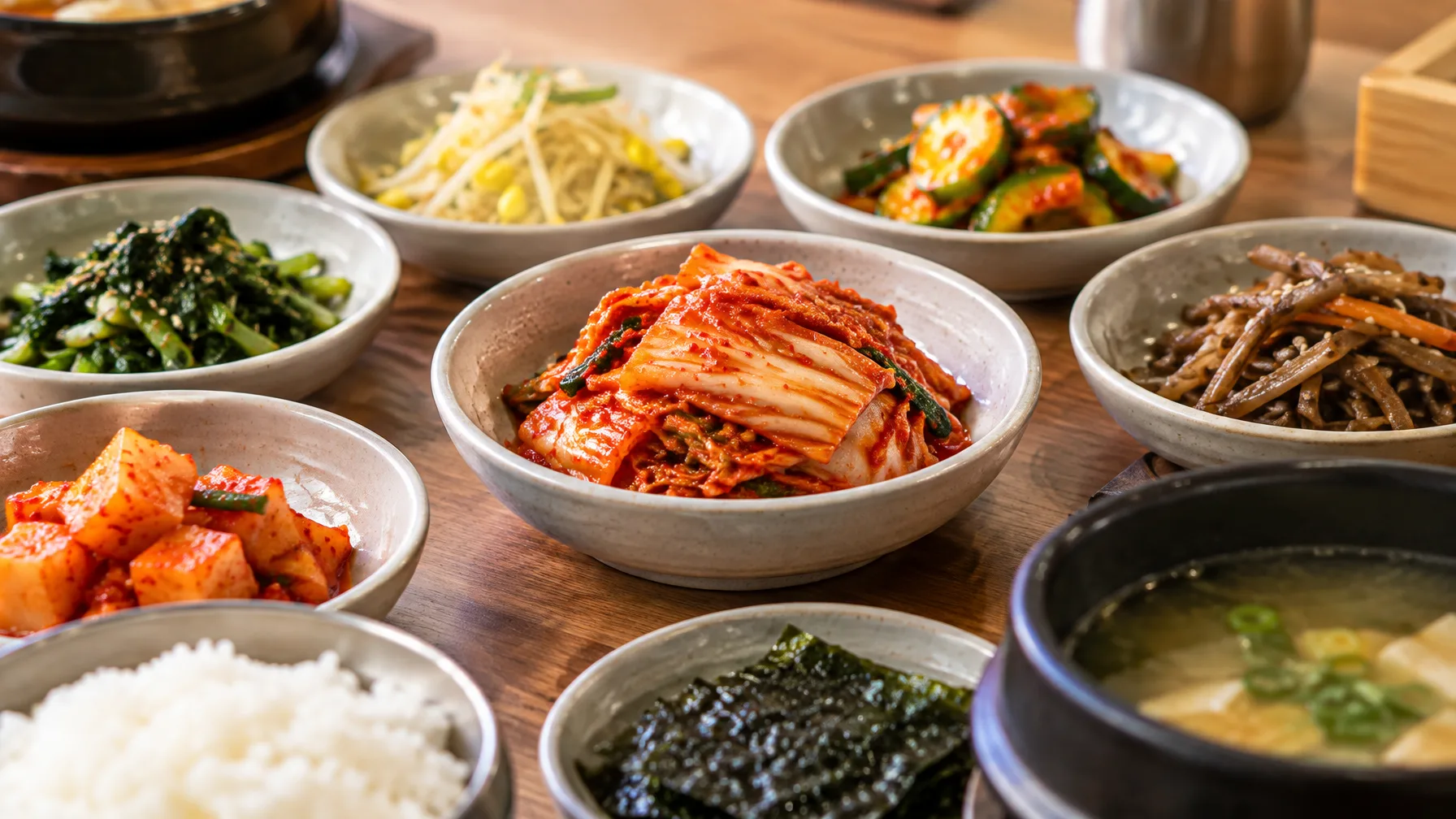
Kimchi is one of the banchan, the small shared side dishes that come with a Korean meal. Koreans eat it every day as a traditional fermented food, and it has long carried a health-food reputation.
That reputation is partly earned. The fiber and vitamins are straightforward, while the bigger promises about immunity, cancer and heart disease rest on thinner evidence. The sections below sort them one by one. For a fuller picture, see Typical Korean Dinner: What's on the Table and How to Eat It.
What's in the jar: cabbage fiber, active compounds and live cultures
 AI-generated image
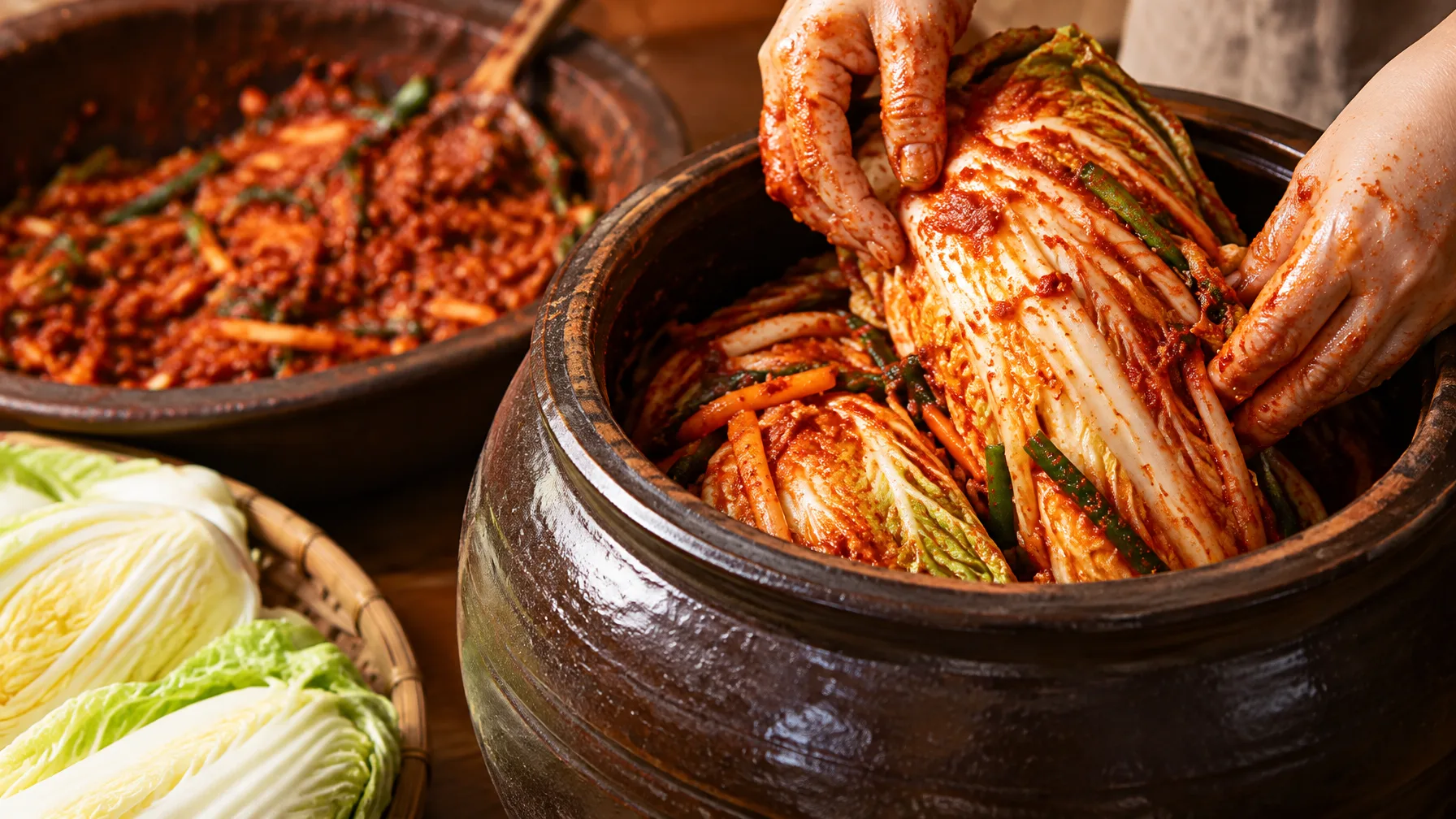
Kimchi starts with a mix of vegetables and seasonings that ferment together. That fermentation leaves behind a set of active compounds beyond the basic nutrients you'd find in the raw vegetables.
Cabbage, the base of the classic version, is a good source of fiber. Fiber supports digestion and can help relieve constipation, which is the most down-to-earth benefit on this list.
People also credit the live bacteria with helping gut health. Probiotics are the helpful bacteria that aid digestion and overall health. How far that claim goes comes up again further down. Curious why the dish became a daily habit in Korea? Why Do Koreans Love Kimchi So Much? A Winter Survival Story covers the history.
Human trials, rat studies and a 13-person test: how solid each claim is
 AI-generated image
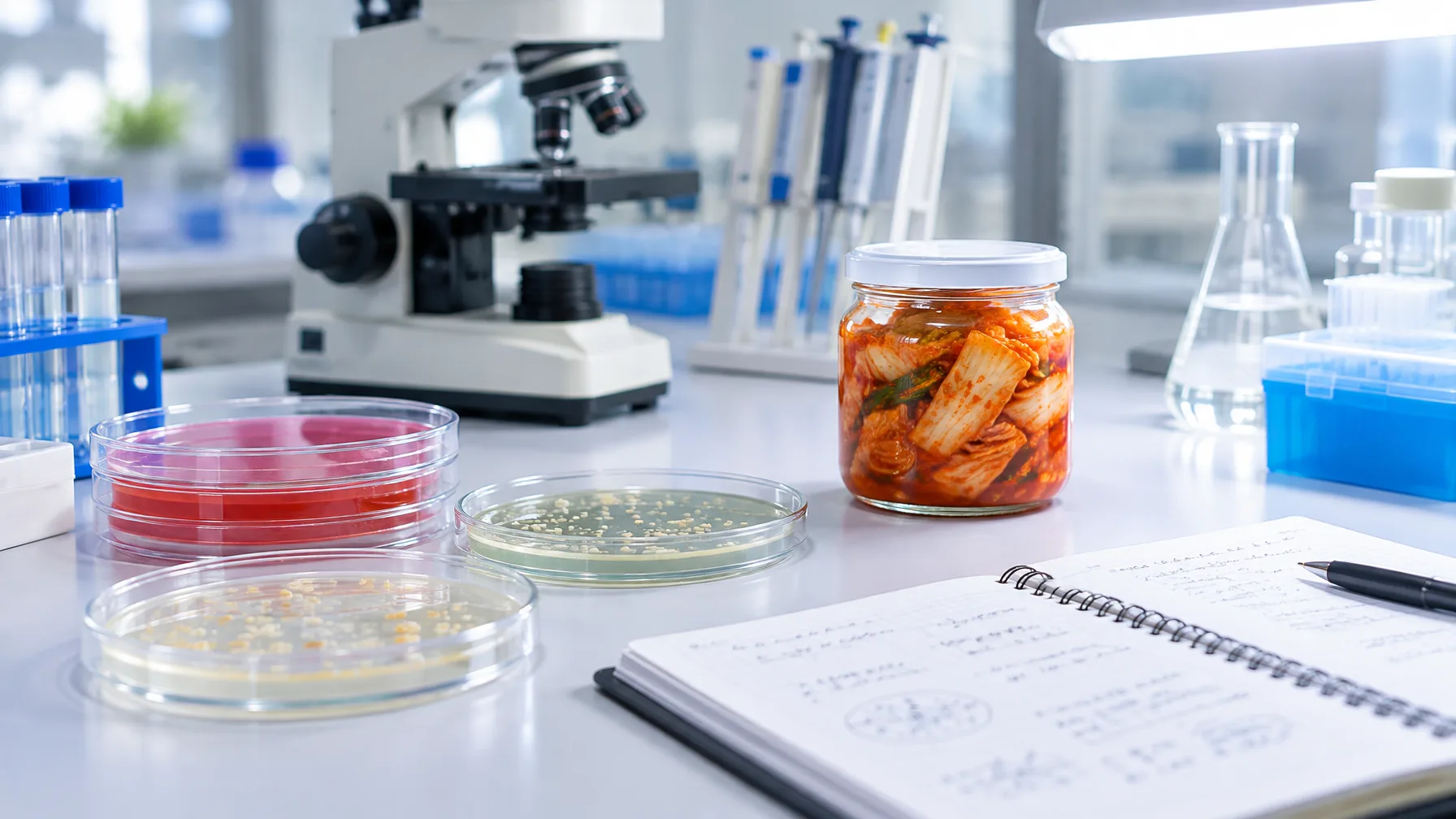
Lab science says kimchi's biological compounds stimulate immune function. They also lower oxidants and free radicals. They have been linked to lower risk of certain cancers, cardiovascular disease, metabolic syndrome and aging. That's a big list, but a systematic review of kimchi's clinical trials hasn't been done yet, so only a review protocol exists so far.
| Claim | What backs it | How solid it is |
|---|---|---|
| Lower blood lipids and artery-stiffness index | Growing data from people eating kimchi | Human data, encouraging |
| Lower LDL and total cholesterol | A randomized trial; another finding came from high-cholesterol rats | Mixed: human trial plus animal work |
| Stronger immune response | A small trial of 13 overweight adults | Early, needs bigger studies |
| Shifts in gut microbes and higher iron | Kimchi changes the makeup and number of gut microbes and raises iron | Interesting, still early |
| Lower body fat | A trial of Lactobacillus sakei, one strain isolated from kimchi | Strain-specific, not kimchi itself |
| Lower colorectal cancer risk | Some studies suggest it may help | Suggestive only |
| Protection against stomach cancer | Epidemiology is mixed | Limited, not consistent |
| Lower heart disease risk | A big reduction looks unlikely | Don't count on it |
The takeaway: treat the big claims as hopeful, not proven. Enjoy kimchi for the vegetables and flavor, and let the research catch up before you expect more.
Kimchi health risks start with salt, and eating it daily makes that count
Kimchi can be high in salt, and too much of it can raise the risk of heart problems. In Korea, kimchi is a major source of daily sodium. Average intake runs more than 1.5 times the World Health Organization recommendation.
Most US adults already take in too much salt, so a sodium-heavy kimchi is a poor fit. So is eating it every day without thinking. The advice is to choose a low-sodium product or make your own so you set the salt. More in Is Korean Food Healthy? Mostly Yes, Once You Watch the Sodium.
Salt shows up in other worries too. In live-animal studies, high sodium intake caused atrophic gastritis and intestinal metaplasia. It also strengthened cancer development driven by Helicobacter pylori. Nitrates and nitrites form during fermentation, and in the acidic stomach they can turn into cancer-causing N-nitroso compounds.
There's a gentler downside as well. The fiber and the live bacteria can cause bloating and stomach pain, so a small first serving is a sensible test.
Who should slow down: blood pressure, histamine, weak immunity and pregnancy
- Low-sodium diets, high blood pressure or heart concerns: kimchi can be high in sodium. It may be best avoided or limited.
- Histamine sensitivity: fermented foods contain histamine. People short on the enzyme that breaks it down can get headaches, hives, nausea or a runny nose.
- Weak immunity: kimchi has been linked to food poisoning, including E. coli and norovirus cases.
- Pregnancy or a chronic condition: ask a clinician before eating probiotics or fermented foods. Kimchi isn't right for everyone.
Histamine levels vary with the product and how it was made. In people who react to high doses, symptoms can include headaches or diarrhea.
Food safety is rarely a problem, but it's real. Kimchi contains live bacteria. If it's made or stored badly, harmful bacteria can grow during fermentation or storage. Kimchi has even been tied to an E. coli outbreak.
Choosing or making the healthiest jar, and what cooking does to it
Which kimchi is the healthiest? The one where you control the sodium. A store-bought jar can work if it's a low-sodium product, and making your own gives you the most say.
- Pick a low-sodium jar, or make a batch at home so you set the salt.
- Store it properly, since poor storage is where bacterial trouble starts.
- Eat it uncooked if you want the live bacteria.
- Start with a small serving and see how your stomach feels.
Cooking changes the picture. Heating kimchi can start to kill the helpful probiotics. A bowl of hot kimchi stew gives you less of that benefit than a cold side of it would.
Three mix-ups: probiotic pills, salt hiding in stews and the weight-loss hope
First, the bacteria in kimchi aren't the same thing as a probiotic supplement. Kimchi's fermentation microbes differ from probiotics, so you can't borrow the proven effects of probiotics for kimchi. Most probiotic research used supplements, which leaves it unclear how much the kimchi kind helps.
Second, the side dish isn't the whole salt story. Kimchi also goes into stews, dumplings, noodles and rice dishes. So real kimchi sodium is much higher than the plate of banchan suggests.
Third, is kimchi good for weight loss? Low-calorie, high-fiber foods like kimchi make you feel full, which helps with managing hunger. That's a modest, useful effect. The body-fat result in the table above came from one strain, not a bowl of kimchi.
Verdict: a good plate habit, with the salt kept in check
Yes, kimchi can be a healthy part of your plate. It brings fiber, vitamins and fermentation bacteria, though many of the bigger health claims are still early. The catch is salt: a daily side dish adds roughly 500 mg of sodium, so pick a low-sodium kimchi or make your own. Check with a clinician first if you have high blood pressure or heart concerns, are pregnant or have a chronic condition. Enjoy that first bite, and here's to a happy jar.
Comments
No comments yet.