
Cabbage for Kimchi: Why Napa Cabbage (Baechu) Is the Standard
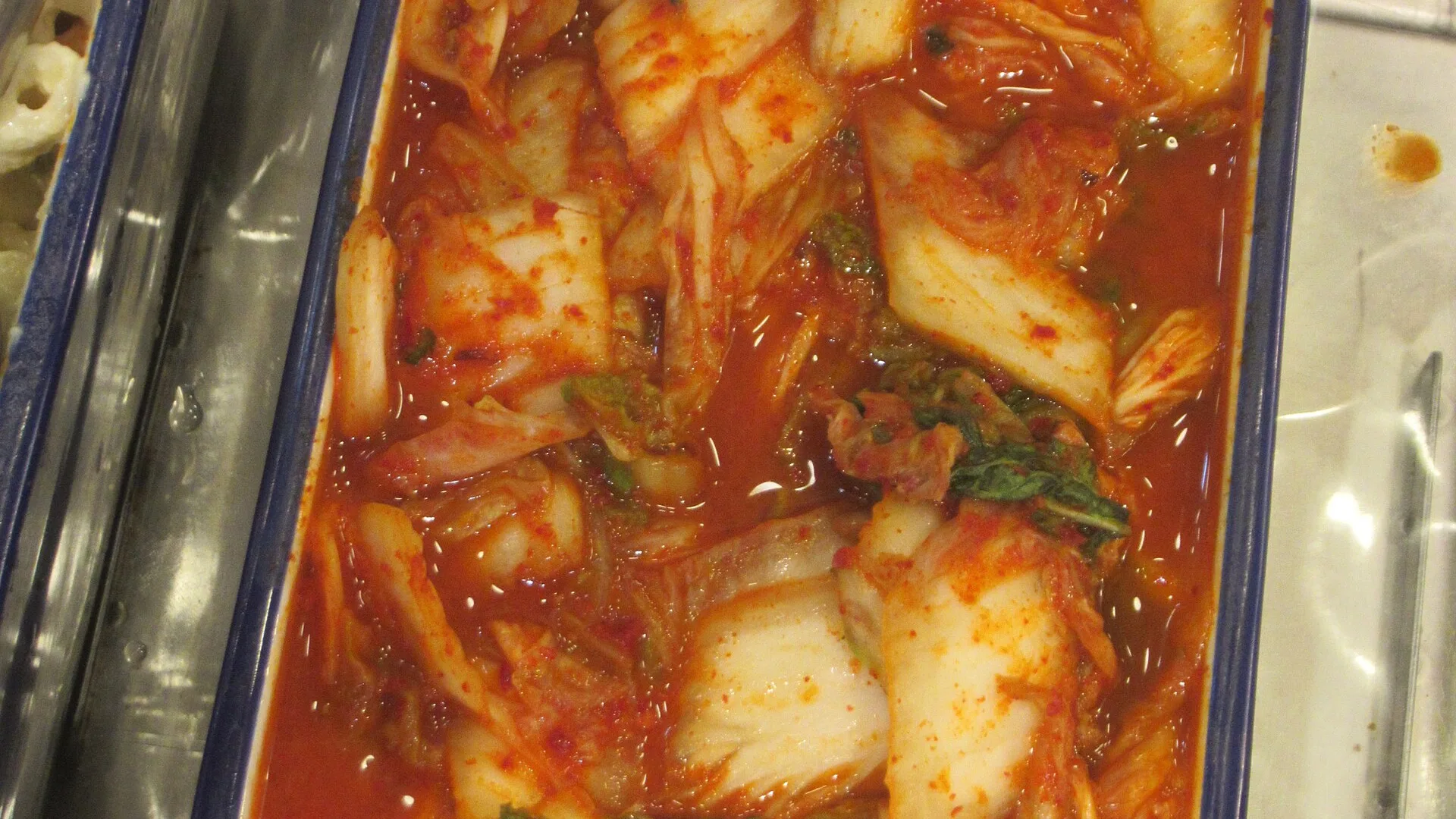 Photo: Wikimedia Commons / Wikimedia Commons (CC BY-SA 4.0)
The cabbage for kimchi is napa cabbage, called baechu in Korean. It's the classic base of the dish, and its crisp texture softens as it ferments. If you're shopping for your first batch, that's the head to put in the cart.
Napa cabbage (baechu) is the classic base, and its crunch softens as it ferments
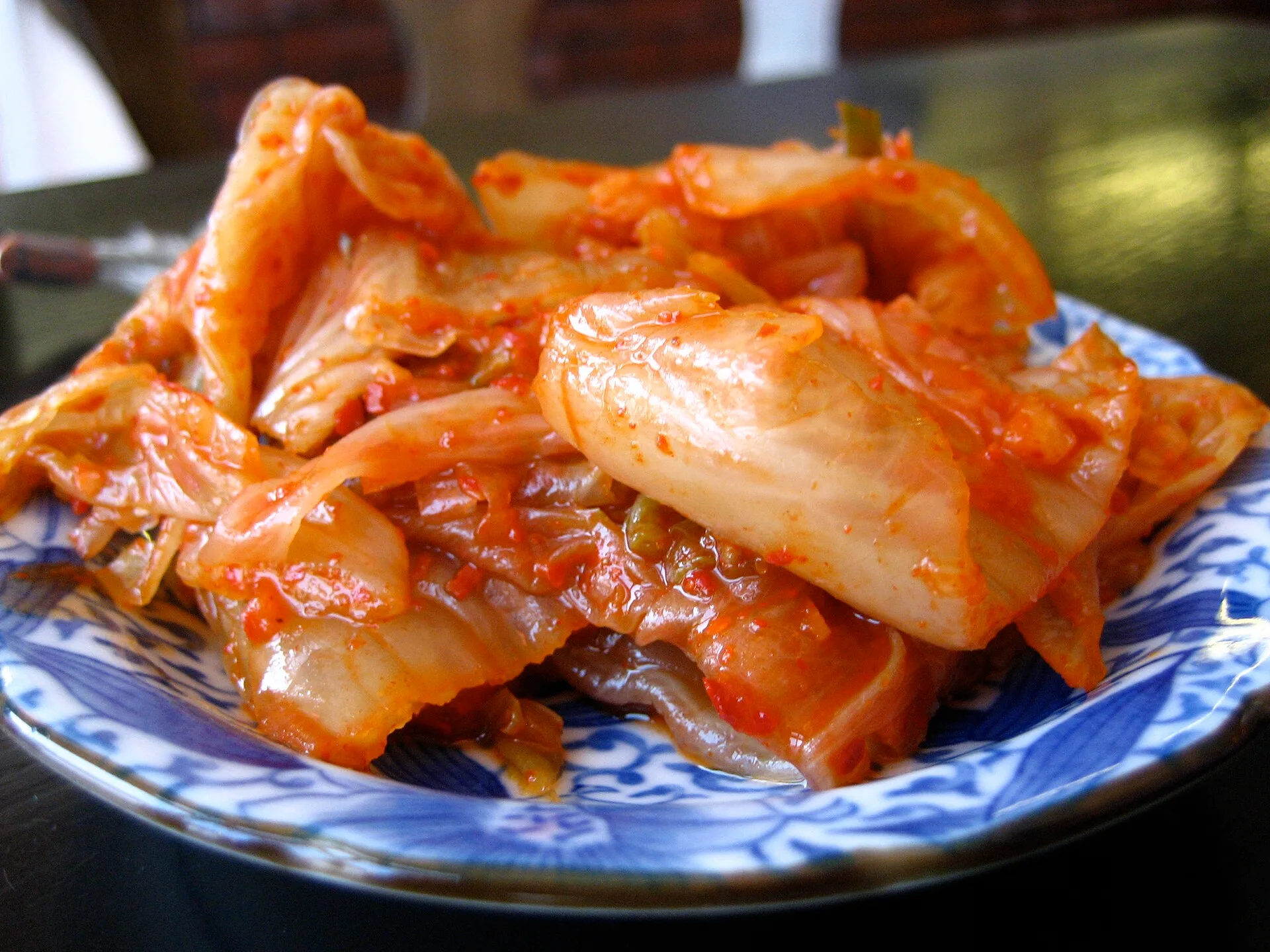 Photo: Jeremy Keith / Wikimedia Commons (CC BY 2.0)
Traditional kimchi is built on baechu. English-language recipes call it napa cabbage, and the two names mean the same vegetable. You start with a firm, crisp head, and fermentation does the softening for you. The leaves lose their raw snap but keep enough body to bite into.
A good head matters more than most beginners expect. Home cooks who judge their cabbage by the result look for one thing: kimchi that is still crunchy a week after mixing. One home cook says a poor cabbage ruined the family's big annual kimchi-making session, called kimjang, the year before.
For the bigger picture of where kimchi sits on a Korean table, see Korea's National Dish: Kimchi and How It Fits Every Meal.
A medium head weighs 2 to 3 pounds, and a bigger batch takes two
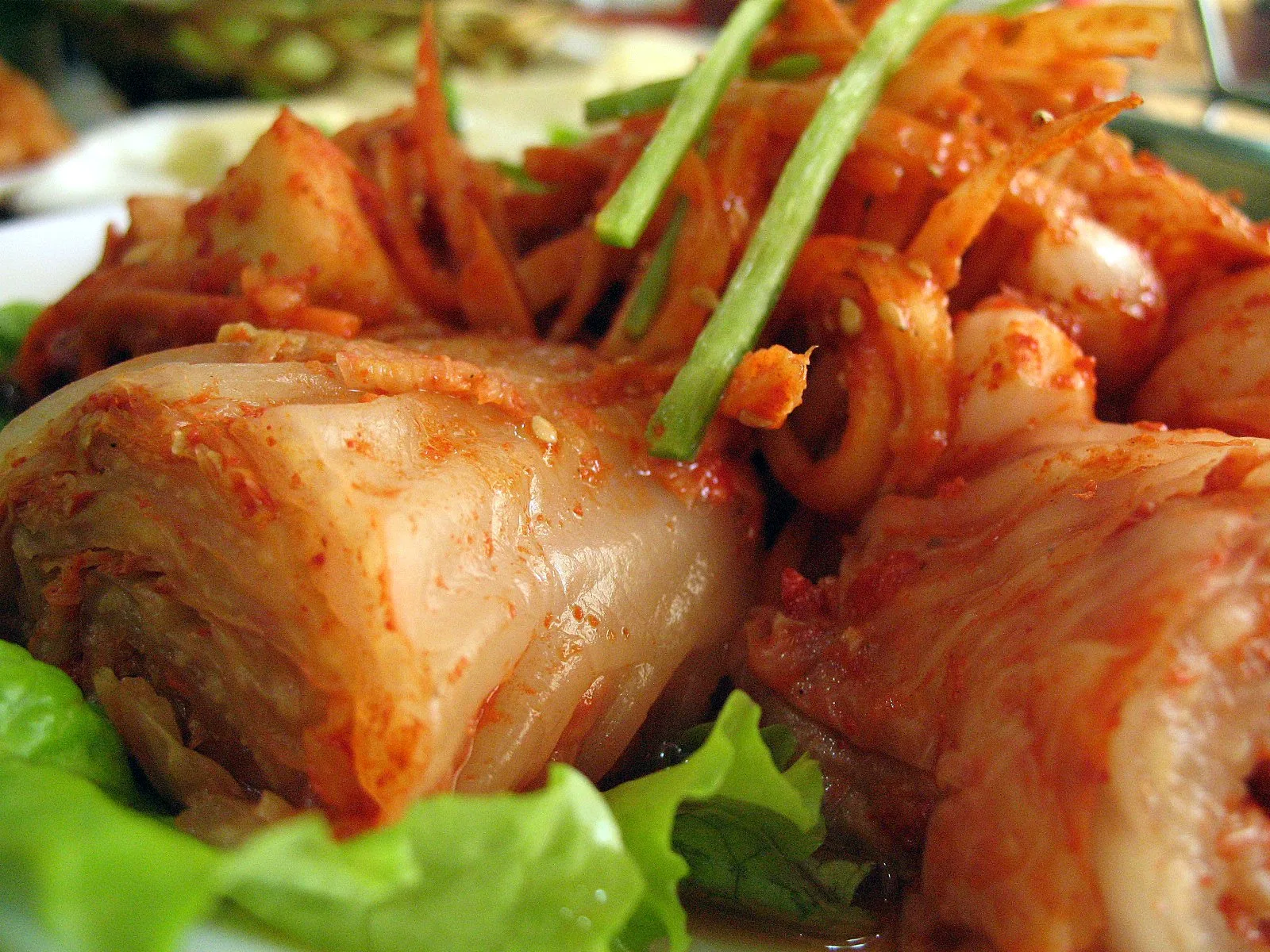 Photo: jqn (a flickr user) / Wikimedia Commons (CC BY-SA 2.0)
Recipes don't agree on head size. One calls for a medium head of about 2 pounds. Another uses a medium head of 3 pounds (1.3 kg). A larger batch uses two heads, about 6 pounds in all. The gap is mostly about what "medium" means at your store, so go by the weight on the scale.
As for yield, one of these recipes makes about 2 quarts of kimchi. That is a modest jar or two, which is a sensible size for a first try. You can always scale up to two heads once you know you like the result.
A few checks help you pick a good head. Cut one in half and look at the center: a straight, yellow interior is a good sign. The outer leaves should hold together without crumbling. After salting and rinsing, the leaves should stay on the head and not fall off in bits.
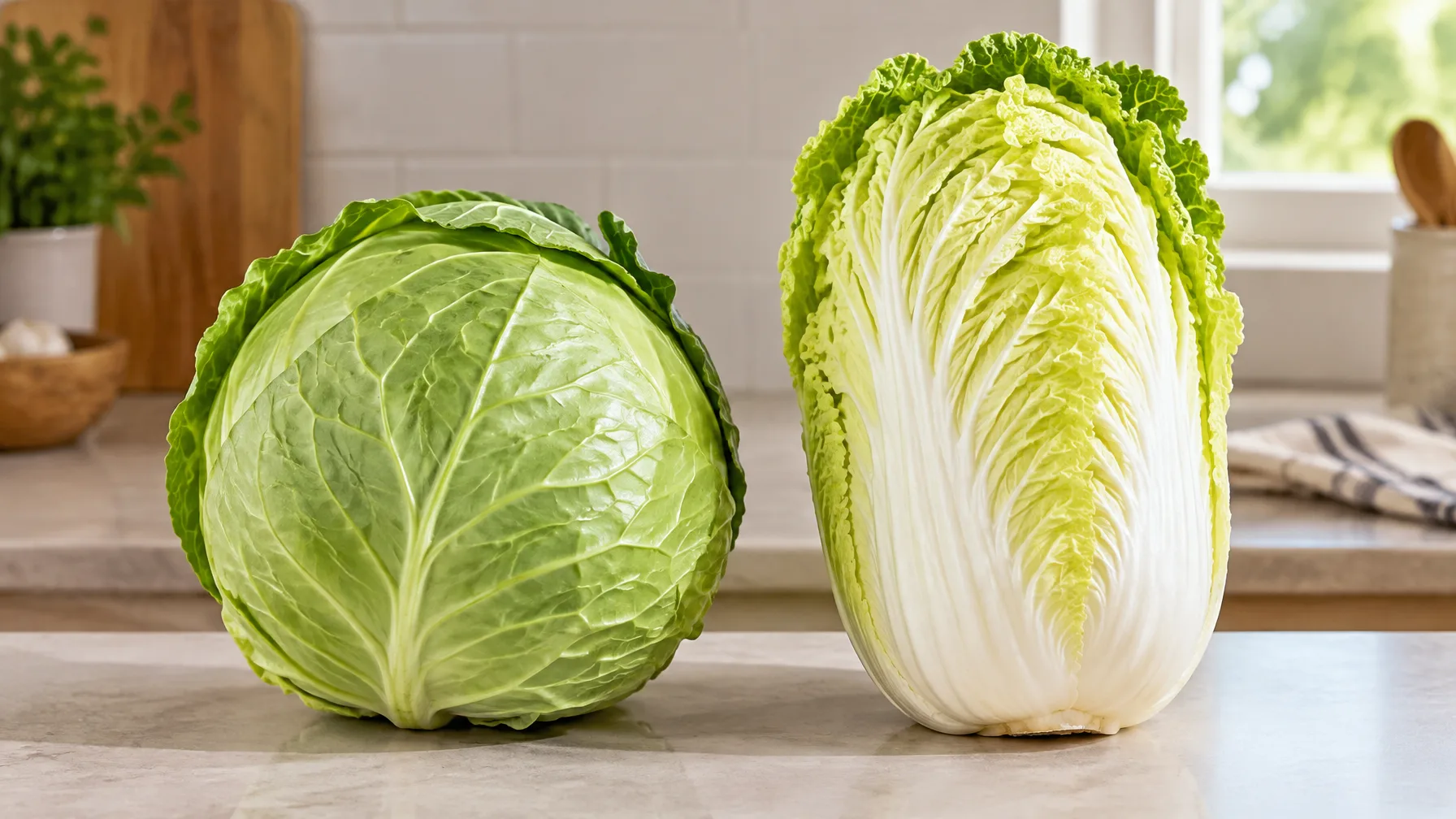
Green cabbage can stand in for napa, but expect a different texture
 AI-generated image
If you cannot find napa, regular green cabbage will work. Cooks often treat that as a perfect swap, and it is not. The texture comes out different, and the fermentation goes a little differently too. Think of green cabbage kimchi as a close cousin, not a copy.
The practical advice is simple. Use napa when you can, and keep green cabbage as the backup for a week when the store has none. If you're also swapping the radish, that choice is covered separately. See Korean Radish Substitute for Kimchi: Why Daikon Works.
Salt, rinse, drain: where the recipes agree and where they split
Salting is the first step and, in the view of experienced home cooks, the most important one. The usual method is to toss the cabbage with coarse sea salt and let it sit for 2 to 3 hours. One recipe uses about ½ cup. Warmer kitchens cut that time down. Some cooks who tried several lengths settled on 6 hours as the best. If you're new to this, start with the shorter window.
Rinsing and draining differ from cook to cook, too. In one version, you rinse the salted cabbage three times in cold water, then let it drain for 15 to 20 minutes in a colander. In another, you rinse once, drain, rinse a second time, and let it sit 10 to 15 minutes until it's fully drained. Either way, the surface salt comes off and the water goes out before any seasoning goes on.
- Weigh the head: 2 to 3 pounds is a medium head.
- Salt it with coarse sea salt.
- Let it sit for 2 to 3 hours, less if the kitchen is warm.
- Rinse in cold water until the surface salt is gone.
- Drain in a colander for 10 to 20 minutes.
- Mix with the seasoning and pack the jar.
| Stage | What the recipes say | Where they differ |
|---|---|---|
| Head size | Medium head of napa | 2 lb in one recipe, 3 lb (1.3 kg) in another |
| Bigger batch | Two heads | About 6 lb total |
| Salting | Coarse sea salt, tossed through | 2 to 3 hours in most, 6 hours in one tester's trials |
| Rinsing | Cold water | Three rinses, or rinse, drain, rinse again |
| Draining | Colander until dry | 15 to 20 minutes, or 10 to 15 minutes |
| Room-temperature ferment | Out of direct sunlight | 1 to 2 days, depending on the weather |
| Fridge | Kimchi goes in after the room-temperature stage | One tub stayed good after 4 weeks |
Skip iodized salt, then leave the jar out for a day or two
Salt choice is an easy place to go wrong. Avoid salt with iodine or anti-caking agents, because both can get in the way of fermentation. Coarse sea salt is what the recipes use.
Once the cabbage is mixed and packed, the jar goes on the counter, out of direct sunlight, for 1 to 2 days. The weather decides which: warmer rooms ferment faster. Then it goes in the fridge. Some cooks move the kimchi to a different container to speed things along. They say that gave a tangier, more sour flavor. Another reports a tub of kimchi kept for 4 weeks in the fridge still tasted fresh.
Kimchi does get more sour over time and can spoil. If you see mold or smell something strongly off, throw it out. Clean hands, jars, and tools matter when you make it at home, since poor hygiene or storage can let harmful bacteria grow.
Who should go easy on kimchi, even with the right cabbage
Kimchi can be high in sodium. Anyone watching salt, blood pressure, or heart health may want to eat it in small amounts. Making it yourself lets you control the salt. Fermented foods also contain histamine. It can cause headaches or an upset stomach in people who are sensitive to it. The fiber and probiotics can cause bloating or stomach pain in some people too.
Kimchi has also been linked to outbreaks of E. coli and norovirus. If you're pregnant, ask your doctor before adding fermented foods to your diet. Same if you have a chronic condition or a weakened immune system.
Buy napa for kimchi, and keep green cabbage as the backup
Buy napa cabbage (baechu) for kimchi. Its crisp leaves soften as they ferment, which is the texture the dish is known for. Green cabbage works if you can't find napa, but expect a different texture and a different fermentation. Weigh your head, salt it, rinse and drain it well, and give the jar a day or two out of the sun before it goes cold.
Comments
No comments yet.