
Korean Radish Substitute for Kimchi: Why Daikon Works
 AI-generated image
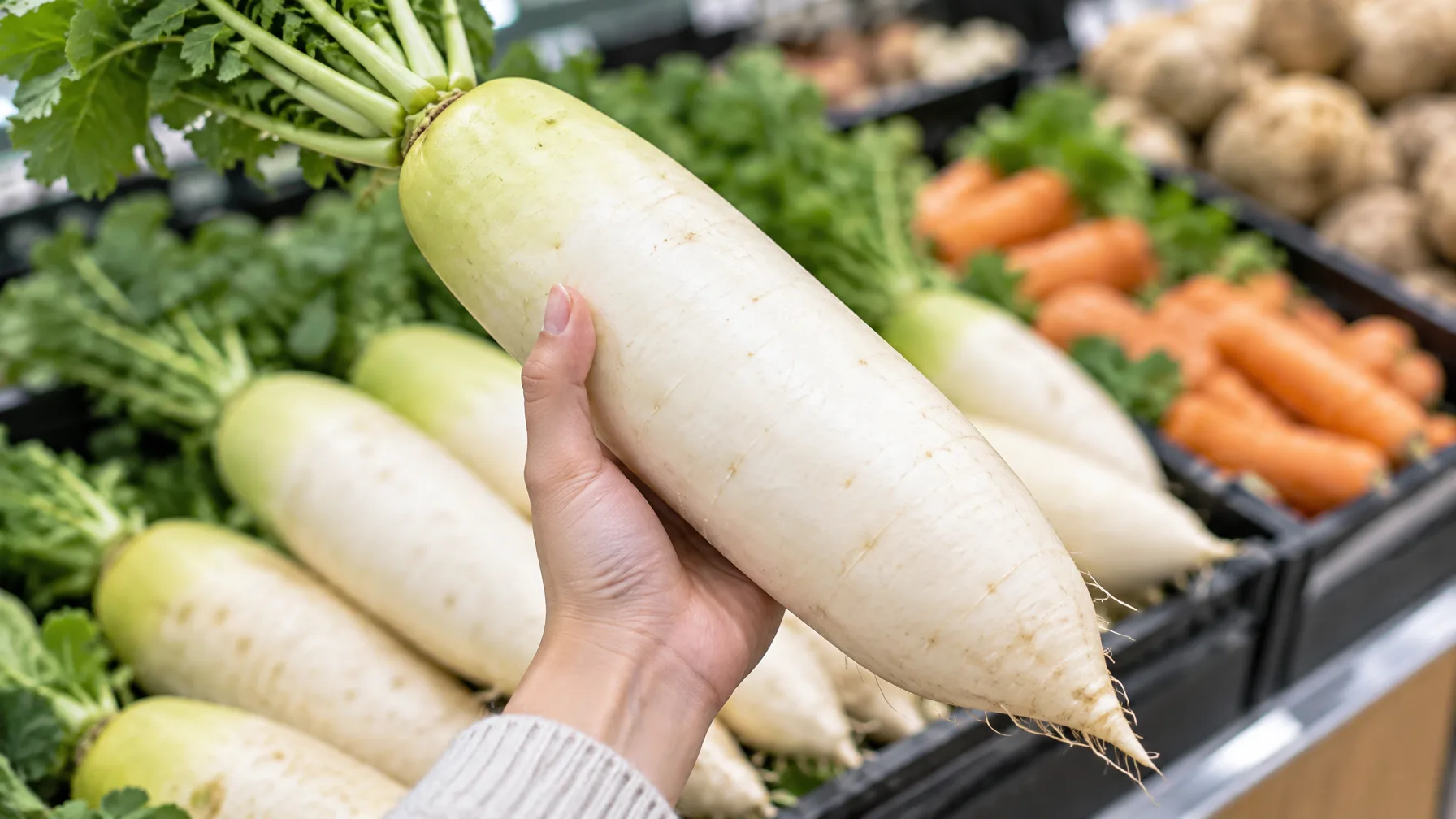
If you can't find Korean radish (mu) for kimchi, use daikon. It is the best Korean radish substitute for kimchi. It's mild like mu, a bit sweeter, less peppery, and crunchy enough to cut small. That's the short version for a kimchi recipe when mu isn't available. Below you'll find how the two differ, how much to buy, what else works, and what to leave on the shelf.
Use daikon when mu is missing from the shelf
 AI-generated image
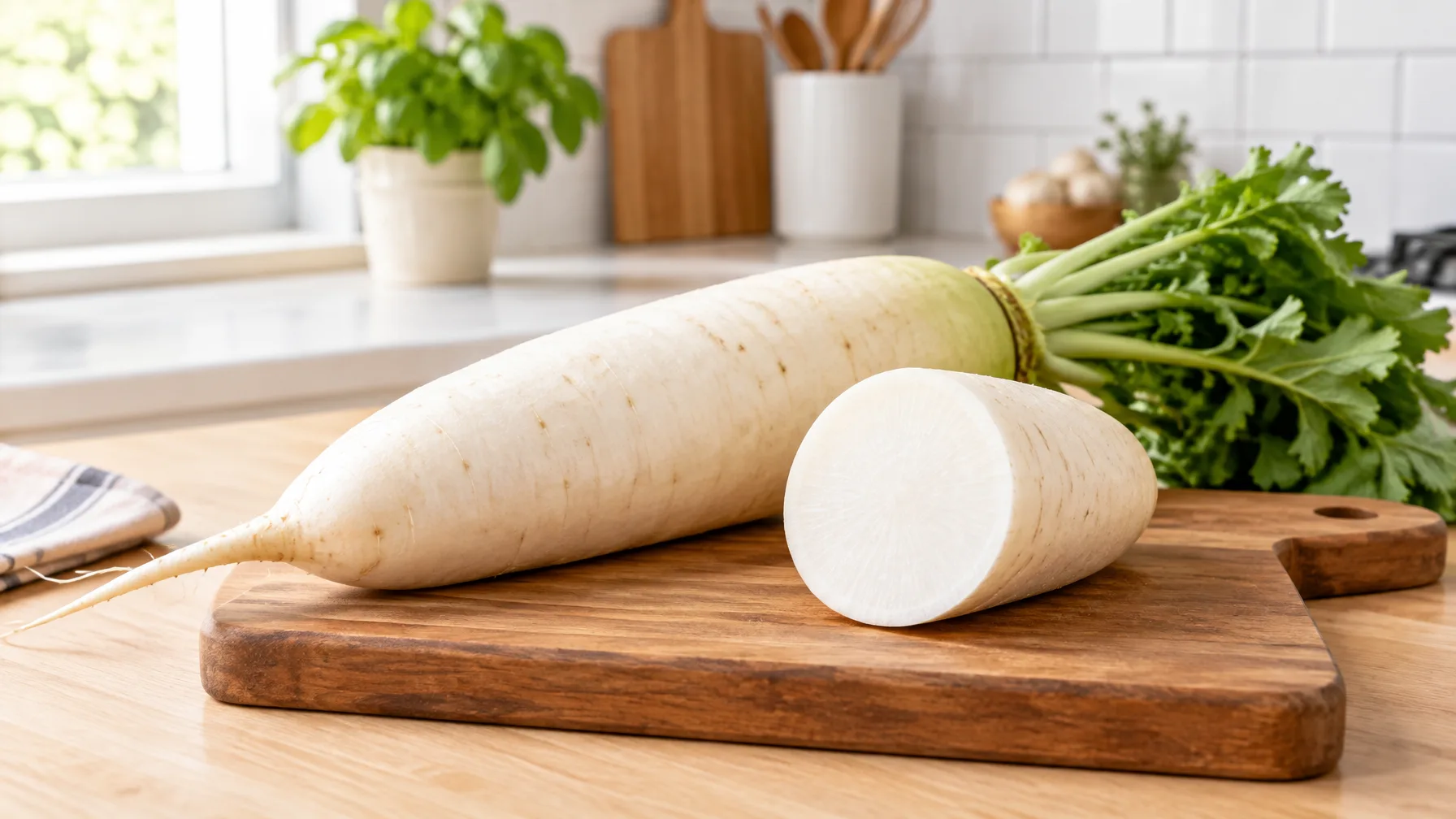
Here is a quick ranking of the stand-ins worth considering. Each one is covered in more detail below.
| Substitute | Verdict | Why |
|---|---|---|
| Daikon | Best swap | Closest match to mu |
| White turnip | Works | Sweet, with a texture like daikon |
| Napa cabbage heart | Works | Fine in kimchi, soups and stews |
| Red radish | Borderline | Texture is fine, flavor is stronger |
| Jicama | Skip | Hard to find in the US |
| Horseradish | Skip | Far too hot and pungent |
| Beet | Skip | Flavor is too strong and distinct |
Daikon and mu look alike but not identical
 AI-generated image
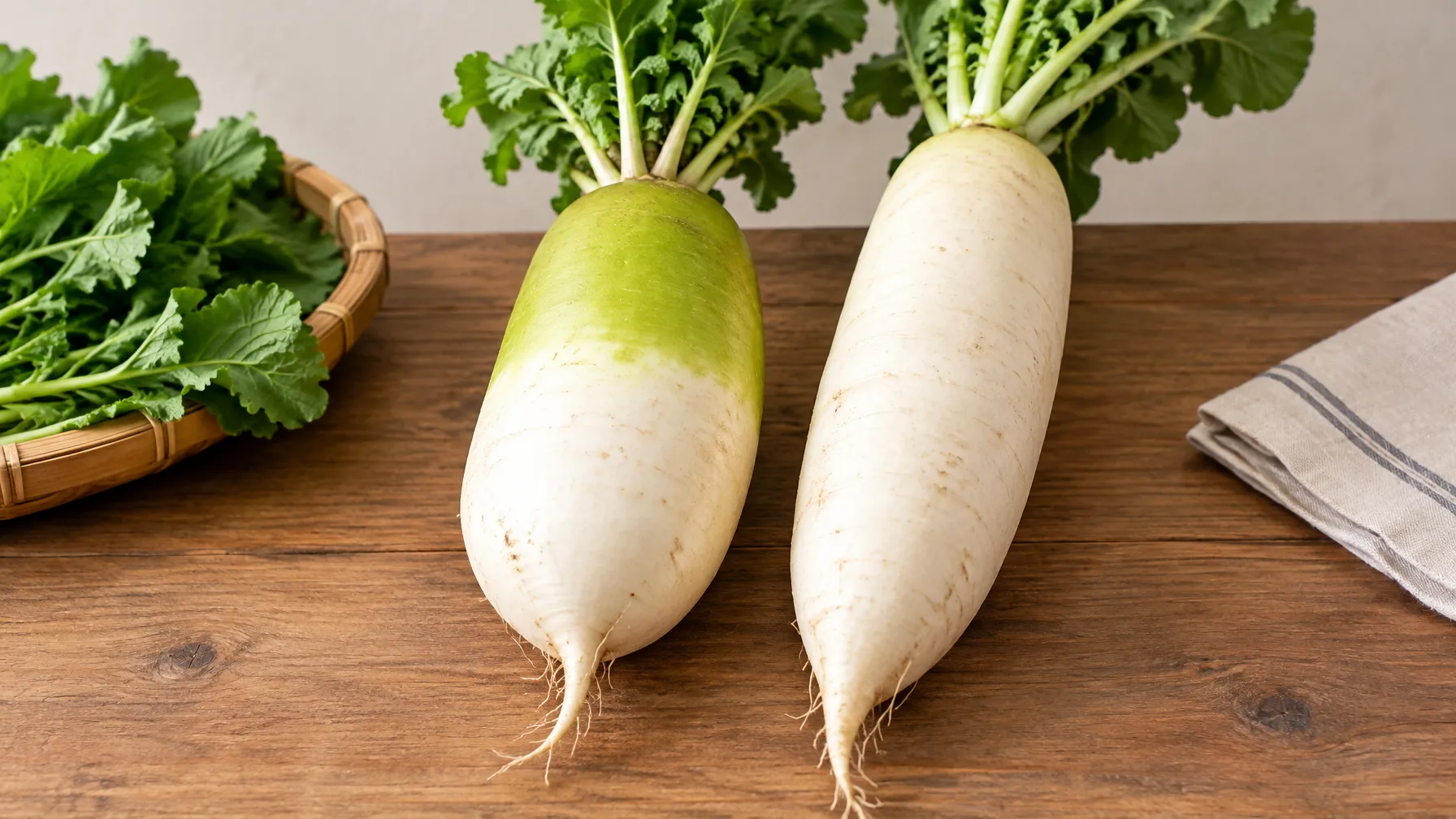
Some daikon even looks like mu, with a green top and a white bottom. Don't let that fool you into thinking they are twins. Korean radish has firmer flesh, and its greens are softer.
Season matters too. Korean radish is naturally sweetest and firmest at the autumn harvest. If you're making kimchi at another time of year, relax about a swap. There's no need to chase the perfect radish.
Yes, you can swap daikon in for Korean radish
 AI-generated image
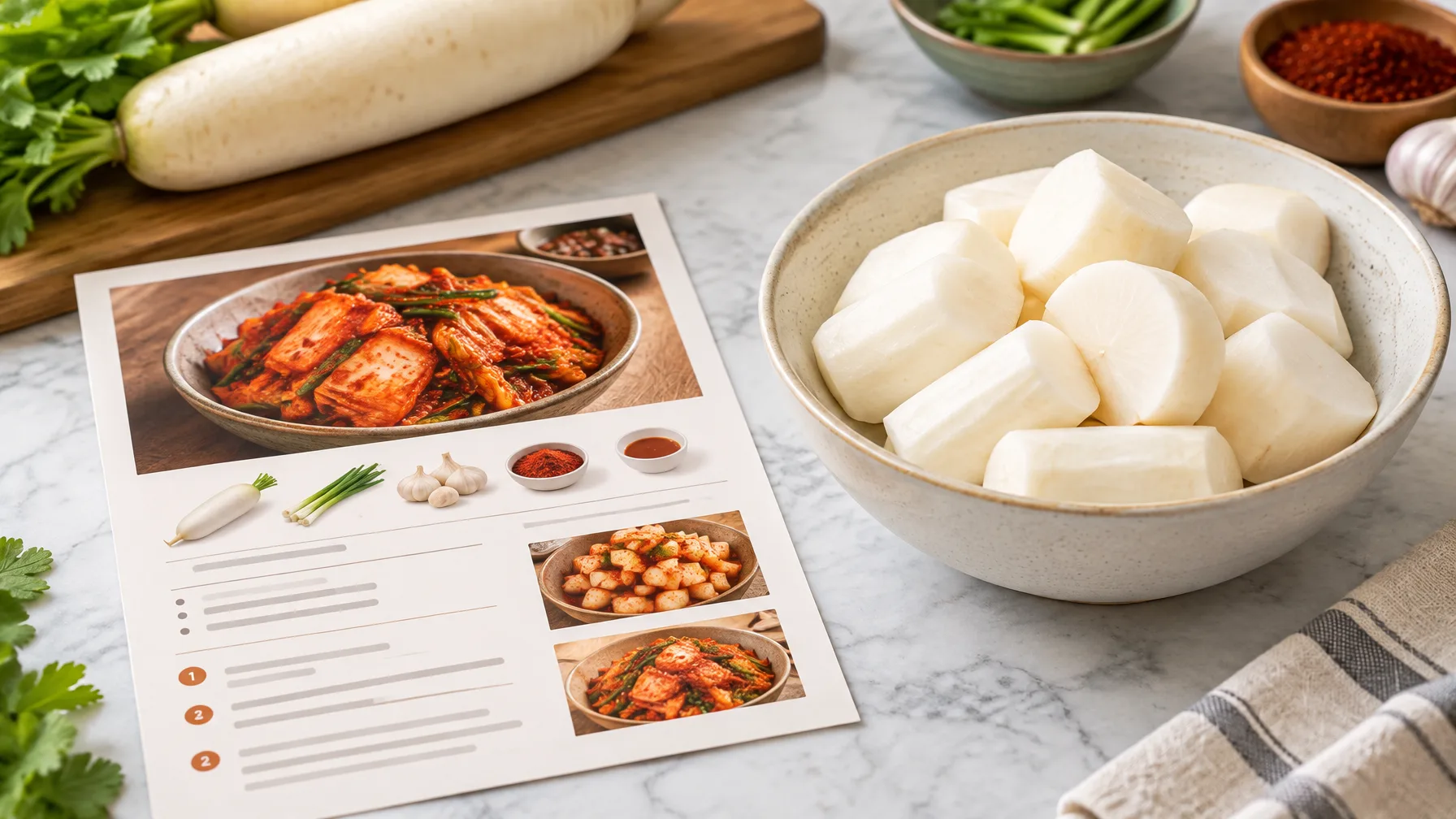
Can you replace Korean radish with daikon? Yes, and recipes make it easy. They write "Korean radish or daikon" as a single ingredient line. Some say outright that another kind of white daikon is fine. You don't need to do any conversion math.
Daikon earns the top spot because it is the one vegetable that is both easy to cut small and gentle in flavor. The sweeter, less peppery taste means your kimchi will lean slightly milder than one made with mu.
How much radish to buy before you start
Recipes vary on quantity. Amounts range from 1.1 kg (2.5 lb) of Korean radish or daikon, washed and peeled, to 3 lb of the same. Buy the amount your own kimchi recipe specifies, and add a little extra if you want room for trimming.
Beyond the radish, the rest of the pantry stays the same. Want the other basics to keep on hand? See the starter pantry guide.
White turnip and napa cabbage heart are the next best choices
If daikon is sold out, what else can you use? White turnip is a good second choice. It is sweet and has a texture close to daikon's. A napa cabbage heart also works in kimchi. It does a decent job as a Korean radish substitute for soup and stews too.
You can also mix. Only part of the Korean radish needs to be replaced, using turnip, carrot and white radish. A mixed batch like this can then be fermented. Icicle radish, with its greens and some red bell pepper added, also works well.
Four stand-ins that cause trouble in kimchi
Can you use regular radish instead of daikon in kimchi? The texture holds up, but red radish tastes slightly different and stronger, so it isn't ideal for every Korean dish. Treat it as a last resort.
Jicama has a similar crunch. But in the US it is about as hard to find as Korean radish, so it doesn't solve your problem. Horseradish root is much hotter and more pungent, and it is not a good stand-in on its own. Beet is the worst fit: its flavor is so strong and distinct that it doesn't read as radish at all.
Longer fermenting makes the kimchi stronger and sourer
Taste changes a great deal with fermentation time. The longer kimchi ferments, the stronger and sourer it gets. With a substitute, adjust how long you let it go until it tastes the way you want. Don't copy a recipe's timing blindly.
Making kimchi with daikon, step by step
- Pick white daikon, or a turnip or napa heart if that's what the store has.
- Wash the radish and peel it.
- Cut it small. Daikon is crunchy enough to hold up at a small size.
- Use the same amount your kimchi recipe lists for Korean radish.
- Season and salt as the recipe says. Need a refresher on salt? How to Make Simple Kimchi at Home: Which Salt to Use?
- Taste as it ferments and stop when it reaches the sourness you like.
Where substitute batches tend to go wrong
Grated radish adds water. If your seasoning includes grated radish, make the sticky rice paste thick and dry. Otherwise the seasoning turns loose and watery.
Prep is the other trap. Washing, trimming and cutting radish into strips is a lot of work in a traditional napa kimchi. You can skip the seasoned radish strips and grate the radish into the seasoning instead. The grated radish adds moisture to the seasoning, so make the glutinous rice paste thick and without excess water. Kimchi made without the strips looks tidy. It suits cooking in dishes like jeon (savory pancakes), stews and stir-fries.
What no substitute can promise
Even the best swap tastes a little different from the original, and the texture will not match perfectly either. Daikon is sweeter and less peppery, and mu has firmer flesh. The gap is small, but it is real.
One more thing to keep straight: kkakdugi is a separate kimchi made with cubed radish. It is not a stand-in for napa cabbage kimchi, so don't treat it as a swap.
Reach for daikon, and taste as you go
Use daikon: it's the closest swap, a little sweeter and less peppery than Korean radish. White turnip or a napa cabbage heart can also work, but skip horseradish and beets. Whatever you pick, expect a slightly different taste and texture.
Comments
No comments yet.