
Japchae Noodles: Boil 6-7 Minutes, Rinse Cold, Stay Chewy
 AI-generated image
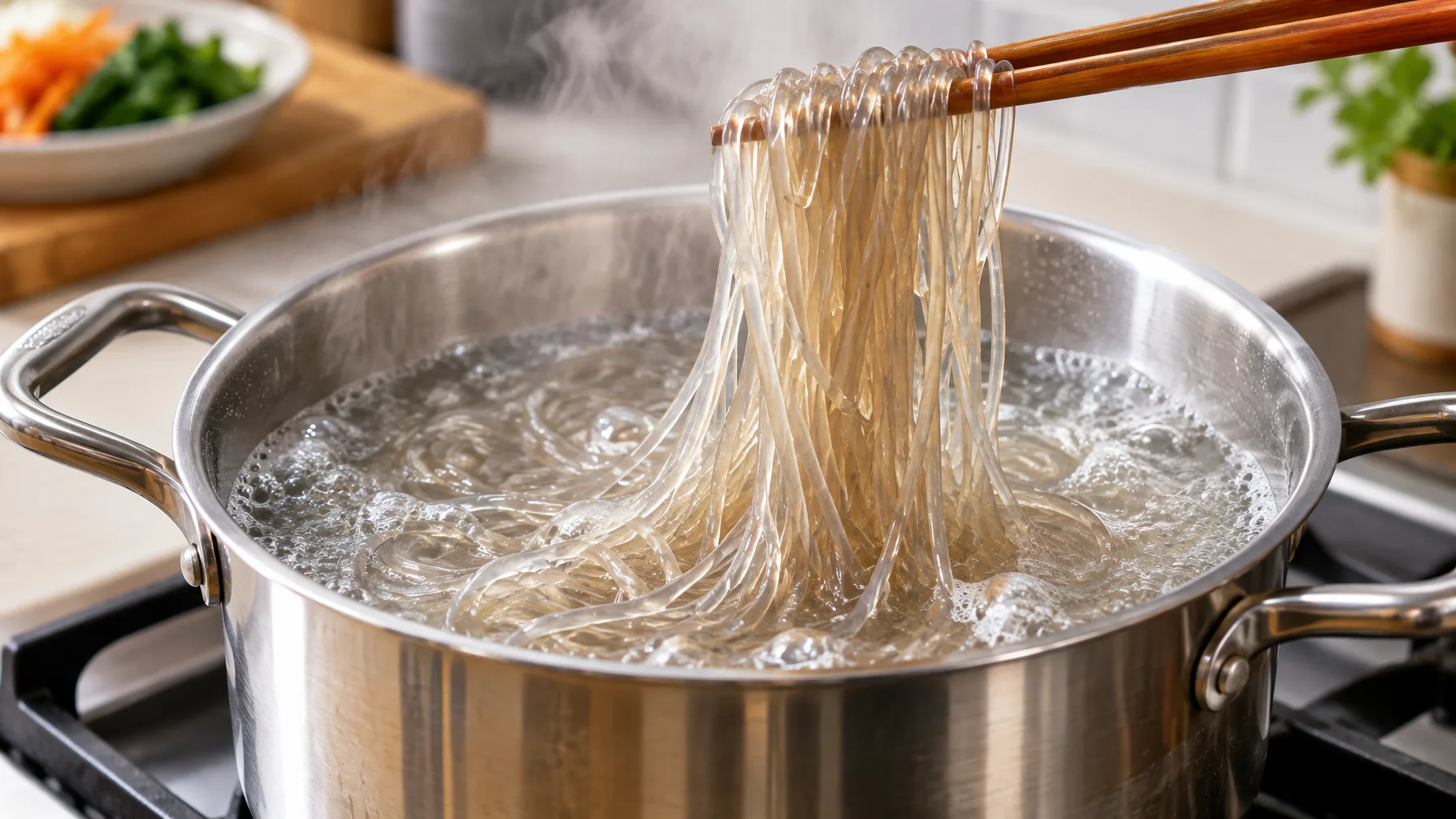
For chewy japchae, boil the sweet potato starch noodles (dangmyeon) for about 6-7 minutes until al dente. Rinse them right away under cold running water. Then toss the drained noodles with 1 tablespoon of sesame oil so they don't stick. First-timers usually go wrong at the noodles, not the vegetables or the sauce. So this guide starts there.
Boil 6-7 minutes, rinse cold, toss with 1 tablespoon sesame oil
 AI-generated image
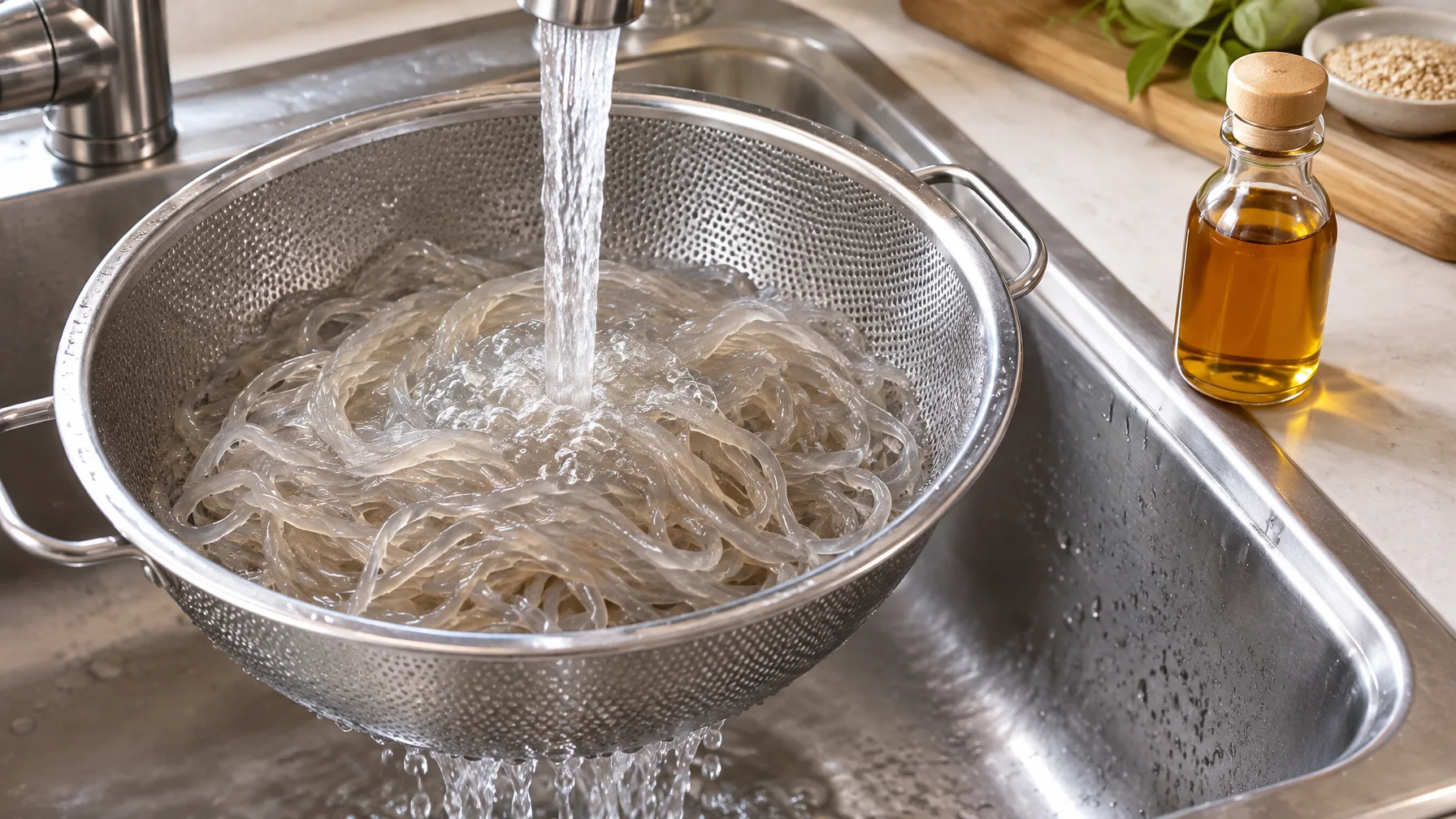
Koreans have a word for the texture you want: jjolgit. It means chewy with a springy, pleasant bite. Not tough, and not undercooked. Japchae noodles have a mild, neutral flavor, so the bite is most of what you taste. Boil them to al dente, stop the cooking fast, and oil them so they stay loose. Do those three things and the noodles end up springy rather than limp or stiff.
Dangmyeon are clear sweet potato noodles, so here is what to gather
 AI-generated image
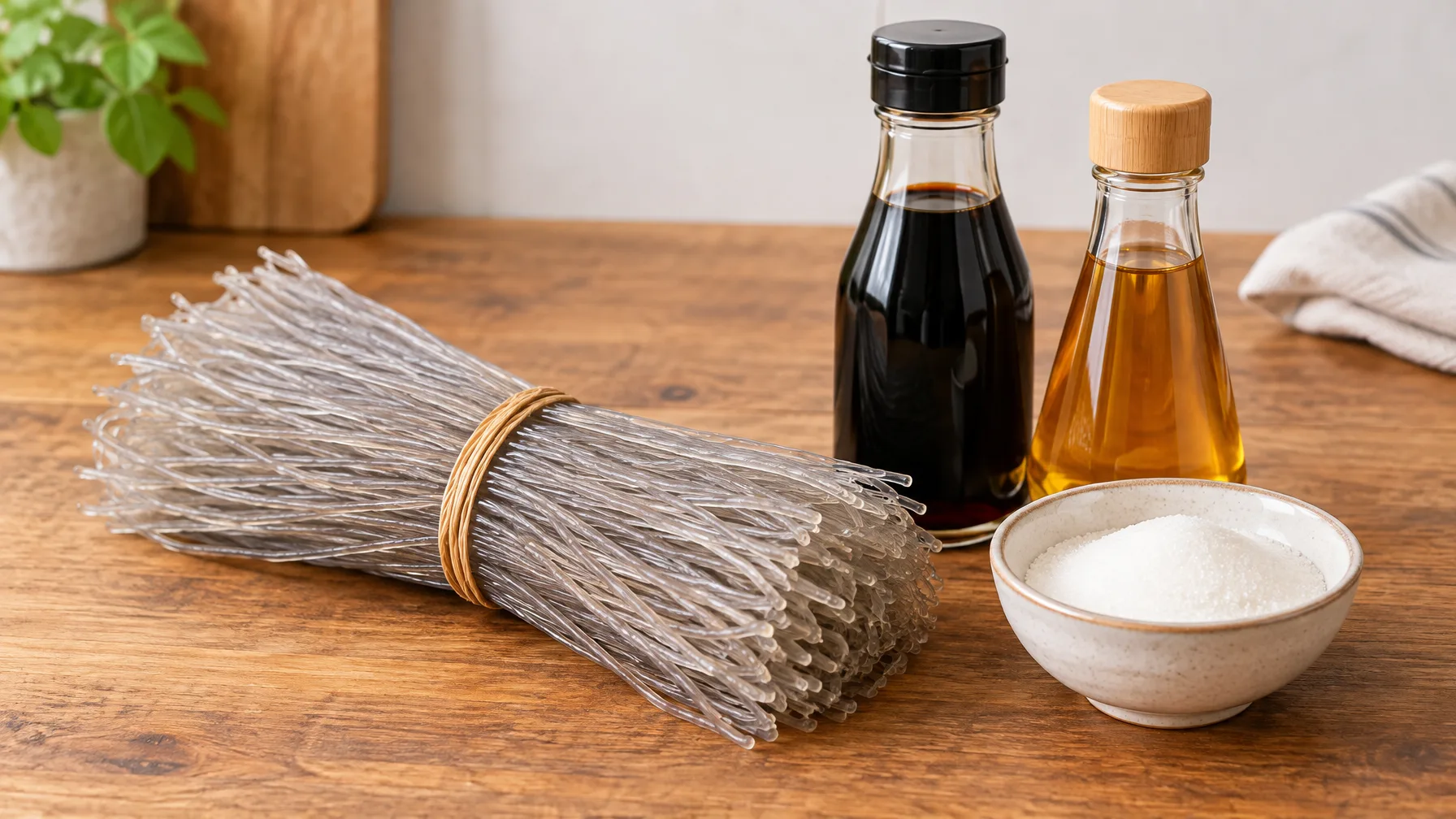
Dangmyeon are Korean noodles made from sweet potato starch. They turn almost see-through once cooked. That is why English-language cooks also call them glass noodles or cellophane noodles. If you shop for the Japchae recipe ingredients in a Korean grocery, look for a bag labeled dangmyeon. It may also say Korean glass noodles. They are chewy and taste neutral, which lets the sauce do the talking.
The sauce is just sesame oil, soy sauce (tamari works) and sugar. Add spinach, shiitake and onion for the vegetables. Many versions also include very thin slices of beef, and a vegan batch simply leaves it out. You also need a colander, scissors and a big pot. If your pantry is still bare, check this list. Basic Ingredients in Korean Cooking: Your Starter Pantry It covers the soy sauce and sesame oil end of it.
Why the cold rinse keeps noodles from going mushy
 AI-generated image
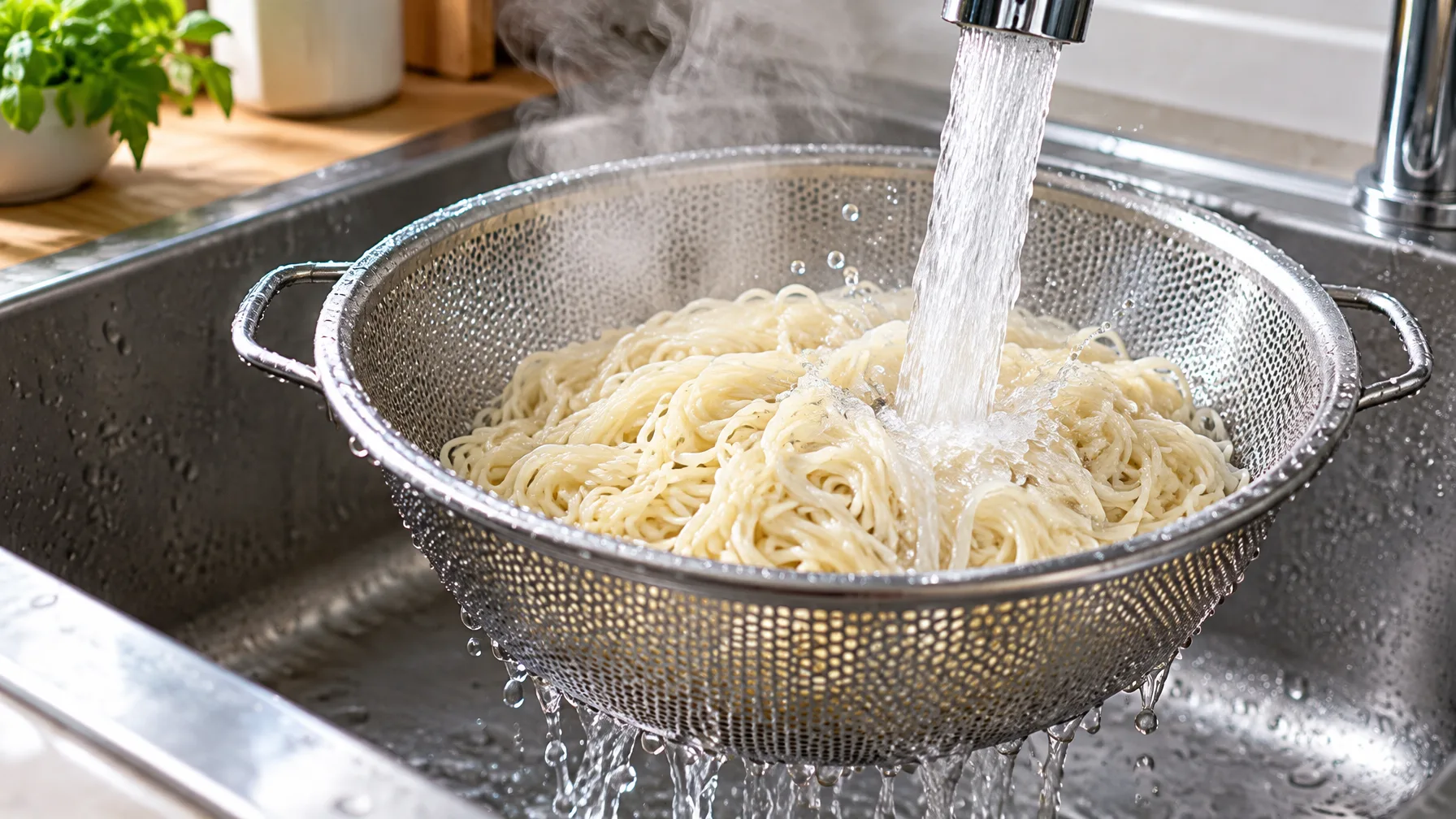
Hot noodles keep cooking even after you drain them. The heat trapped inside the strands pushes them past al dente while you're busy with the vegetables. Pour them into a colander and rinse them well under cold tap water right away. The cold water stops the cooking, so they stay chewy instead of turning soft and slippery.
Once the water has drained off, add the sesame oil and toss gently. Gently matters, since you're coating the strands, not working them. The oil keeps the noodles from sticking to each other, and that makes the later stir-fry far easier.
Do you need to soak dangmyeon first? You can skip it
Some package directions, such as the Sempio brand's, tell you to soak the noodles in warm water for 20 minutes. They then have you boil them 6-7 minutes. You can skip the soak and boil straight from the bag. The boil is the same either way, so skipping saves you 20 minutes and a bowl to wash.
If you do like to follow the package, go ahead and soak. Just know the boil time doesn't change.
A full japchae takes about 20 minutes, and the noodles spend 3-5 of them in the pan
Japchae comes together in under 30 minutes. A typical recipe gives 10 minutes of prep and 10 minutes of cooking, 20 minutes in total.
- If you're using spinach, blanch it in boiling water for about 30 seconds, stirring until it wilts fully. Lift it out, rinse it cold, squeeze out the water and halve it. Keep the pot of water.
- Cook the noodles in that water until al dente, 6-7 minutes.
- Drain into a colander and rinse right away under cold running water.
- Toss the drained noodles gently with 1 tablespoon of sesame oil.
- Snip the noodles with scissors into lengths of about 6 inches.
- Add the noodles to the pan with sesame oil, soy sauce and sugar. Stir for 3-5 minutes so the sauce spreads and the noodles warm through.
- Finish with scallion greens and sesame seeds, taste, and adjust the seasoning. Japchae is happy served at room temperature.
Reusing the spinach water for the noodles saves you a second pot. The scissors matter too. Cutting the noodles to about 6 inches makes them easy to stir and easy to eat with chopsticks. If the noodles clump in the pan, add a splash of water and loosen them. A little extra soy sauce while tossing is fine if the dish tastes flat.
No spinach, shiitake or onion? Garlic chives, wood ear and garlic step in
Japchae is forgiving about vegetables, and cooks swap in what they have. The table below lists the swaps.
| If you can't find | Use instead | Good to know |
|---|---|---|
| Spinach | Garlic chives (buchu) and green bell pepper | Handy when spinach is pricey |
| Shiitake | Wood ear mushroom | Dried shiitake also works but needs a soak of at least 30 minutes |
| Onion | Garlic | Adds the savory punch the onion would have given |
Where first-timers slip: over-stirring and under-boiling
The classic mistake is stir-frying the noodles too long. Long frying makes the noodles lose their shape entirely, which is why the pan time is only 3-5 minutes. You aren't cooking the noodles again, just coating them and warming them through.
The opposite problem is hard noodles. The fix is simple: boil a little longer next time.
Adjusting the noodle timing
Brands, pots and stoves differ, so noodle times vary a bit. You will also see 7 minutes, or 7-8 minutes. Neither gives a precise way to judge the chew. Start with the 6-7 minute window, then pull a strand out and bite it.
A few other chores add time. Slicing beef paper-thin is easier if you half-freeze it first, which takes more planning. Dried shiitake adds at least 30 minutes of soaking.
Boil, rinse, oil, then a short stir: your chewy japchae plan
Boil the dangmyeon for about 6-7 minutes, rinse it cold right away, and toss it with 1 tablespoon of sesame oil. Then stir it with the sauce for only 3-5 minutes so it stays chewy. If your noodles come out hard, boil them a little longer next time.
Comments
No comments yet.