
How to Make Tteokbokki at Home Without Mushy Rice Cakes
 AI-generated image
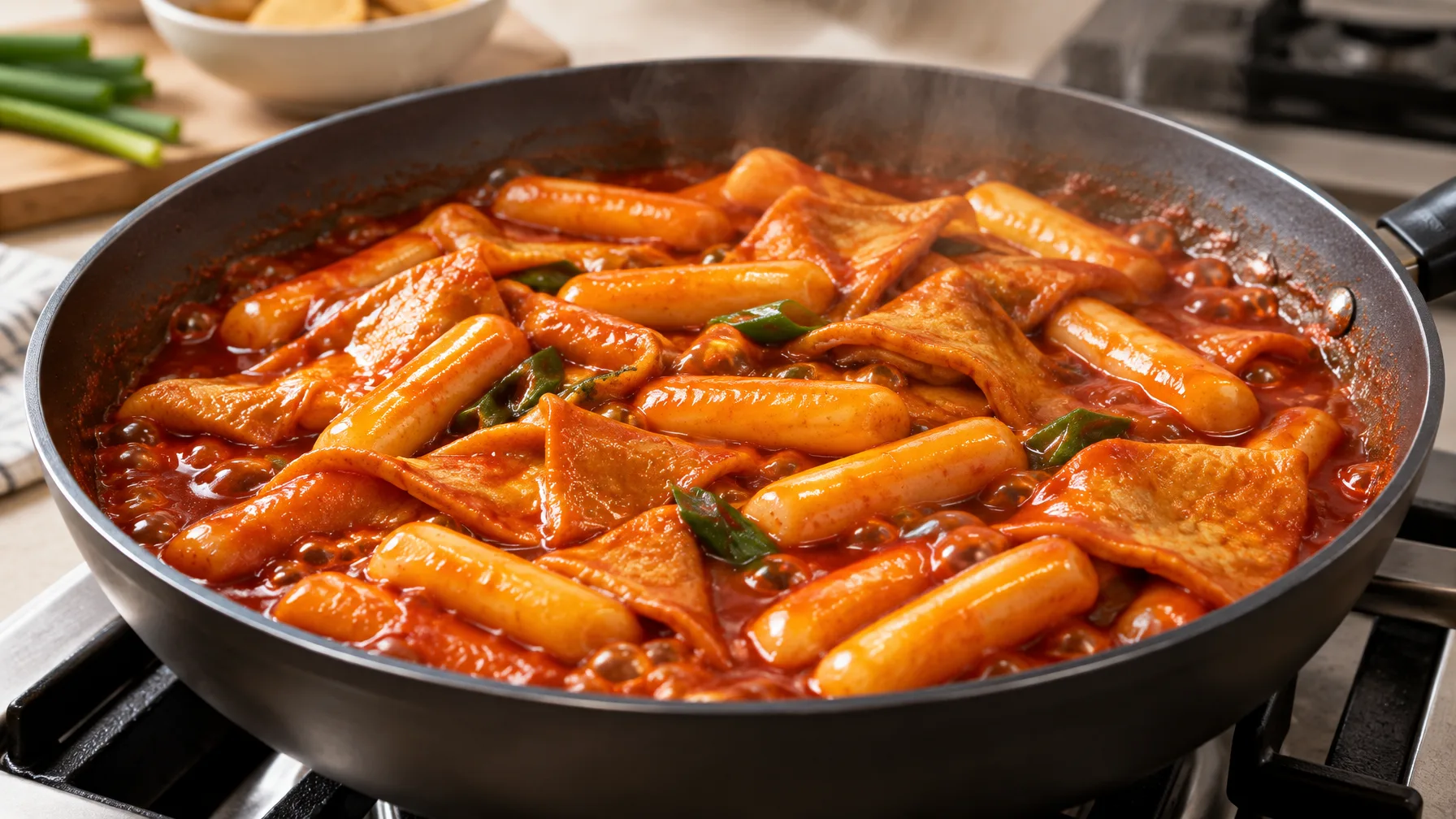
To make tteokbokki at home, soak refrigerated cylindrical garae-tteok (long rice cakes) in warm water for 10–15 minutes. Then simmer it with fish cake over medium heat for 10–12 minutes. The sauce is made of gochujang, gochugaru, soy sauce and sugar. Gochujang is fermented red chili paste, and gochugaru is Korean red pepper flakes.
Soak the cakes, then simmer them in a broth-thinned gochujang sauce
 AI-generated image
The steps below go in order, and the order is what keeps the cakes soft and chewy rather than stiff or slimy.
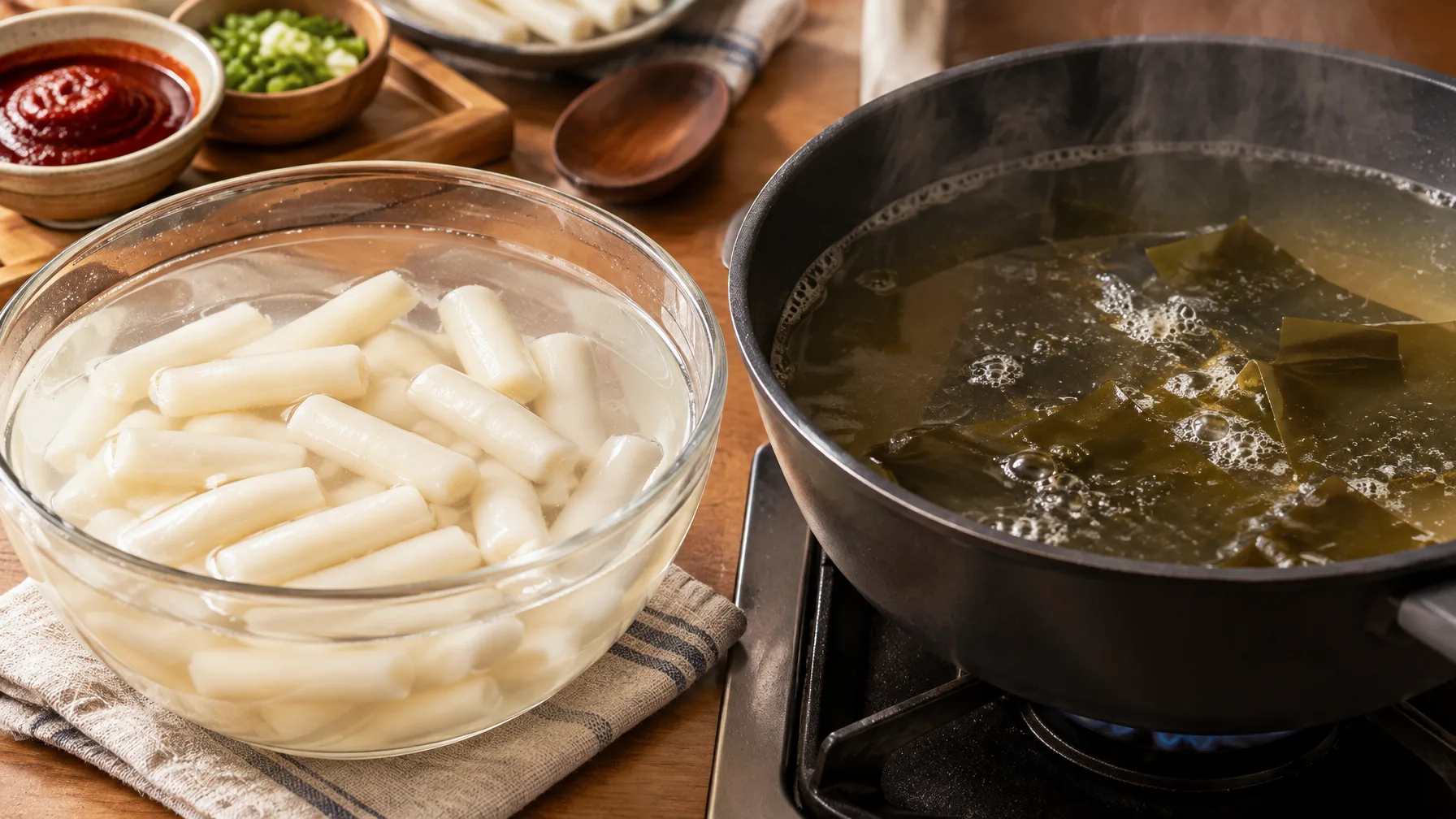
- Soak the cakes in warm water until they loosen up and turn soft.
- In a wide pan or shallow pot, simmer 2 ½ cups of water with dried kelp (dashima) for 10 minutes, then lift the kelp out.
- Stir gochujang, gochugaru, soy sauce and sugar into the broth until smooth.
- Add the rice cakes and the fish cake (eomuk, sheets of processed fish paste).
- Simmer uncovered over medium heat, stirring now and then, until the sauce clings to the cakes.
The broth is the fussy part. Plain water saves a step and makes an easier, faster tteokbokki recipe, but the sauce tastes thinner. If you make the broth anyway, doubling it is worth it. The extra works as a base for Korean soups like kimchi jjigae (kimchi stew).
Tteokbokki is rice cakes in a sweet, spicy gochujang sauce
 AI-generated image
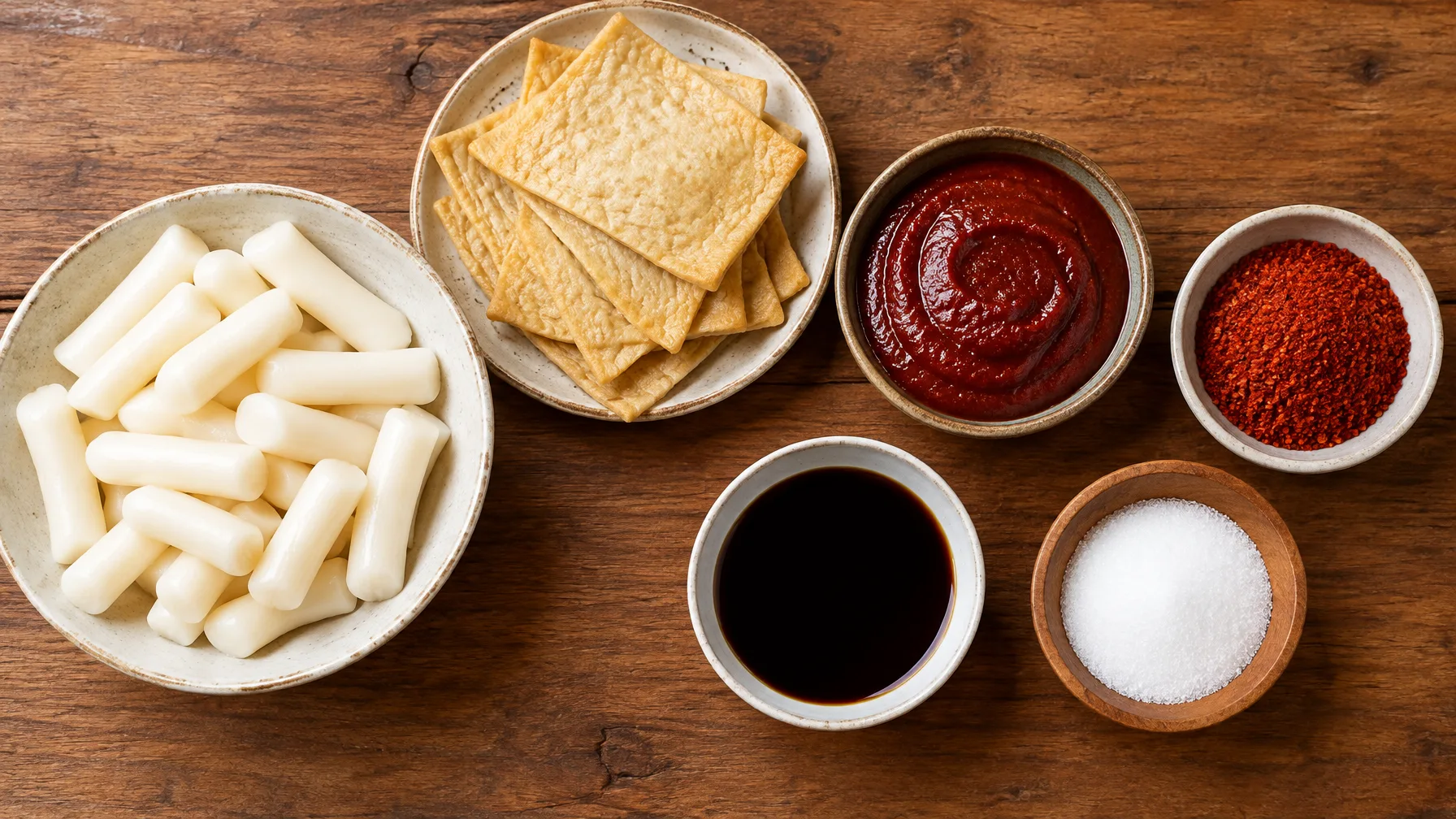
Tteokbokki, ddeokbokki and topokki are three romanizations of one dish. The classic version simmers rice cakes in a sweet, spicy red sauce built on gochujang. Besides the rice cakes, it needs fish cake, gochugaru, soy sauce, sugar and a kelp broth. Eggs are a common extra.
Brown sugar gives a softer sweetness than white. The main rule is not to overdo it. Most of the pantry items come from a Korean grocery or an online order. Our Basic Ingredients in Korean Cooking: Your Starter Pantry covers what to stock first.
Tteokbokki did not always look like this. Earlier, the cakes were stir-fried in oil and flavored with soy sauce. That made the dish more like banchan, the small side dishes that come with a meal, than a street snack. The red version is usually credited to a street vendor in Sindang-dong in 1953. The vendor stirred gochujang into cakes that were boiling. By the late 1960s, students near schools were buying it as an inexpensive snack. Still, that origin story is a popular tale, not settled fact.
Cylindrical garae-tteok is the standard, and sliced cakes belong in soup
 AI-generated image
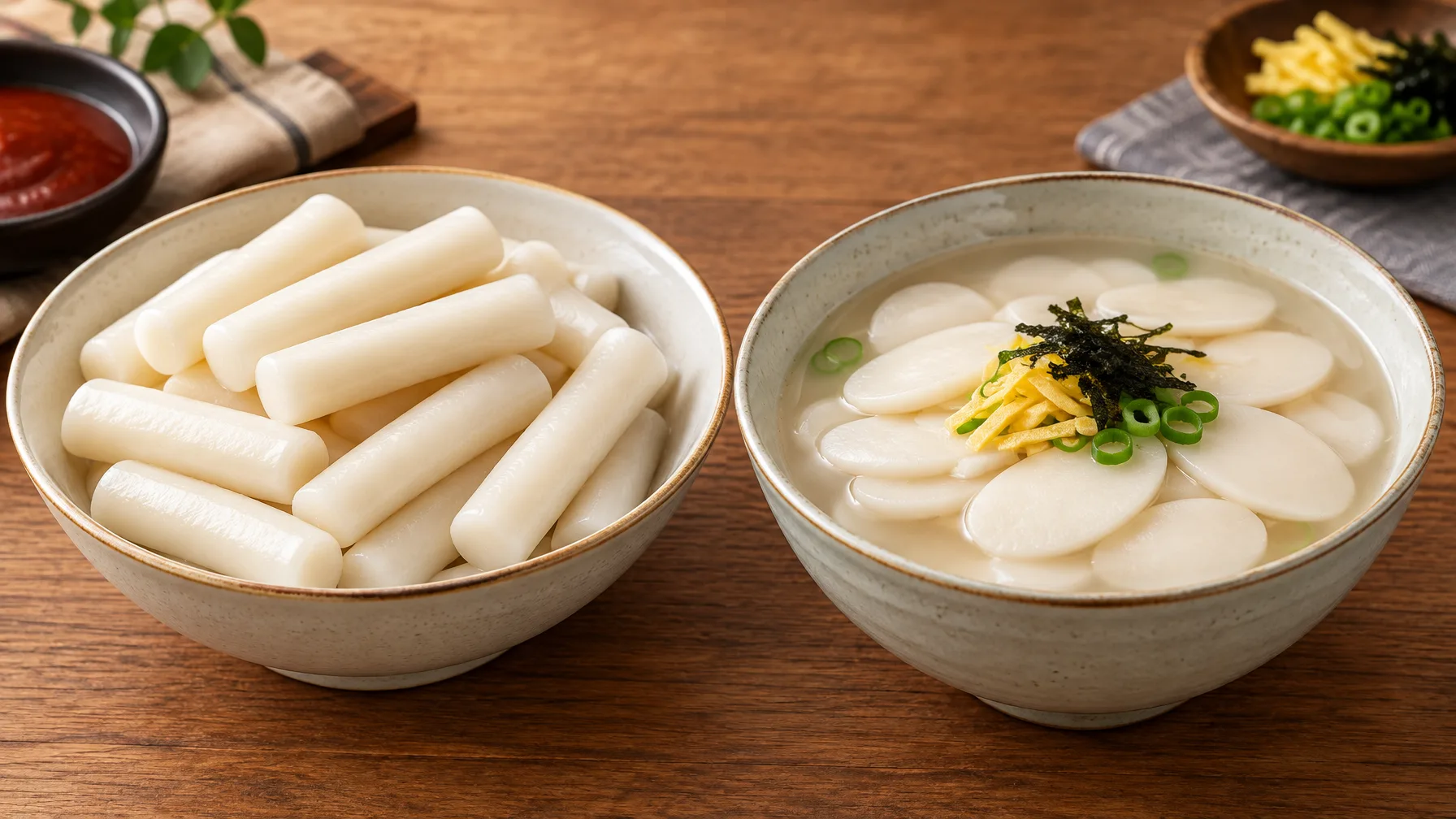
Garae-tteok is the traditional Korean cake for tteokbokki. It is firm and dense, with the springy bite Koreans call jjolgit: chewy, but neither tough nor underdone. The cylinder soaks up sauce and keeps its bounce while it cooks. Flat sliced cakes are the soup kind, used for tteokguk (rice cake soup). They cook faster and suit broth better.
Don't confuse tteokbokki cakes with mochi. Tteokbokki cakes are cylindrical, firm and chewy, and they go into a hot, savory or spicy meal. Mochi is usually round and filled, softer and stickier, and eaten as a sweet. Rice crackers are a crunchy snack, not a cake for sauce, so skip them.
| Cake condition | Prep | Most likely failure |
|---|---|---|
| Refrigerated cylinder | Soak in warm water until soft | Stiff, tough cakes if you skip the soak |
| Frozen cylinder | Thaw with a short soak only | Mushy once cooked if soaked too long |
| Frozen and thawed several times | Nothing fixes it | Cracks and splits, then turns mushy |
| Sliced (tteokguk style) | Treat as soup cake, shorter cook | Goes soft fast in a long simmer |
| Wheat-flour cake | Same method as rice cake | Not gluten-free, so read the label |
Fresh, soft cakes belong in the fridge once opened, and they should be eaten within a few days. Some packaged cakes also call for a quick 20–30 second rinse before cooking. Wheat cakes are a common stand-in for rice cakes, so check the package if gluten matters to you.
Mushy cakes come from overcooking, so pull the pan before the sauce looks fully thick
The window for good cakes is narrow. A little too long in the pan and the chew disappears. The cakes loosen and turn porridge-like. The fix is to take the pan off the heat before the sauce looks fully thick. The sauce keeps tightening as it sits.
If the cakes are still too tough, cook a little longer or cover the pan for a few minutes to steam them. If the sauce is too tight, add a splash of water. A bit more water turns it into a soupier tteokbokki. Frozen cakes need the opposite caution. A long soak to thaw them is what makes them mushy later.
Leftovers are a letdown. Cooked cakes turn hard and dry in the fridge. Reheating needs extra water or broth, and the sauce never gets as loose as it was at first. Cook what you'll eat in one sitting.
Mild, soy sauce and jjajang versions for people who avoid the heat
The standard red sauce is a poor fit if you avoid spice. For a tteokbokki recipe that is not spicy, start by cutting the gochujang. Sweet-and-spicy sauces taste milder because of the sugar and ketchup. Soy sauce tteokbokki is the usual alternative, and jjajang (a savory, slightly sweet black bean sauce) is another mild option.
Some styles don't follow the gochujang method above at all. Cream tteokbokki uses cream sauce and bacon instead of gochujang and fish cake. Egg tteokbokki has no sauce, is seasoned mostly with salt, and isn't spicy. Oil tteokbokki uses little or no sauce. Some soupy versions also fit neither the red nor the soy sauce camp. Rose and royal court (gungjung) styles exist too.
Instant kits are the shortcut. Most come with a sauce packet or powder, and you add water and heat. That's fine, but you give up control over the gochujang, sugar and vegetables. Sauces often contain wheat, soy, sesame or milk, so read the allergy label.
Fish cake, eggs and ramyeon are the usual company
Fish cake goes in with the rice cakes. Thicker pieces add a good chew of their own. Boiled eggs are the other classic. If fully hard yolks don't appeal to you, half-boiled eggs work fine.
Add ramyeon (Korean instant noodles) to the pot and you have rabokki. The noodles add carbs, so it is more filling than plain tteokbokki. Many instant packs weigh 115–160 g.
Tteokbokki is casual food, so it often comes on one big plate that everyone shares, with no small plates.
Verdict: buy cylindrical garae-tteok, soak it briefly, and stop cooking early
Use cylindrical garae-tteok, soak it briefly, and simmer it 10–12 minutes in a gochujang-based sauce. Overcooked rice cakes turn mushy quickly, so do not leave the pan on the heat too long.
Comments
No comments yet.