
Basic Ingredients in Korean Cooking: Your Starter Pantry
 AI-generated image
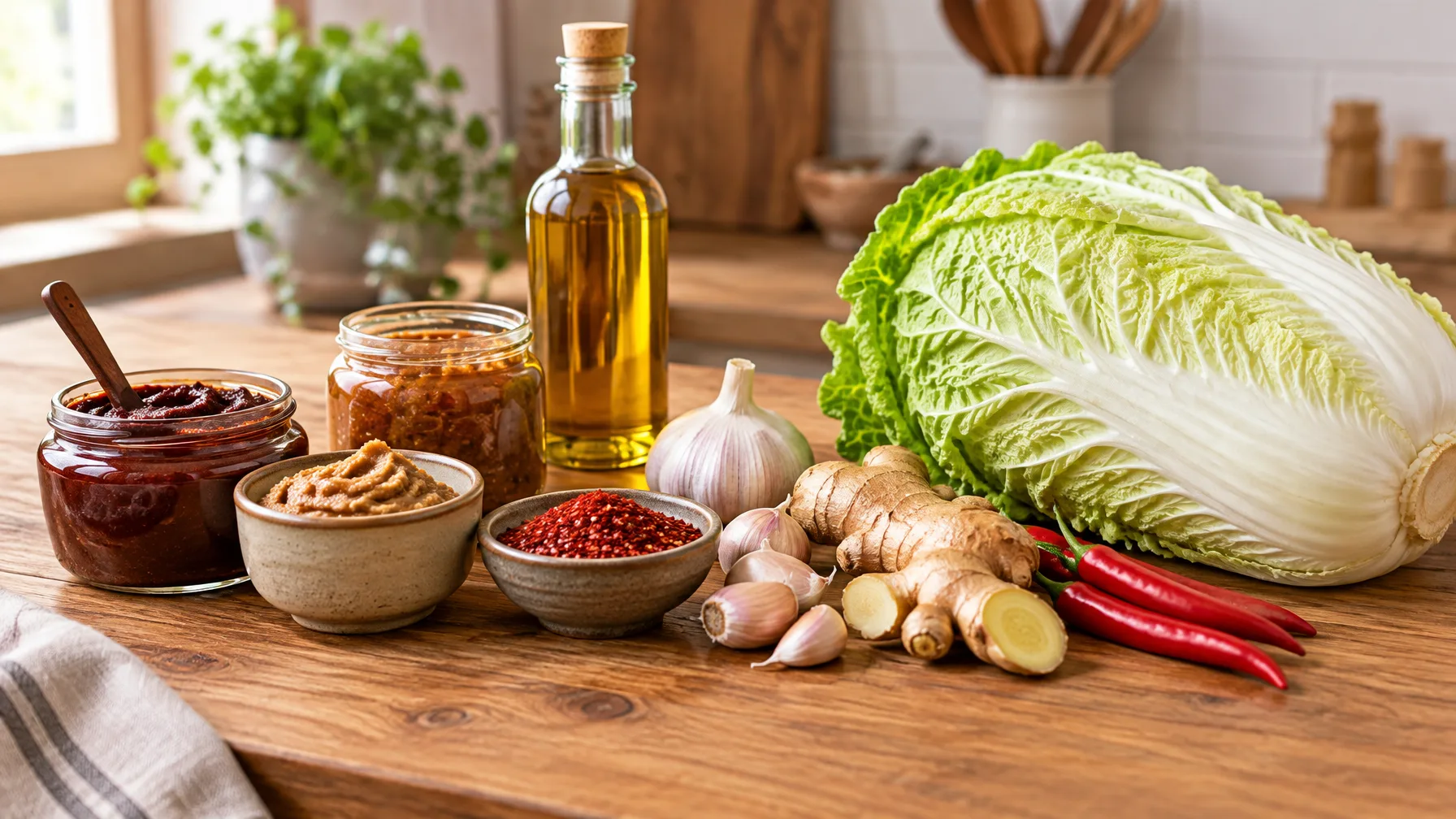
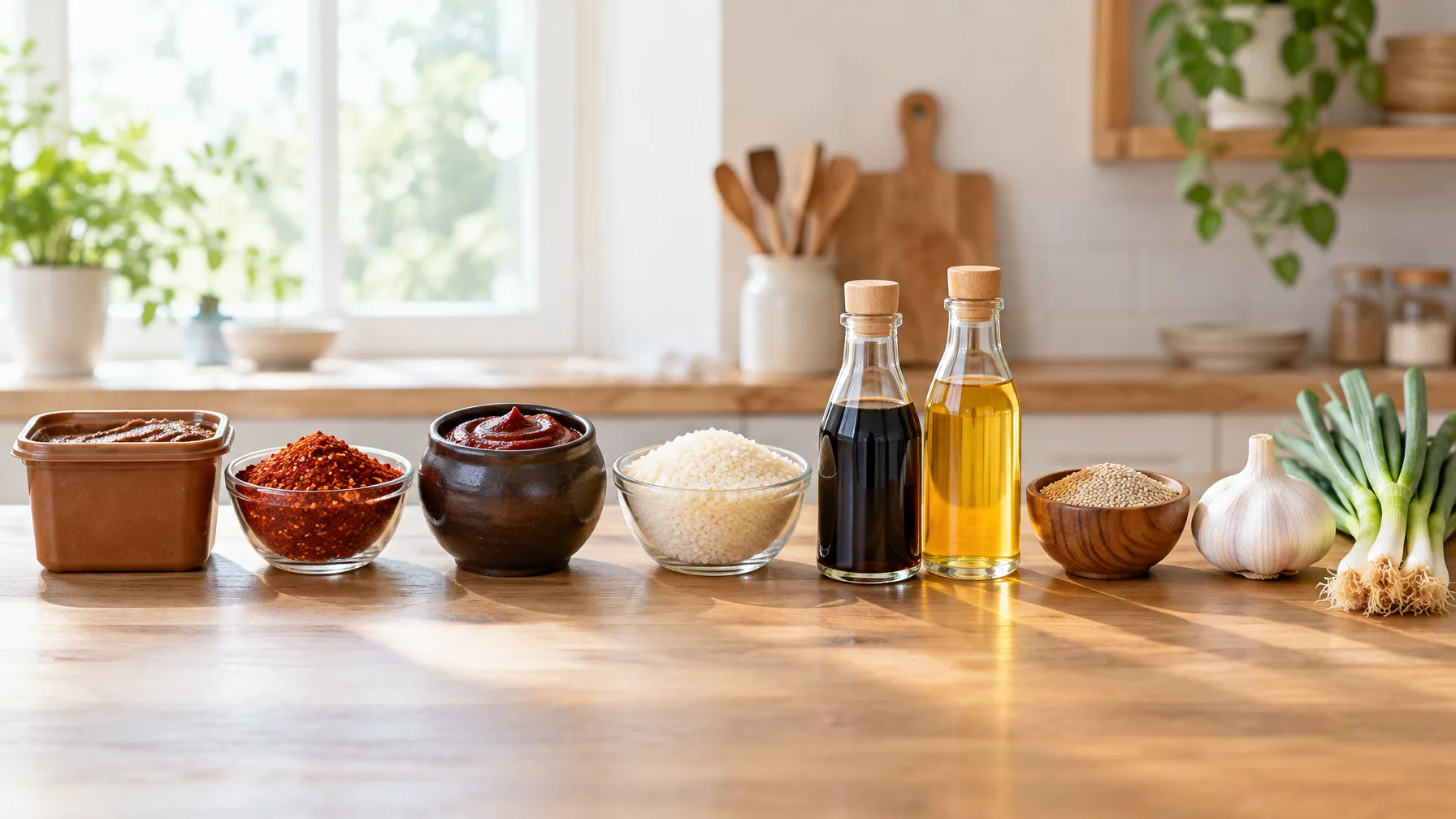
If you want to know how to cook Korean food at home, start with the shopping list. Korean home cooking leans on nine staples. They are sesame oil, doenjang, soy sauce, salt, garlic, ginger, gochugaru, gochujang and napa cabbage. Stock those before your first dish. Once they are in your kitchen, most easy Korean recipes with few ingredients stop feeling like a project. This guide walks through what each staple is, what you can swap, and what to go easy on.
Nine staples to stock before your first dish
 AI-generated image
These staples are the basic ingredients of Korean cooking, and they cover most of what home cooks reach for day to day. Doenjang is fermented soybean paste. Gochugaru is Korean chili flakes. Gochujang is fermented chili paste. You probably already know the rest.
| Staple | What it is | Swap or limit? |
|---|---|---|
| Sesame oil | Seasoning oil | Keep a bottle on hand |
| Doenjang | Fermented soybean paste | Fermented and salty: use small amounts |
| Soy sauce | Fermented salty seasoning | Use small amounts, especially with other fermented sauces |
| Salt | Basic seasoning | Sodium adds up fast, so go light |
| Garlic | Fresh aromatic | Nothing to limit |
| Ginger | Fresh aromatic | Nothing to limit |
| Gochugaru | Korean chili flakes | Cayenne plus sweet paprika is a stopgap only |
| Gochujang | Fermented chili paste | Fermented and salty: use small amounts |
| Napa cabbage | Kimchi base and everyday vegetable | Cabbage kimchi is tricky for beginners; start with radish kimchi |
Read the last column as a buying guide. The aromatics and the oil need no special handling. With the fermented pastes and sauces, go easy on the amount. Gochugaru is the one staple you should not substitute, because swapping it costs you flavor.
A Korean meal is rice, banchan and kimchi on one table
 AI-generated image
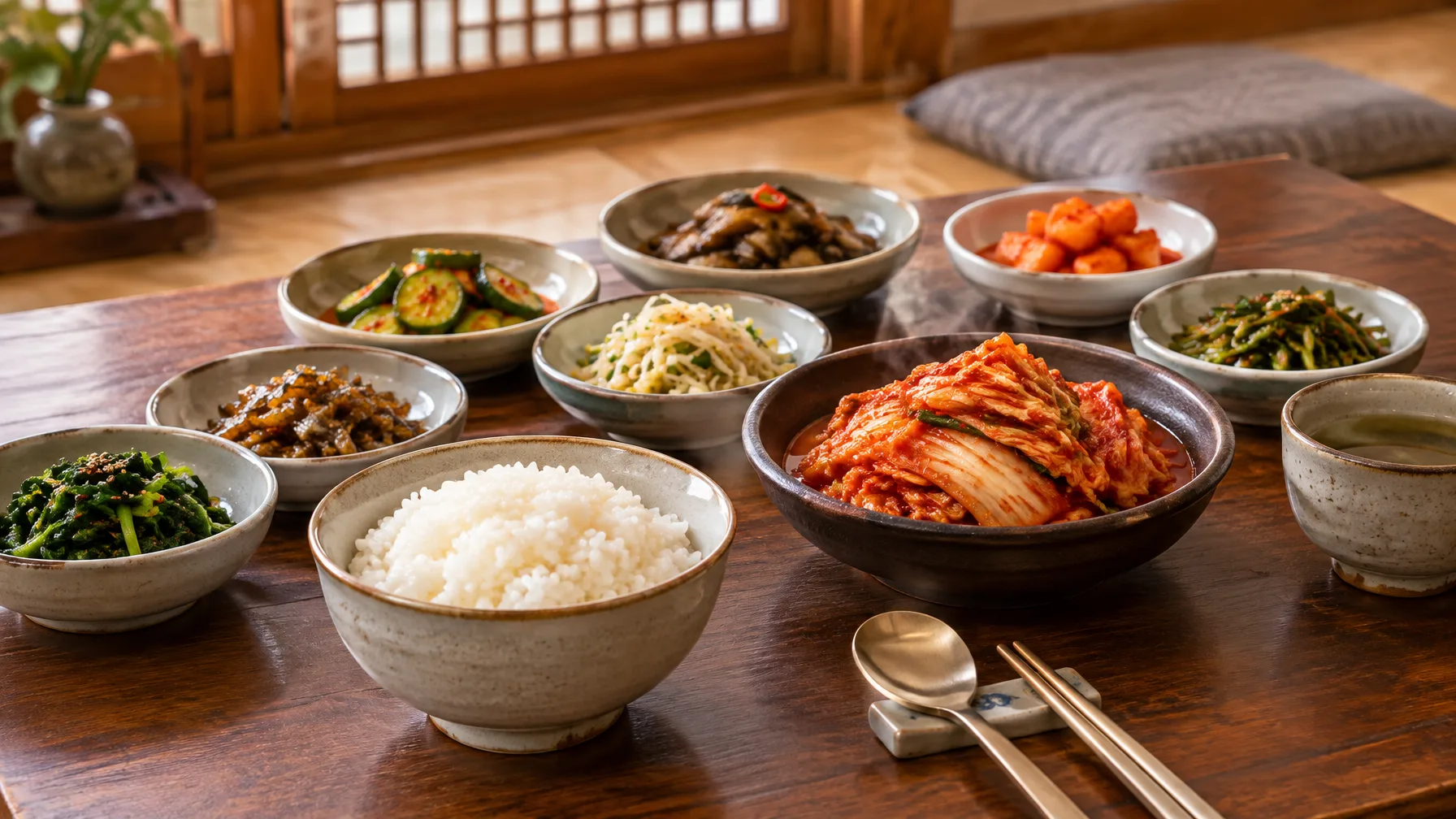
A traditional Korean table is built around short-grain rice. The meal is named after the number of banchan, the small side dishes that come with the rice. Kimchi shows up at nearly every meal, so it works more like a fixture than a special dish.
A balanced spread follows the same logic. You cook one protein dish that isn't a noodle dish, then add banchan or a soup next to it. That is a useful plan for Korean recipes for dinner: pick one main, then fill the table with small things.
Only a fifth to a third of Korean dishes are spicy
 AI-generated image
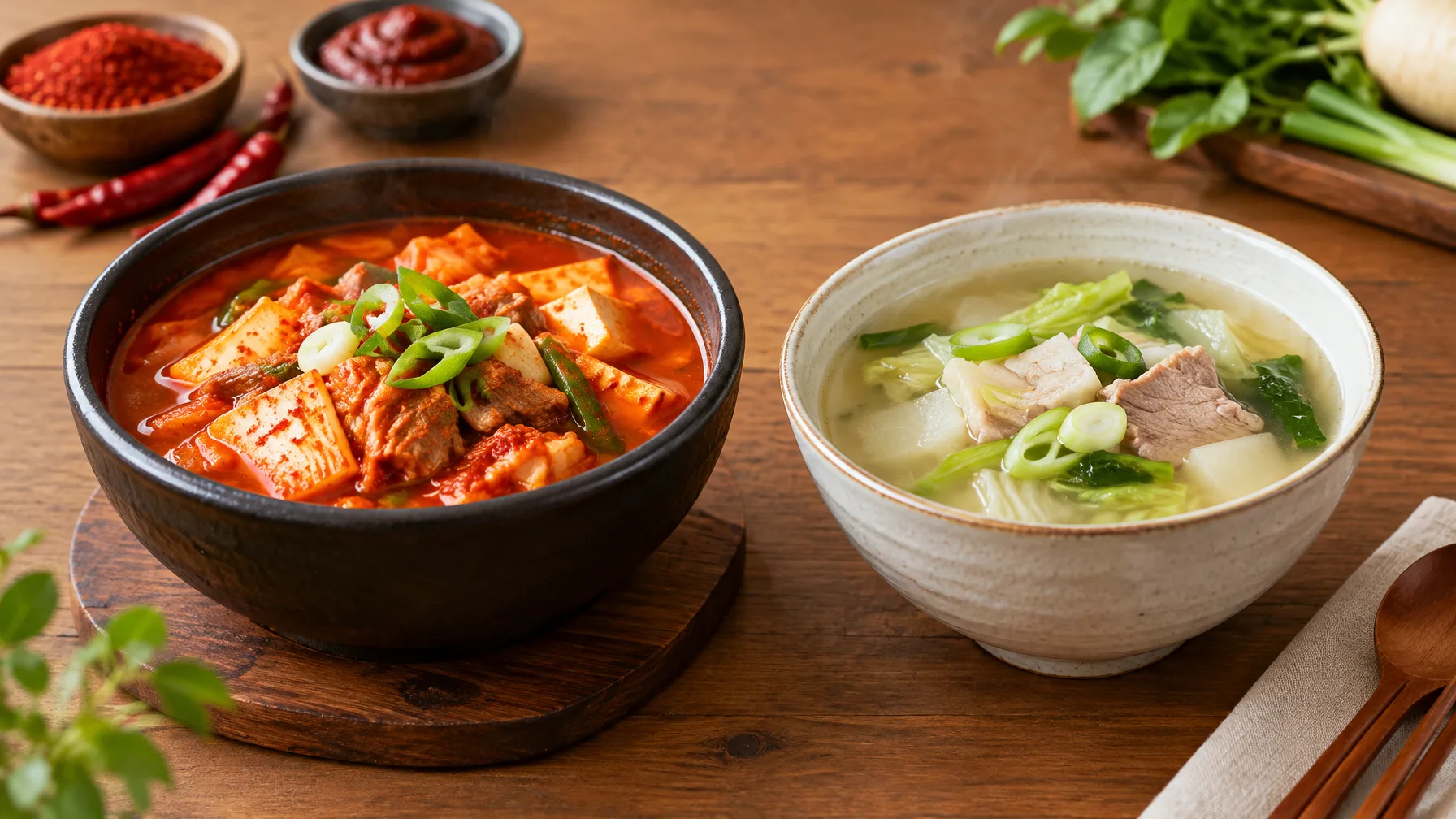
Many first-timers assume all Korean food is painfully spicy. One estimate based on a review of the literature puts spicy dishes at only about 20-30% of Korean food. So a pantry with gochugaru and gochujang does not mean every plate comes out red.
Region plays a part too. Cooking in the south, where the weather is warmer, tends toward spicier and saltier seasoning. Further north the seasoning gets milder, with more meat and richer dishes. If a recipe tastes too sharp, you may simply be cooking a southern-style version.
Gochugaru and kimchi substitutes only get you partway
Swapping out gochugaru means giving up the authentic taste. A mix of cayenne and sweet paprika is the usual workaround, and it is a stopgap at best. If a recipe leans on gochugaru, buy the real flakes when you can.
Kimchi is the other tricky one. Temperature and fermentation time change how it turns out, which makes it hard for a beginner to repeat. Canned kimchi isn't great eaten straight. It works well in kimchi jjigae (kimchi stew), so keeping a can around as a backup makes sense. When you do want to make your own, this page on which salt to use for simple kimchi is a good next step.
Other store-bought shortcuts need small adjustments too. Bottled bulgogi sauce can taste too sweet, so a mix of water and soy sauce is an easy fix. If the curry powder at your supermarket doesn't suit you, a Korean grocery can ship the Korean kind.
Korean dishes to make at home with a starter pantry
For a first project, kkakdugi is the friendliest. It is cubed radish kimchi, crunchy and spicy, with a deep savory taste the Koreans call gamchilmat, close to umami. It is also easy to make, which sets it apart from cabbage kimchi.
Try galbi. The beef short ribs go into a marinade, then onto charcoal, under an oven broiler or into a pan. The pan is the simplest route in a regular kitchen.
The list of home-cookable dishes is longer than most people expect. It runs from jjajangmyeon (noodles in black bean sauce) to a soup of soft tofu and egg, a high-protein breakfast. The jjajangmyeon turns out different from the one in Korea but still hits the spot. Jatjuk, a porridge of finely ground rice and pine nuts, is another option. Together there are enough dishes to fill a whole week. For more ideas, see the most popular Korean dishes. You can also look at these bibimbap ingredients.
Go light on fermented sauces and open a window for grilling
Doenjang, gochujang and soy sauce are fermented, and they carry a lot of sodium. Recipes written for traditional seasoning can come out too salty when you make them at home. Add these seasonings in small amounts and taste as you go. Eat pickled seafood and vegetables sparingly too, since they are high in sodium and not meant for every day.
A few favorites are heavy dishes overall. Korean fried chicken is high in fat, salt and sugar. Jjajangmyeon is high in calories. Both are better as occasional treats than weeknight habits.
Grilling indoors has its own catch. Korean barbecue is traditionally cooked on a tabletop grill over a gas burner. A pan will taste a little different from the restaurant version. Searing meat also throws off a lot of smoke. Without ventilation, the fire alarm can go off. Turn on the vent fan and crack a window before the first rib hits the pan.
Where to go next after your first pantry run
If you want more cooking pages like this, the bibimbap ingredients guide covers a single rice bowl in detail. The meat-free bibimbap option with tofu shows how to adapt it.
So here is the plan. Stock the nine staples from earlier. Then try an easy dish like kkakdugi or pan-seared galbi, using the fermented sauces sparingly. Take it one dish at a time.
Comments
No comments yet.