
Authentic Korean Dishes: Bibimbap, Tteokbokki and Bulgogi
 AI-generated image
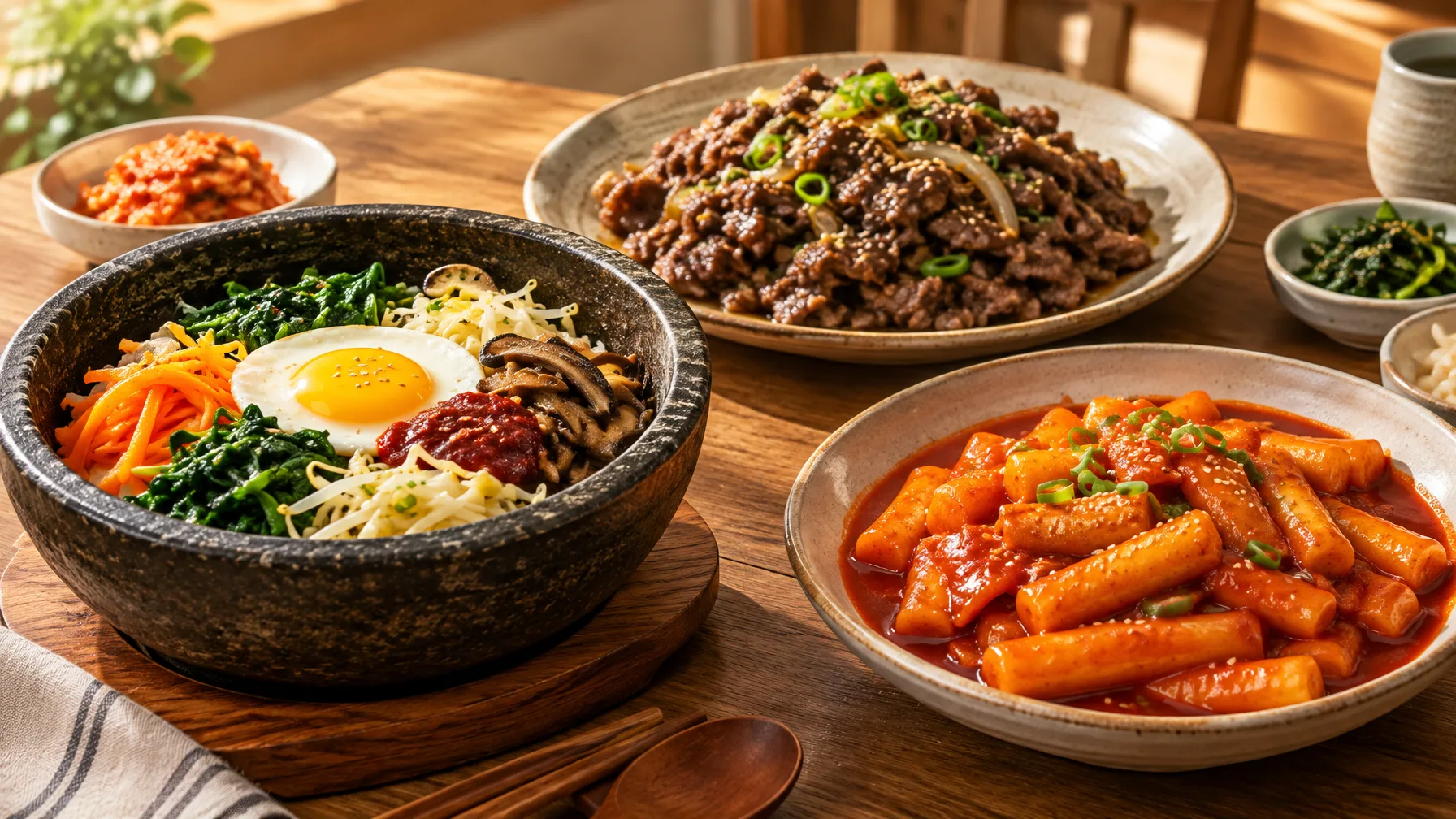
One Korean recipe site features bibimbap, tteokbokki and bulgogi as its three most popular recipes, a sensible first set of authentic Korean recipes to cook at home. Cook those first, then branch out into stews, side dishes and barbecue. One word deserves a second look, though: authentic. Some collections say openly that their dishes are Korean-style and aren't strictly traditional. This guide sorts the dishes into groups and shows which cooks stay close to home-style tradition and which adapt.
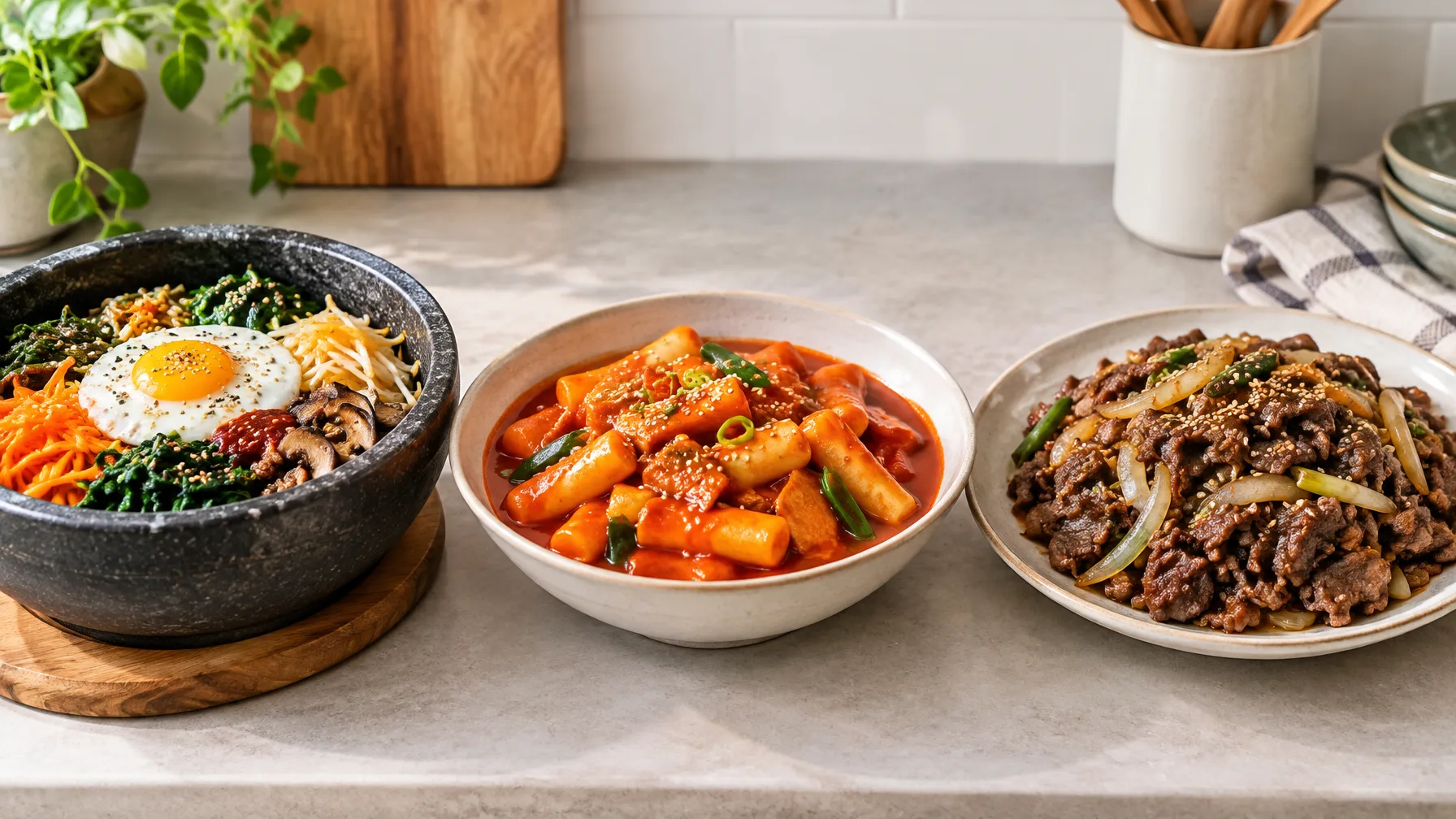
Bibimbap, tteokbokki and bulgogi are the three to cook first
 AI-generated image
When you have never cooked Korean food, popularity is a fair place to start. Each of these top dishes has its own page in the collection. Pick one for your first dinner and save the other two for the following weeks. Then use the rest of this map to decide where to go.
- Pick one of the popular three and cook it first.
- Check whether the recipe calls itself traditional or Korean-style.
- Add a banchan, a small side dish served with rice, such as kkakdugi.
- Move on to a stew such as kimchi jjigae.
- Try Korean BBQ once the basics feel easy.
| Group | Dishes | How to use it |
|---|---|---|
| Most popular | Bibimbap, tteokbokki, bulgogi | Your first three dinners |
| Stews | Kimchi jjigae, mushroom jeongol, dakdoritang, budae jjigae | A warm pot once you have the basics |
| Banchan | Napa cabbage kimchi, oi kimchi, kkakdugi, japchae | Small dishes to put beside rice |
| BBQ | Galbi and other Korean BBQ | A weekend project, with several ways to cook it |
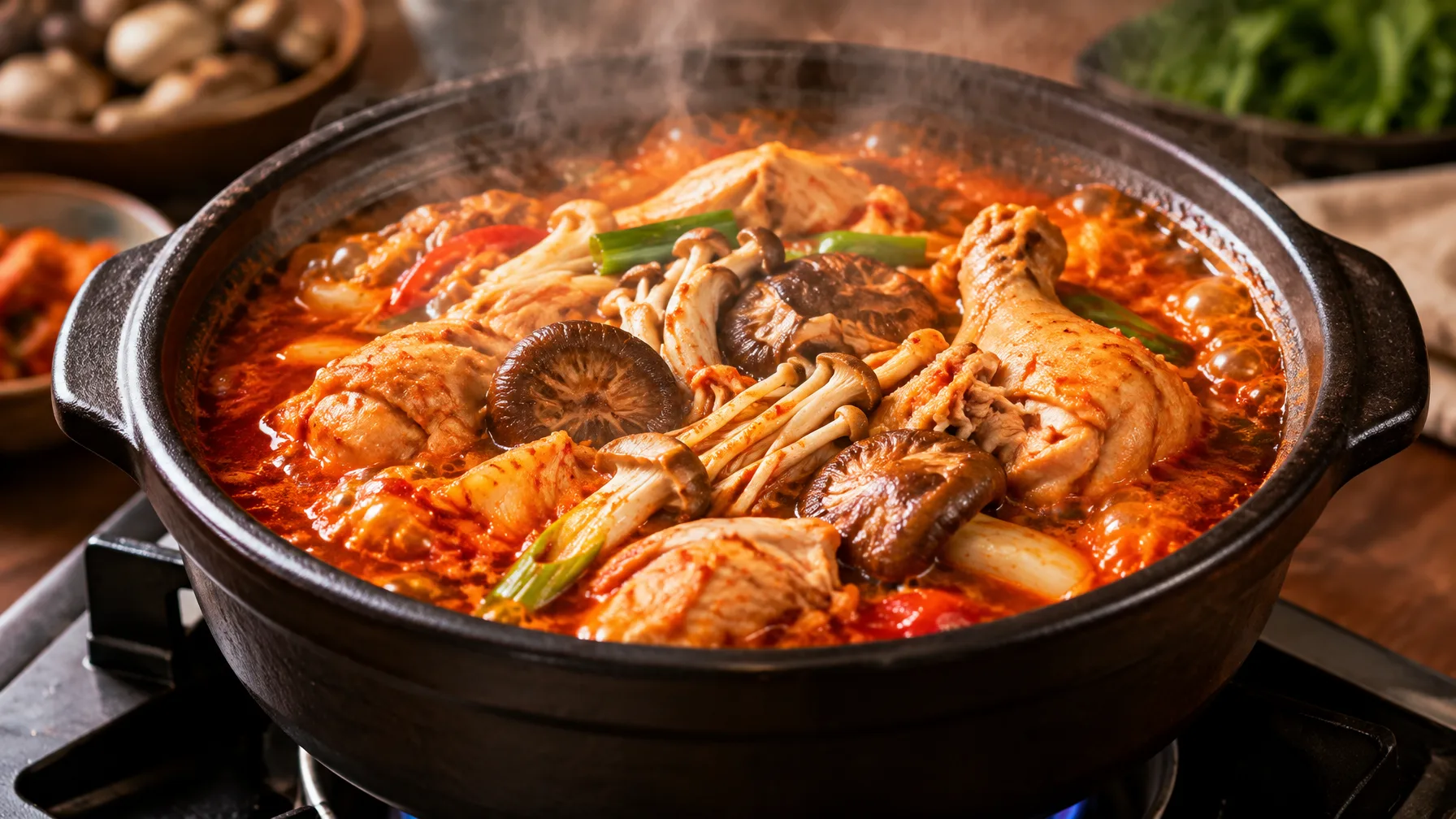
Stews come next: kimchi jjigae, mushroom jeongol and dakdoritang
 AI-generated image
Once the trio feels comfortable, the stew pot is the next stop. The stew category lists kimchi jjigae, mushroom jeongol and dakdoritang.
Look at what is already in your fridge and pick the stew that matches. A stew also sits well beside a bowl of rice and a few small side dishes, which is where the next section picks up.
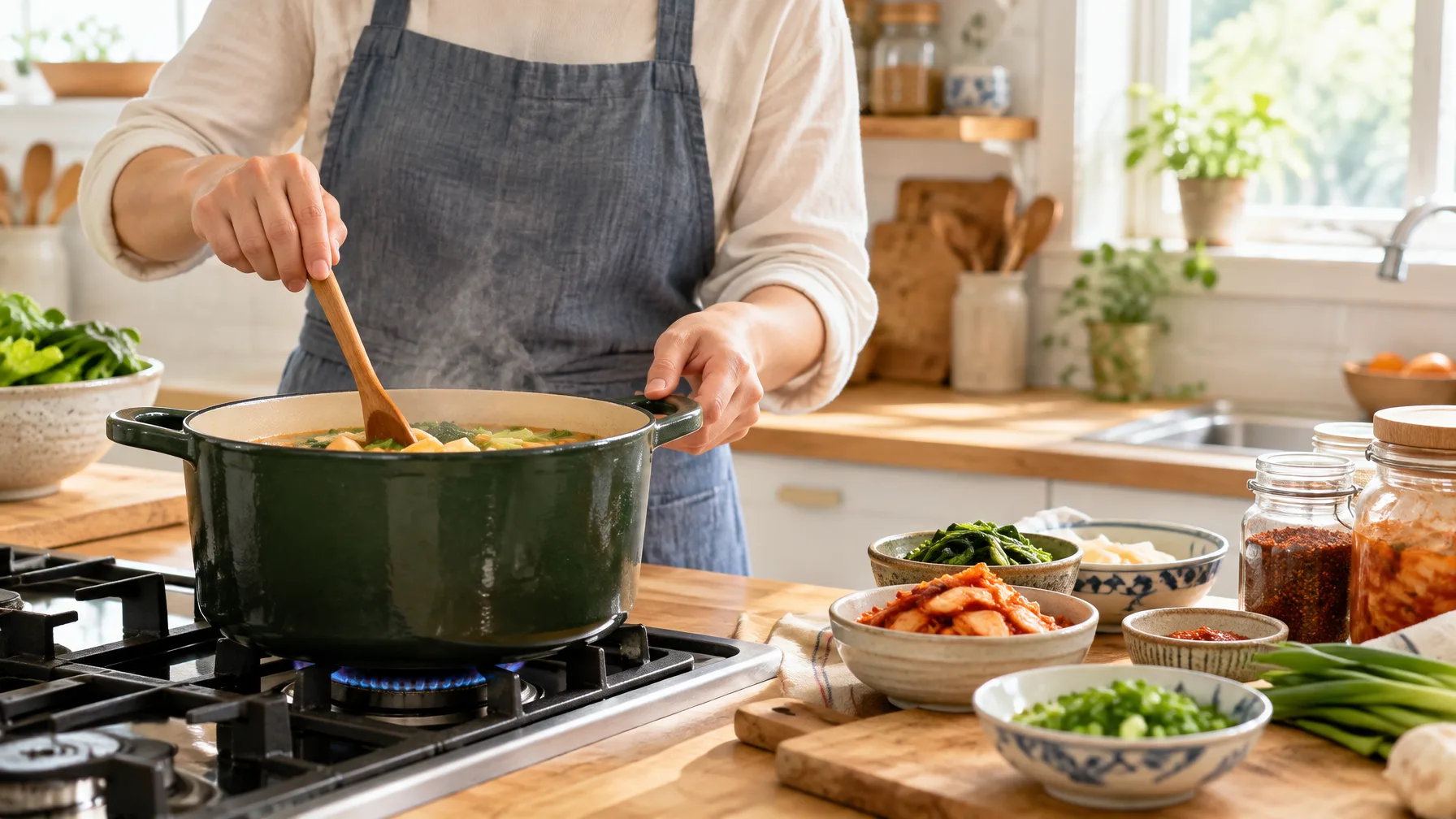
‘Authentic’ means home-style tradition; ‘Korean-style’ means adapted
 AI-generated image
Not every recipe that looks Korean is trying to be traditional. One Korean American cook teaches Korean dishes the way Korean families have traditionally eaten them at home. That is the home-style approach, and it is the closest match for authentic Korean dishes.
Another author says plainly that the recipes are Korean ‘style’. They're made in the author’s own way, inspired by Korean flavors. Even so, the author promises that every one of them tastes great.
Neither approach is wrong. Adapted recipes can be delicious and often easier to shop for. The useful habit is to read the intro before you cook. If you want the traditional version, look for words like home-style or traditional. If you see ‘style’ or ‘inspired by’, expect a twist.
Four banchan worth learning early: napa cabbage kimchi, oi kimchi, kkakdugi and japchae
Banchan are the small dishes that fill the table around the rice. The popular banchan list includes napa cabbage kimchi and oi kimchi, which is the cucumber version. Both are worth knowing before you try anything fancier.
Kkakdugi is a strong pick for a beginner. It's a crunchy, spicy radish kimchi, popular and easy to make. It carries gamchilmat, a mouth-watering savory depth close to umami. Want to see how kimchi works from scratch? Here's one that walks through it. How to Make Simple Kimchi at Home: Which Salt to Use?
Japchae rounds out the group. The recipe titled ‘Authentic Japchae Recipe: Korean Glass Noodle Stir Fry’ sits in the same popular banchan list, and it's the one side dish here that could almost pass as a main.
Budae jjigae got its name from army base ingredients
Budae jjigae is also called army base stew or Korean Army Stew. The name comes from a hard period in Korea, when many people cooked with processed meat from US army bases. That history is why the stew is built around ingredients you would not expect in a traditional pot.
One version adds tofu and mushrooms for freshness. It is a handy tip if the stew sounds heavy to you.
Gluten-free Korean cooking starts with two bottles: soy sauce and gochujang
Yes, you can cook Korean food gluten-free or vegan. A collection of 33 vegan and gluten-free Korean recipes shows how much ground that covers.
For gluten-free cooking, the swap is simple. The recipes assume gluten-free soy sauce, gluten-free gochujang, or both. Many Korean recipes with gochujang, the fermented chili paste, need that one change. The same recipes use no MSG or corn syrup. Want the basic bottles and jars worth stocking? See our starter pantry guide.
Browse by ingredient when you know what is in the fridge
Recipes can be sorted by ingredient: chicken, beef, pork, seafood, tofu, rice, noodles, vegetables and eggs. Jang, the fermented sauces and pastes, is a group too. That suits Korean recipes for dinner, since you can start from what you've got.
Two examples show what the beef and pork and vegetable routes look like. Dongnggeurangttaeng are small pan-fried patties made with beef and pork in equal parts. They're coated in egg and fried until golden. The mix keeps them moist and tender. On the vegetable side, a pumpkin salad roasts the pumpkin to bring out its sweetness. It was inspired by a pumpkin salad served at Pizza Hut in Korea in the early 2000s.
Three wrong turns to skip early on
Do not assume Korean BBQ needs a charcoal grill. The galbi recipe says marinated short ribs can be grilled over charcoal, broiled in the oven or pan-fried. A collection of 10 Korean BBQ recipes gives you more to work with once you pick one method.
Do not start with makgeolli. It is made at home from rice, nuruk (the traditional fermentation starter) and a few other ingredients. It calls for patience and care. Watching the fermentation change day by day can be very rewarding, but it is a project for later.
Do not think kimchi has to be napa cabbage. Bok choy makes a fine kimchi too, which is handy when a home garden produces a lot of it.
Where to go next after your first Korean dinner
Beyond that, roundups such as ‘Top 10 Korean Recipes that You Have to Try’ show how wide the field is. Guides for home Korean BBQ exist too, including one titled ‘Your Ultimate Guide to Authentic Korean BBQ at Home’. Before you shop, read the intro of each one for the traditional-or-Korean-style signal.
Your first three dishes, and the one thing to check
Start with bibimbap, tteokbokki and bulgogi, and check which recipes are traditional and which are only Korean-style. Pick one dish this week, set the rice cooker going, and enjoy that first bowl.
Comments
No comments yet.