
Korean Easy Recipes for Dinner: Bibimbap in 30 Minutes
 AI-generated image
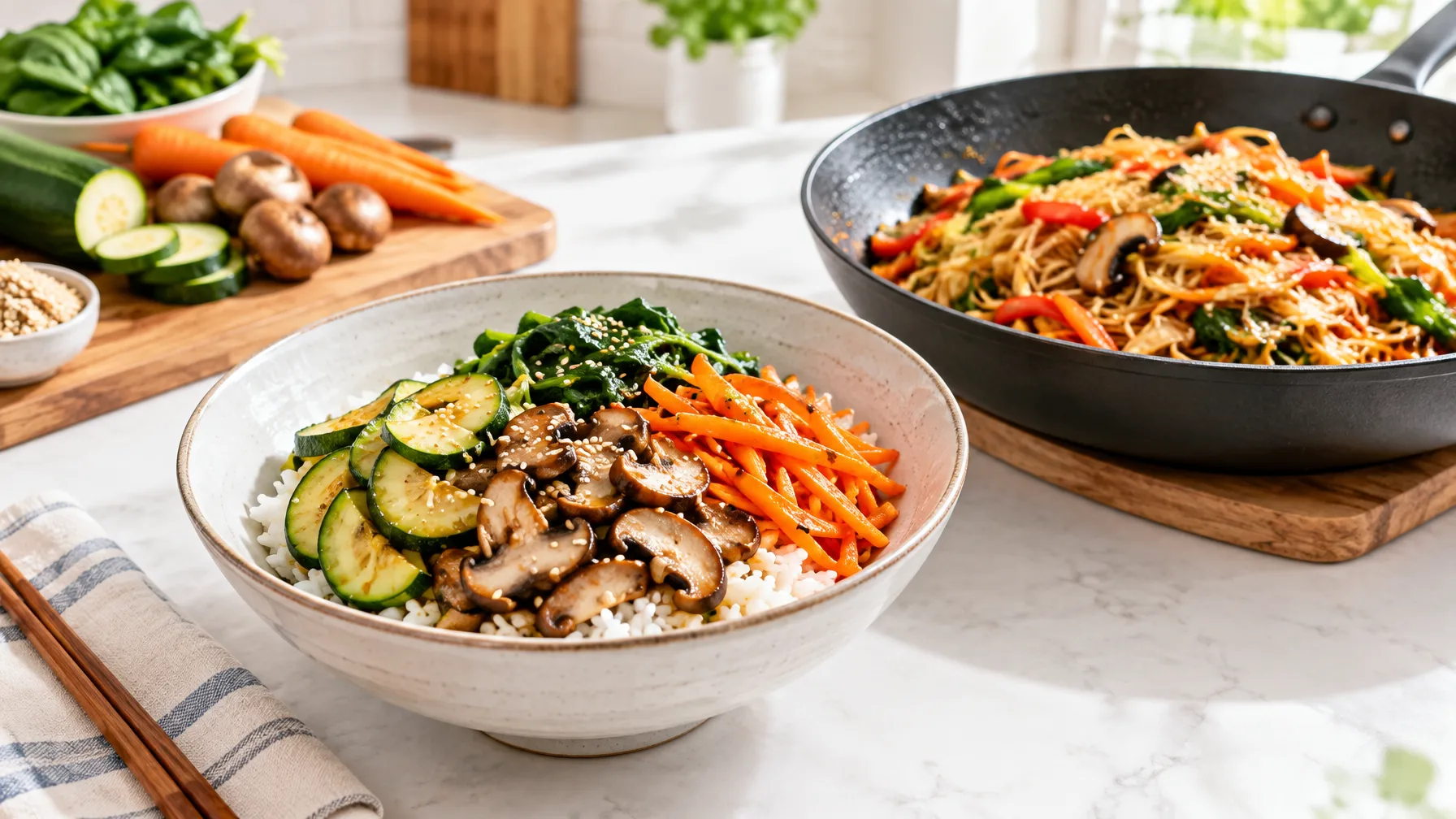
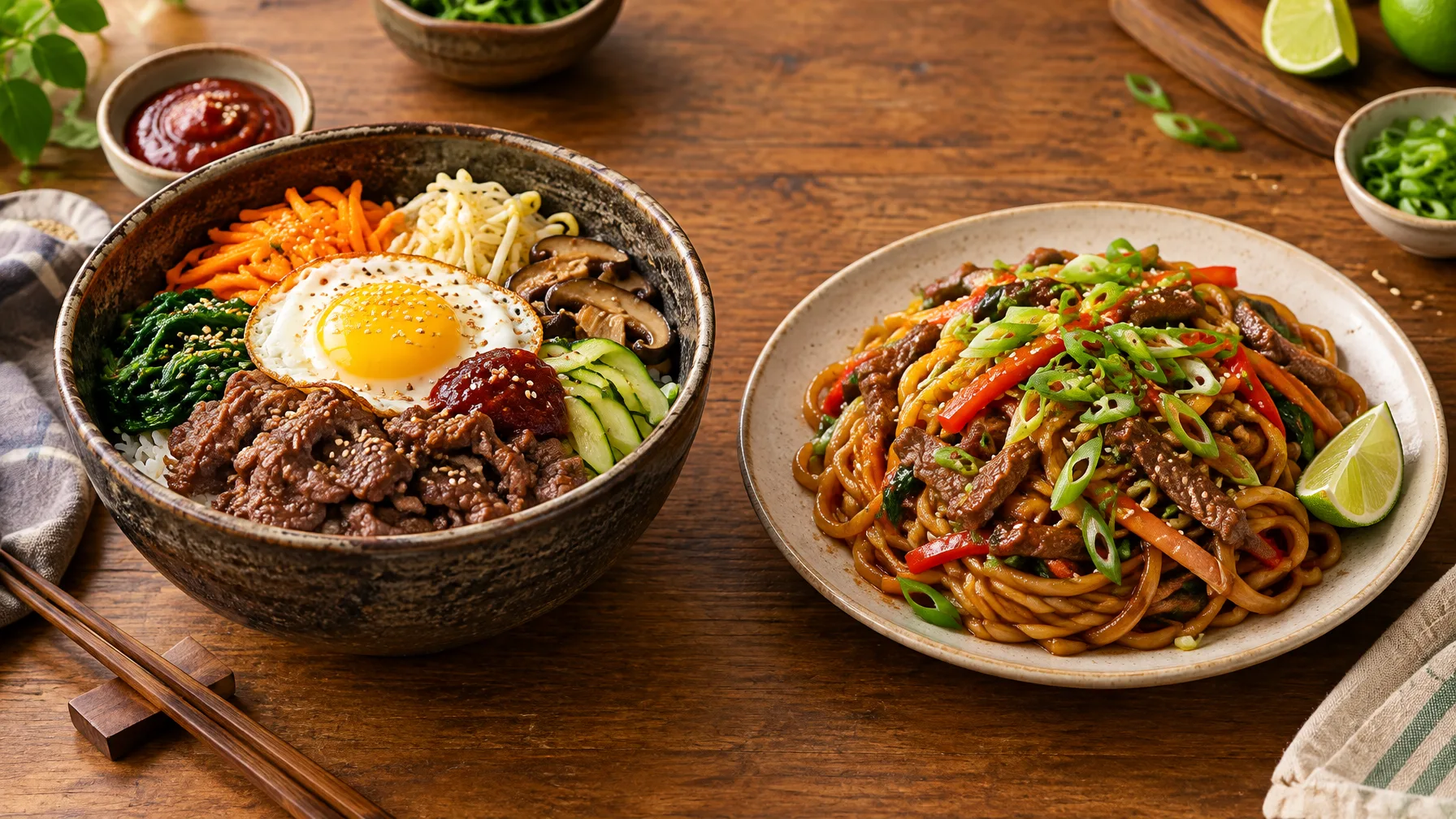
Two recipes sit at the top of the list for a first Korean dinner. Korean beef bibimbap with zucchini, mushrooms and carrots takes 30 minutes and is rated 4.4 from 112K reviews. A bulgogi beef noodle stir-fry with cabbage, carrots, lime and scallions takes just 15 minutes. Start with these two if you have never cooked a Korean meal.
Beef bibimbap takes 30 minutes, and a bulgogi noodle stir-fry takes 15
 AI-generated image
Here is the short version. Cook the beef bibimbap when you want a classic Korean dinner and have half an hour to spare. Cook the noodle stir-fry when the evening is short. Both are weeknight meals rather than weekend projects. The real choice comes down to minutes and what you have to buy.
Bibimbap suits a first cook because it is a rice bowl of simple parts
 AI-generated image
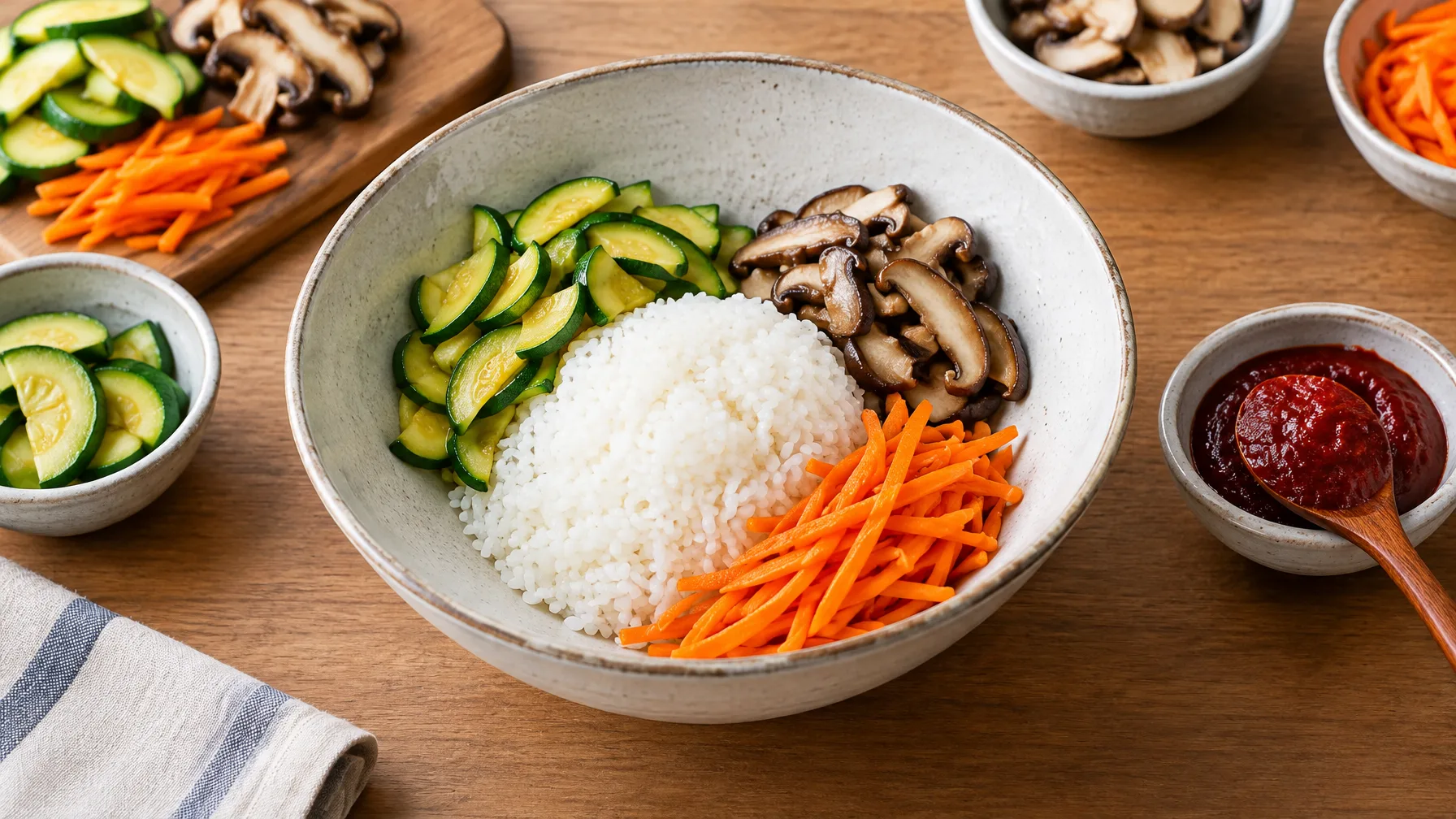
Bibimbap is built from a few separate pieces: rice, beef, namul (seasoned vegetable sides), an egg and a sauce.
Gochujang is a popular red chili paste and a core ingredient in bibimbap. It also shows up in many other Korean dishes, tofu soup among them. That makes the first jar you buy useful well beyond one dinner. Every part of the bowl is laid out, one by one. See Bibimbap Recipe Ingredients: Rice, Beef, Namul, Egg, Sauce.
Minutes first, then what you must buy
 AI-generated image
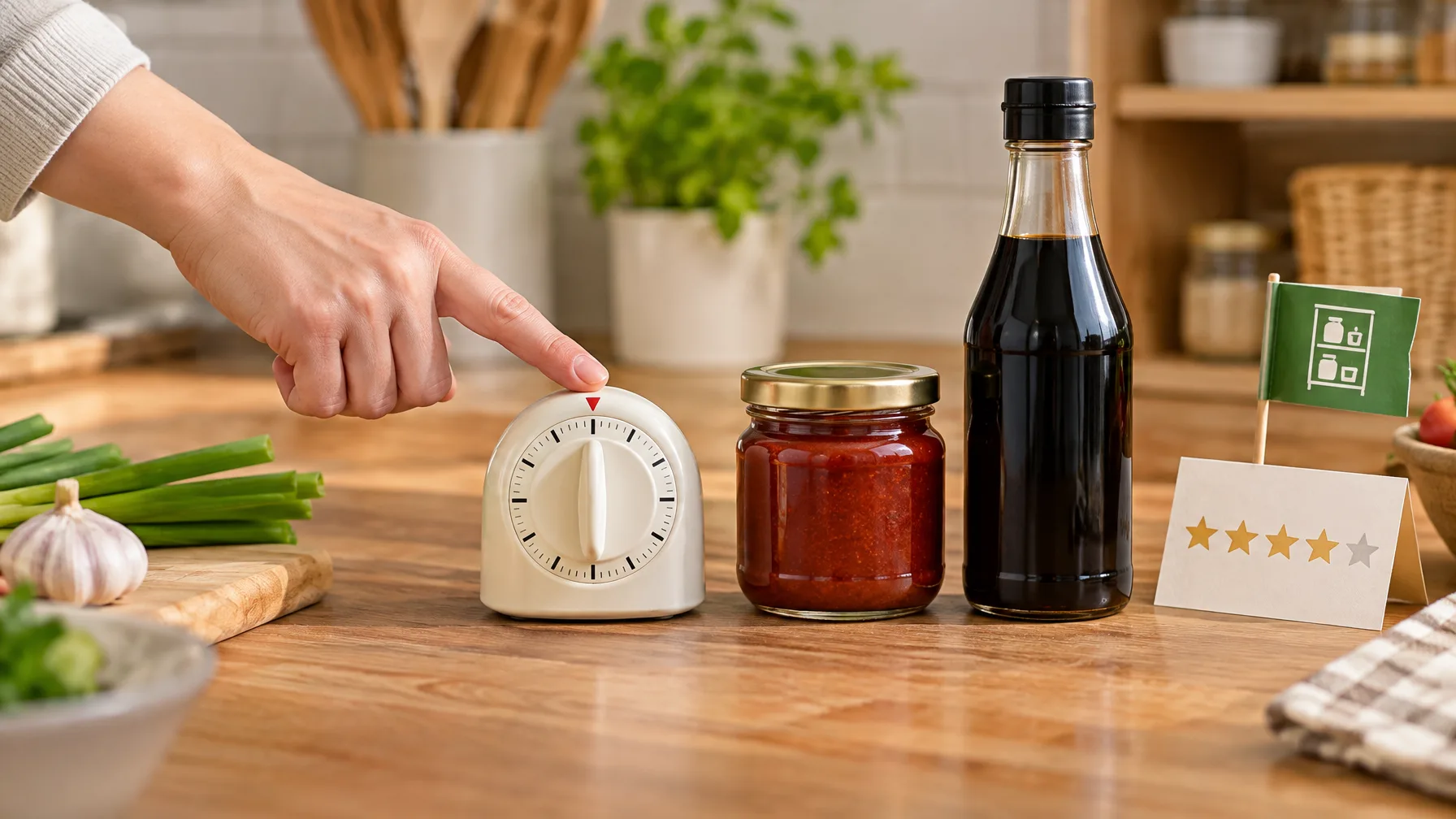
The clock is a first-timer's real limit, so minutes come first; every dinner in the comparison fits under it.
- Minutes: the cooking time each dinner takes, from 15 up to 30.
- Pantry flag: the one Korean item you may need to buy that you probably don't own yet.
- How traditional it is: some dishes are Korean-style versions, not the classic method.
The pantry flag matters most for a beginner, because an unfamiliar bottle can stop a dinner before it starts.
Fifteen, 20 and 30 minutes: the quick dinners side by side
Rows run from fastest to slowest. Find the minutes you have, then check the last column for what you would have to buy.
| Dinner | Minutes | Main ingredients | Pantry item to buy |
|---|---|---|---|
| Korean-style kim-cheese beef hot dogs | 15 | Not confirmed in the source | Not confirmed in the source |
Two dinners share the 15-minute slot, but their shopping differs.
Gochujang and soy sauce are the first two things to put in the cart
A basic Korean pantry rests on a handful of fermented and toasted flavors. They are gochujang, doenjang (fermented soybean paste), soy sauce and sesame oil. To a beginner the list can look long, and the unfamiliar names are a real hurdle. You do not need all of it for tonight. Those Korean pantry staples cover most basic Korean dishes later on, so buy them as recipes call for them.
Soy sauce is the other must-buy, and it deserves a little care. Picking the right bottle matters and can feel confusing, so choose one and stick with it while you learn.
- Sesame oil.
- Doenjang, only when a recipe asks for it.
A longer shopping list lives in Basic Ingredients in Korean Cooking: Your Starter Pantry.
Ground beef, canned kimchi and a splash of water cover most shopping gaps
Real bulgogi asks for thinly sliced ribeye, and that usually means a trip to an Asian grocery. If one isn't nearby, ground beef is the swap that makes the quick versions work. It is a simplified take, not the traditional method, but it gets dinner on the table.
Bottled bulgogi sauce can come out too sweet. Thinning it with a little water and soy sauce brings it back to a pleasant level.
Canned kimchi is not much good eaten plain, but it holds up when cooked and is a popular pick for kimchi stew. So cook it rather than serving it on the side.
Tighter nights: tacos, hot dogs and a quick beef stir-fry still taste Korean
The bulgogi chicken tacos are rated 4.2 from 10.2K reviews. They are a friendly bridge if you want Korean flavor in a familiar shape.
Other dinners known for speed include a kimchi grilled cheese sandwich, called one of the easiest Korean recipes around; a Korean beef stir-fry that comes together in minutes; and a Korean vegetable pancake with tangy kimchi, a quick, simple weeknight meal.
Homemade kimchi is surprisingly easy to start, but aging it properly is a skill of its own. Save that for a later week.
Match the dish to your night: bibimbap when you have time, hot dogs when you don't
If you're tired and want noodles on the table fast, make the bulgogi stir-fry. If the family wants something familiar, the chicken tacos keep the format simple while borrowing the bulgogi flavor.
Where no Asian grocery is nearby, the thin-sliced ribeye version of bulgogi is the hard part, and ground beef gets around it.
The comparison covers minutes and shopping, not taste or cost
The listed minutes are the recipes' own figures, so a first cook may need longer for chopping. Only two of the four dinners have stars, so ratings do not set the order.
Easy doesn't mean effortless. Korean cooking leans on pantry items that are new to most home cooks. The fermented seasonings change in flavor from jar to jar. So taste and adjust instead of following measurements to the letter. The recipes also assume you can recognize cuts of beef and pork. The quick bulgogi versions are streamlined rather than traditional. None of that blocks a first dinner, but it explains why the first shopping trip is the hardest step.
Pick by the clock: bibimbap in 30 minutes or the stir-fry in 15, and shop for two bottles
Choose by the clock: bibimbap for 30 minutes, the noodle stir-fry for only 15.
Comments
No comments yet.