
Bibimbap Recipe Ingredients: Rice, Beef, Namul, Egg, Sauce
 AI-generated image
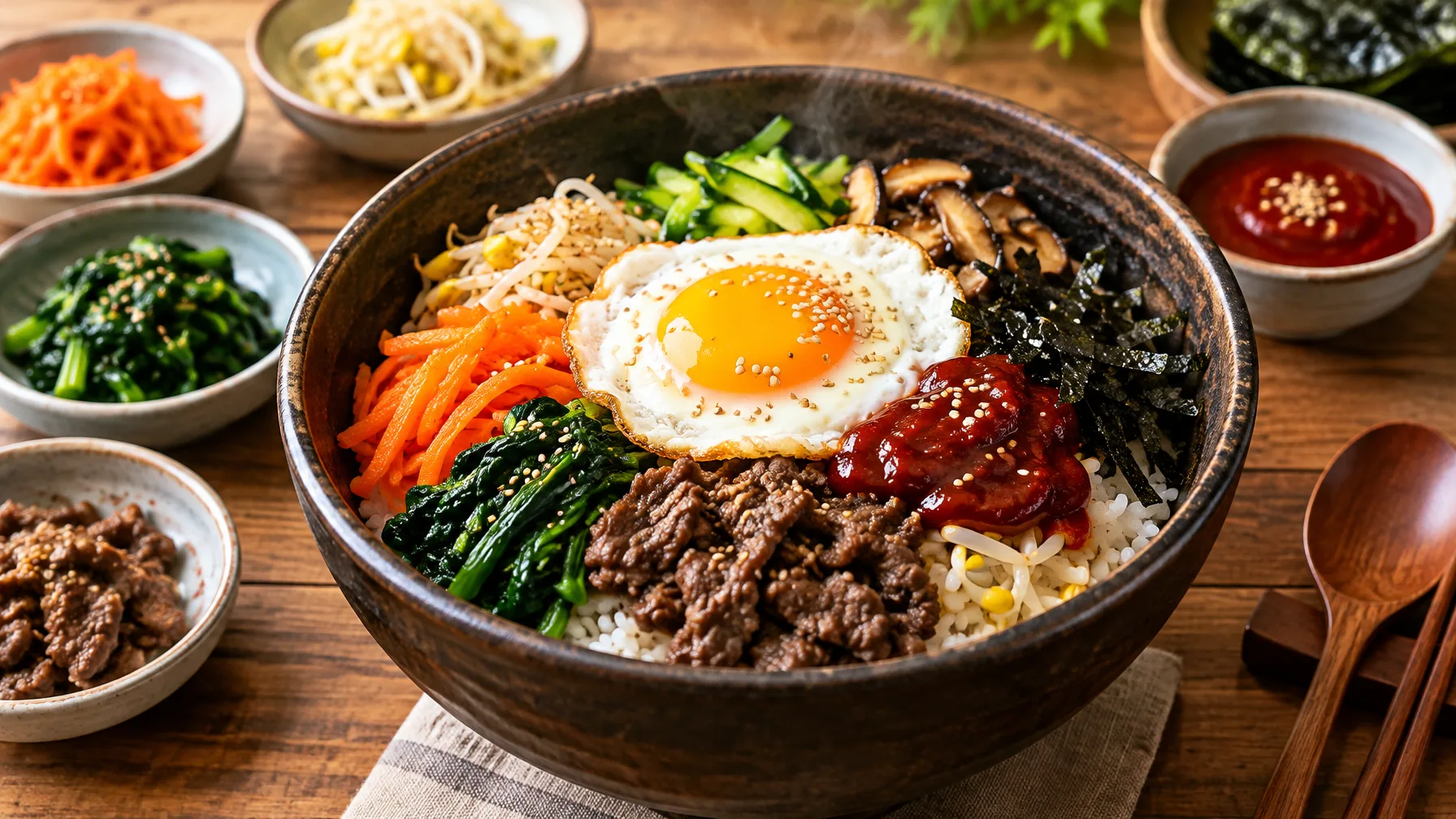
Bibimbap recipe ingredients come down to hot rice and namul, the seasoned vegetables. Beef such as bulgogi or ground beef, seasoned seaweed, gochujang sauce and a fried egg go on top, and everything gets mixed in the bowl as you eat. Most of the extra work is small, quick steps. Below you'll find three sauce ratios, a cooking time for every layer and swaps for hard-to-find ingredients.
Think of the bowl from the bottom up. Hot rice goes in first, then the seasoned vegetables, then the cooked beef. Seasoned seaweed, a spoonful of sauce and the fried egg finish the top.
Spinach, bean sprouts, carrots, mushrooms and zucchini are the namul you'll meet most often in home bowls. Each one gets its own short turn in the pan. That's why the bowl looks like a lot of work but moves along fast once you start.
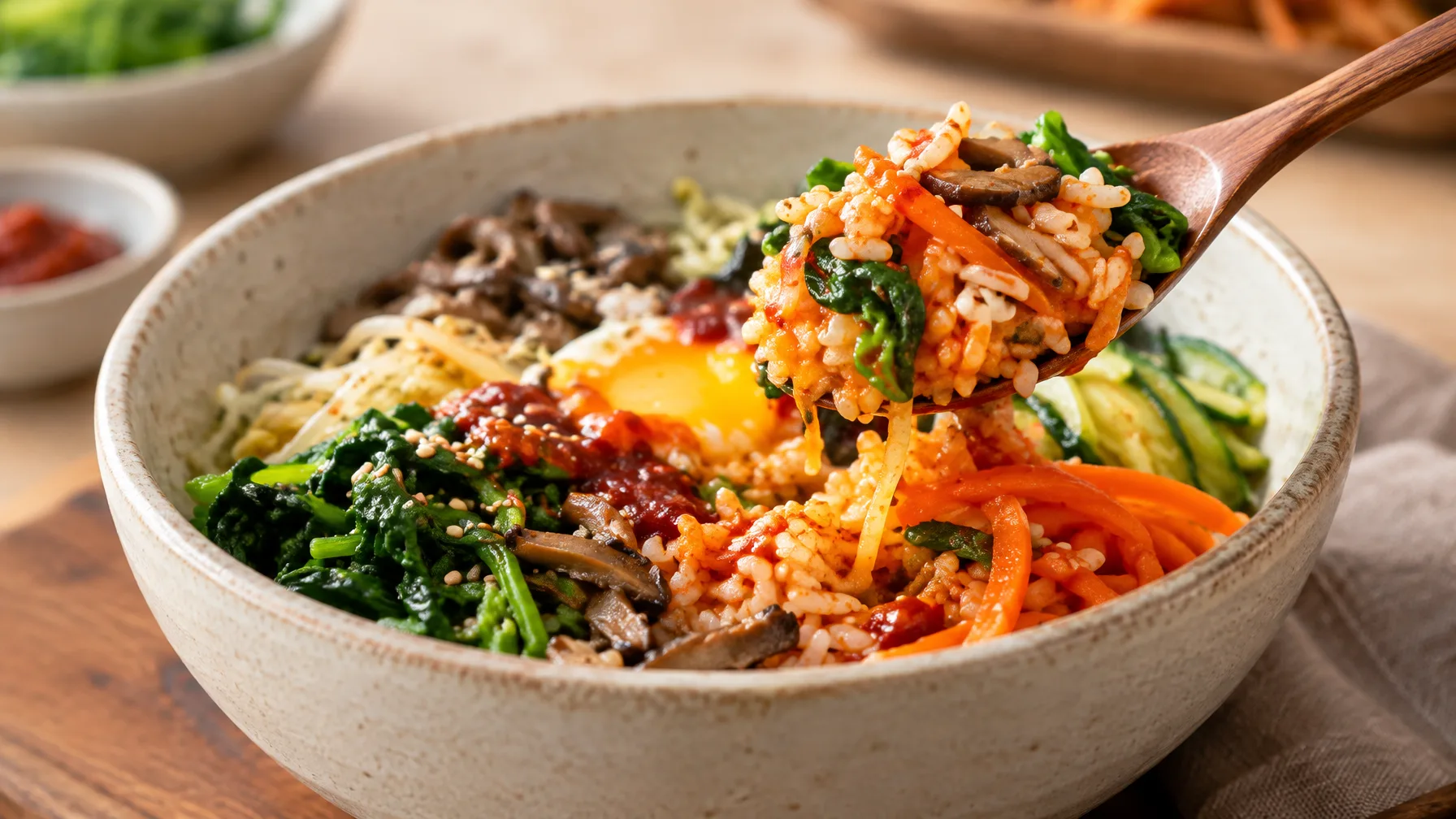
Bibimbap means 'mixed rice' in Korean, and you say it bee-beem-bap
 AI-generated image
Say it bee-beem-bap, and the name tells you what to do: it means 'mixed rice.' The bowl is built to look tidy, then stirred together before you eat.
Plenty of versions share the name. Dolsot bibimbap and yangpun bibimbap are two well-known variations. The traditional style uses raw beef and a raw egg yolk. The recipe below uses cooked beef and a fried egg instead.
What to set out before you turn on the stove
 AI-generated image
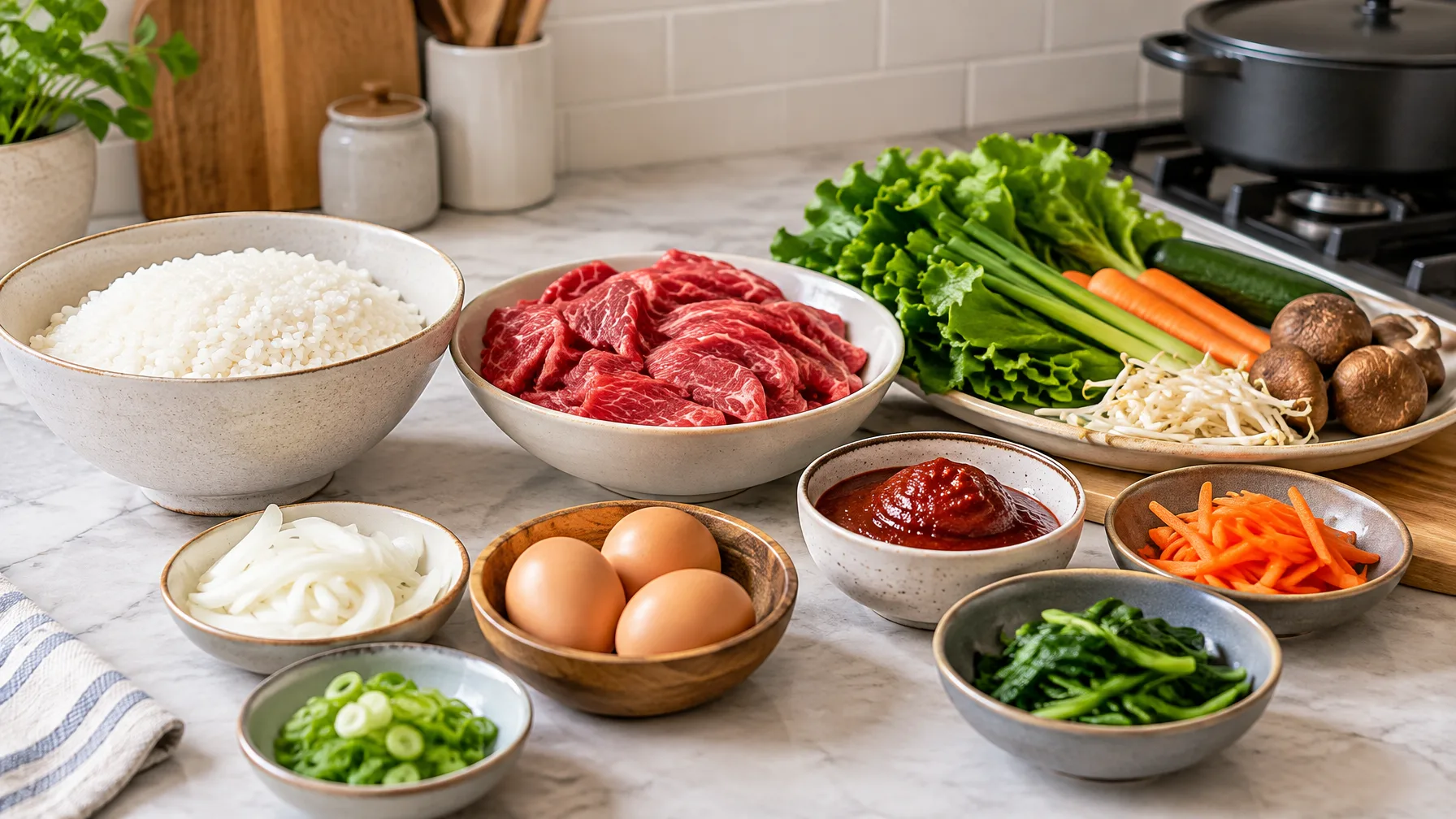
Most of the planning is shopping. Here is what a first bowl needs, and a few details that save you from a bad start.
- Rice: short- or medium-grain sticky rice, or sushi rice. Jasmine and basmati don't suit the bowl.
- Beef: 450 g (1 lb) of ribeye is the usual cut. Tenderloin, sirloin and round also work, and so does ground beef.
- Vegetables: spinach, bean sprouts, carrots, mushrooms and zucchini cover the classic mix.
- Sauce: gochujang (Korean chile paste), rice vinegar, sesame oil, soy sauce, garlic, sugar or honey.
- Finishing touches: seasoned seaweed and one egg per bowl.
Cook the rice on the stove if you can. Using equal parts rice and water, say 2 cups of each, gives glossy grains with a springy, chewy bite. Koreans call that texture jjolgit.
Use two or three pans so the work moves faster. With three pans, every component is ready at about the same time.
Bibimbap sauce: three gochujang ratios, from 3 ingredients to 7
 AI-generated image
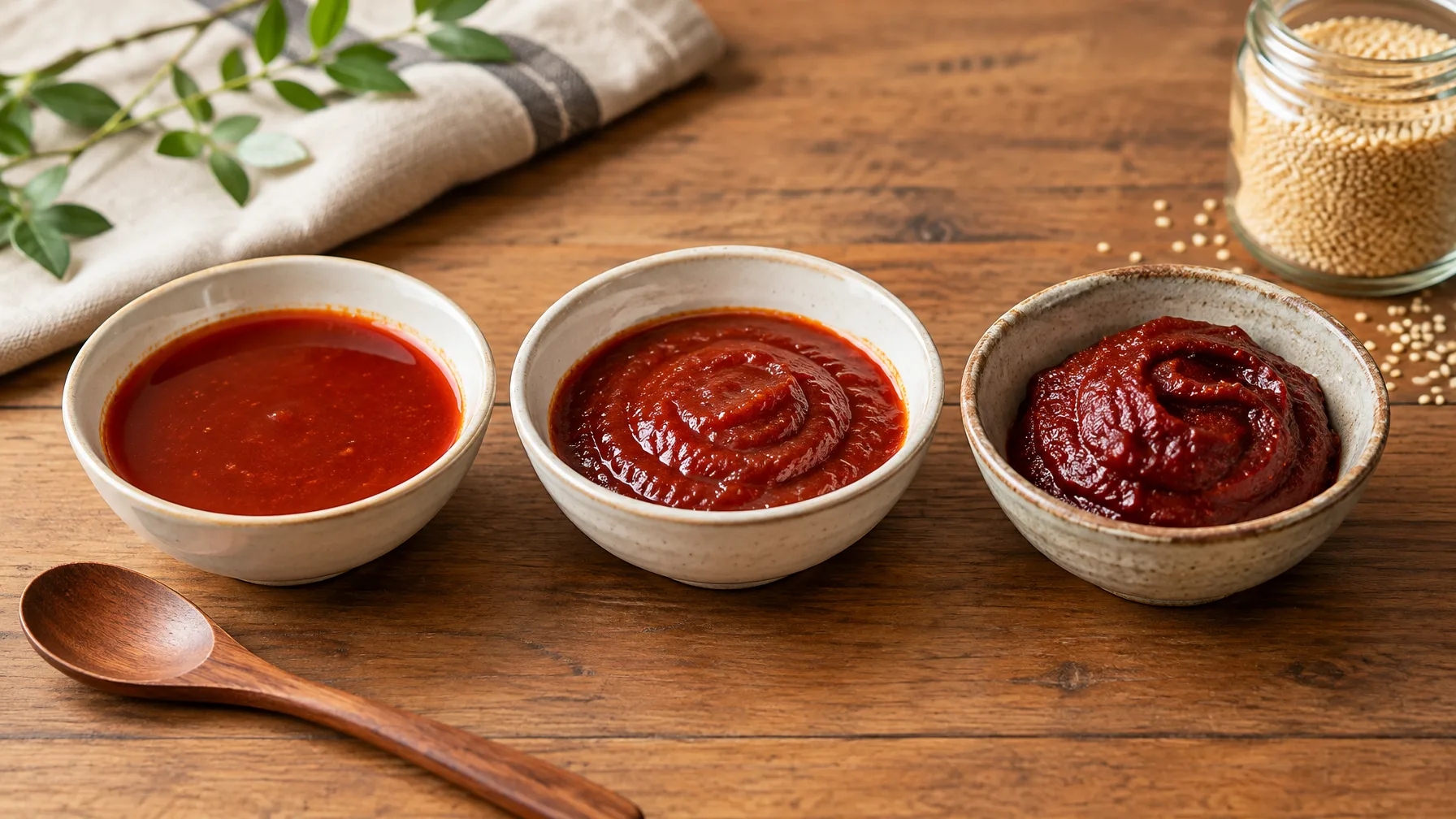
The bibimbap sauce is where the bowl gets its heat. Every bibimbap sauce recipe starts with gochujang and loosens or balances it differently. These three show the range, from the shortest to the fullest.
| Version | Ingredients | What to expect |
|---|---|---|
| 3 ingredients | 1 Tbs gochujang, 1 tsp rice vinegar, 1 tsp honey | Fastest. Vinegar and honey balance the paste. |
| 7 ingredients, one serving | 2 tsp gochujang, 1 tsp soy sauce, 1 tsp sesame oil, 1 tsp garlic, ½ tsp vinegar, ½ tsp sugar, ½ tsp sesame seeds | Scaled for one bowl. Soy sauce adds salt. |
| 7 ingredients, larger batch | 2 Tbs gochujang, 1 Tbs sesame oil, 1 Tbs sugar, 1 Tbs water, 1 Tbs toasted sesame seeds, 1 tsp vinegar, 1 tsp minced garlic | Bigger and nuttier. Water thins it so it spreads. |
Gochujang thinned with only a spoonful of water works in a pinch. It has no seasoning beyond the paste itself, so the fuller versions taste better. A heavy hand with the paste hides the vegetables and beef, so start small.
If you like a saucier bowl, mix a double batch. A lot of the extra tends to get used at the table.
Plan on 15 minutes of prep, but start the beef up to 3 hours early
Prep takes about 15 minutes. The beef sets the real schedule, because it needs 30 minutes to 3 hours in its marinade. Marinate it first and the rest of the meal fits around it.
Ground beef bulgogi is the answer when you're short on time. It cooks quickly and takes the seasoning evenly. Thin-sliced ribeye tastes great too, but it has to be partly frozen so you can slice it, which adds a step.
Full traditional versions can run about 1 hour 30 minutes. The beef, carrots, mushrooms, namul and egg are each cooked separately. Bracken fern (gosari) needs 6 to 8 hours in cold water to lose its bitterness. A crispy rice bottom adds another 10 to 15 minutes. Skip those and the evening gets much shorter.
Build the bowl layer by layer, and cook each layer for just a few minutes
- Start the beef marinating and set the rice cooking on the stove.
- Stir the sauce together while the rice cooks.
- Boil the bean sprouts in salted water, drain them the moment it boils and rinse them in cold water.
- Sauté the zucchini, carrots and mushrooms one at a time, with a pinch of salt, in a hot pan.
- Wilt the spinach last, then cook the beef.
- Fry the egg while the beef finishes.
- Scoop hot rice into the bowl, then add the vegetables, beef, seaweed and sauce. Top with the egg.
| Layer | Cooking time | Notes |
|---|---|---|
| 1. Hot rice | Stovetop, equal parts rice and water | Short-grain or sushi rice |
| 2. Bean sprouts | Drain as soon as the water boils | Rinse cold; clear fish sauce can stand in for salt |
| 2. Zucchini, carrots, mushrooms | 1 to 2 minutes each, stirring | Medium heat, light salt, no scorching |
| 2. Spinach | About 1 minute | Stop when just wilted |
| 3. Beef | Marinate 30 minutes to 3 hours, then cook | Ground beef cooks fastest |
| 4. Seasoned seaweed | None | Goes on as it comes |
| 5. Sauce | None | Stir and spoon over |
| 6. Fried egg | Fry last | Sits on top |
Shiitake behave a little differently. A touch of sesame oil and a spoonful or two of water in the pan helps them cook. Don't rush them, because they release water first and brown only afterward.
No Korean grocery nearby? Swap in vegetables you can find
Traditional namul can mean a trip to a Korean grocery store. An easy bibimbap recipe skips that and uses everyday vegetables from any supermarket. The rule is to cut them small enough that they finish cooking in about the same time.
Cutting small also helps if kids are eating. Tough vegetables can be hard for little ones to chew.
For a meat-free bowl, see Tofu for Bibimbap: A Meat-Free Protein Option. For beef, ground beef or a tender cut like sirloin both work. Use sticky short-grain rice, because long-grain rice won't hold the bowl together.
Loosen the toppings with chopsticks, then switch to a spoon
Bring the bowl to the table as built, so everyone sees the layers. Then break the egg and start with chopsticks. They loosen the toppings and spread the sauce without crushing the rice.
Once the toppings are loosened, switch to a spoon and give it a final mix. Add the sauce a little at a time and taste as you go, because you can always add more if it's too mild.
Where bowls go wrong: mushy rice, muddy flavor and uneven vegetables
- Rice cooked with too much water turns the whole bowl mushy.
- Too much gochujang drowns out the beef and vegetables.
- Bean sprouts left in the boiling water go limp, so drain them at once.
- Mushrooms hurried in the pan stay pale and watery.
- Vegetables cut in different sizes finish at different times.
- Cooking everything in one pan leaves the first layers cold by the time the last is done.
- Skipping the marinade leaves the beef bland.
If you want an authentic bibimbap recipe in the traditional sense, this isn't it. The classic uses raw beef and a raw yolk, while this version swaps in cooked ingredients, which makes it a variation rather than the original.
Shortcut versions that steam the vegetables for speed also differ from restaurant bowls. There, each vegetable is cooked and seasoned separately for stronger flavor and color. And this method won't give you the crispy rice of a hot stone pot, which restaurants serve to crisp the rice bottom.
The full workflow is also long, and it can feel like a lot for a casual dinner. Would you like to taste the restaurant version first? Then read Best Bibimbap in Seoul: Michelin-Listed Mokmyeoksanbang.
Stack the layers in order, then stir it all together
Layer hot rice, seasoned vegetables, cooked beef and the remaining toppings in the bowl, then mix everything together right there as you eat. If you can't find traditional namul, use vegetables that are easy to get and cut them small so they cook evenly. It's fine if the bowl looks messy, because bibimbap is meant to be eaten mixed.
Comments
No comments yet.