
How to Make Simple Kimchi at Home: Which Salt to Use?
 AI-generated image
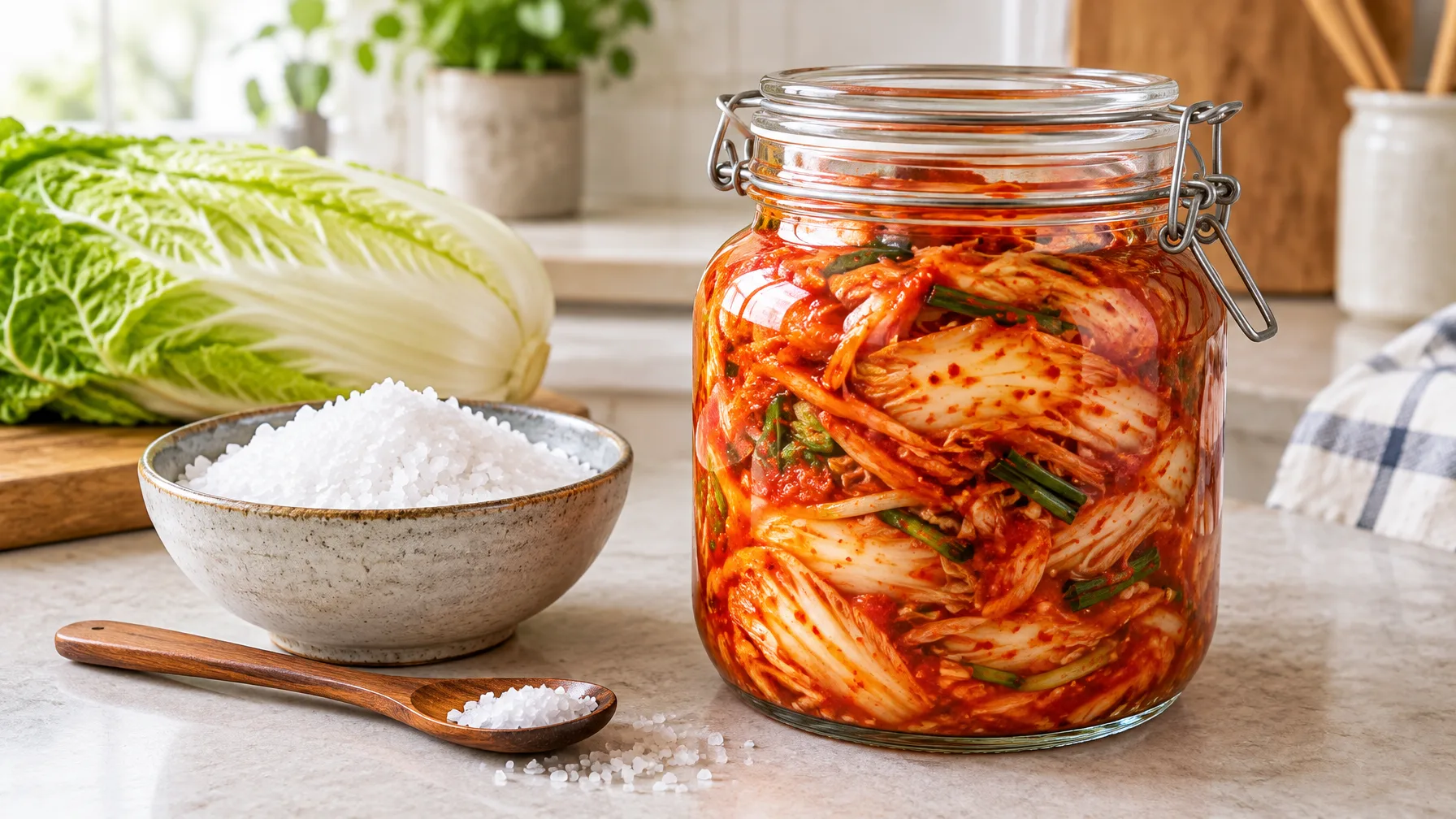
To make simple kimchi at home, salt napa cabbage with additive-free coarse salt for 1–2 hours. Toss it with the chili paste and pack it into a jar. Leave the jar at room temperature (60–75°F) for 1–2 days until small bubbles form. Then refrigerate it for 4–5 more days before eating. If you're wondering how to make kimchi at home without a pile of special equipment, this is the whole outline. The salt you pick matters more than most beginners expect.
Salt 1–2 hours, ferment 1–2 days, chill 4–5 days
 AI-generated image
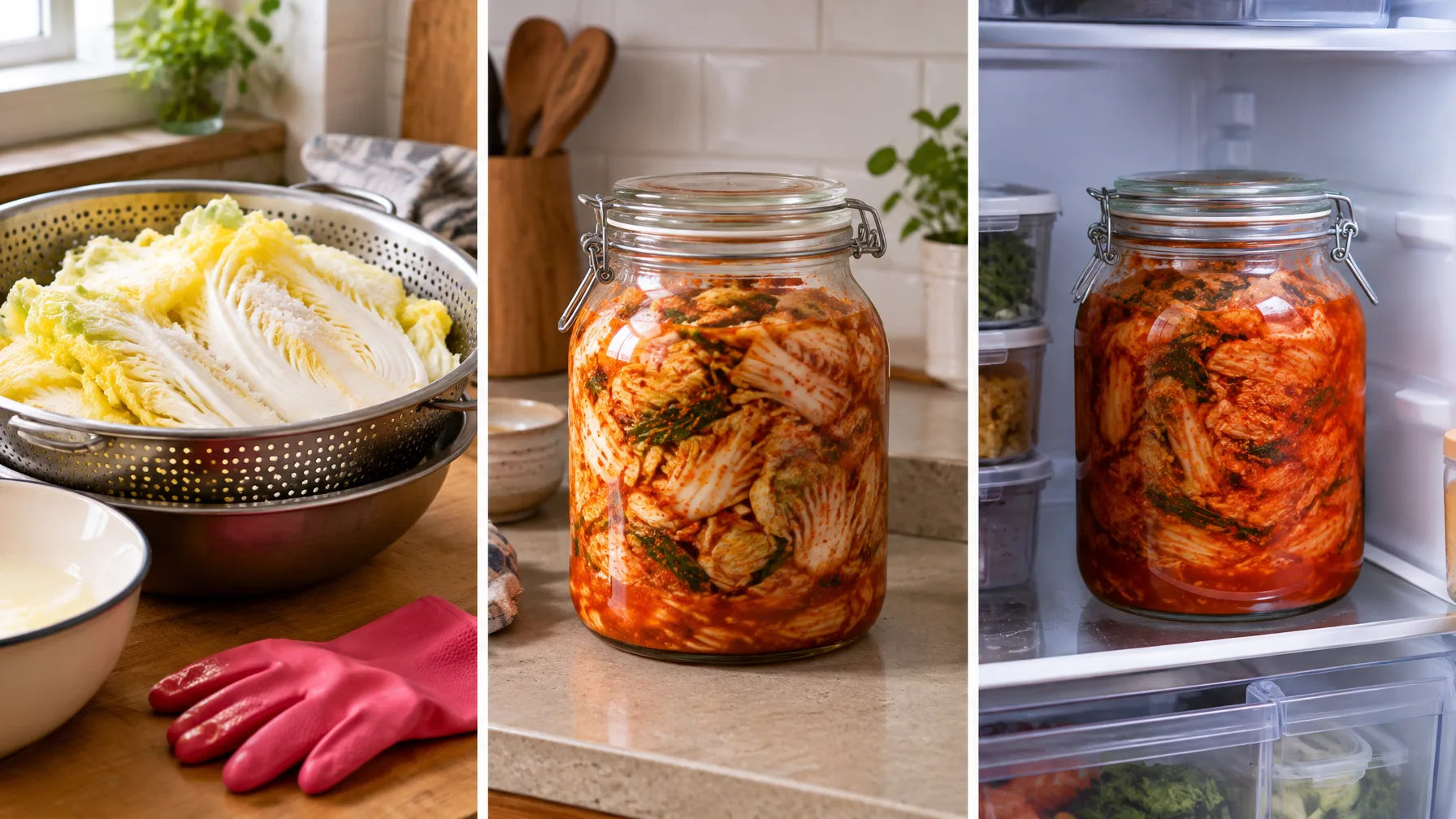
That is the shape of an easy kimchi recipe: three stages, and most of the time is spent waiting. Start to finish it takes roughly a week. Gloves are worth having because chili flakes stain and can irritate skin.
What goes into a simple cabbage kimchi
 AI-generated image
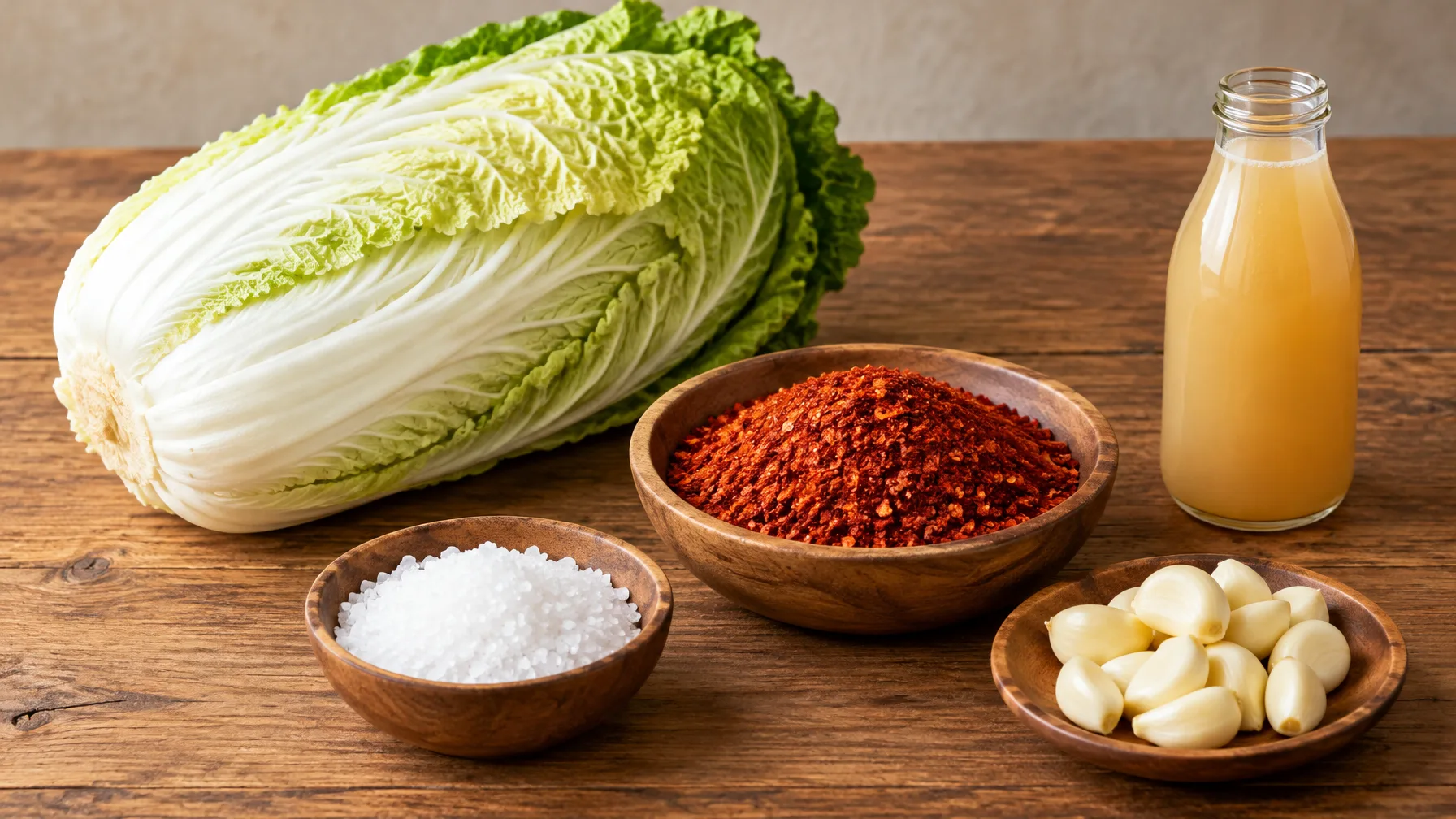
A cabbage kimchi recipe has a shorter ingredient list than most people expect. The base is napa cabbage: about 4 kg (8.8 lb) for a large batch, with the thick outer leaves removed. Around it you need coarse salt, Korean-style chili flakes, and fresh garlic. Use whole fresh cloves, not the kind from a jar.
For a little sweetness, a mix of apple and pear nectar works well without covering the chili flavor. Many traditional versions also add a salty, savory seasoning. Examples are salted fermented seafood called jeotgal, such as salted shrimp or anchovy. Anyone with a fish or shellfish allergy should skip those. Check store-bought kimchi too, since most Korean-made jars contain seafood and often MSG.
Why additive-free salt matters, and what table salt does
 AI-generated image
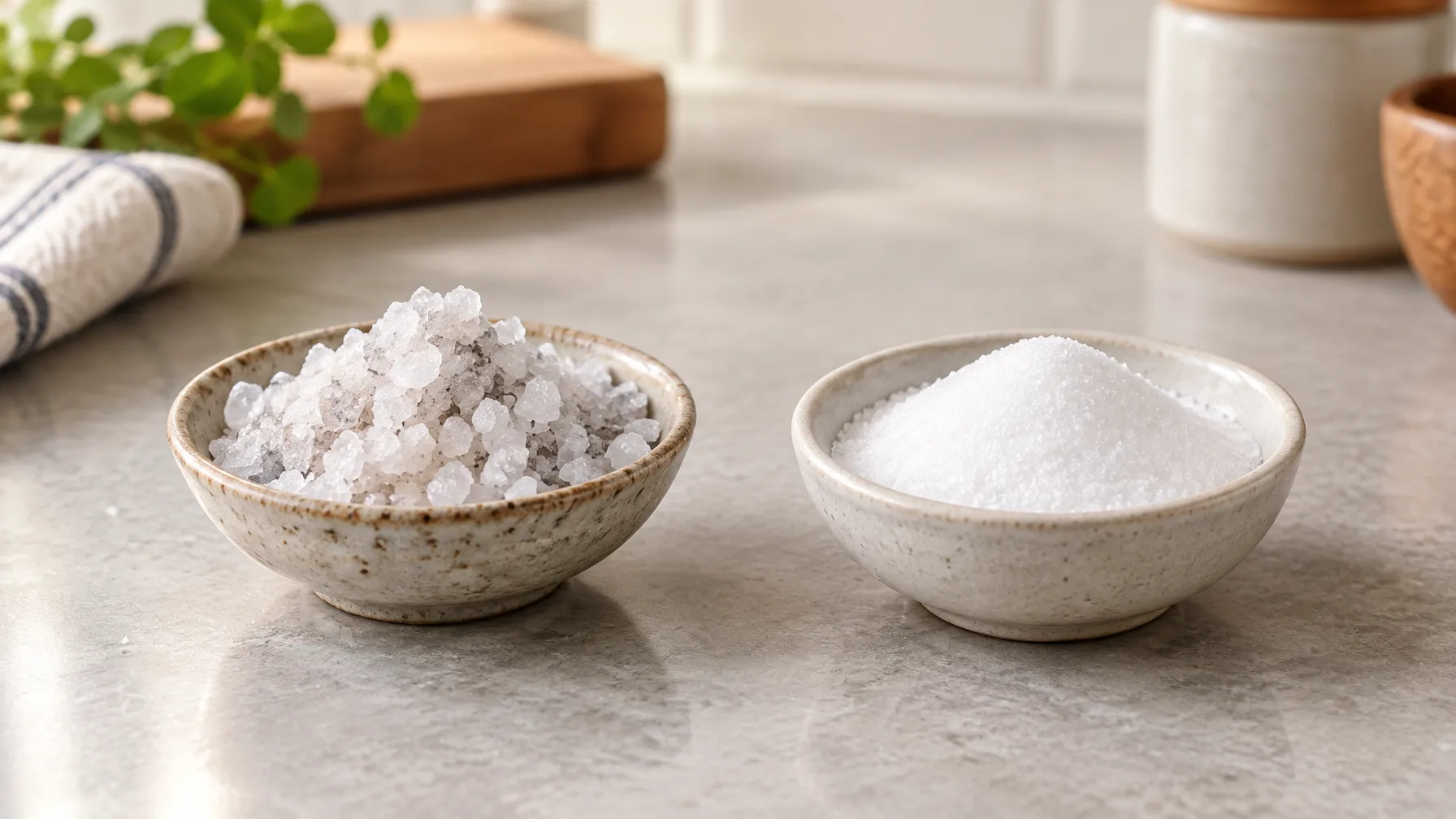
This is where first-timers slip. The salt must be additive-free, because additives get in the way of fermentation. Iodized table salt and salt with anti-caking agents are not suited to fermenting, so they are off the list. Read the ingredient list before you buy, and pick coarse salt with nothing added.
| Salt type | What happens in the jar |
|---|---|
| Additive-free coarse salt | Ferments normally; the one to use |
| Iodized or anti-caking table salt | Additives interfere with fermentation; cabbage can turn too limp and mushy |
| Regular salt that still has its bittern (bitter brine) | Kimchi can turn bitter and unpleasant |
How long to salt the cabbage, and how much salt to use
Salting is the first step and the most important one. Lay the cabbage in layers and sprinkle about 2–3 tablespoons of coarse salt over each layer. Let it sit for 1–2 hours and turn the cabbage a few times along the way. When the leaves have wilted, move them to a colander.
Let the cabbage drain for another 1–2 hours, rinse it, and drain it again so the leaves are not dripping. Timing matters here. Salt too long and the kimchi turns very salty. Salt too briefly and it tastes flat, ferments poorly, and molds sooner.
How long to ferment, and how to tell it is ready
While the cabbage drains, stir the chili flakes with the other seasonings. Let them sit for 5 minutes so they soften into a thick kimchi paste. Put on gloves, toss the cabbage with the paste, and pack it into the jar firmly so little air stays trapped. Fill the jar no more than about three-quarters. Fermentation gases and brine need room, and an overfull jar can burst.
Cover the jar loosely for the first 48 hours and keep it in a cool, dark spot at 60–75°F. A day is typical, and a cooler kitchen can take up to two. The signs that it is time to move on are light bubbles and a mild sour smell. Keep every piece of vegetable under the brine, pressing it down with a plate if you have to. Vegetables left above the liquid are where mold starts.
If a few days at room temperature worries you, fermenting in the refrigerator alone also works. Whichever route you take, once the flavor suits you, move the kimchi into smaller jars and keep it cold. Small containers also make it easy to hand a jar to a friend.
Fridge temperature, shelf life and signs of spoilage
After the room-temperature stage, kimchi belongs in the refrigerator at 41°F or below. The ideal range is 3–5°C, close to a normal fridge setting. A lidded kimchi container can keep a batch tasting fresh even after four weeks. It's at its best in the first few weeks, while it's still crisp and balanced.
Kimchi turns more sour as time passes, and that's normal. Mold isn't. White mold on top means the batch has spoiled. So does an unpleasant smell that's different from the tangy ferment, or an odd texture. Spoilage can be a real food-safety risk, so throw it out. Air exposure is a common cause. Kimchi that has simply gone too sour is another matter. It makes a good base for stew, fried rice or pancakes.
A one-page timeline with a check at every stage
Here is the whole process as a single checklist, with a quick test at each step.
- Prep the tools: wash everything with soap and warm water, then soak it in 160°F or hotter water for at least 30 seconds.
- Salt the cabbage for 1–2 hours, turning it a few times. Check: the leaves have wilted.
- Drain in a colander for 1–2 hours, then rinse and drain again.
- Soak the chili flakes for 5 minutes to make the paste.
- Toss the cabbage with the paste, pack it into the jar, and stop at three-quarters full. Check: the vegetables sit under the brine.
- Ferment at room temperature (60–75°F) for 1–2 days. Check: small bubbles, a mild sour smell, no mold.
- Refrigerate at 41°F or below for 4–5 days. Check: no mold, no off smell, then eat.
When homemade kimchi isn't the right fit
Kimchi recipes differ from home to home, so there is no single correct version. The times above are a starting point. The right moment to stop fermenting is also a matter of taste. A batch that ferments too long loses its crunch and turns sharply sour. Making kimchi takes time, and a jar that molds after a week wastes all of it.
Some people should be careful. Kimchi is salty. Eaten as small side dishes called banchan, it adds roughly 500 mg of sodium a day. It adds more when it goes into stews, noodles or rice dishes. Anyone watching their sodium should factor that in. Is Korean Food Healthy? Mostly Yes, Once You Watch the Sodium goes further on the topic. Kimchi also contains histamine, so people with histamine intolerance may get headaches, hives or a runny nose. Its fiber can cause bloating in some people. Anyone who is pregnant or has a chronic condition should ask a health professional before eating fermented foods.
Food safety deserves a short word too. Poor hygiene or bad storage can let harmful bacteria in, and fermented foods have been linked to outbreaks. Wash your hands, use clean tools, and wipe down your work surface.
Your first jar, start to finish
Salt the cabbage for 1–2 hours, mix in the chili paste and pack it into a jar. Keep it at room temperature for 1–2 days until bubbles appear. Then refrigerate it for 4–5 days before eating.
Comments
No comments yet.