
Korean Barbecue vs Bulgogi: Is Bulgogi Just One Dish?
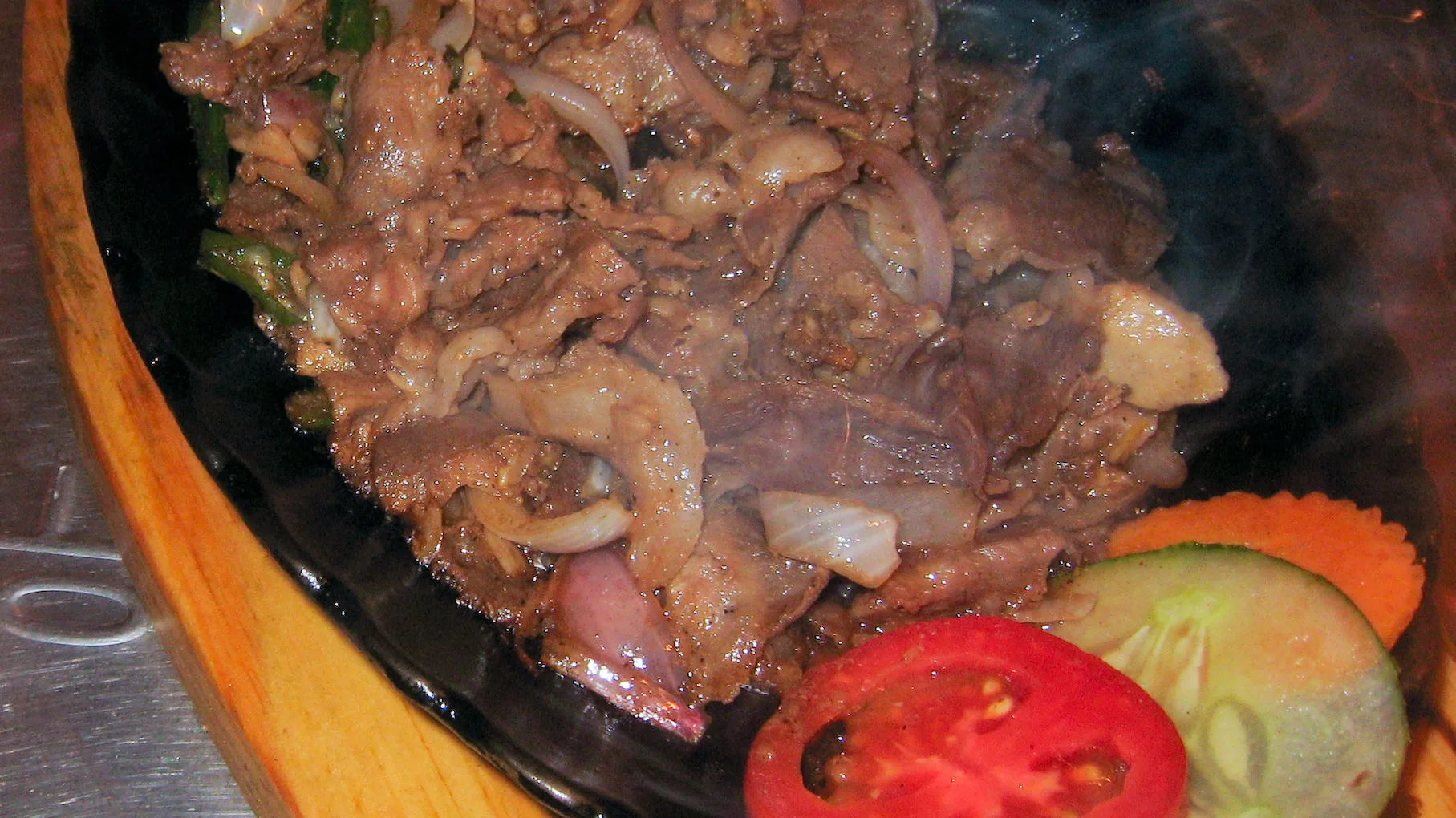 Photo: Charles Haynes / Wikimedia Commons (CC BY-SA 2.0)
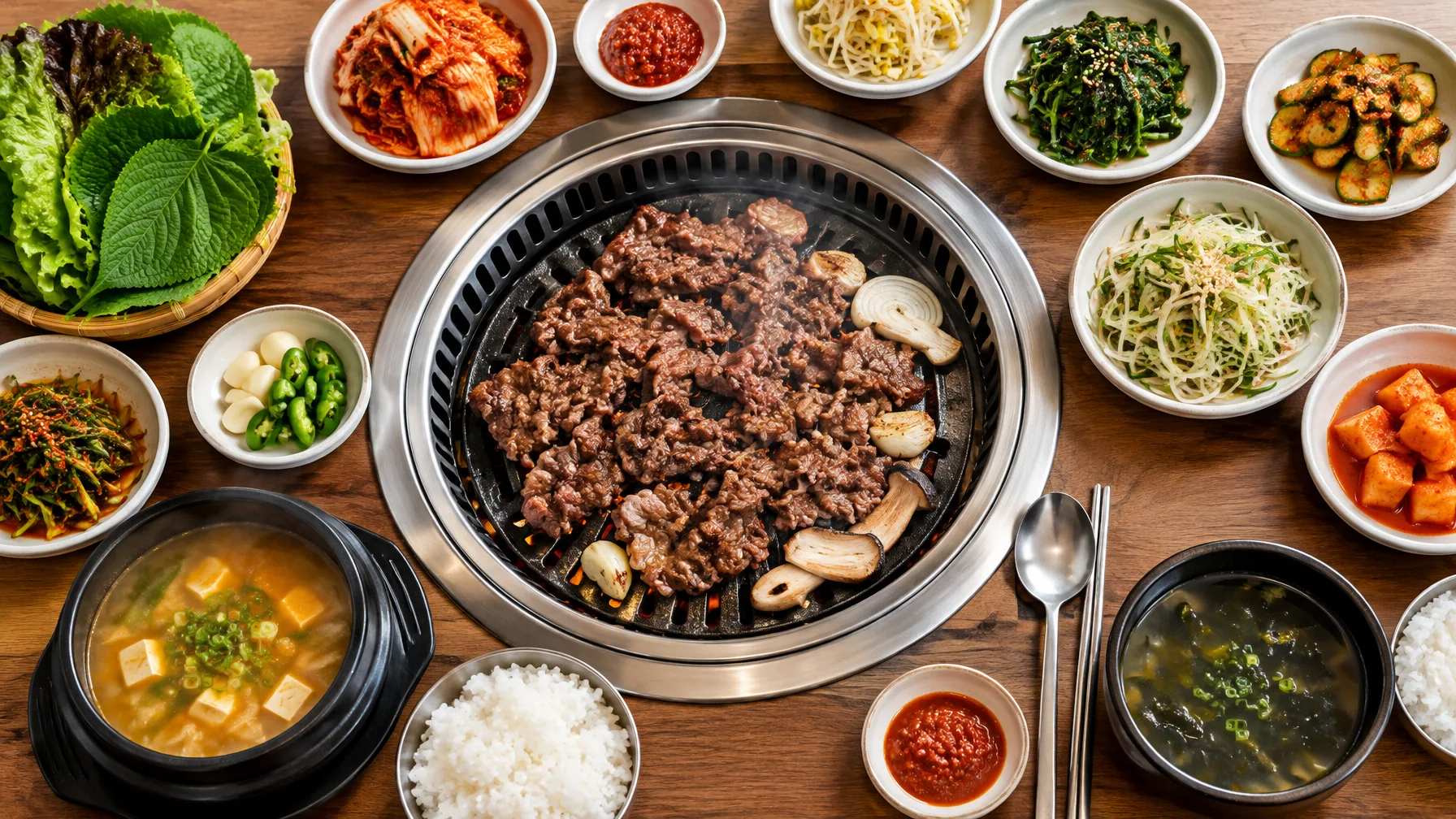
Korean barbecue (gogi-gui) is the whole style of eating in which you grill cuts of meat at the table. The heat comes from charcoal or a built-in gas grill. Soup and rice often come too. Bulgogi is one dish within it: thinly sliced meat, most often beef, marinated in a sweet-savory sauce. So what's the difference between Korean barbecue and bulgogi? It comes down to level. One is the meal, the other is something you cook during it. The comparison people really want to make is a different one, and we'll get there below.
Korean barbecue is the meal; bulgogi is one dish in it
 AI-generated image
Banchan are the small side dishes that fill the table. Korean Banchan Explained: What Are They and What's on the Table? covers them in detail. Together with the grilled meat, and usually soup and rice, they make up the meal. That is why Korean barbecue is better thought of as a way of eating than as a single food. The tradition is old, too, with roots going back about 2,000 years to the Goguryeo period (37 BC to 668 AD).
Here is a quick way to sort the words you'll run into. Ask yourself which level someone is talking about.
| Term | Level | What it is |
|---|---|---|
| Korean barbecue (gogi-gui) | The meal style | Grilling meat at the table, with banchan and often soup and rice |
| Bulgogi | A dish within it | Thinly sliced, marinated meat, most often beef |
| Galbi | A second dish within it | The same basic marinade, but a different cut of beef |
What goes into a bulgogi marinade
 AI-generated image
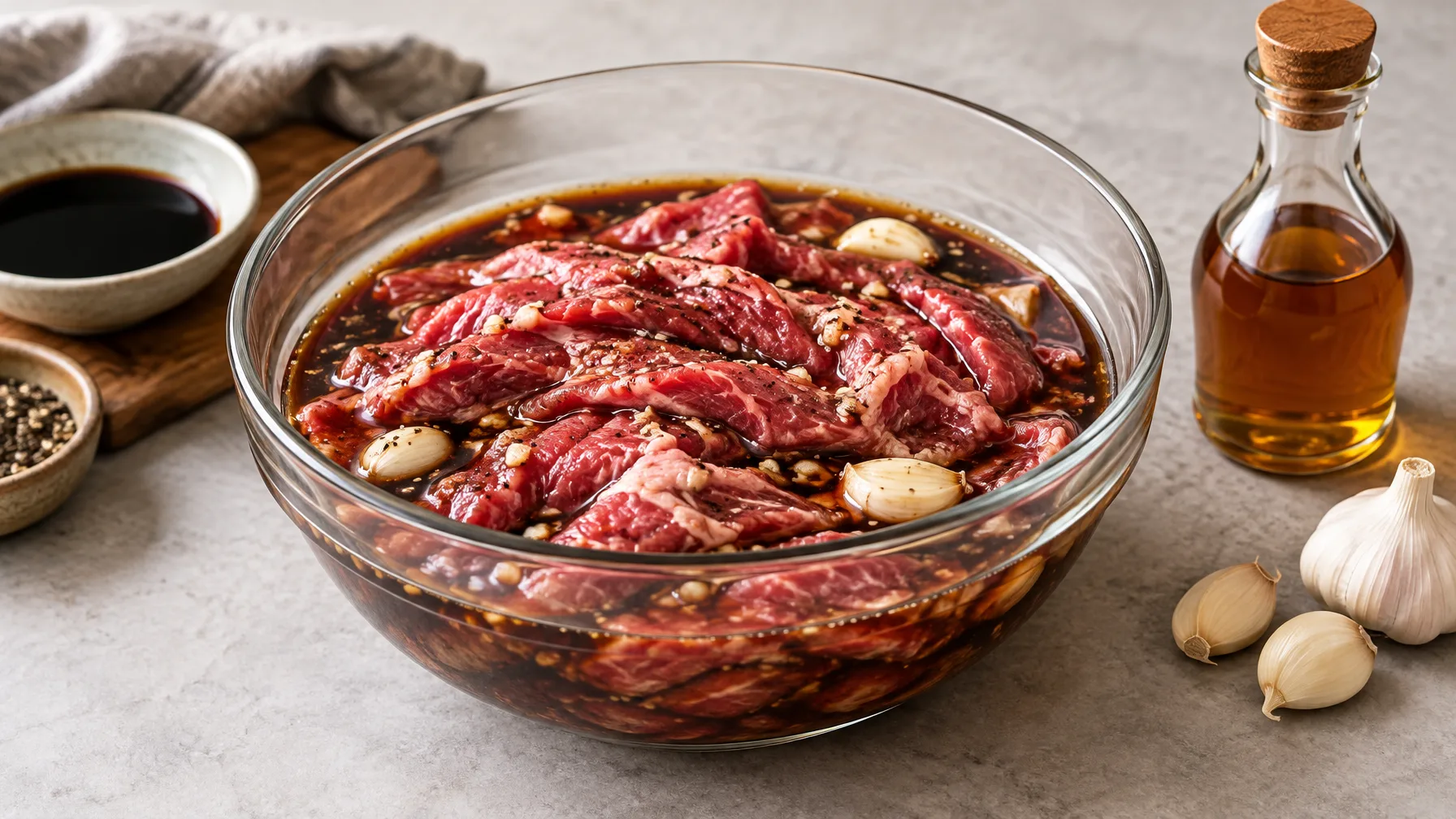
What is bulgogi, exactly? It's thinly sliced meat in a sweet-savory marinade, and today it is the signature menu item at Korean barbecue restaurants. The bulgogi marinade is simple: soy sauce, sugar, sesame oil, garlic and pepper mixed together. The meat sits in it before cooking, which is where the flavor comes from.
Pear is the usual fruit sweetener in these marinades, and outside Korea it can be hard to find. A red apple plus grated onion works well as a stand-in.
The dish has a long family tree. The oldest Korean barbecue was maekjeok, marinated meat on skewers, which developed into bulgogi over many centuries. Bulgogi also traces to neobiani. This was thinly sliced, marinated beef grilled over charcoal, which Joseon-era royalty enjoyed. As beef production grew, ordinary Koreans could eat it as easily as royalty.
Fire meat isn't always beef or open flame
 AI-generated image
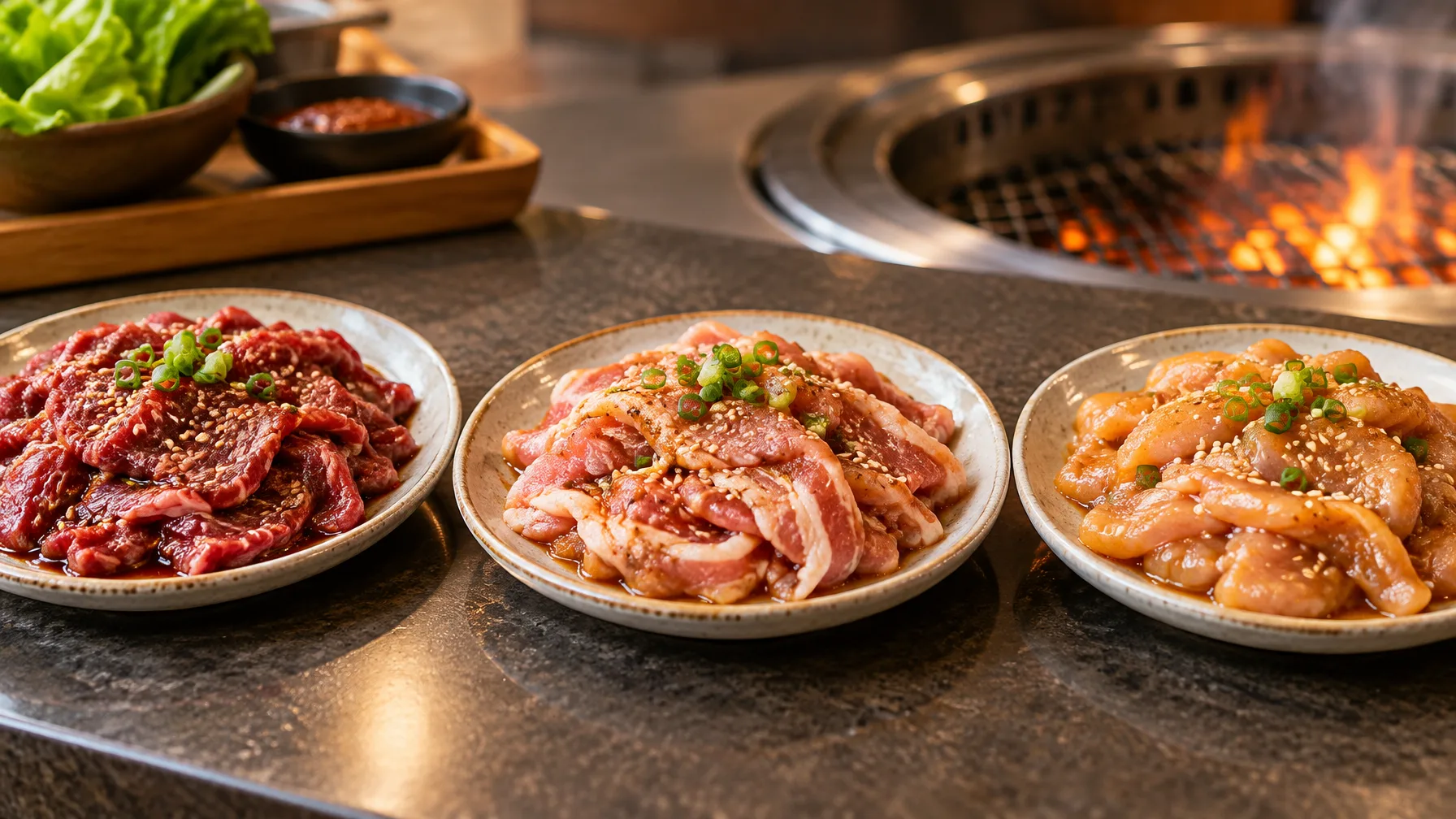
Bulgogi literally means 'fire meat.' It's often made from tender cuts of beef, pork or chicken, but unless a menu says otherwise, you get beef. Pork and chicken versions are common, so bulgogi isn't strictly a beef dish.
The name also suggests flames, and the traditional method is indeed direct fire. But bulgogi is also cooked on a griddle or pan over a stove, and that pan method has become popular. The name hints at a technique that doesn't always apply.
Pan with vegetables versus the table grill
In a Korean barbecue restaurant, the grill sits in the middle of the table. Raw, marinated bulgogi is one of several popular items you cook yourself on it. At home you can use a barbecue grill with no vegetables, or a pan on the stove with vegetables. The two methods give slightly different flavors.
The pan version has a practical bonus. Bulgogi cooked with vegetables releases some juice, and that juice is good mixed into steamed rice. It's also a method that suits meal prep.
Galbi is the real rival, and the cut is the difference
If you want a true galbi vs bulgogi comparison, this is it. Both use basically the same marinade and are cooked over fire. The main difference is the beef: galbi uses short rib, while bulgogi can use ribeye. Recipes vary in their marinade ratios, but the flavor direction is very similar.
US diners should know one catch. California restaurants serve galbi cut crosswise through the bones. This is known as LA galbi, and it isn't how galbi is cut in Korea. So a distinction based on American-style galbi may not match what is served in Korea. For the same reason, Korean BBQ vs bulgogi is the wrong pairing. The useful pair is bulgogi and galbi, two dishes inside one meal.
Finding the right cuts without an Asian market
A good Asian market sells meat trimmed for both bulgogi and galbi. Professionally cut pieces like that are hard to find elsewhere. If you have no such market nearby, you can still get similar results at home with more common cuts. They won't be identical, though.
Ribeye, sold as scotch fillet in some places, is a good choice for bulgogi beef cuts. Pre-sliced grocery meat can disappoint, so it helps to choose the piece yourself and slice it by hand. Ribeye costs a little more than other popular steak cuts but is nowhere near as expensive as tenderloin.
Comments
No comments yet.