
What Cut of Meat Is Bulgogi? Sirloin and Ribeye, Sliced Thin
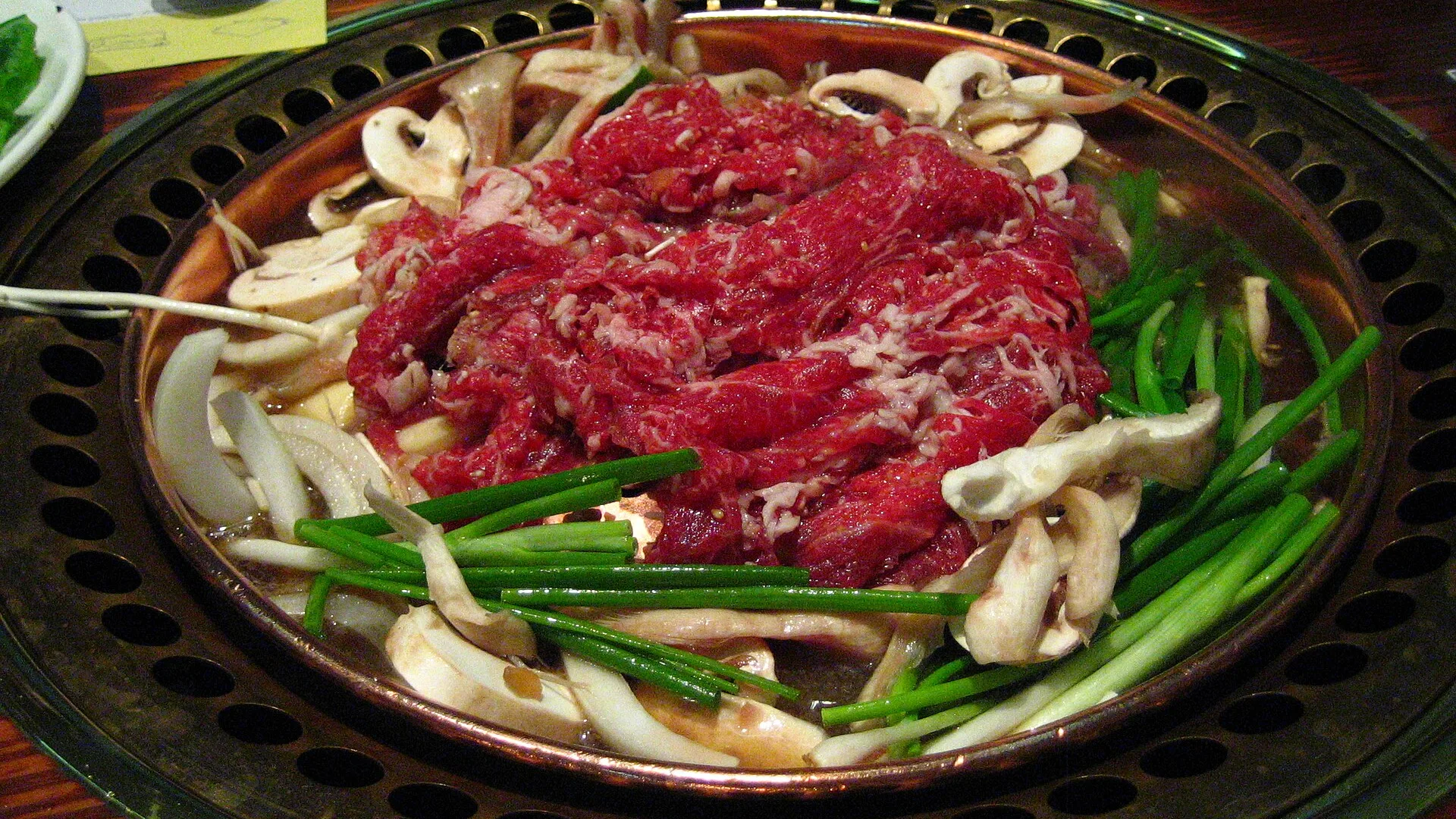 Photo: by ayustety / Wikimedia Commons (CC BY-SA 2.0)
Bulgogi meat is usually thinly sliced beef, and sirloin and ribeye are the two cuts most often used. The rest of this page covers why those cuts work, how thin to slice them, and what to buy if you would rather skip beef.
Sirloin and ribeye are the cuts to ask for
 AI-generated image
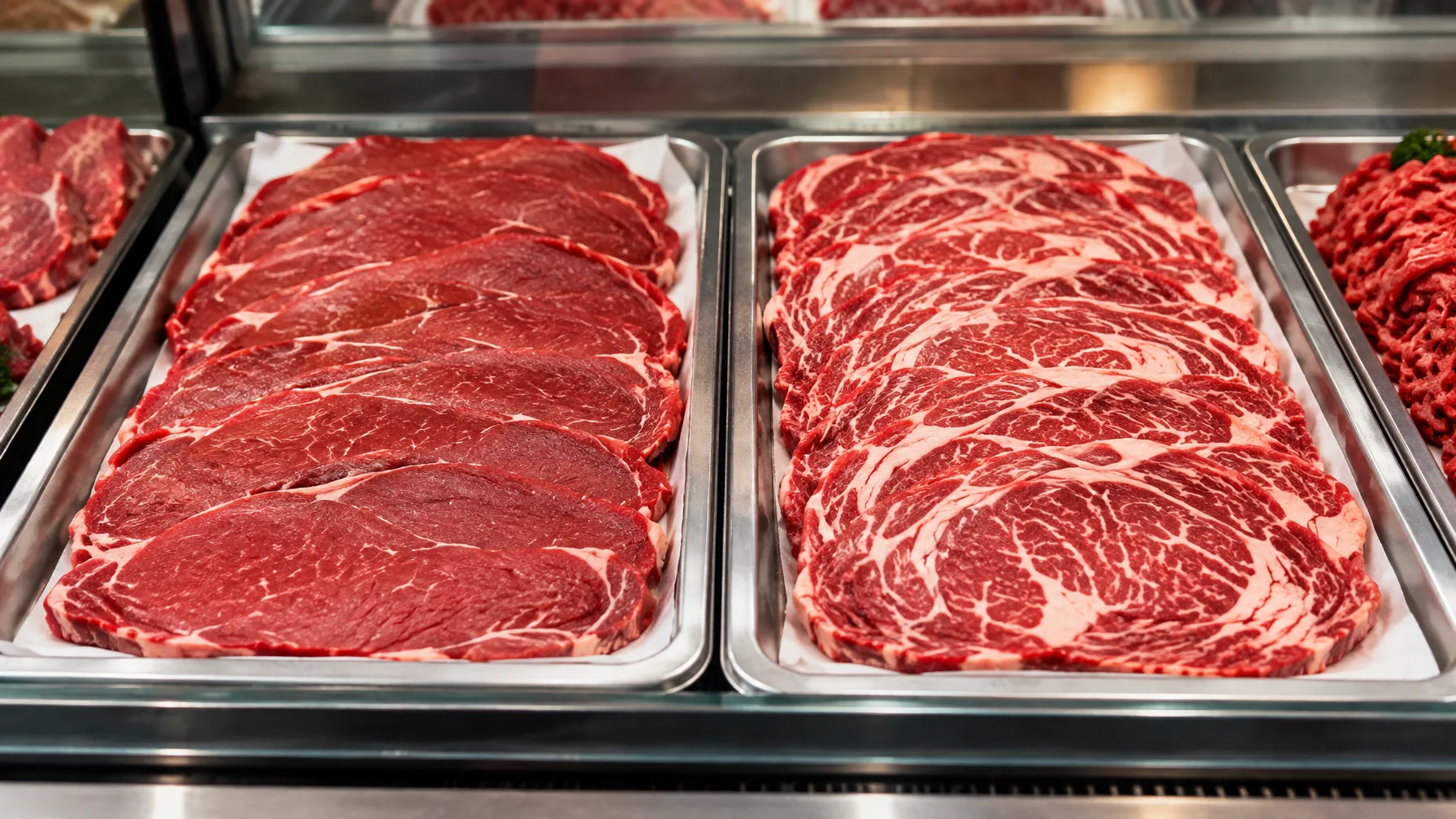
At the butcher counter, ask for thinly sliced beef sirloin or ribeye. Both show up in bulgogi recipes again and again, and home cooks who have tried several cuts keep coming back to these two.
Some stores also sell beef that's already sliced for bulgogi, which saves you the knife work. If you want a variation, pork belly or chicken are the usual alternatives. The table further down shows how they compare.
Thin, marinated, then grilled or pan-cooked
 AI-generated image
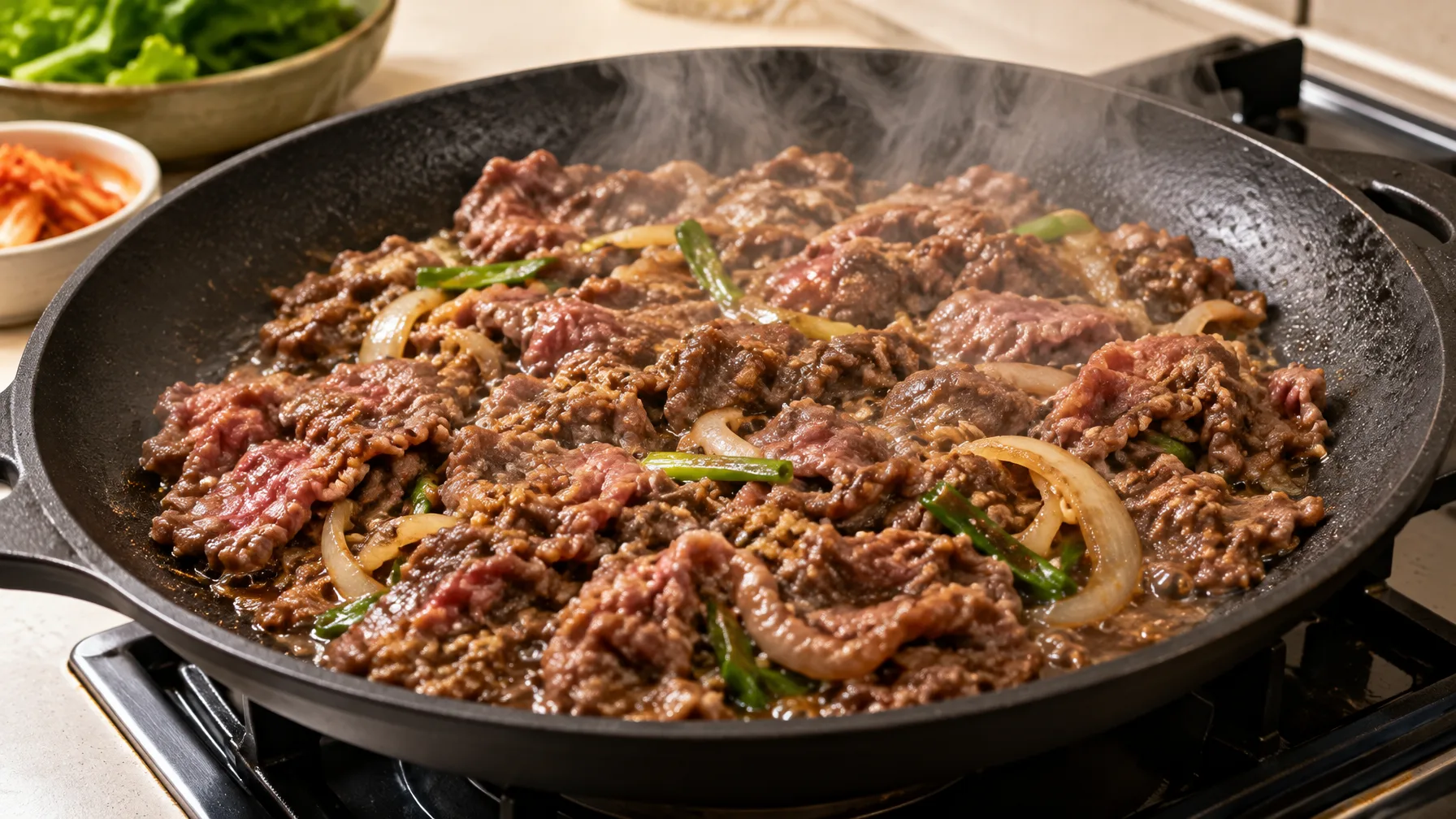
Bulgogi is thinly sliced meat that gets marinated and then cooked over a barbecue or on a stovetop griddle. Koreans file it under gui, the grilled dishes. The name means "fire meat," and beef is the most common choice.
Traditionally it was cooked on a grill rack over a brazier or on a perforated dome-shaped pan. Sometimes it was cooked right at the table. Pan cooking has become just as common. Cooks used to grill the meat until crisp, but today bulgogi usually gets plenty of broth or water in the pan.
It also helps to know what bulgogi isn't. Galbi, the other dish Americans call Korean barbecue, uses pork or beef ribs cut thicker than bulgogi. Bulgogi, by contrast, is made from thin slices of meat.
Ribeye is richer, sirloin is leaner
 AI-generated image
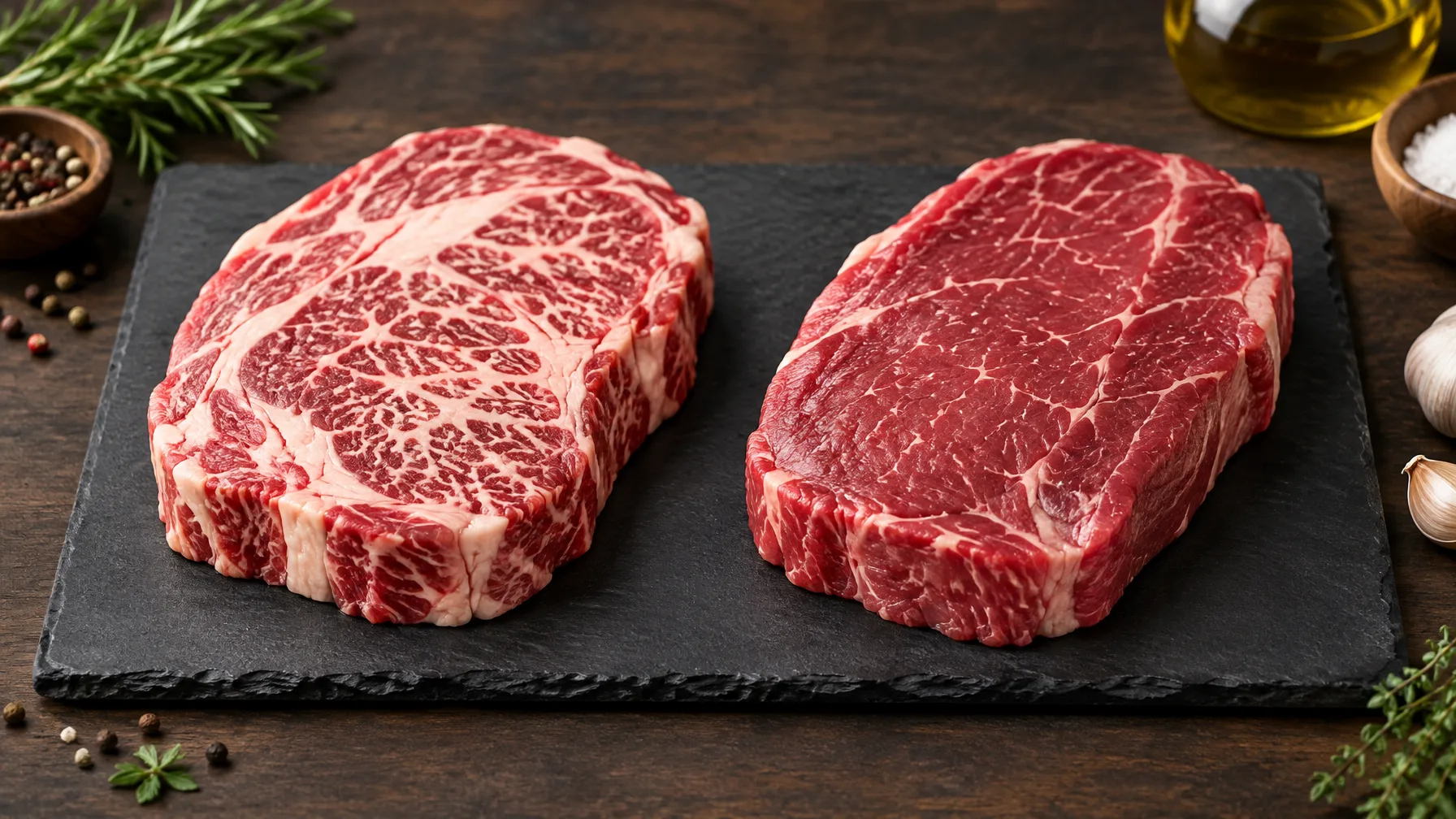
The two cuts differ mainly in fat. Ribeye is well marbled and carries big beef flavor, which is why it's a favorite for bulgogi. Sirloin has less fat than ribeye, so ribeye bulgogi tastes richer and sirloin bulgogi tastes a little cleaner.
A basic recipe starts with 1 lb of boneless ribeye steak. Other cuts work too: flank steak, skirt steak, short rib, and top sirloin. Sirloin or tenderloin can stand in as well.
In Korea, the neck cut (moksim) is another option for brothy, stew-like bulgogi. Its fat is evenly spread and it has little thick connective tissue, so it stays tender in a simmering pot. The cut used also shifts with region and price, so you will see different meats on different tables.
Slice it about 1/4 inch thick
Thin slices are what make bulgogi cook fast and soak up the marinade. If you slice it yourself, firm the meat up first so the knife glides.
- Put the steak in the freezer for about 20 minutes.
- Set it on a cutting board and find the direction of the grain.
- Slice against the grain.
- Aim for slices about 1/4 inch thick.
Slicing against the grain keeps the strips tender instead of stringy. For quantity, a basic recipe built on 1 lb of beef is a sensible first batch.
Pork belly, chicken, and squid are fair swaps
Beef is the default, but in some parts of Korea pork or chicken is more common. Pork bulgogi usually means pork belly (samgyeopsal), which is tender. Pork is dwaeji bulgogi, chicken is dak bulgogi, and squid versions are called ojingeo bulgogi.
| Meat | Korean name | Fat and feel | Marinade |
|---|---|---|---|
| Ribeye | beef bulgogi | Well marbled, more fat than sirloin, big flavor | Soy-based |
| Sirloin | beef bulgogi | Leaner than ribeye | Soy-based |
| Pork belly | dwaeji bulgogi (samgyeopsal) | Tender | Chili paste or chili flake base instead of soy |
| Chicken | dak bulgogi | A common alternative alongside pork | Varies by cook and region |
| Squid | ojingeo bulgogi | A seafood version, not a meat cut | Varies by cook and region |
The marinade changes with the meat. Pork bulgogi is marinated in a base of gochujang (Korean chili paste) or gochugaru (chili flakes) rather than soy sauce. That's the main difference from the beef version. For chicken and squid there's no single standard recipe, since seasoning differs from cook to cook.
The family has a few more members. Raw duck is marinated and stir-fried with vegetables as oribulgogi, with chives added when the duck is nearly done. Black goat bulgogi uses thinly sliced goat mixed with ginseng powder and seasoning, then grilled with vegetables.
Is bulgogi fatty? It depends on the cut
Many people assume bulgogi is either a lean dish or a greasy one, and neither is a safe bet. Ribeye has more fat than sirloin, so a plate of ribeye bulgogi is heavier than one made with sirloin. Calories also move with the sugar in the marinade and the way the meat is cooked.
The nutrition of a meal shifts a lot with which meat and sides are on the table. The sugar in the marinade also affects blood sugar, so people with diabetes should keep portions moderate.
Fruit tenderizes, and time sets the flavor
The marinade is built on soy sauce, sugar, sesame oil, garlic, and pepper, often with scallion and ginger. It adds flavor and softens the meat before cooking. There is no standard recipe, and the seasoning differs by cook and by family.
Grated fruit and onion do the tenderizing. Pear is the traditional choice, and kiwi and pineapple have become common too. Pear can be hard to find, and red apples mixed with grated onion work as a stand-in.
Kiwi and pineapple are stronger than pear. Leave the meat in them too long and its color and texture can change in ways you will not like. If you use kiwi, adjust the amount to how long the meat will sit.
Timing sets how bold the result tastes. About an hour in the marinade gives a milder flavor, and a stronger flavor needs an overnight rest, so plan ahead.
When you cook, lift the meat out by the handful and shake off the extra marinade before spreading it in the pan. Crowd the pan with meat or vegetables and the juices pool, which cuts the smoky effect. Cook in small batches for better browning.
Comments
No comments yet.