
South Korea Travel Costs Explained: What to Expect for Flights, Lodging, Food, and Transport, and How to Save Money
 AI-generated image
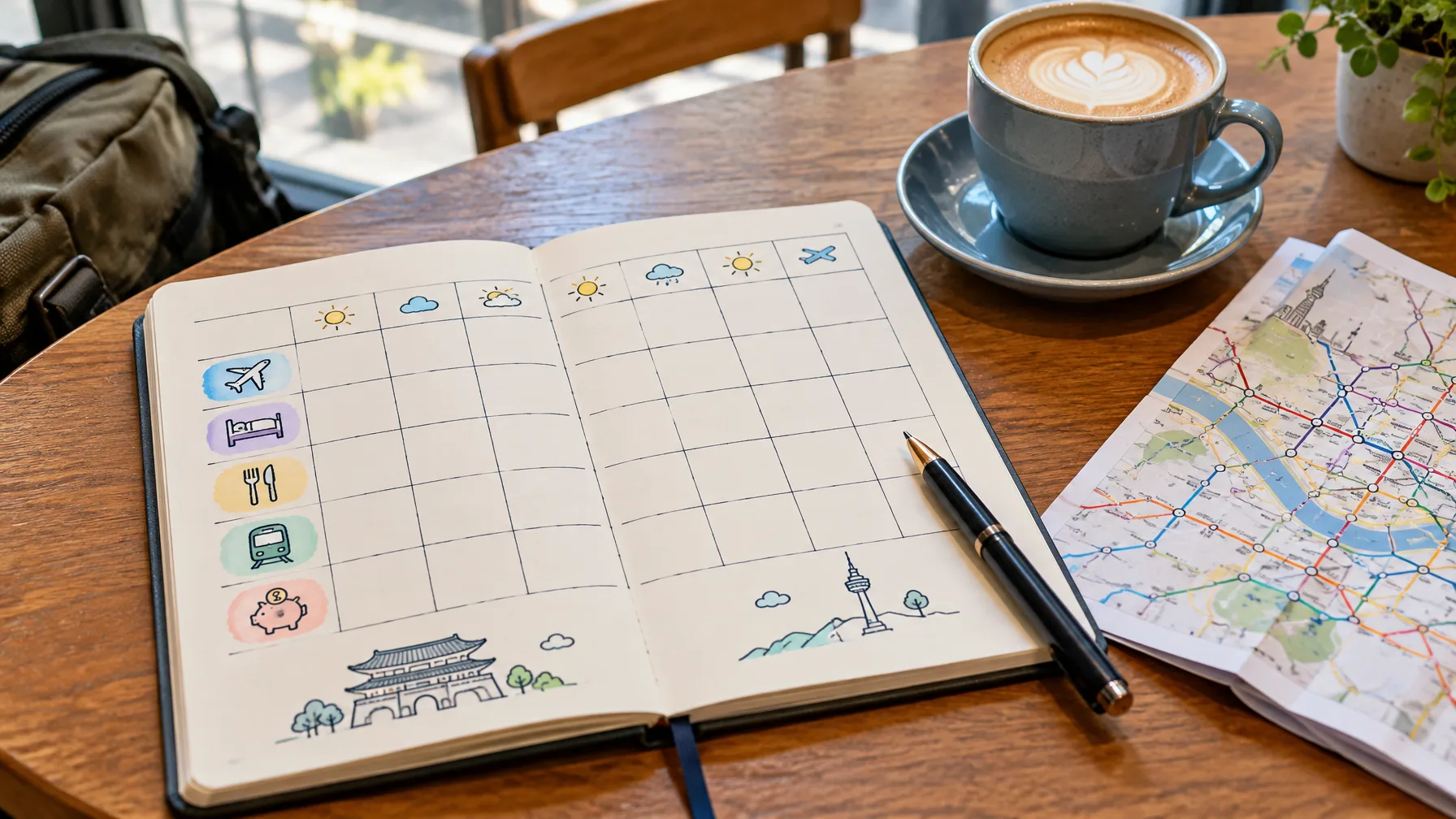
A standard-style traveler in South Korea spends about $159 a day, or $1,113 for a week. That covers hotels, meals, local transport and activities. It doesn't include international flights, so your plane ticket goes on top. South Korea travel costs swing a lot depending on where you sleep and how often you order Korean barbecue. Start with the standard number, then adjust it to fit your trip.
A standard week runs about $159 a day, $1,113 in all, before flights
 AI-generated image
Think of that number as the cost of being on the ground. It pays for your bed, your meals, your local rides and the things you pay to do. It leaves out the trip from home, which first-timers can overlook.
It's also an estimate, not a price quote. Your travel style and your activities will move the real total up or down. So treat the ground budget as the part you can still tune.
Budget days only work with hostels and street food
 AI-generated image
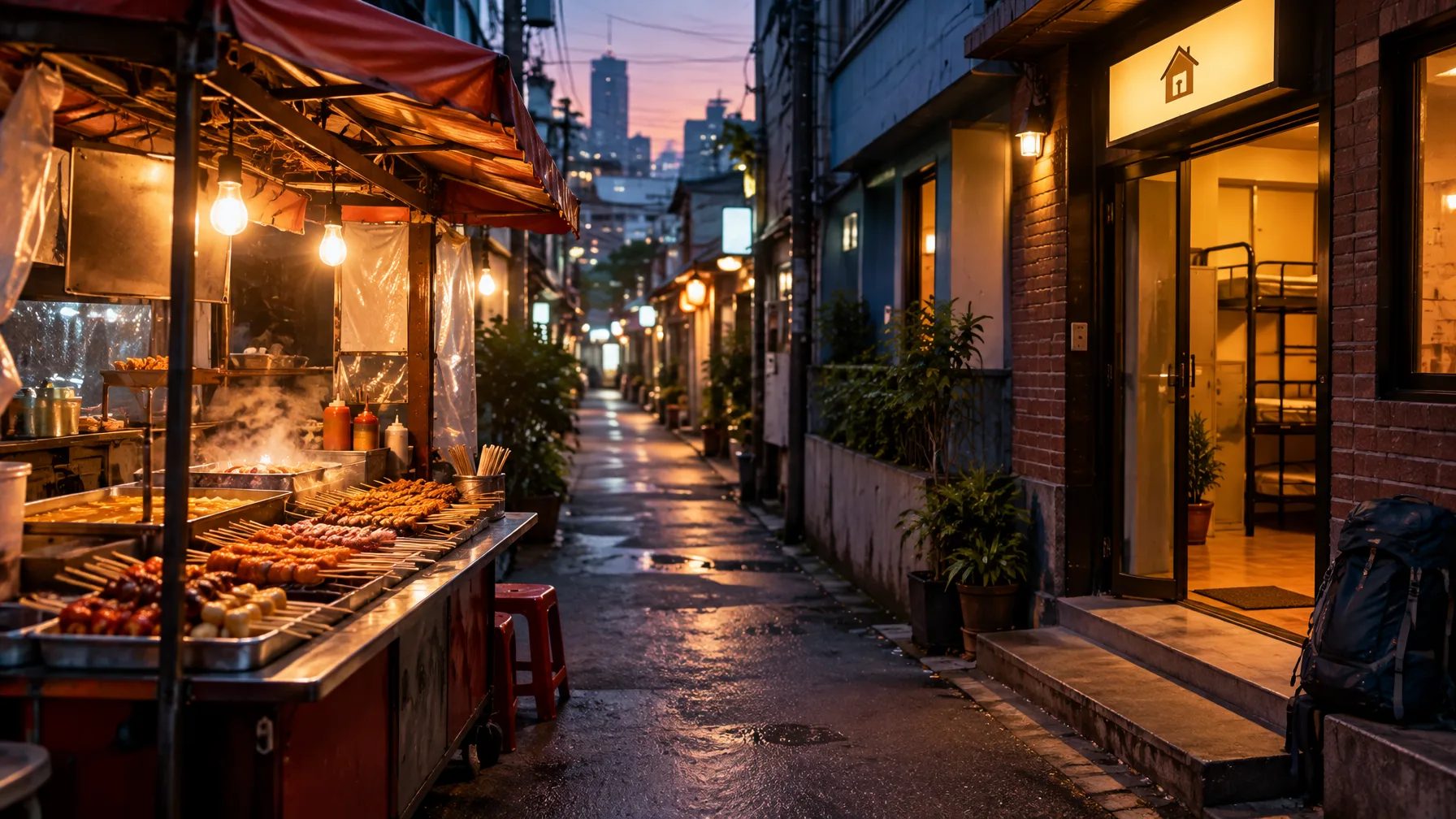
Young travelers on a tight plan commonly spend ₩50,000 to ₩100,000 a day. That is the budget band, and it comes with a condition: it assumes hostels and street food. Swap in guesthouses or cafés and your day slides toward the top of the range or past it.
The other end of the scale is far higher. Luxury travelers who pick five-star hotels and private transfers should plan on $397 a day or more. Most first-timers will land somewhere between the two. That's why it helps to decide early which kind of week you want.
Newark to Seoul runs about $480 one way, and trains after landing are priced by speed
 AI-generated image
A nonstop from Newark to Seoul typically costs about $480 one way. Price the return separately when you compare fares. Day and time matter: Friday and Sunday evening flights run higher, as do Monday mornings and major holidays. Early Sunday mornings and late-night departures can be cheaper.
Flights with an overnight layover are usually the cheapest. If the airport closes at night, you have to budget for a hotel. Airlines generally don't cover a scheduled overnight stop. Self-transfer itineraries, where you buy two separate tickets, can look cheaper too. But a delay on the first flight is your risk alone. The airline has no duty to rebook the second.
The AREX fare from Incheon Airport to Seoul depends on which train you take. The Express takes 43 minutes and costs ₩9,500. The All Stop Train takes 53 minutes, but the fare is half as much, at ₩4,150. For longer distances the KTX high-speed train is faster, though not cheap. A one-way standard-class ticket from Seoul to Busan costs ₩59,800 to ₩83,700, depending on the train. If you plan to ride public transit often in Seoul for a week, you can use the 7-day Climate Card, which costs ₩20,000.
| Ride | Time | Price |
|---|---|---|
| AREX Express, Incheon to Seoul | 43 minutes | ₩9,500 |
| AREX All Stop, Incheon to Seoul | 53 minutes | ₩4,150 |
| KTX Seoul to Busan, one way, standard class | Varies by train | ₩59,800–₩83,700 |
| Seoul Climate Card, 7-day | Seven days of city rides | ₩20,000 |
Korean BBQ, taxis, central lodging and peak season stretch a week
Four things push a trip past the standard estimate. Korean barbecue dinners, taxis, shopping and group tours are the add-ons that inflate trips. Barbecue is the sneakiest, because many places price meat by weight and set a minimum order per cut. A table of two can spend far more than a casual meal would suggest.
Where you sleep matters just as much. Lodging in the middle of the city is fairly expensive, and saving money usually means staying farther out. Spring and autumn, when the weather is at its best, are peak seasons, and both hotels and flights cost more.
Carry more cash than you think, because foreign cards often fail
In Korea, foreign-issued debit and credit cards worked only about 30% of the time. So it is better to bring plenty of cash. Still, it is hard to decide how much cash to bring for a one-week trip. If you exchange too much, you may come home with a lot of unused bills.
A sensible middle path is to take the daily figure from the worksheet below for everything you won't prepay. Multiply it by seven, carry that in cash, and keep a card as the backup. That way you aren't stuck when a terminal rejects your card. You also won't hand a pile of unused bills back to the exchange counter.
Two weeks nearly doubles the ground cost, and the flight stays a one-time fee
Stretching the trip to two weeks mostly means multiplying. Fourteen standard days at $159 comes to about $2,226 on the ground, and the budget band doubles the same way. Your plane ticket does not double, since you only pay for the round trip once. A second 7-day Climate Card is the one pass you would buy twice.
Real trips wander off the formula. An 11-day, 10-night trip came to $2,264 in total, while food for about two weeks added up to only $176.40. Daily spending swings with your choices, so treat the multiplication as a planning starting point rather than a promise.
A seven-step worksheet that turns the estimate into your own number
- Pick your ground cost. Use the standard weekly figure from the top of this guide. Or use the budget band times seven days, which gives ₩350,000 to ₩700,000 for hostels and street food.
- Add your flight. Newark to Seoul nonstop is the baseline, and you should price the return too.
- Add checked-bag fees if you book the cheapest fare.
- Add a hotel night if your cheap itinerary has an overnight layover.
- Add any other inflaters you plan on, such as group tours.
- Add train rides, such as the airport train or a KTX day trip.
- Set your cash: your daily figure times seven, with a card as backup.
Cheap fares and cheap Korea stories mislead more than they help
The first mistake is treating the lowest fare as the lowest cost. The cheapest fares often charge extra for checked bags. Low-cost carriers also charge for carry-on bags, meals and seat choice. The final total can end up close to a full-service ticket. With strict baggage rules, the add-ons can even cost more than a regular ticket would have.
The second mistake is ignoring which airport you land at. Budget carriers often use secondary airports far from the city. Those can have thin public transport, so ground travel needs its own line in the budget. Sometimes flying into the main airport turns out cheaper overall. So compare the total cost of getting into the city from each airport before you book.
The third is assuming a country that sounds cheap will be cheap everywhere. Seoul is the most expensive region in the country, so a capital-only week fits the "Korea is a bargain" story less well. Minimum-budget plans can also fall short: a trip ended about $1,000 above its stated minimum.
Keep reading on this site while you plan
Want a sense of where everyday meals happen once you arrive? This guide walks through a market worth a stop, Namdaemun Market, and points to Guksu Alley and Galchi Alley as the places to eat. Here it is: Namdaemun Market Food: Guksu Alley and Galchi Alley, Where to Eat.
Plan on $1,113 for the week, then add your flight
Plan on about $1,113 for a standard week on the ground, which works out to $159 a day. Then add your flight on top, using the Newark nonstop fare from earlier as your baseline. Budget travelers can get by on far less, but only if they stay in hostels and eat street food. Fill in the worksheet once and keep some cash in your pocket.
Comments
No comments yet.