
Namdaemun Market Food: Guksu Alley and Galchi Alley, Where to Eat
 AI-generated image
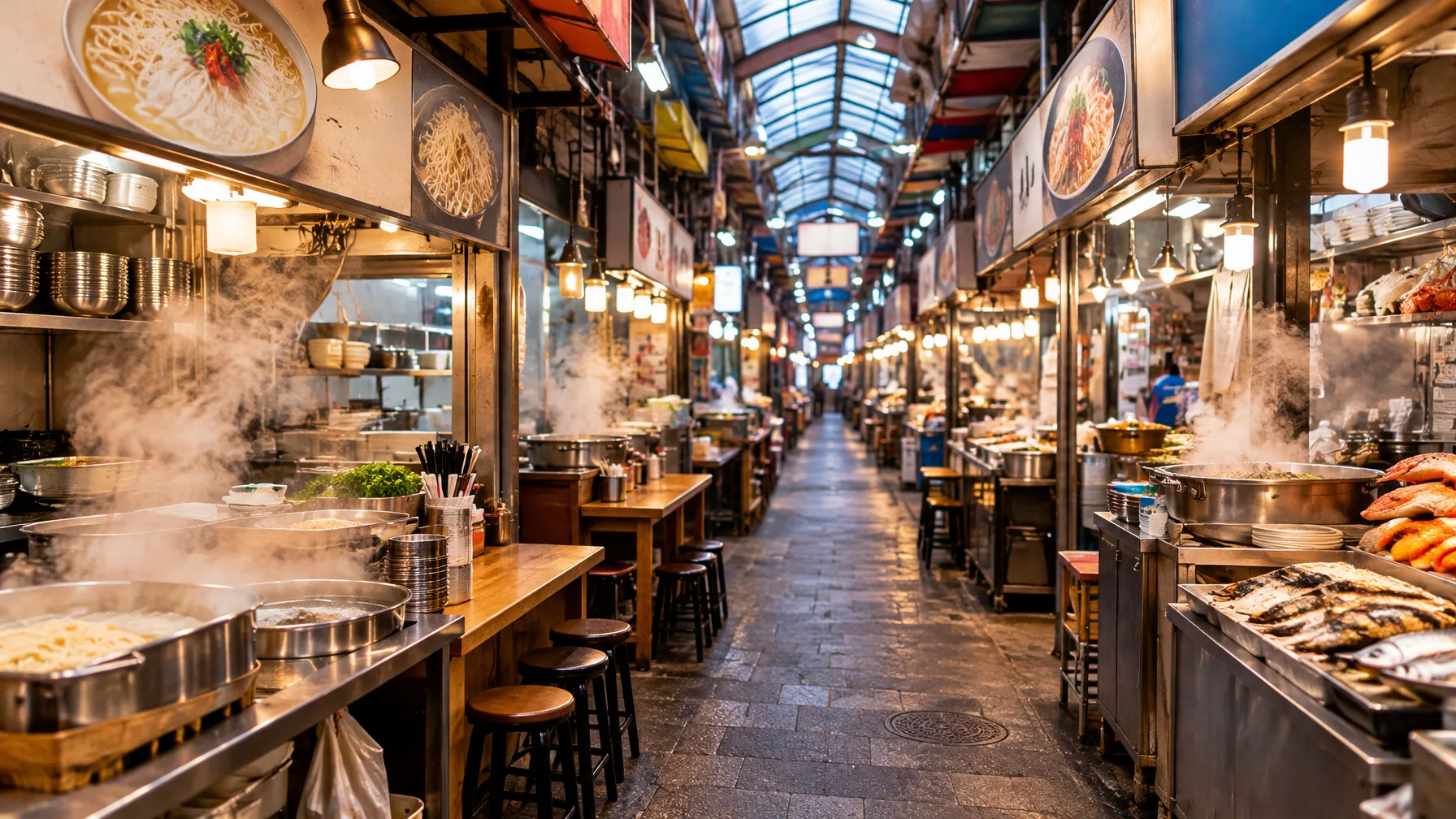
For Namdaemun Market food, head to the two best-known food alleys, Guksu (noodle) Alley and Galchi Alley. Guksu Alley packs more than 10 shops. They sell kalguksu (knife-cut noodle soup), bibim naengmyeon (cold noodles in a spicy sauce) and barley bibimbap. Namdaemun Market is mostly a shopping market, so it's easy to walk right past the food. Start with the noodles, add the fish alley and the snack stalls, and go Monday to Saturday.
Guksu Alley and Galchi Alley are the two food stops to aim for
 AI-generated image
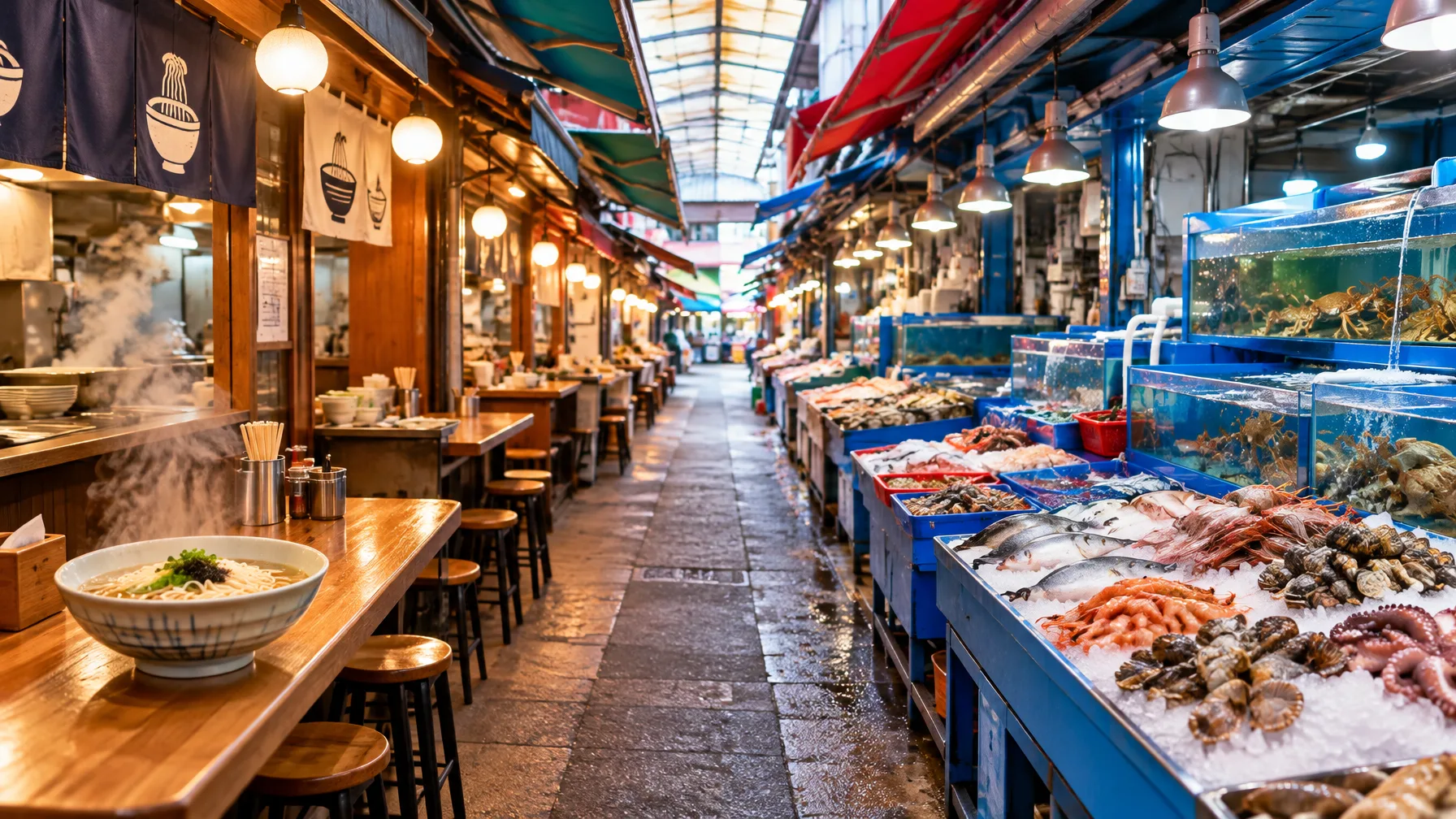
Guksu Alley is sometimes called Kalguksu Alley, so you may see either name. Think of it as the noodle stop.
A noodle bowl, a walk through the fish alley and a snack from a stall make a full meal. Nothing here needs a reservation or a plan beyond knowing where the alleys are.
A 600-year-old market that mostly sells clothes
 AI-generated image
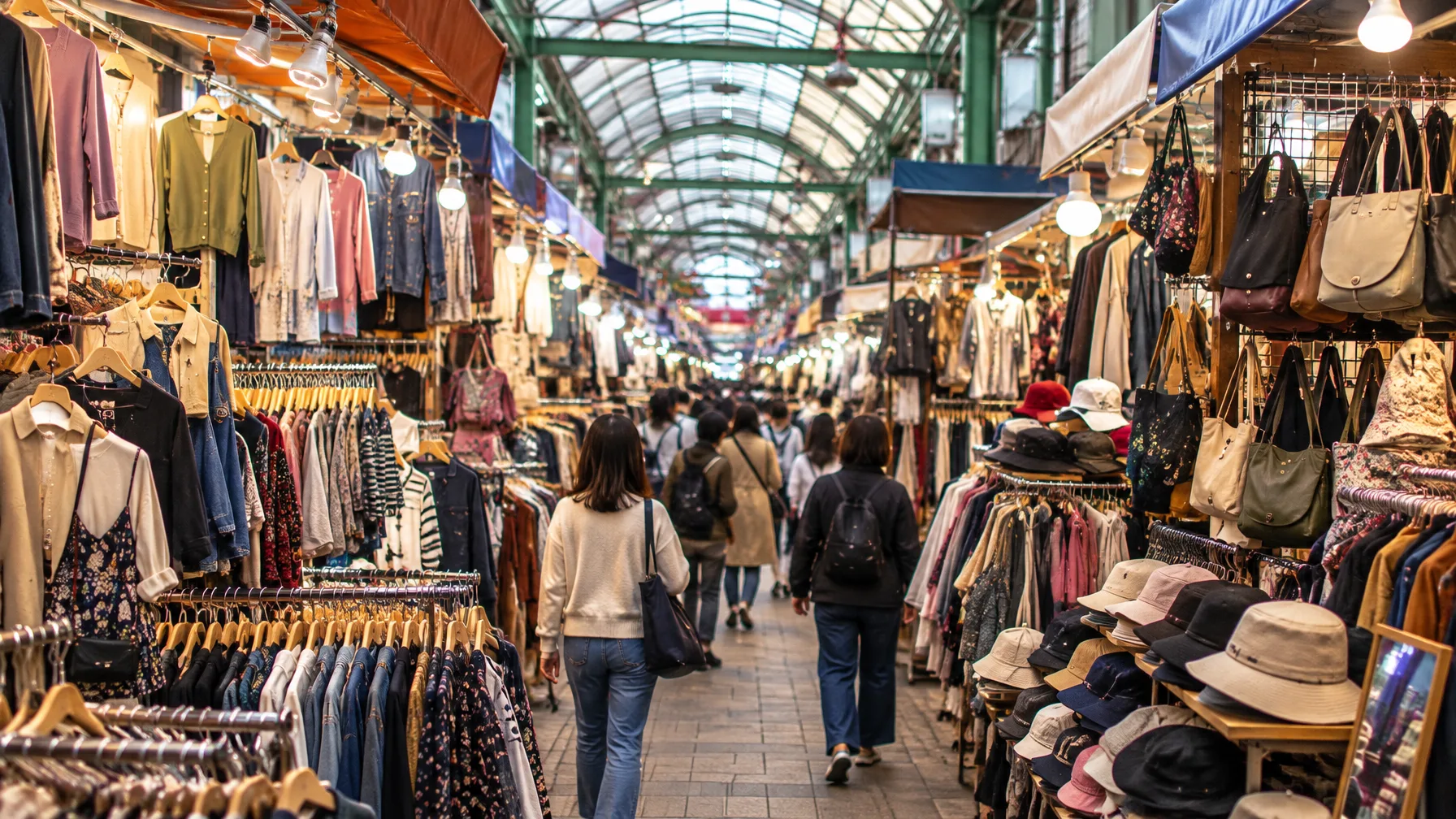
Namdaemun Market is the largest traditional market in Korea and one of the oldest. It opened in 1414 and has more than 600 years of history behind it. The oldest buildings, A and B, are called the Main Building and stand on the site of an old Joseon-era grain warehouse.
What it's famous for today is sheer volume. A 2016 count put it at 5,200 stores and 9,090 workers across 64,612 square meters, selling about 17,000 kinds of goods. Clothing, eyewear, kitchenware, toys, hiking and fishing gear and stationery are all here. Hats, carpets, flowers, ginseng and imported goods share the narrow lanes too.
Fashion shops make up 66.3% of the total. Kitchenware, handicraft and regional specialty shops come to 973 stores, or 8.2%. Clothing outweighs every other category by a wide margin.
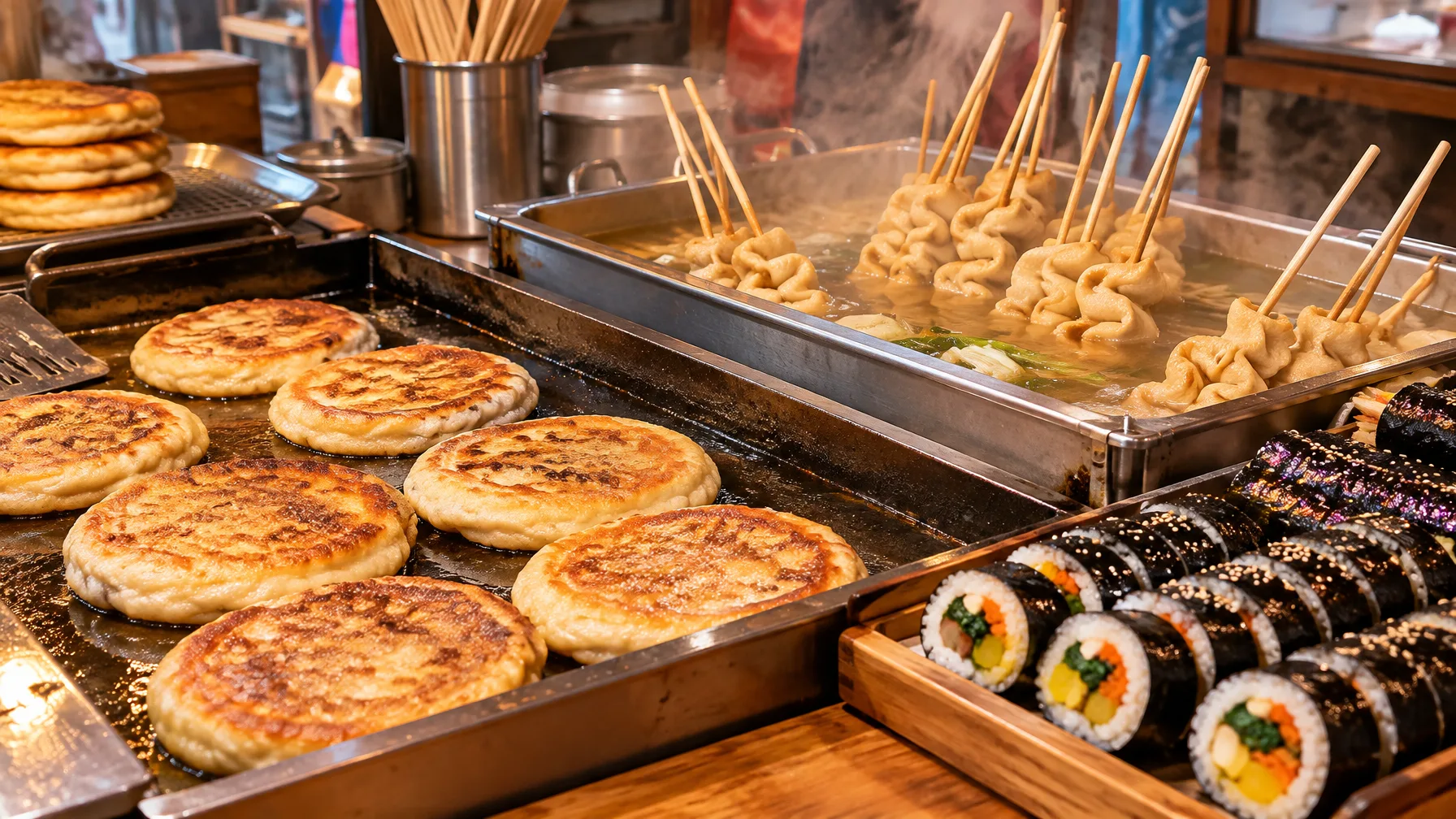
Hotteok, eomuk and gimbap stalls fill the gaps between meals
 AI-generated image
Think of the stalls as the sides and dessert to a bowl of kalguksu. Hotteok is a sweet, chewy griddled pancake. Eomuk is fish cake, usually served on a skewer. Gimbap is seaweed-wrapped rice with fillings, easy to eat on the move.
Kalguksu is a safe first bowl, a warm, simple noodle soup that works even if Korean flavors are new to you. In the alley, follow the crowd. The counters with the most people are the easy pick when you can't read the menu. Eomuk turns out less fishy than many people expect, even for people who usually skip fish dishes. Kimchi dumplings (kimchi mandu) are tangy and spicy and can win over someone who does not love kimchi.
| Stop | What you eat | Good to know |
|---|---|---|
| Guksu Alley | Kalguksu, bibim naengmyeon, barley bibimbap | More than 10 shops in one lane |
Snacks are cheap, entry is free and cards are accepted
Walking into the market costs nothing. The one street-food price worth knowing is hotteok. The honey version runs ₩1,500 each here, and about ₩1,000 at smaller markets, so snacking will not drain your wallet. Parking is available, and the market takes cards.
The alleys have no signs, and Galchi Alley is awkward for solo diners
This is the part that trips up first-timers. Neither Guksu Alley nor Galchi Alley has signage. Some miss the famous food alleys completely and wander the clothing lanes instead. Look at a Namdaemun Market map on your phone before you leave the station.
Galchi Alley can also be hard on someone eating alone, since it is hard to get a proper meal there as a single diner. If you are on your own, make noodles in Guksu Alley your meal and treat Galchi Alley as a walk-through. It can also be a lucky find, since you may stumble into it while wandering after lunch.
Crowds are the other catch. The aisles fill up, and with small children a stroller is the usual way to cope. Merchants call out from every side, so keep your pace and your route.
Most shops close on Sunday, so plan for Monday to Saturday
Namdaemun market opening hours differ from shop to shop, and Sunday is the regular day off. A few shops and stalls do open on Sunday, but most close. That includes the alleys that sell imported snacks and drinks and the ones aimed at foreign visitors. That's why Monday to Saturday is the safer plan for a meal here.
The market also trades overnight, from 23:00 to 04:00, when retailers from around the country pack the aisles. Even so, shop hours vary, so go in the daytime and eat while the alleys are busy.
Exit 5 at Hoehyeon Station is the closest way in
The address is 21, Namdaemunsijang 4-gil, Jung-gu, Seoul. Hoehyeon Station on Line 4 is the closest stop, and Exit 5 is a 2-minute walk. Namdaemun Market Myeongdong is an easy pairing too. Myeongdong Station Exit 5 is also on Line 4. From there it takes about 11 minutes on foot toward Shinsegae Department Store. The district layout for the Myeongdong side of that walk is in the guide below. See the Myeongdong map guide.
It's a rechargeable transit card, and the next link covers where to get one. See the T-money card guide. A simple order for the day looks like this:
- Get off at Hoehyeon Station Exit 5 and walk 2 minutes to the market. Or walk from Myeongdong Station Exit 5 in about 11 minutes.
- Pull up the map and go to Guksu Alley first for kalguksu.
- Finish with a snack at the stalls.
Noodles first, then the fish alley and the stalls
Plan your first meal in Guksu Alley, the noodle lane with more than 10 shops, then add Galchi Alley. Go Monday to Saturday, because most shops close on Sunday. If you still have room afterward, Myeongdong is a short walk away.
Comments
No comments yet.