
Hyebindang Hanjeongsik in Ganghwa-do: Hanjeongsik Suraesang with Brass Bowls, Stew and Pot Rice
At Hyebindang Hanjeongsik in Ganghwa-do, hanjeongsik comes as one set, the Hyebindang 19-cheop Suraesang. Small side dishes in brass bowls ring a stew in a black earthenware pot. The same table holds a whole grilled fish, a meat dish, jeon, ssam greens and pot rice. Hanjeongsik is a Korean set meal that arrives all at once, and here there's no menu puzzle to solve. I judge a Korean table by its banchan (the small shared side dishes). If those are good, I forgive almost anything else. The stew sits in the middle like a host, and the brass bowls ring around it like guests at a round table. It's a good table, and I'd go back.
| Item | Details |
|---|---|
| Place | Hyebindang Hanjeongsik (혜빈당 한정식) |
| Address | 157 Borigogae-ro, Gilsang-myeon, Ganghwa-gun, Incheon, 1st floor (인천 강화군 길상면 보리고개로 157, 1층) |
| What I had | Hyebindang 19-cheop Suraesang (혜빈당 19첩 수라상) |
| Price on the menu | ₩19,000 for the set |
| Other dishes | À la carte: seasoned raw bendaengi, barley-aged croaker, hanu tteokgalbi, jeyuk bokkeum, seasoned crab, shrimp jang |
| Banchan | Small dishes in brass bowls, with refills at a self-bar |
| Parking | Lot in front of the building, packed when I was there |
| Finding it | Naver Map, under the Korean name |
Hanjeongsik here is one set: the Hyebindang 19-cheop Suraesang
Hanjeongsik means a full Korean meal set out together instead of served course by course. Cheop counts the dishes in a set. Suraesang borrows its name from the royal table, so a 19-cheop suraesang is the generous end of the range.
At Hyebindang the set is the whole point. You pick the set and everything else lands on the table together, with no list of courses to learn.
Finding the black building on Naver Map, and where the cars go
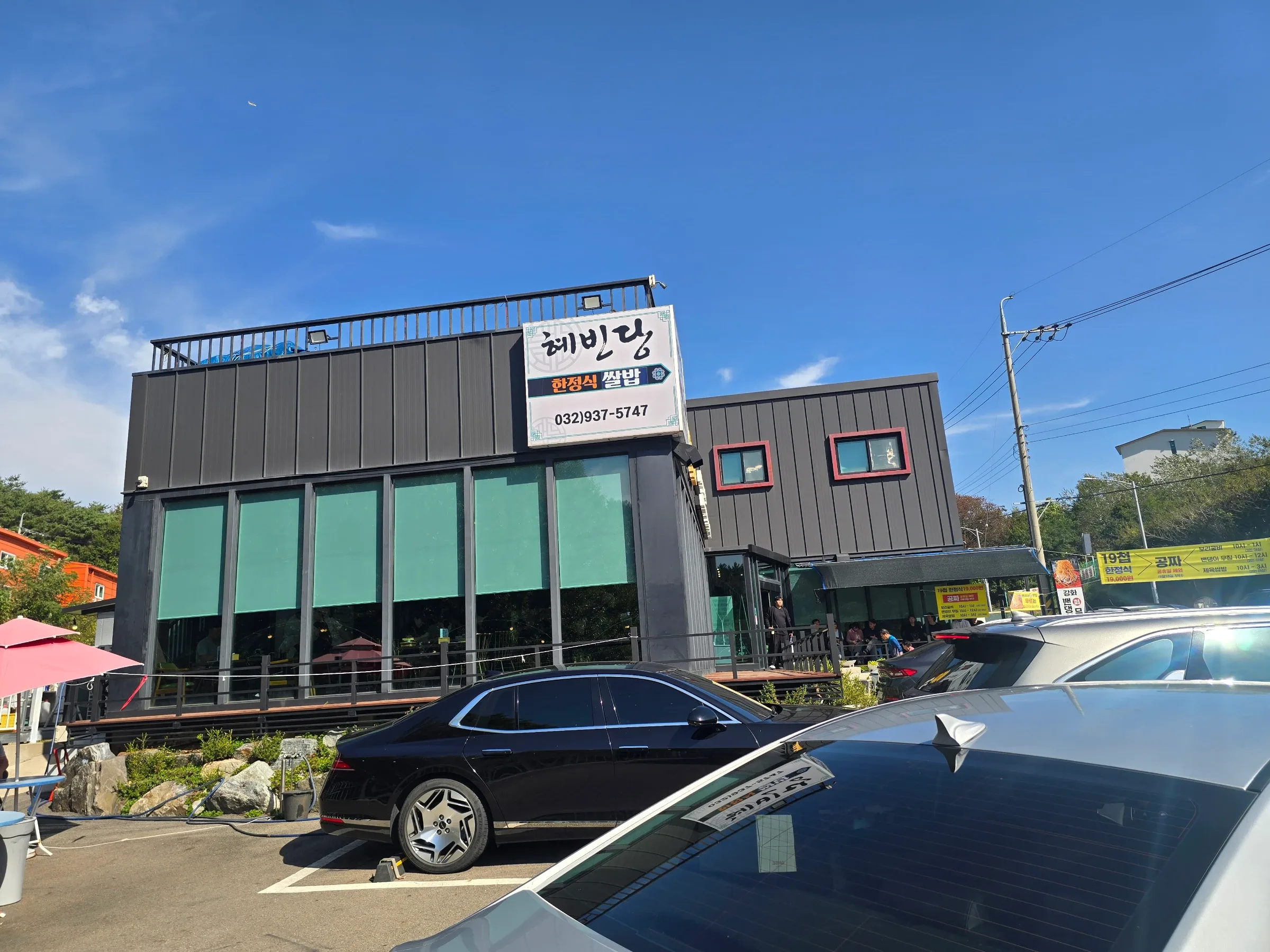
I found the place on Naver Map. It's listed there under the Korean name, so type that in rather than the English spelling. The address is 157 Borigogae-ro, Gilsang-myeon, Ganghwa-gun, Incheon, on the first floor.
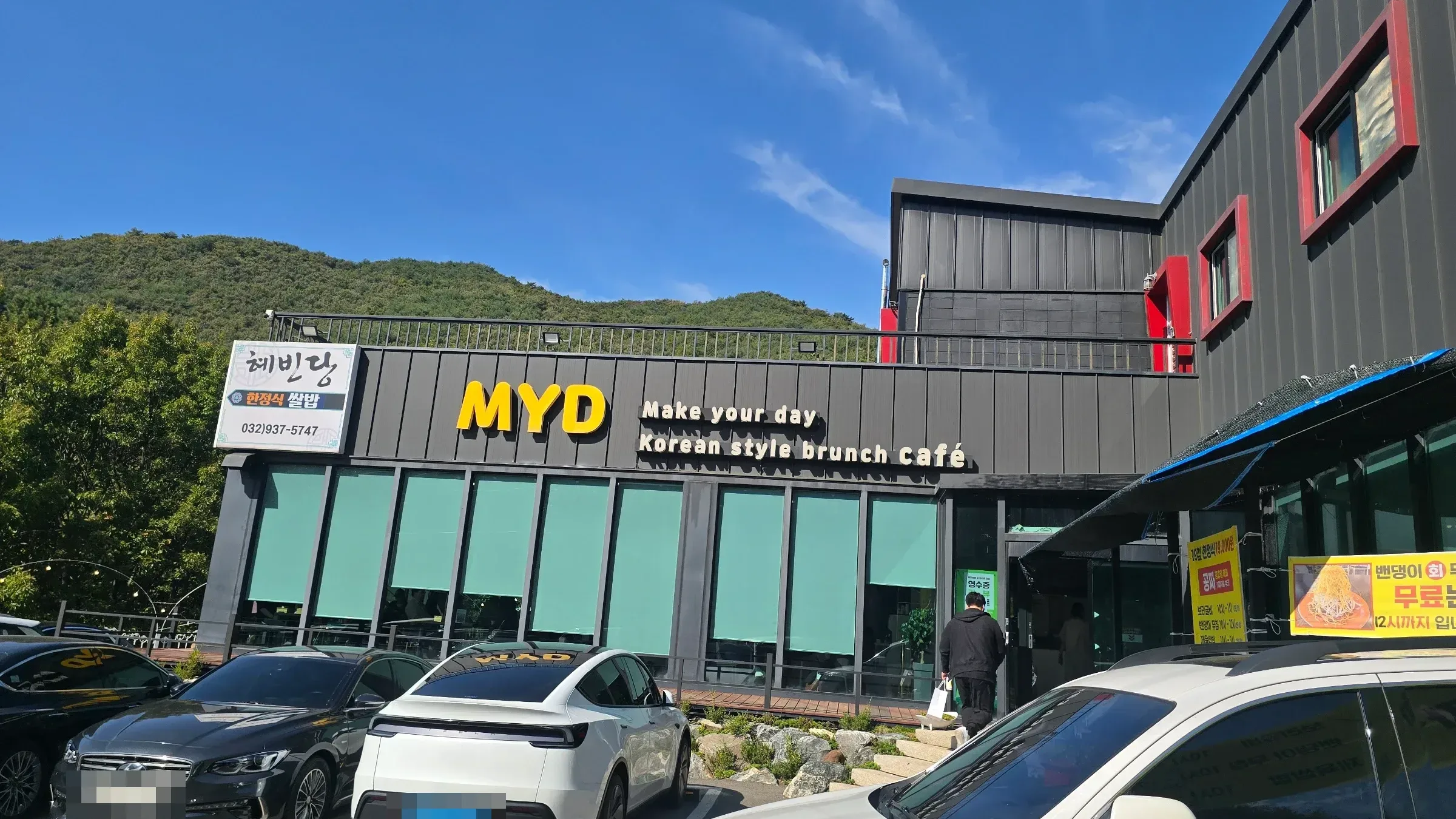
The building is easy to read once you're close. It has black walls under a blue sky, with green mountains standing behind it. A brunch café's yellow lettering sits on the roof line, which threw me for a second. The restaurant's own small sign is off to the left. From the other side, a big white sign says hanjeongsik and ssambap.
Parking is in front, under a row of green awnings over the windows. The lot was packed with cars when I pulled in. On a busy day, leave yourself a little slack before you even reach the door.
Take a number at the door, then wait your turn
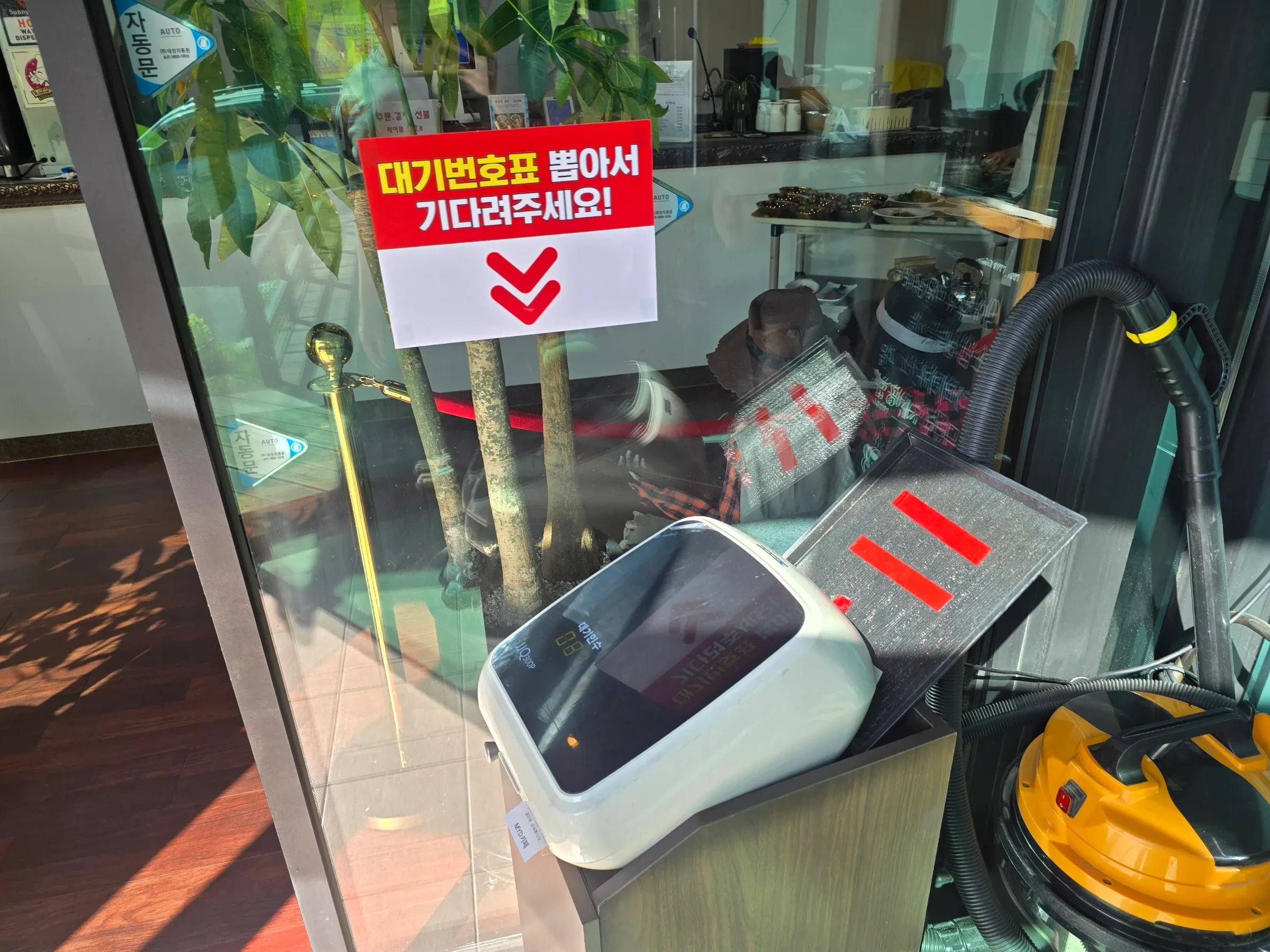
Behind the glass of the front door, a red notice asks you to take a waiting number and wait. The ticket machine sits right under it. A vacuum cleaner was parked beside the machine, which made the entrance look a little busy. But the message was clear enough.
- Park in the lot in front of the building.
- Take a waiting-number ticket from the machine inside the door.
- Wait until your number is called.
- Sit down and choose the set.
The à la carte side of the menu, and what each dish costs
The set is the main event, but the menu has other dishes if you'd rather build your own meal. There is a sweet-and-sour bendaengi hoe muchim. There's also a boriguulbi, a barley-aged croaker, crisp outside and moist inside. The rest is what you'd expect beside a Korean set. There's hanu tteokgalbi (grilled beef patty) and jeyuk bokkeum (spicy stir-fried pork). There's also seasoned crab and shrimp jang (soy-marinated shrimp).
| Dish | What it is | Price |
|---|---|---|
| Hyebindang 19-cheop Suraesang | The full set: banchan, stew, fish, meat, jeon, ssam, pot rice | ₩19,000 |
| Saekomdalkom Bendaengi Hoe Muchim | Sweet-and-sour raw bendaengi salad | ₩25,000 |
| Gyeotbasokchok Boriguulbi | Crisp-outside, moist-inside barley croaker | ₩25,000 |
| Suje Hanwoo Tteokgalbi | Handmade beef short-rib patty | ₩20,000 |
| Jeyuk Bokkeum | Stir-fried pork | ₩15,000 |
| Sangkeum Lemon Saeujang | Soy-marinated shrimp with lemon | ₩15,000 |
| Yangnyeom Kkotgemuchim | Seasoned crab | ₩10,000 |
What came out: a map of the full table
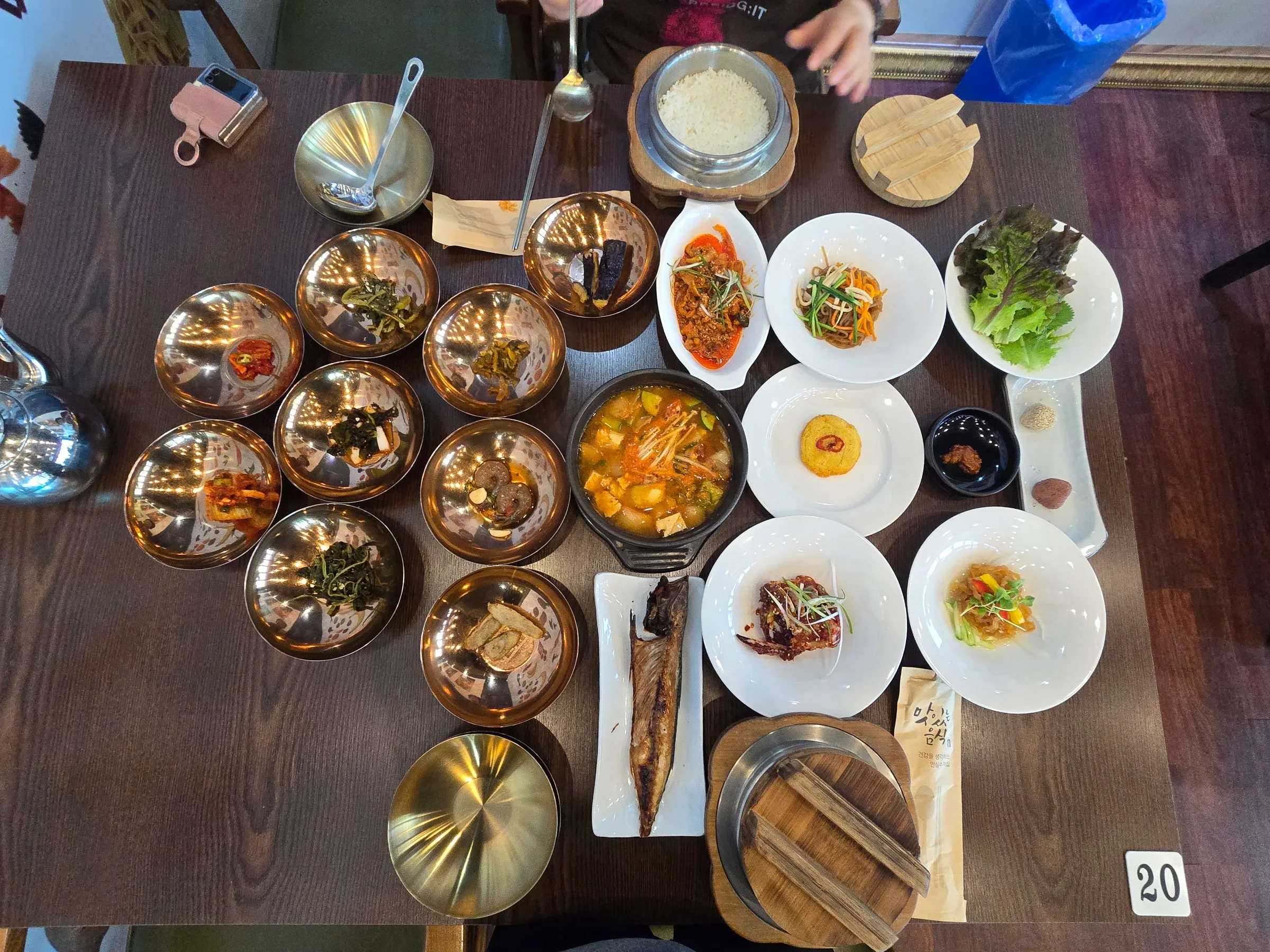
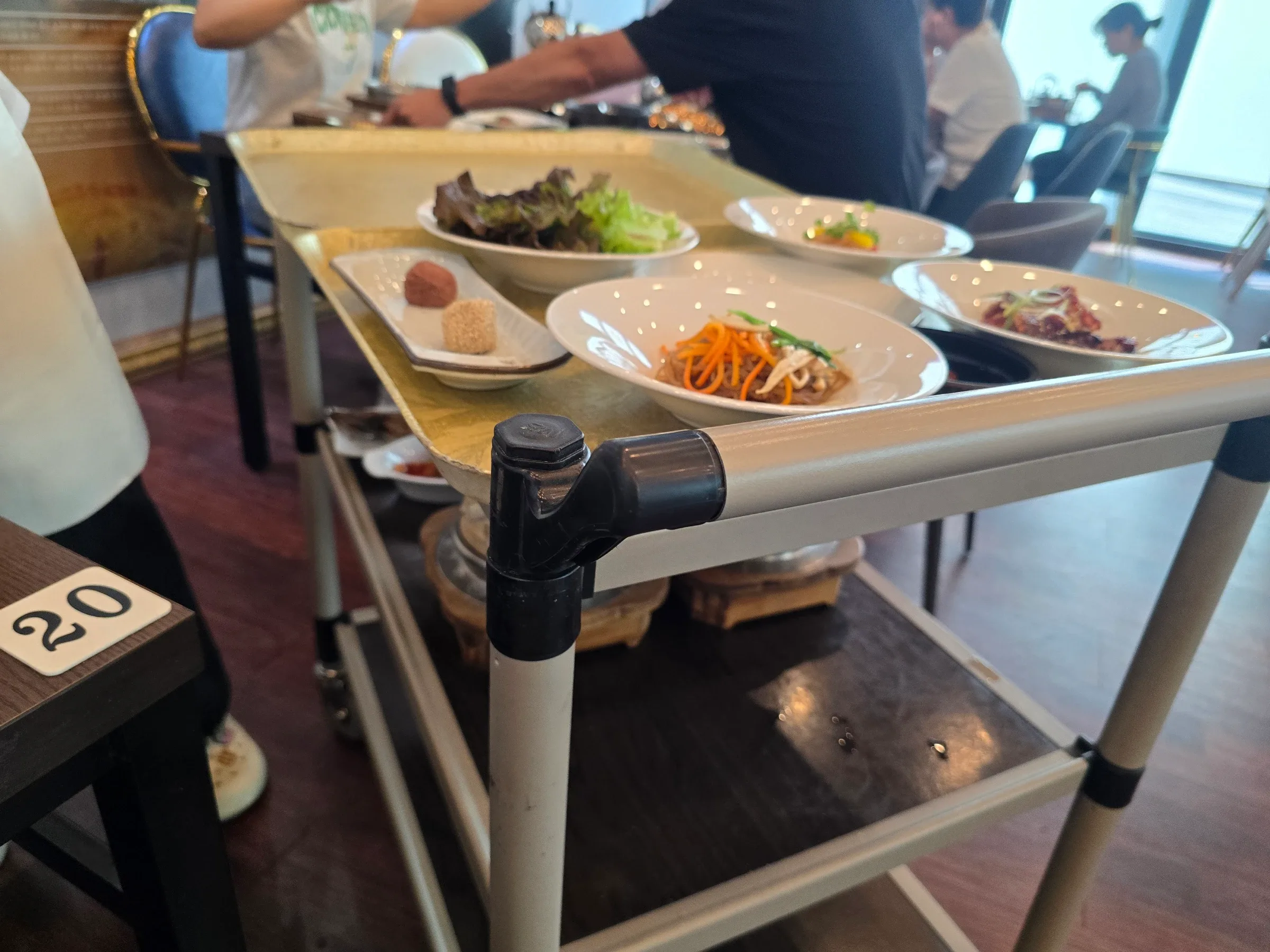
Plates were loaded onto a cart and about to roll out into the hall as I sat down. Then the table arrived, and I hadn't expected it to fill up that completely. The brass bowls were polished and shining, and the stew pot sat dead center with the bowls around it. I looked down at it for a good while before I picked up my chopsticks.
| Part of the set | Where it sits | What you'll see |
|---|---|---|
| Banchan | In brass bowls, ringed around the table | Seasoned greens, kimchi, a braise, grilled tofu |
| Stew | Dead center, in a black earthenware pot | Piled with shredded vegetables and tofu, brothy |
| Grilled fish | On the same table | One whole fish |
| Meat dish | On the same table | A red-sauced stir-fry |
| Jeon | On the same table | Golden pancake with a slice of red pepper on top |
| Ssam greens | On the same table | Leaves for wrapping rice and meat |
| Pot rice | On the same table | Under a wooden lid, white and glossy |
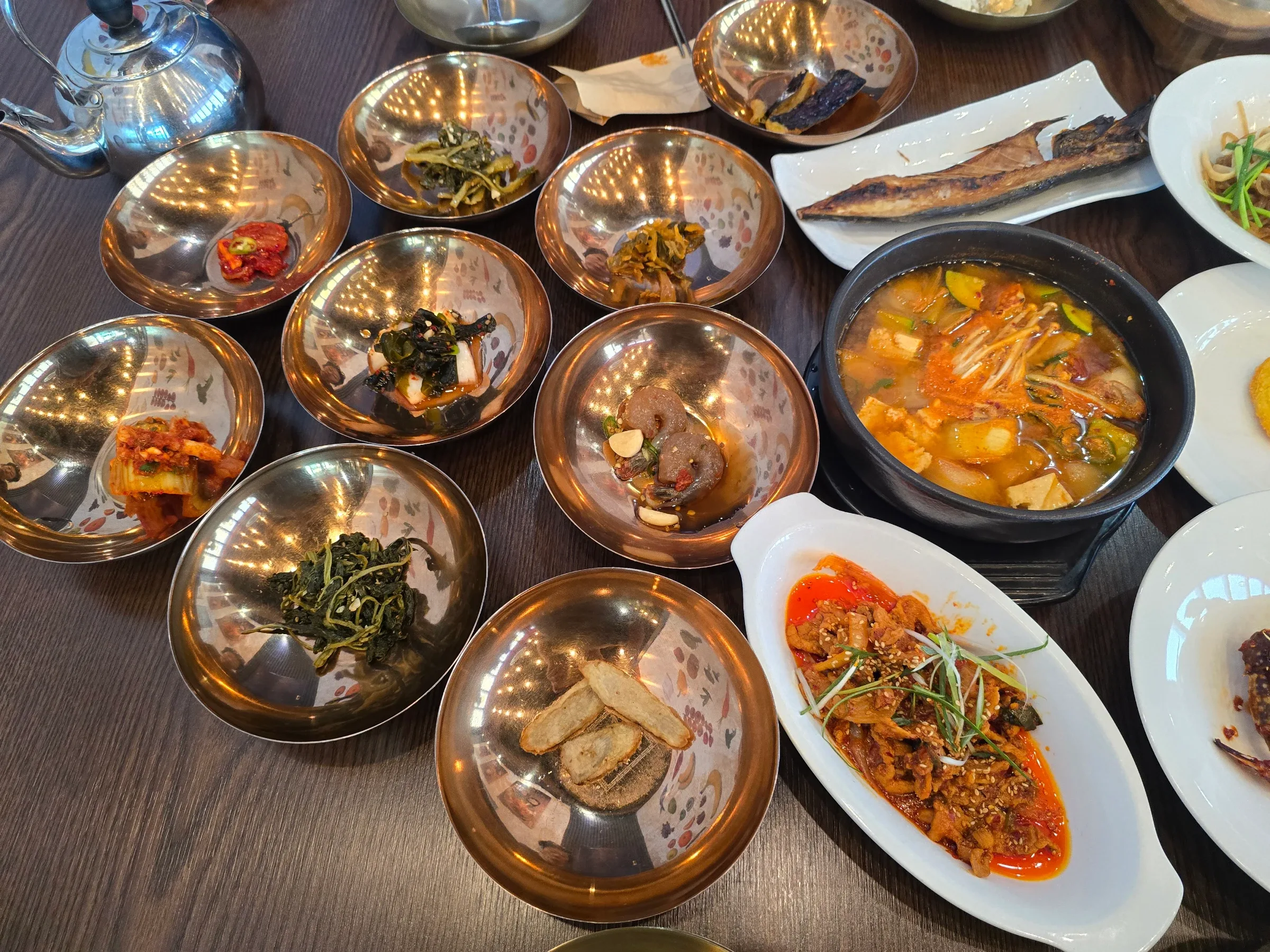
Up close, each plate has a tidy garnish on it. There's a slice of red pepper on the golden jeon, and the stir-fry is coated in a red sauce. The bowls hold namul (seasoned greens), kimchi, a braise and grilled tofu, one small portion each.
Mild banchan, a brothy stew, and rice that stays hot
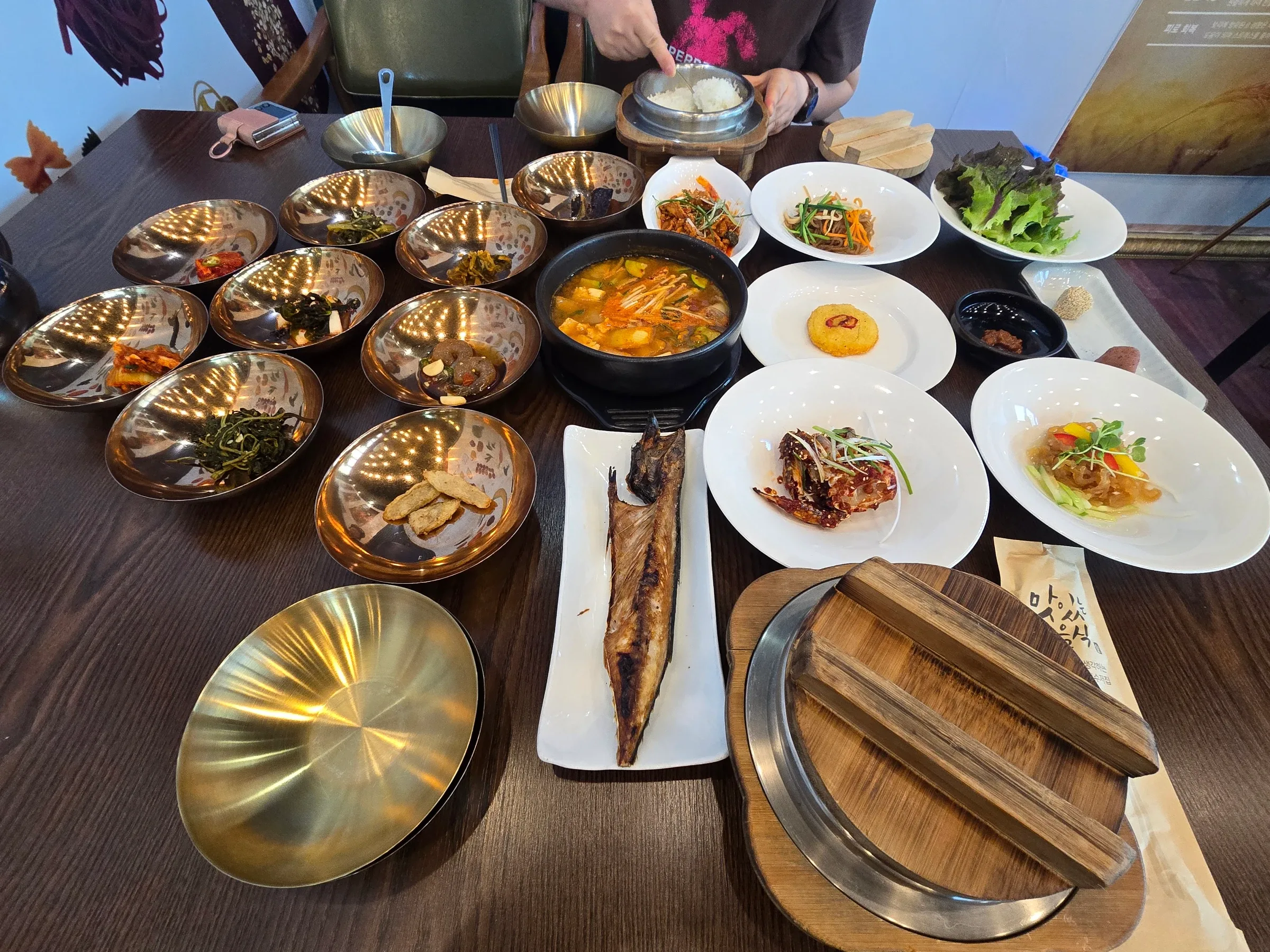
Start with the small bowls. They taste neat and mild. It's the sort of seasoning Koreans call seum-seum: light, not salty, nothing sharp or aggressive. It's dambaek in the way a plate of namul should be, nothing oily and nothing heavy. You end up eating a bite from one bowl, then another, then back again. If you're new to this, my note on whether to eat banchan first covers the etiquette. Refills are available at a self-bar, so a bowl you like doesn't have to run out.
The stew in the black pot is packed with shredded vegetables and tofu, with the broth sitting low around them. The pot rice comes from a lidded pot and looks glossy. Koreans describe pot rice like this as sticky, hot and made with good rice. The scorched layer at the bottom gets eaten too. A spoon of rice, a spoon of stew, and a bite from one of the bowls: that's the rhythm the table sets up.
Is it worth it, and what are the downsides?
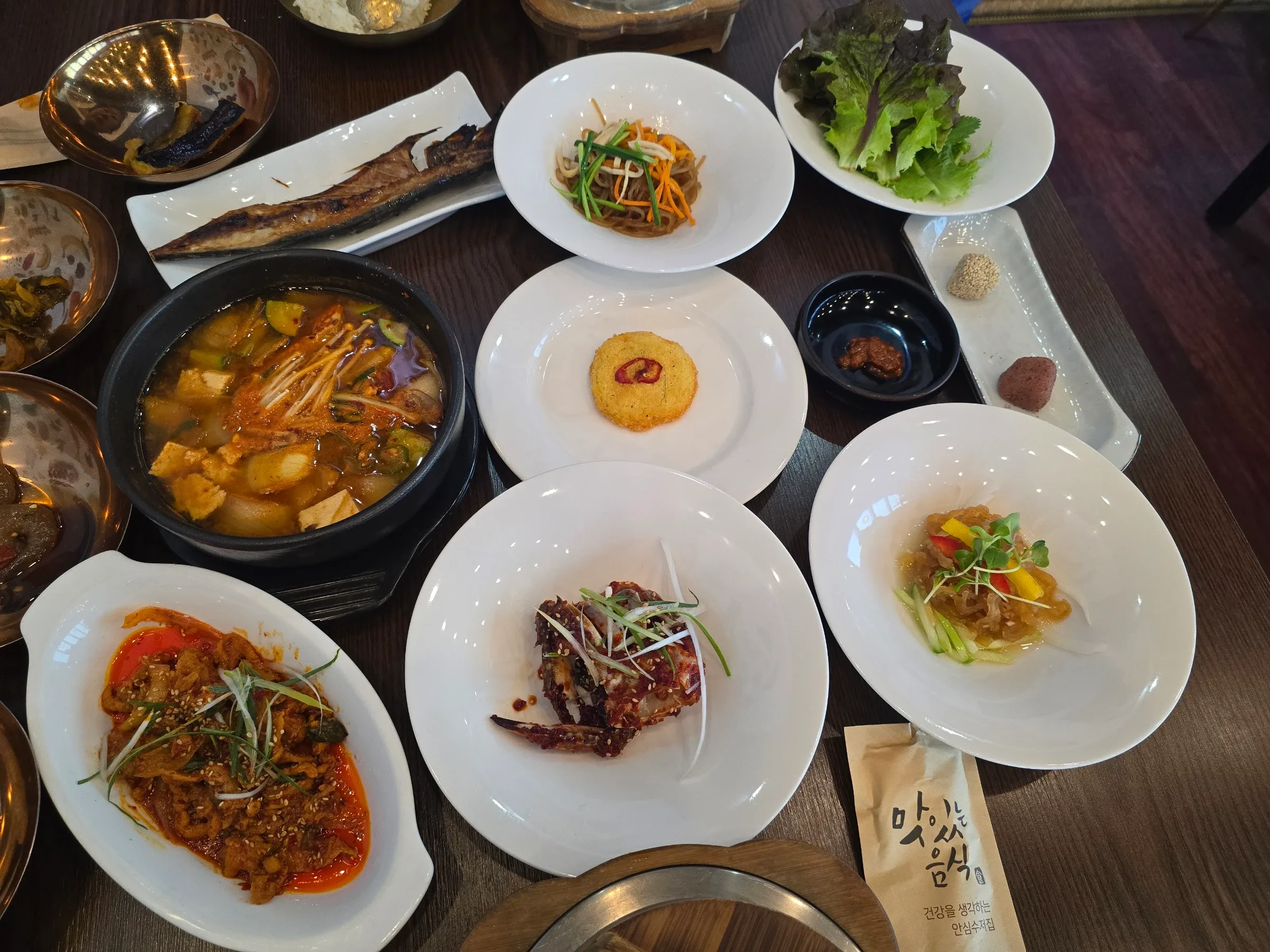
Is it worth it? For a table that size, yes. The food is homemade, neat and generous, and nothing on it shouted at me. I never had that moment of wondering whether to order more.
The downsides are small. You take a ticket and wait at a busy door. The lot fills up. And a set of nineteen dishes is more table than a quick solo lunch calls for.
What I haven't tried here
I only sat down to the set. Those are what I'd order next time, alongside the set or instead of it.
Who this table suits on a Ganghwa-do day trip
It suits a slow Ganghwa-do day out with friends or parents, the kind of trip where lunch is the main stop. Mountains stand behind the building and a brunch café's sign sits on the same roof line, so coffee afterward looks easy. If you want one bowl and out the door in ten minutes, nineteen dishes will feel like too much.
Brass bowls, a black pot, and rice under a lid
I had the Hyebindang 19-cheop Suraesang with my wife, at ₩19,000 per person. There's hardly anything I found lacking. The ingredients were all fresh and the banchan were delicious. Fresh ingredients, good banchan, a black-pot stew. I'll go again when I'm in Ganghwa-do with family, and I'd recommend it to parents too. See you next time, Ganghwa-do.
Comments
No comments yet.