
Do Koreans bow when greeting? When a bow makes sense
 AI-generated image
Do Koreans bow when greeting? Yes. In South Korea a bow is a common greeting, especially in formal introductions or when you meet an elder. Handshakes are common too, and close friends don't need to bow. First trip? This guide sorts out which bow goes with whom and where, so you're not left guessing.
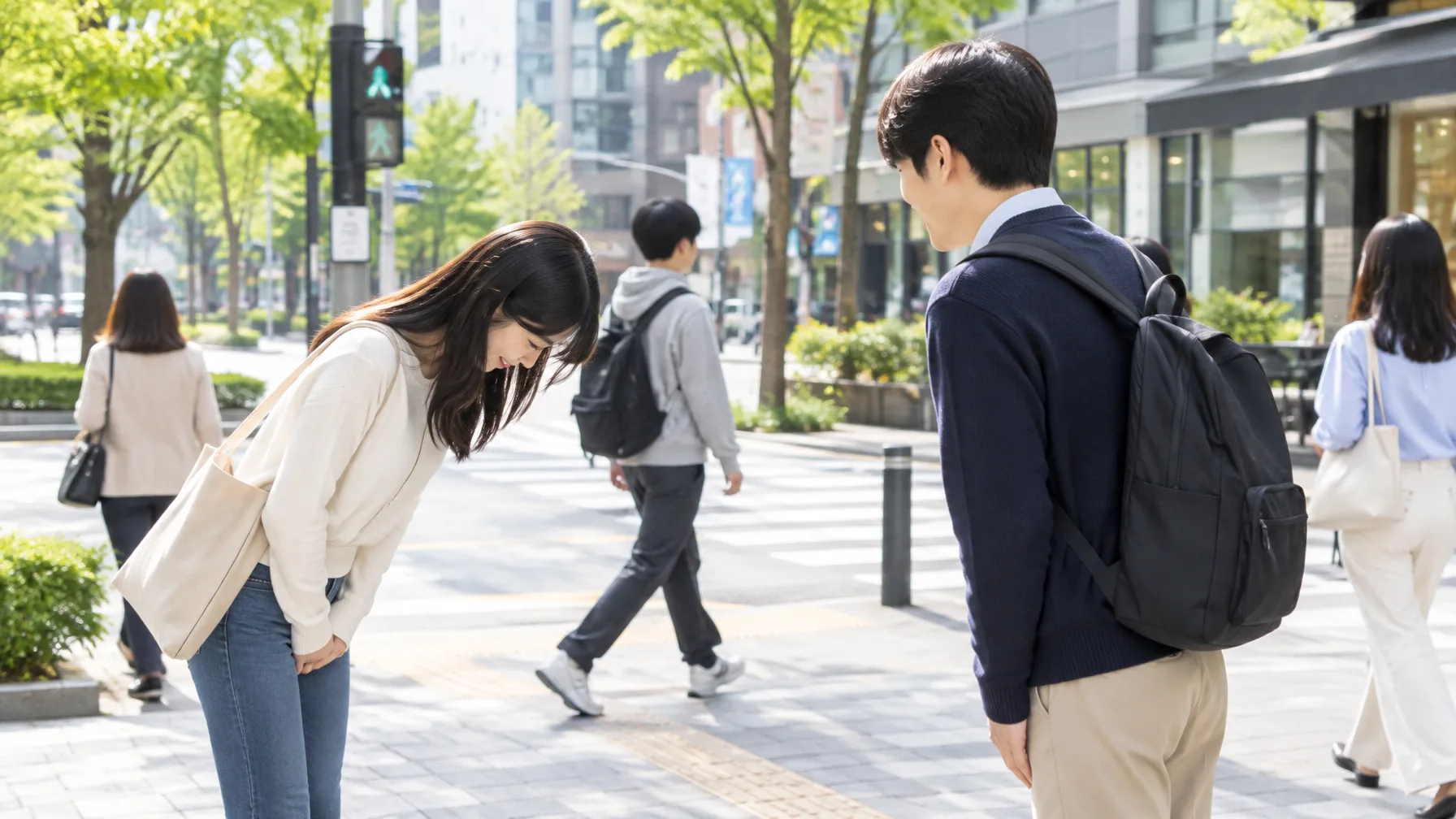
Bowing is a common Korean greeting, and a handshake works too
 AI-generated image
Treat it as a dial, not a rule. The closer you are to someone, the smaller the bow. The more formal the meeting, the deeper it goes. So there's no single correct bow to memorize, just a size that fits the person in front of you. Each situation gets its own section below, starting with the everyday dip you'll see most.
Bows are part of everyday life in modern Korea
 AI-generated image
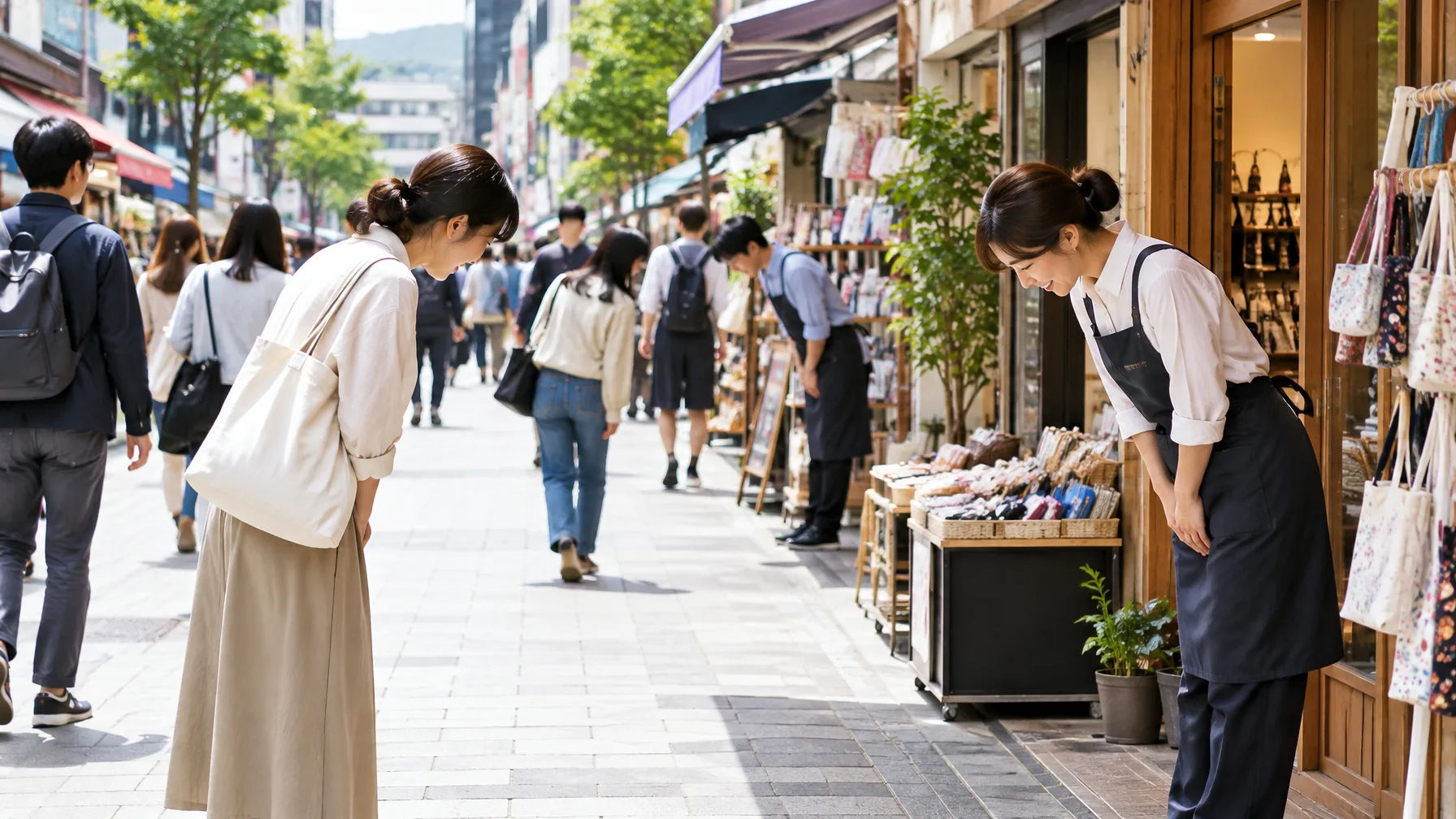
A bow in Korean culture isn't a museum piece or something kept for ceremonies. In modern Korea it's part of daily life, and it works both as a greeting and as a way to show respect. Many first-time visitors notice bows almost everywhere they look.
Bowing in Korea isn't only for hellos. People also bow when handing something over, asking a question, or making a request. The size and style shift with who you're facing and what's going on. That's why the same gesture can look quite different from one scene to the next.
The casual bow is a quick head dip with eyes closed
 AI-generated image
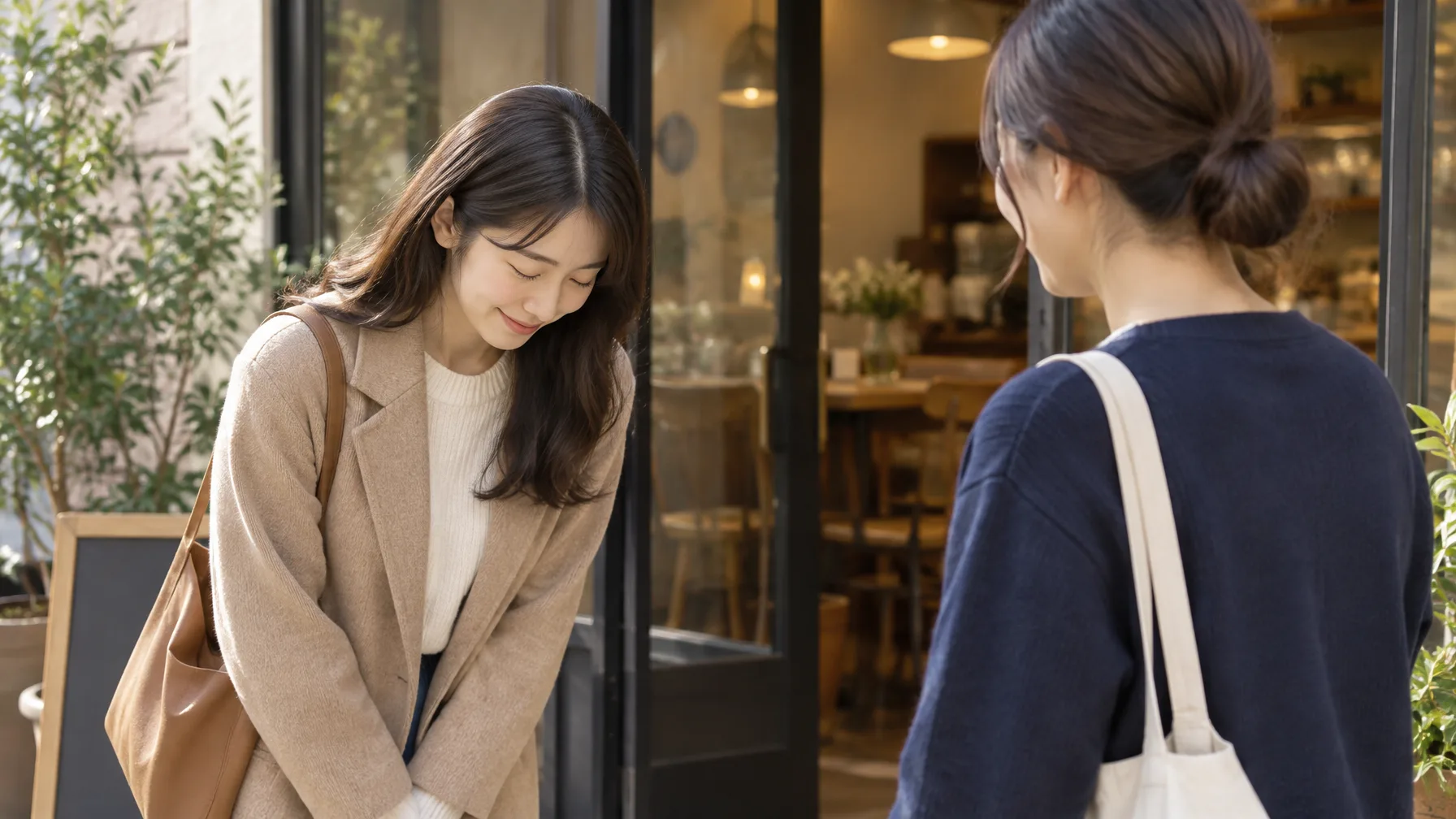
This is the one you will meet most. The casual bow is a dip of the head with the eyes closed, sometimes with a slight bend from the waist. It is called mokrye, and it is typically how people greet friends, colleagues, and acquaintances.
It also covers quieter moments. People use it for an informal hello, or when walking past someone of higher status. Here is how to do it:
- Face the person you are greeting.
- Dip your head and close your eyes for a moment.
- Add a slight bend from the waist if the moment calls for a bit more respect.
- Straighten up and carry on with your day.
A deeper bow of about 30 degrees fits business and formal introductions
Business settings call for a bigger bow. In the deeper bow, you bend the torso from the waist by about 30 degrees. A first formal introduction works the same way: the bow is deeper than the everyday kind. You should see a clear lean from the waist, much bigger than the head dip above.
A bow often stands in for the handshake, but a handshake is fine too
When people meet for the first time, or in a more formal setting, a bow is typically used instead of a handshake. Handshakes are also a common form of greeting in South Korea, so offering one isn't out of place. A simple way to play it: if the other person offers a hand, take it. If they bow, bow back.
Bowing to an elder is good manners
Korean bowing to elders is plain etiquette: greeting an older person with a bow is good manners. When you are unsure, let your bow lean toward the respectful side, closer to the deeper one than the quick dip. Then stop there. Respect shows in a clear, calm bow, not a big performance.
Close friends do not need a bow at all
With a close friend, you can skip the bow. A relaxed hello is enough. Many Koreans who live abroad are used to hugs, or even a kiss, as an everyday greeting among friends. So a hug can come up too. Follow your friend's lead and you'll be fine.
Common mix-ups: thank-yous, nods, and bowing too much
Do Koreans bow when saying thank you? Sometimes. A small bow can go along with a word of thanks or an apology. It works as a little gesture added to the words, not as a full greeting bow.
Over-bowing is the easiest slip. An exaggerated bow can make the other person uncomfortable, so match their size rather than going bigger.
Another mix-up: expecting a deep bow in every hello. In daily life, the usual greeting is often just a nod, not a formal bow. Full bows are mostly saved for occasions like New Year and ancestral rites. Everyday bowing in Korea is mostly the light, quick kind.
A quick chart for choosing your greeting
| Situation | What to do |
|---|---|
| Everyday hello with colleagues or acquaintances | Dip your head, eyes closed |
| Business meeting | Bend from the waist about 30 degrees |
| First formal introduction | Bow deeper than usual |
| Meeting an elder | Bow, leaning toward respectful |
| Close friends | No bow needed |
| Someone offers a hand | Shake it |
Bow small, shake when offered, and relax
So, do Koreans bow when greeting? Yes, especially in formal introductions and when meeting elders. But it's not the only option. Handshakes are common, and close friends needn't bow. When in doubt, a friendly head dip and a smile will take you a long way.
Comments
No comments yet.