
Bibimbap Korea Ingredients: What Goes in This Bowl?
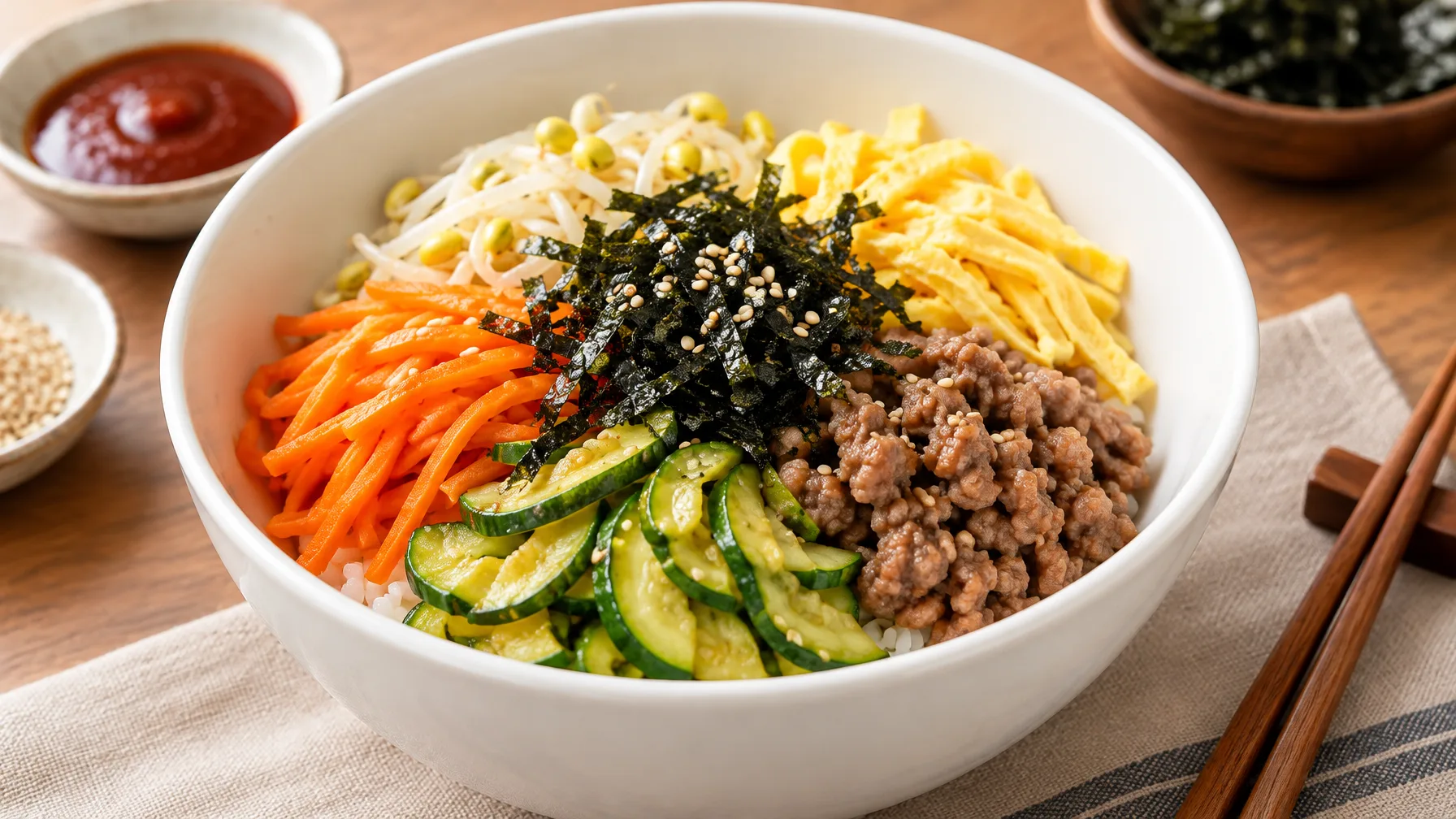
Here is what goes in: spicy seasoned bean sprouts, sautéed carrot and zucchini, and warmed pork crumbles.
 AI-generated image
Here is what goes in: spicy seasoned bean sprouts, sautéed carrot and zucchini, and warmed pork crumbles. Roasted seaweed, gochujang, sesame oil, and sesame seeds finish the bowl. Gochujang is Korean red chili paste.
Think of this bowl as a handful of small side dishes sharing one serving of rice. Nothing is raw, nothing needs fancy equipment, and each piece is cooked on its own before it goes in the bowl.
That separation is the whole idea. You can taste the sprouts, the carrot, and the zucchini one by one, and then you stir them together. The sauce does the job of tying them into a single bite.
How each vegetable and topping gets cooked
 AI-generated image
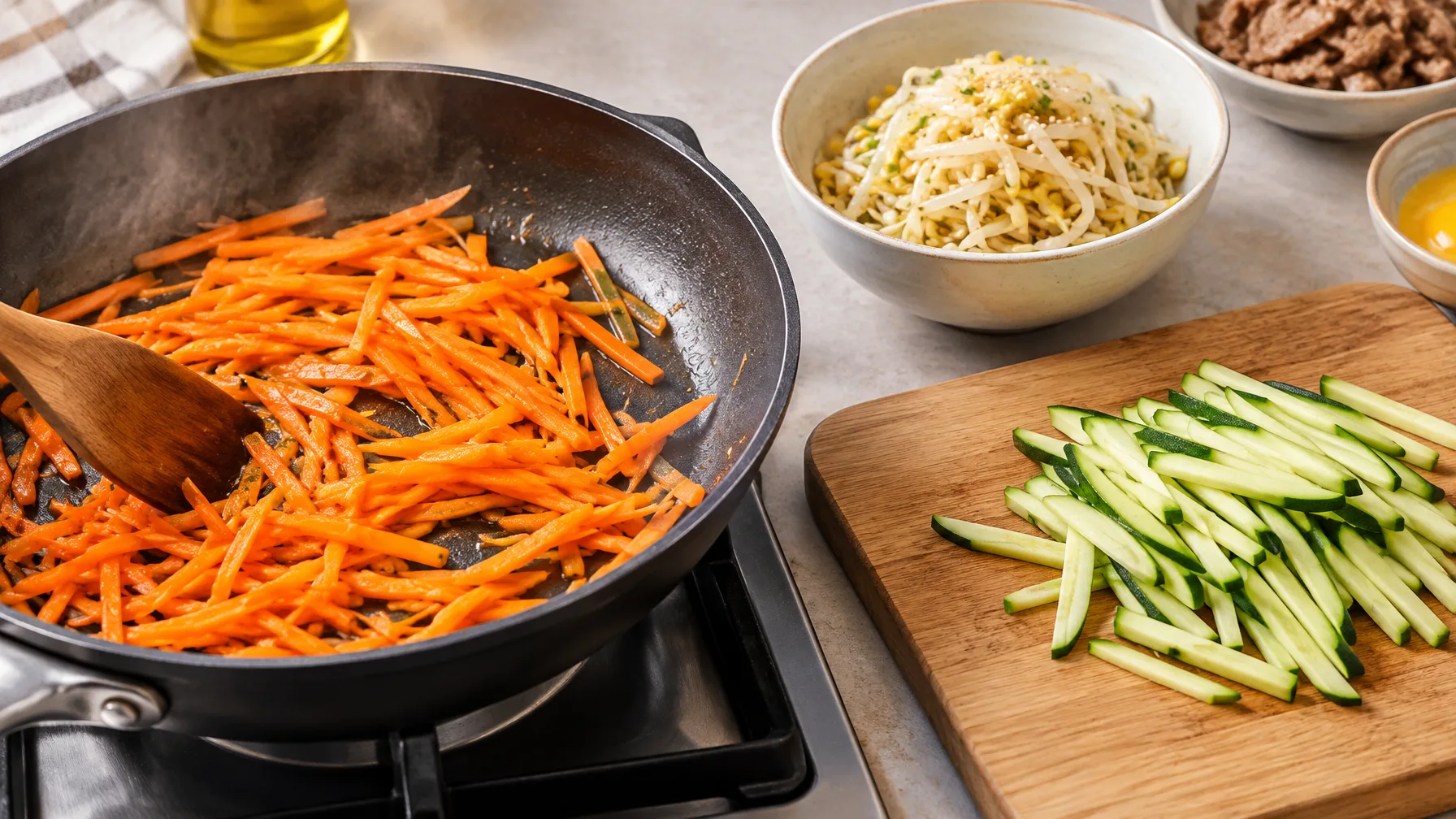
The Korean bibimbap vegetables here are simple. Bean sprouts come seasoned and ready, and carrot and zucchini are cut into thin matchsticks. The pork and egg are the toppings that make it feel like a full meal. Rice bran oil is a fine choice for the stir-frying.
| Piece | Prep | Flavor |
|---|---|---|
| Bean sprouts | Seasoned as a side dish, added to the bowl as is | Spicy from gochugaru (Korean red pepper flakes) |
| Carrot | Cut into thin matchsticks, stir-fried | Salt |
| Zucchini | Cut into thin matchsticks, salted, then stir-fried | Salt |
| Pork crumbles | Warmed in a pan | Already seasoned |
| Seaweed | Roasted, scattered on top | Toasty and light |
Here is the order that keeps the kitchen calm, since you're only ever cooking one thing at a time.
- Season the bean sprouts with gochugaru and set them aside.
- Stir-fry the carrot matchsticks with a pinch of salt.
- Salt the zucchini matchsticks, then stir-fry them.
- Warm the pork crumbles in a pan.
- Put everything over rice, then add roasted seaweed, seasoned gochujang, sesame oil, and sesame seeds.
Why cooked toppings suit a weeknight bowl
 AI-generated image
It wasn't always pretty. It was always good.
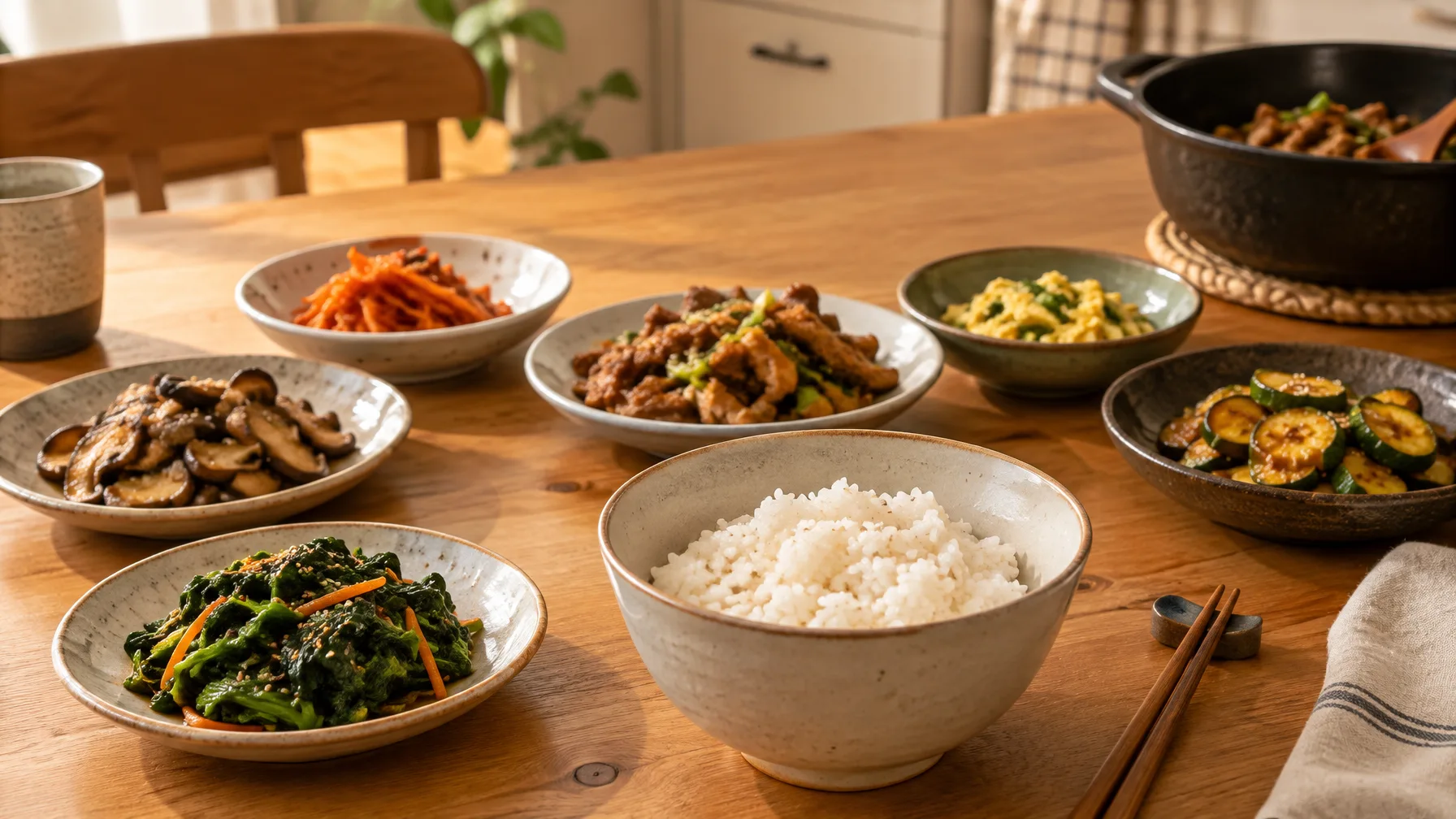
Cooking every topping, rather than following the more traditional approach, makes the bowl easier to build at home.
Gochujang, sesame oil, and light seasoning on the vegetables and pork
 AI-generated image
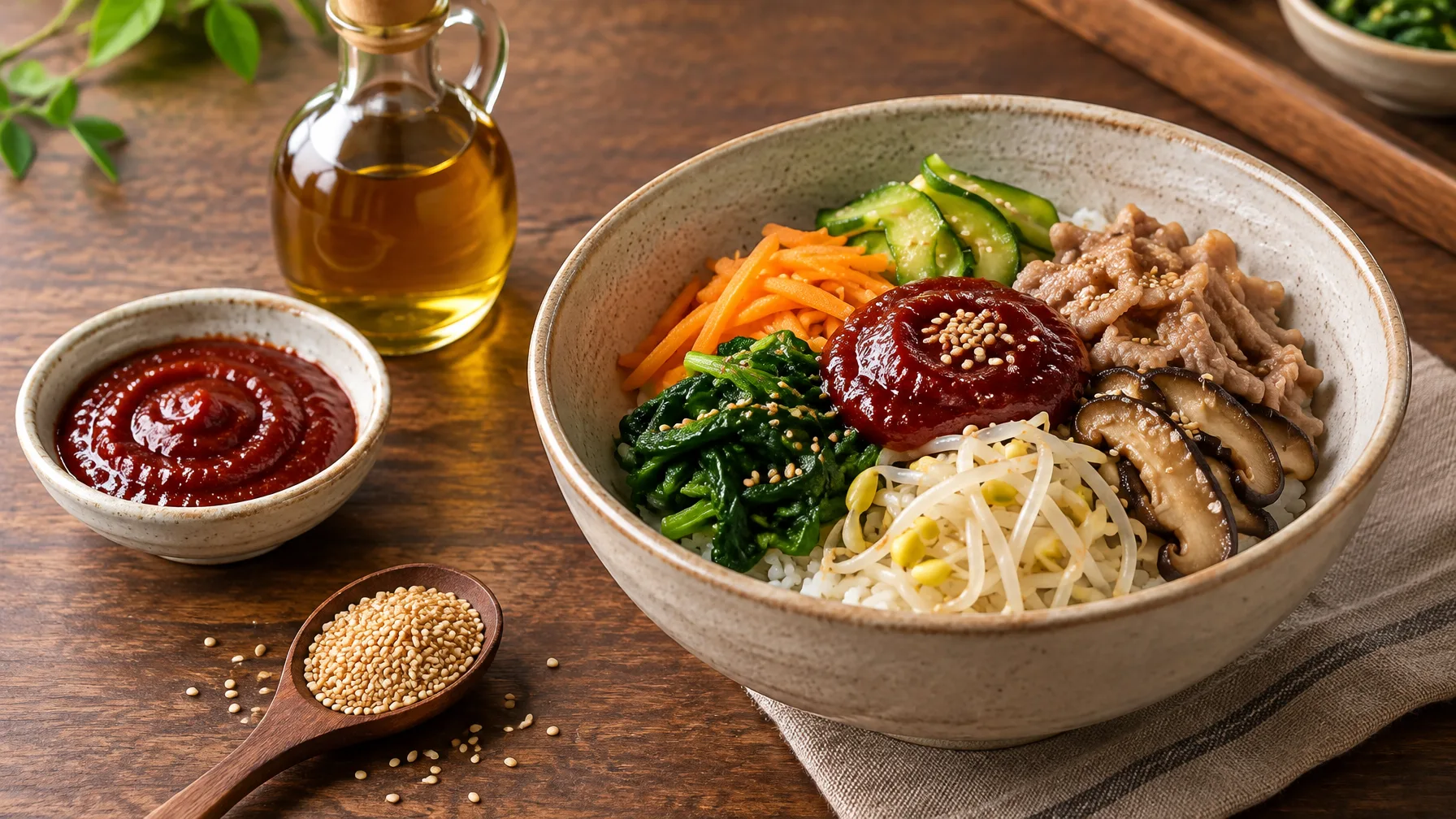
Most of the flavor comes from the bibimbap sauce. A scoop of about 2 tablespoons per bowl is a good starting point, and that's the gochujang, seasoned to taste. Sesame oil and sesame seeds go on at the end for nuttiness.
The vegetables and pork are kept lightly seasoned on purpose. Salt on the carrot, zucchini, and egg is enough. Gochugaru gives the bean sprouts their kick, and cooks who love sprouts tend to pile them in generously. A mild hand on the toppings means each one still tastes good alone.
Beef swaps in for pork without changing the bowl
Bibimbap with pork is the version here, but beef is a natural substitute. If you want bibimbap Korea ingredients beef style, the swap is easy. Use beef in place of the pork crumbles and leave the vegetables as they are.
Tenderloin sliced by hand is one cut that works. Keep the bulgogi-style seasoning on the mild side, so the meat doesn't drown out the vegetables.
Seafood and mountain greens are part of bibimbap variations too
Bibimbap variations go well beyond pork or beef. Others recall seasonal mountain greens picked at their best that time of year. The idea is the same: cooked pieces over rice with a bit of sauce.
The bowl also travels well in memory. A first plate of bibimbap ordered in the US can bring childhood back. The mix of vegetables and sizzling rice is enough to ease homesickness. Some cooks make it whenever they miss home.
Things you can relax about when making it at home
The bowl doesn't need to look perfect. A homemade one that isn't beautifully plated can still taste wonderful.
Resting the carrot and zucchini in salt before cooking is a step many home cooks skip. If time is short, you can too. Go easy on the sauce, since about 2 tablespoons per bowl is enough. Stir so that your first spoonful already has a bit of everything.
The bowl in a nutshell, and where to take it next
This home-style bibimbap combines spicy bean sprouts, sautéed carrot and zucchini, and pork crumbles. It also has egg, roasted seaweed, gochujang, sesame oil, and sesame seeds. Other versions use beef, seafood, or seasonal mountain greens. Start with the pork bowl, then make it yours. Enjoy every spoonful.
Comments
No comments yet.