
Keunjeol: Know When Korea’s Formal Bow Is Used
 AI-generated image
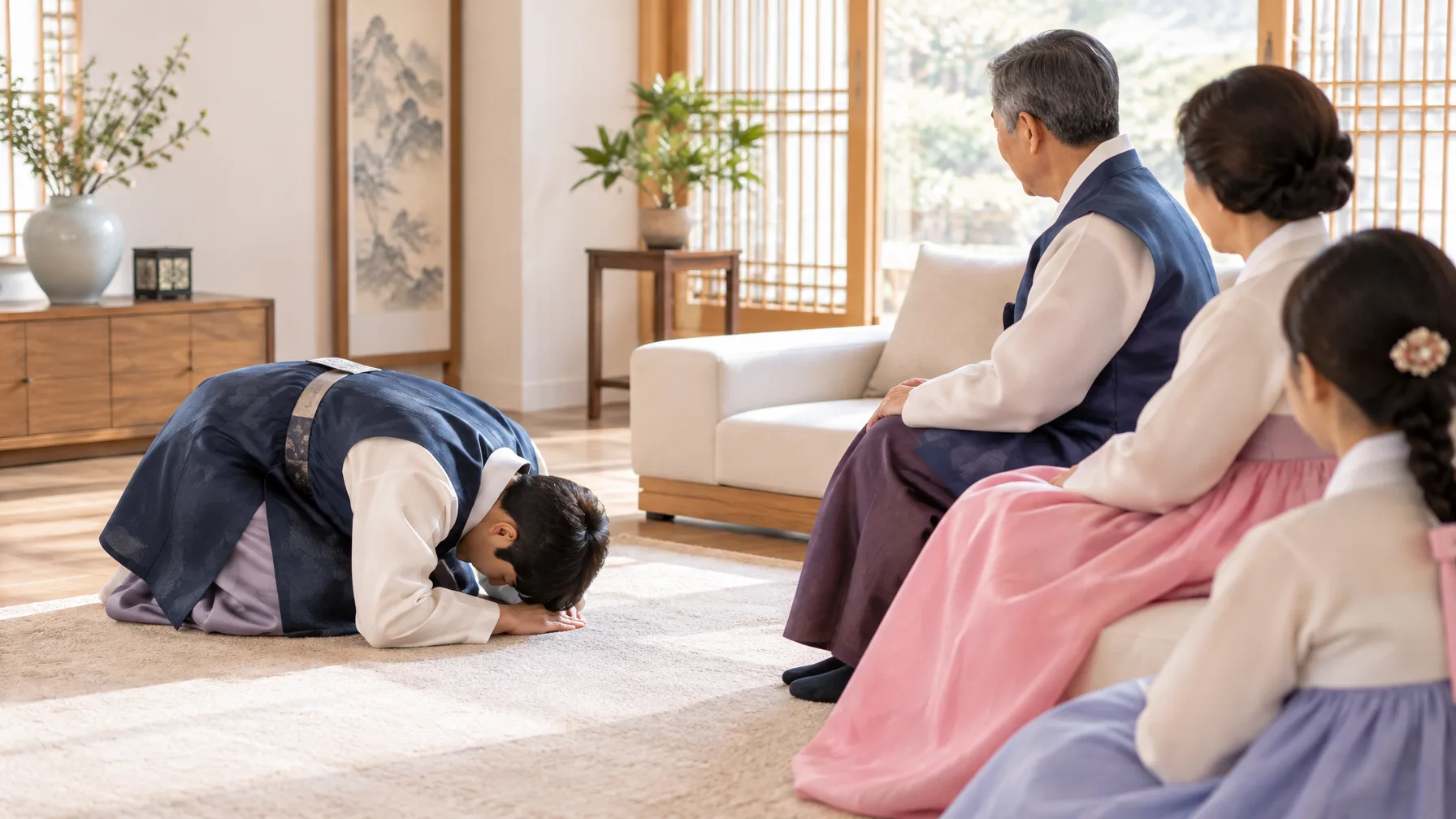
Keunjeol is Korea’s most respectful formal bow. People perform it at Seollal and Chuseok to honor living elders, and also during jesa and the wedding pyebaek. If you have only seen the quick nod Koreans use in daily life, this is the other end of the scale. It is a deep, slow bow saved for moments that carry real weight. Here is when it appears, how it is done, and when you can safely skip it.
Seollal, Chuseok, jesa and pyebaek are where keunjeol belongs
 AI-generated image
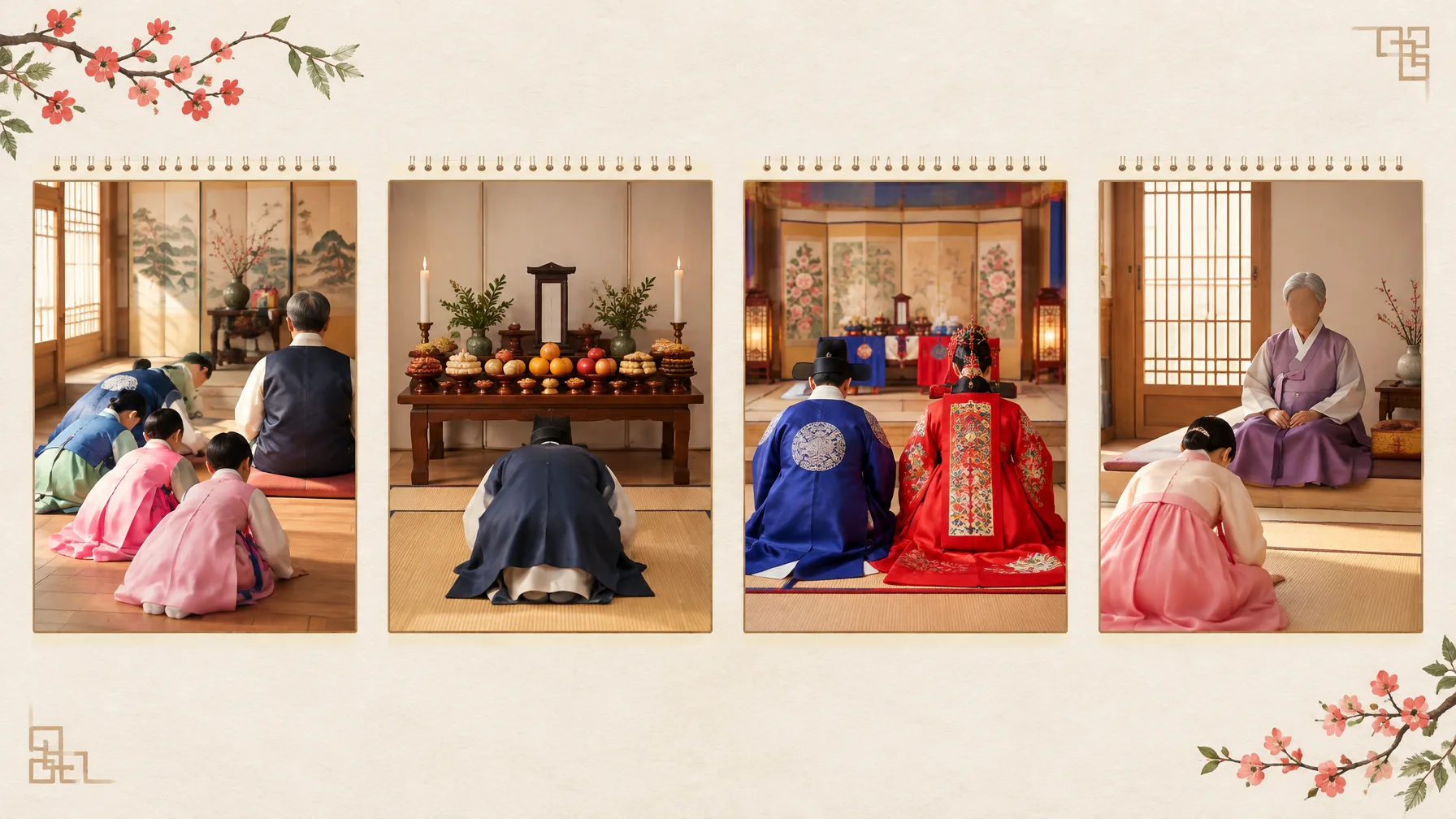
Seollal is Korean Lunar New Year, and Chuseok is the Harvest Festival. On both holidays, younger family members give keunjeol to older relatives. Jesa, the traditional ceremony that honors ancestors, includes the bow, as does pyebaek, the traditional portion of a Korean wedding.
The list is short on purpose. The bow is tied to a handful of occasions, not a skill you need for every day in Korea. The sections below take the details of each occasion one at a time.
A formal bow, not a hello
 AI-generated image
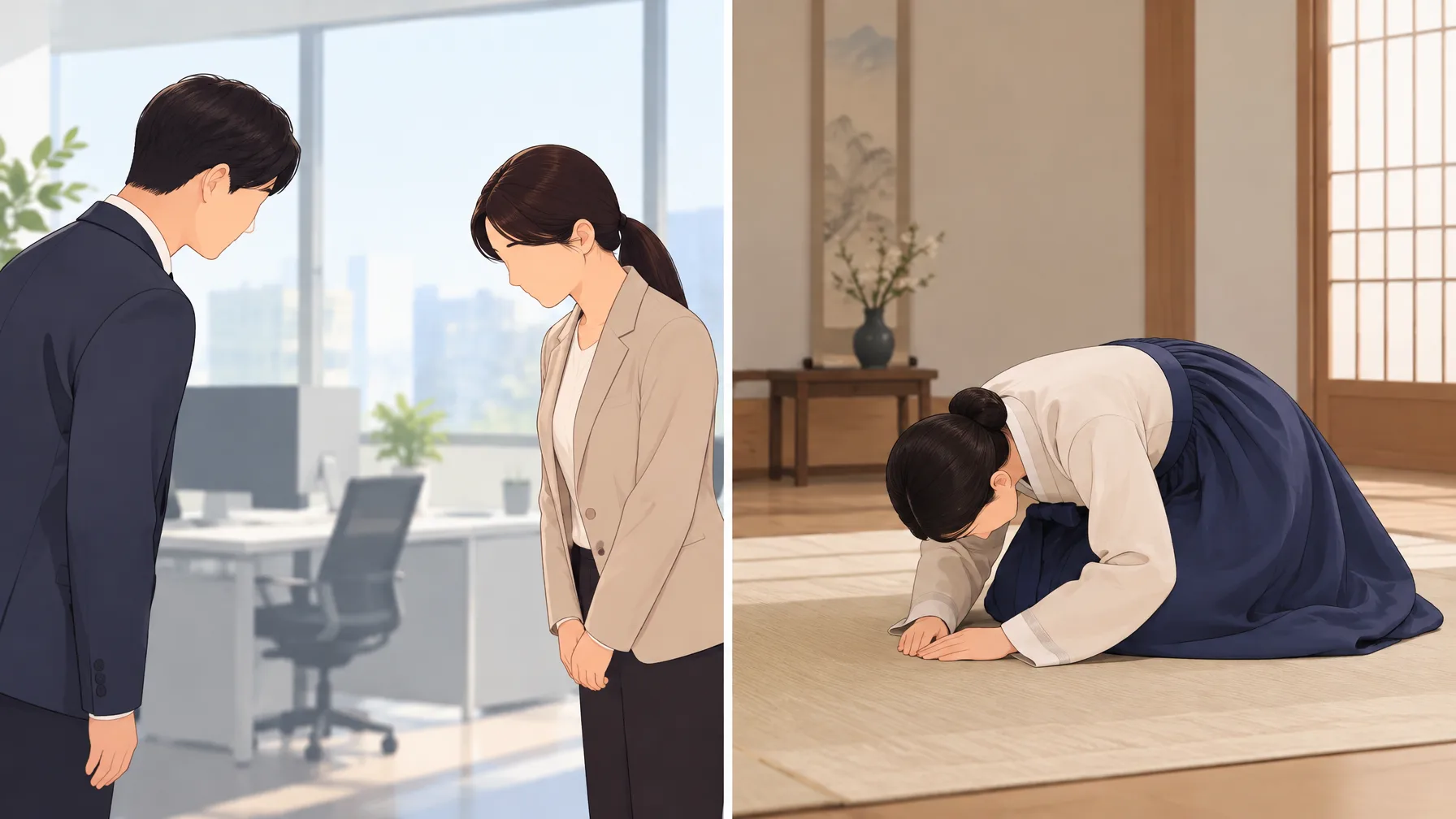
Korea has bows of many sizes. A slight tilt of the head works for casual meetings, and deeper bows scale up with the situation. Keunjeol sits at the top of that scale, used for the most formal occasions and to show the most respect.
The difference is not only size. An everyday bow is quick and done standing. Keunjeol goes all the way down to the floor and pauses there. That makes it a gesture you plan for, not one you do in passing.
Why living elders receive the deepest bow
 AI-generated image
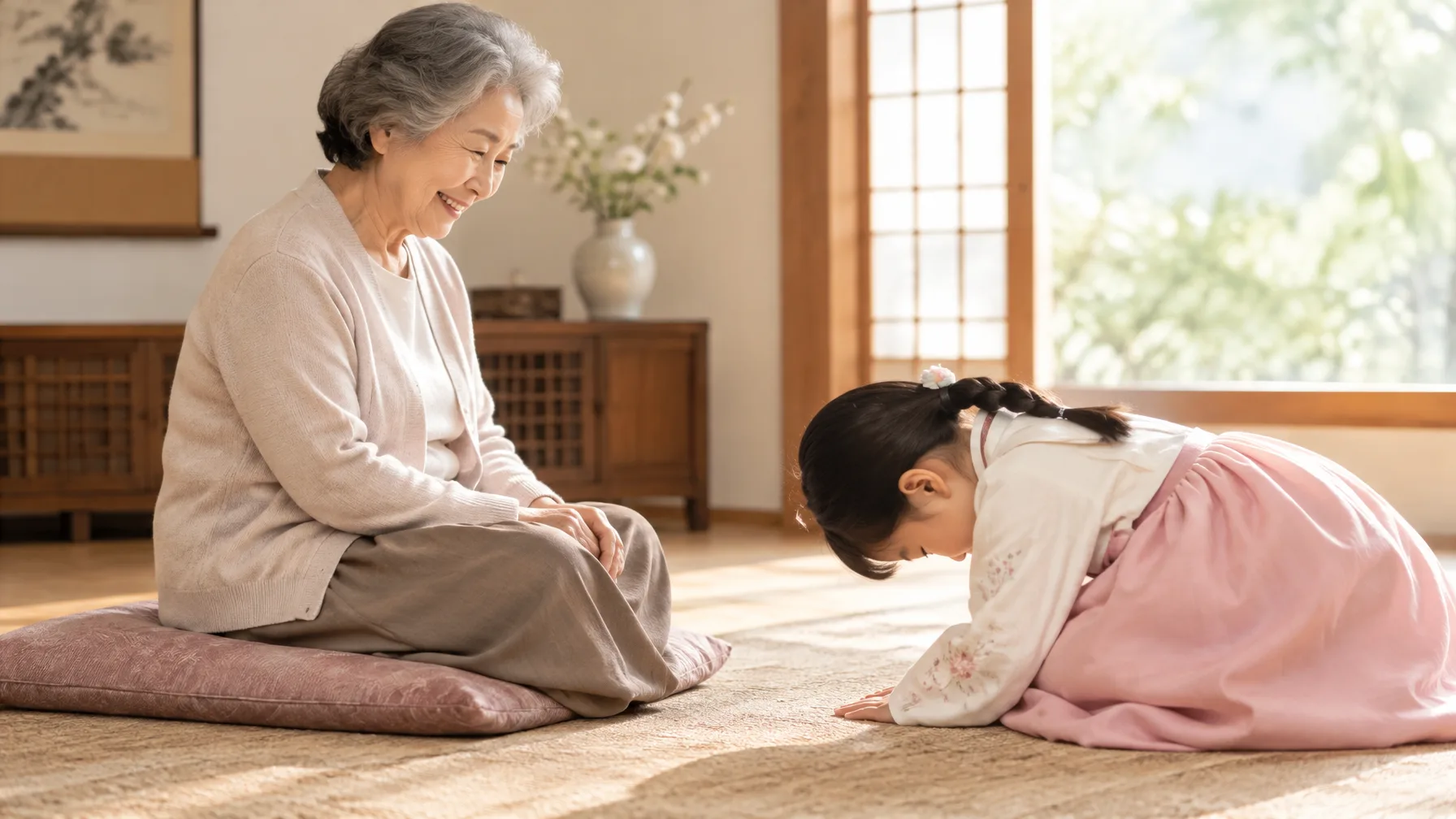
That is why families choose it for their elders on the big holidays. The same logic applies outside the family: someone of high status, or someone you deeply respect, may be met with a 90-degree bow.
There is one more family situation where the bow carries a lot of meaning. A man gives keunjeol to his fiancée’s parents when he asks for her hand in marriage. In that moment it works as a formal way of saying he takes the request seriously.
Lunar New Year and the Harvest Festival bring the bow home
If you are invited to a family’s Seollal or Chuseok, this is where you are most likely to see keunjeol. Younger family members bow to the older ones, who are then often the center of the room. It is a family ritual, and the bow is the way the younger generation says thank you and shows respect.
Visitors are not usually the ones expected to lead. If you are a guest and unsure, watch how the family does it first. The sequence is simple enough to follow once you have seen one round.
The bow in four steps
- Kneel on both knees.
- Place your hands on the floor or at chest level.
- Press your forehead toward the ground and keep your head lowered for about three seconds.
- Rise back up.
Three seconds is short, but it is long enough that rushing it looks careless. Slow and steady is the goal. The pause is what turns a bend of the body into a sign of respect.
Men and women place their hands differently
The bow is not one fixed movement for everyone. It varies by gender, and the clearest difference is the hands. Men hold the left hand over the right. Women place the right hand over the left.
That small detail is easy to get backwards. For a pyebaek, brides-to-be sometimes practice for weeks before the wedding. If you are learning for a family event, practice the hands first, because the rest of the movement tends to follow.
Skip it for everyday greetings, but not for funerals
Keunjeol is not expected in every greeting. Meeting a friend, a coworker or a shopkeeper does not call for it. In casual settings, a lighter greeting is enough. Some girls and young women give a jakeunjeol, a small bow, instead of the full bow. A smaller bow is not necessarily rude.
Funerals work differently, and they are the case people most often get wrong. Keunjeol is expected there no matter how the mourner and the person receiving the bow compare in social rank. You bow twice in a row to the portrait of the deceased, then once more to the bereaved family.
| Occasion | Who bows to whom | Detail to remember |
|---|---|---|
| Jesa | Family toward ancestors | Held on an ancestor’s death anniversary |
| Pyebaek | Bride and groom | In a traditional wedding, both may bow to each other |
| Marriage request | Man to his fiancée’s parents | Done when asking for her hand |
| Funeral | Mourner to portrait and family | Two bows to the portrait, one more to the family |
Each row in the table is a defined moment with its own rules, not a general habit you carry around.
It is not a bow for every greeting. Learn the hand rule, count your three seconds, and save it for the moments that ask for it. Your family hosts will notice the effort.
Comments
No comments yet.