
Maisan Stone Pagodas in Jinan: Going to Tapsa's Hand-Stacked Towers
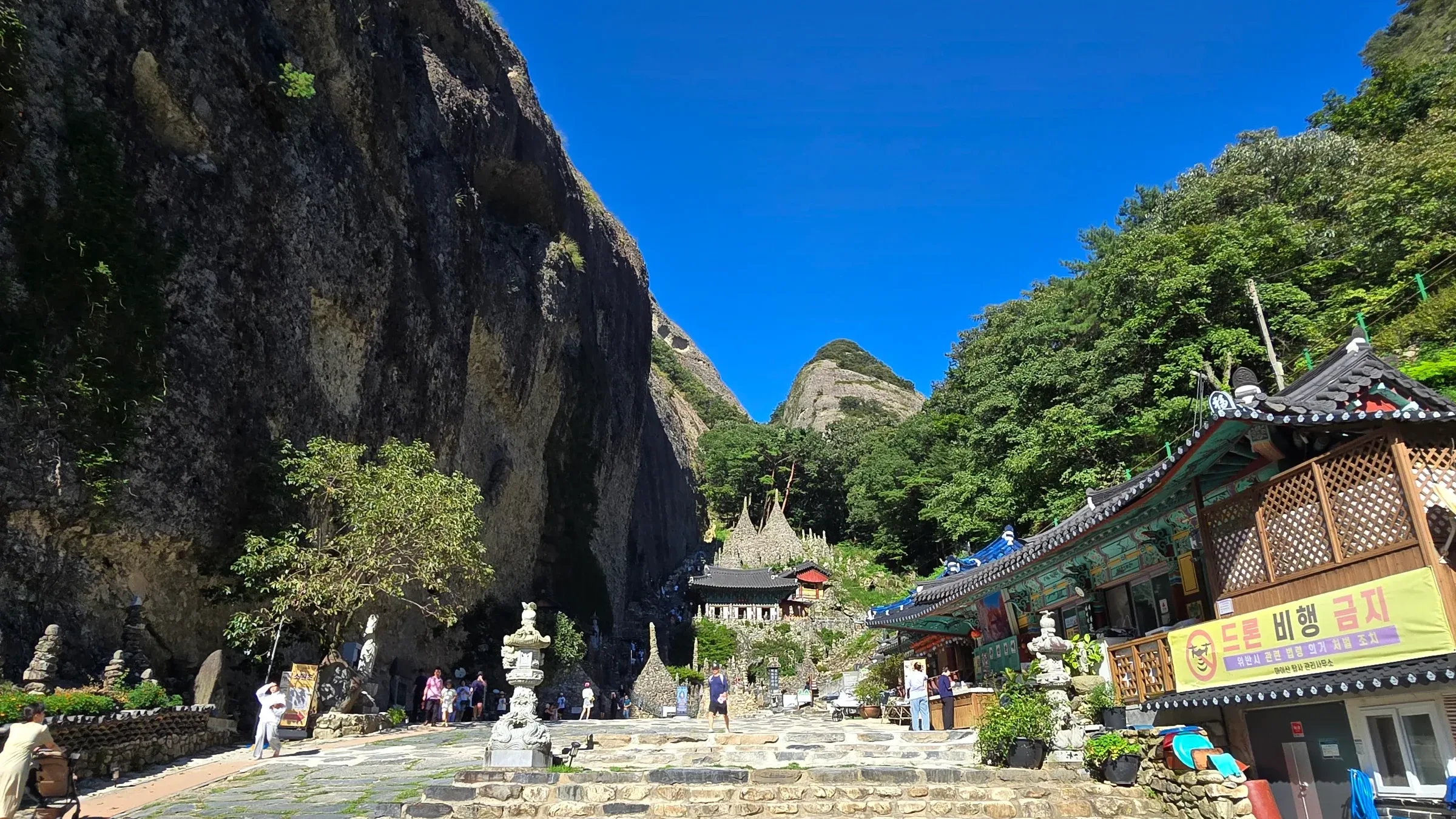
Walking among about 80 hand-stacked towers at Tapsa
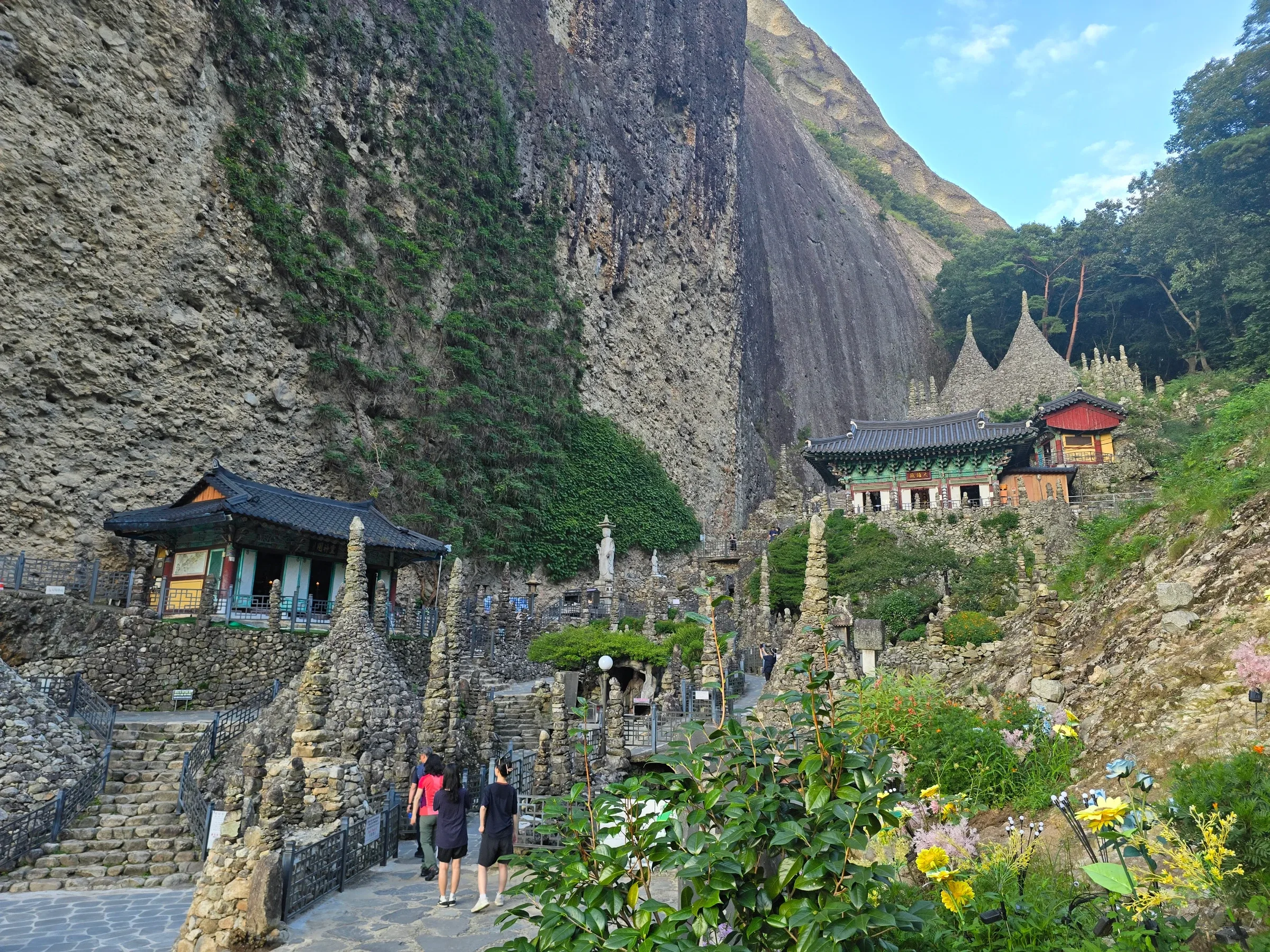
At Tapsa Temple on Maisan in Jinan, Jeonbuk, you walk among about 80 surviving stone pagodas, 1 m to 15 m tall. One man, Yi Gap-ryong, stacked them from uncut natural stones over 30-plus years starting around 1885. I judge a landmark by one thing: does it make me stop walking and just look up? These Maisan stone pagodas did, and I'm not a person who stops easily. Think of them as a crowd of very patient strangers, each one balanced on nothing but its own weight. My verdict up front: go, and bring good shoes.
| Item | Detail |
|---|---|
| Name | Maisan (Horse Ear Mountain), Tapsa Temple area |
| Address | 745 Dongchon-ri, Maryeong-myeon, Jinan-gun, Jeonbuk |
| Cherry blossom road | Free, open at all times, open year-round, parking available |
| Adult entry (Naver Place listing) | ₩3,000 individual, ₩2,800 group |
| Middle/high school | ₩2,000 individual, ₩1,800 group |
| Elementary school | ₩1,000 individual |
| Satisfaction | Good views, easy parking, trail worth it |
Who stacked them, and why does it matter?
Yi Gap-ryong moved to the foot of Maisan around 1885 to practice as a recluse. The story goes that he built 108 towers by himself over 30-plus years, and roughly 80 remain. They aren't cut blocks but natural stones piled one on another, so the sizes are uneven, from about 1 m to 15 m. Several have names, like Cheonjitap, Obangtap and Wolgwangtap, each with its own meaning.
How do you get to Maisan Tapsa, and is parking easy?
The address is 745 Dongchon-ri, Maryeong-myeon, Jinan-gun, Jeonbuk. Parking is available, and the area's most-voted comments call it easy. I'm not going to describe a bus route I didn't ride. From the lot I walked toward the cliff, past a shop with a banner reading no drones, and up some stone steps.
What do you see from the rock wall to Cheonjitap and Eunsusa?
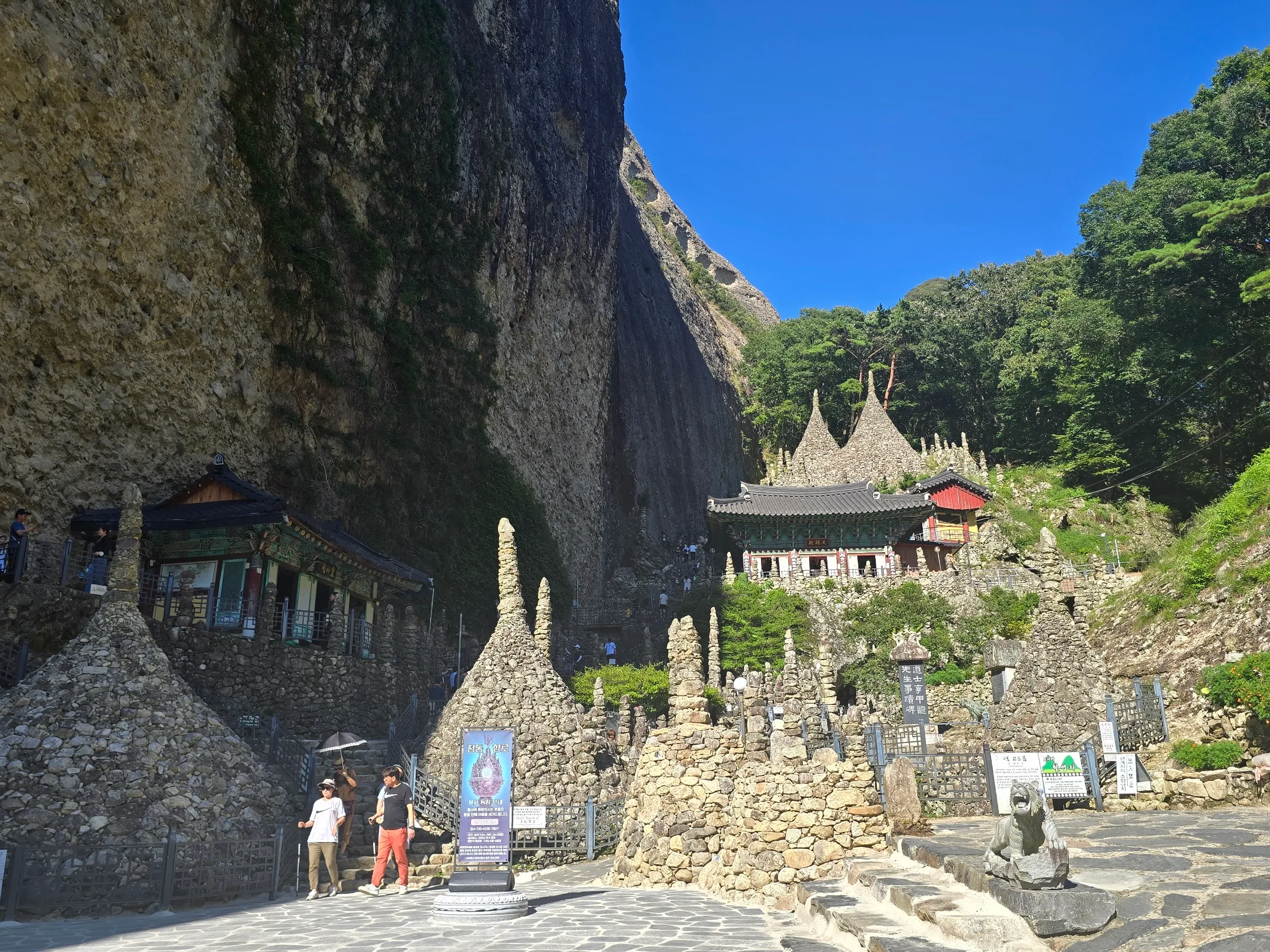
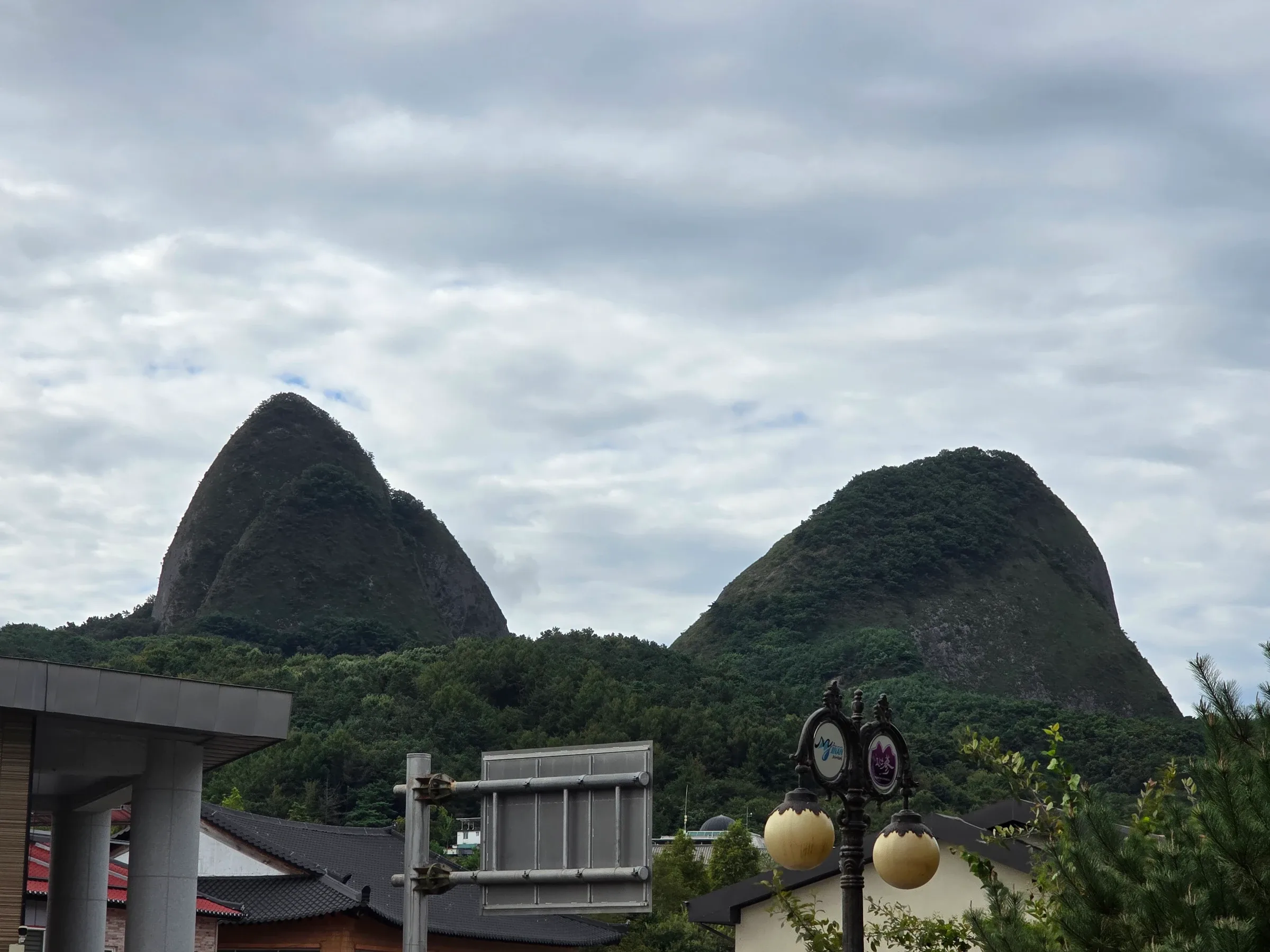
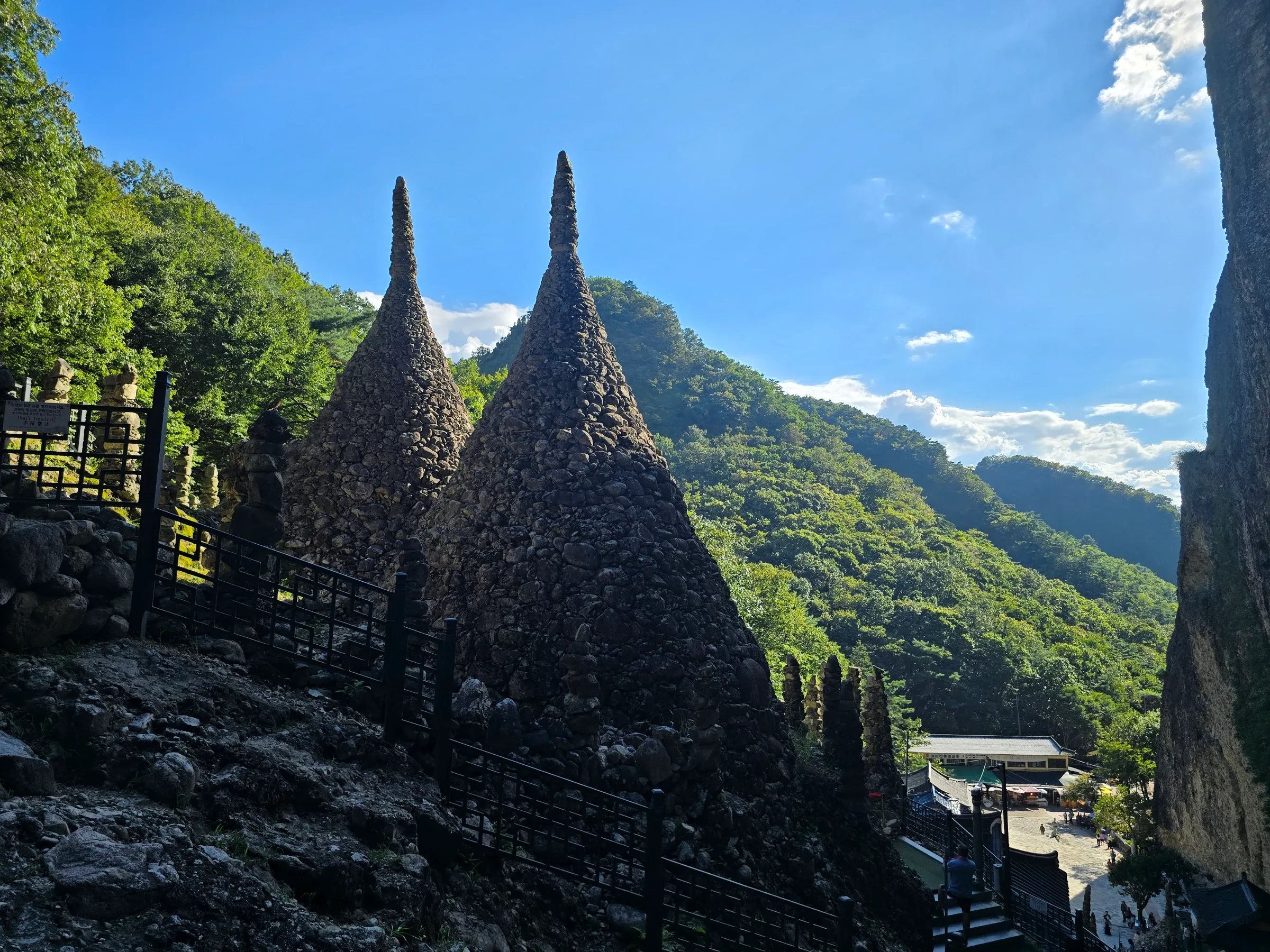
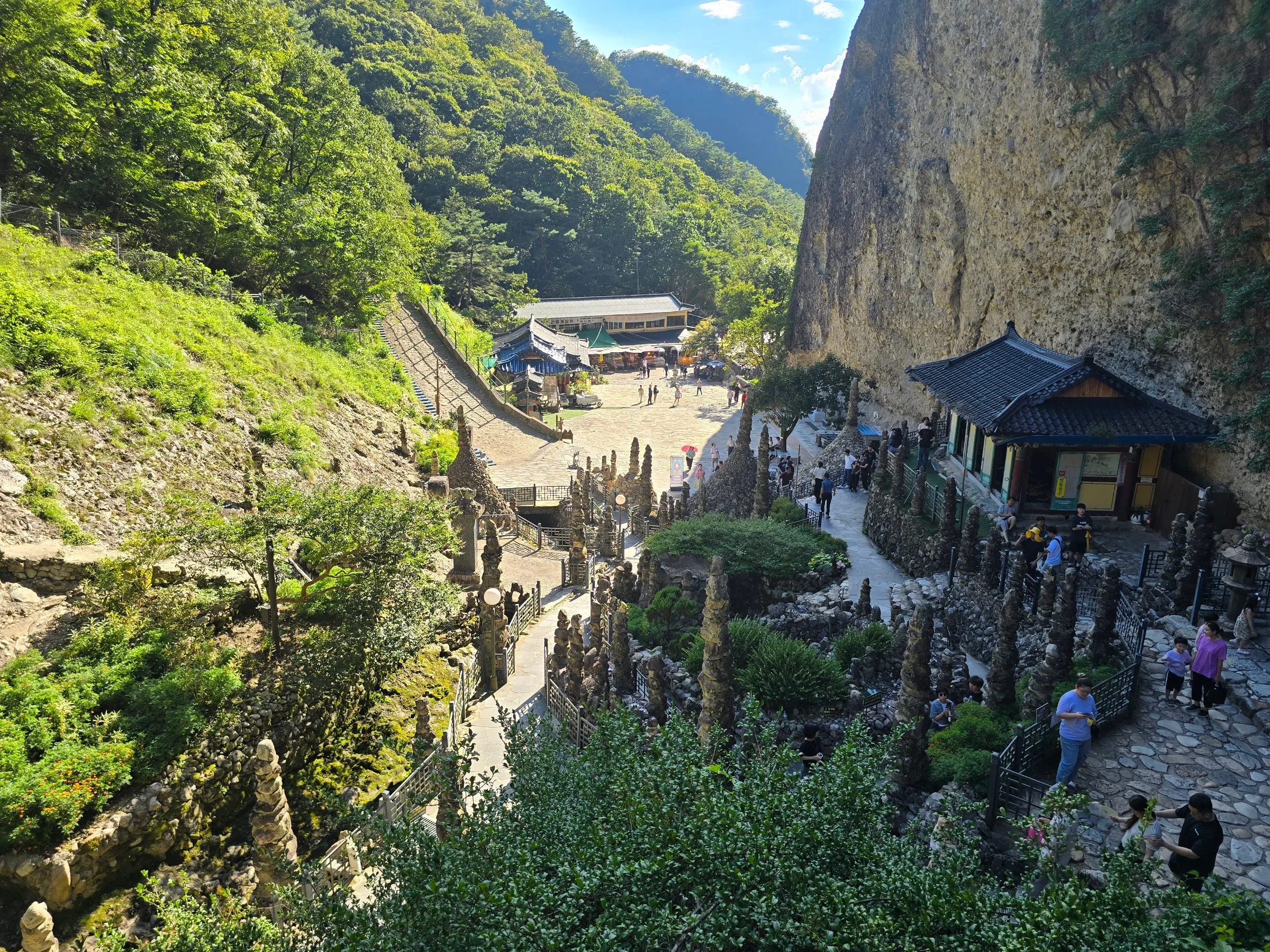
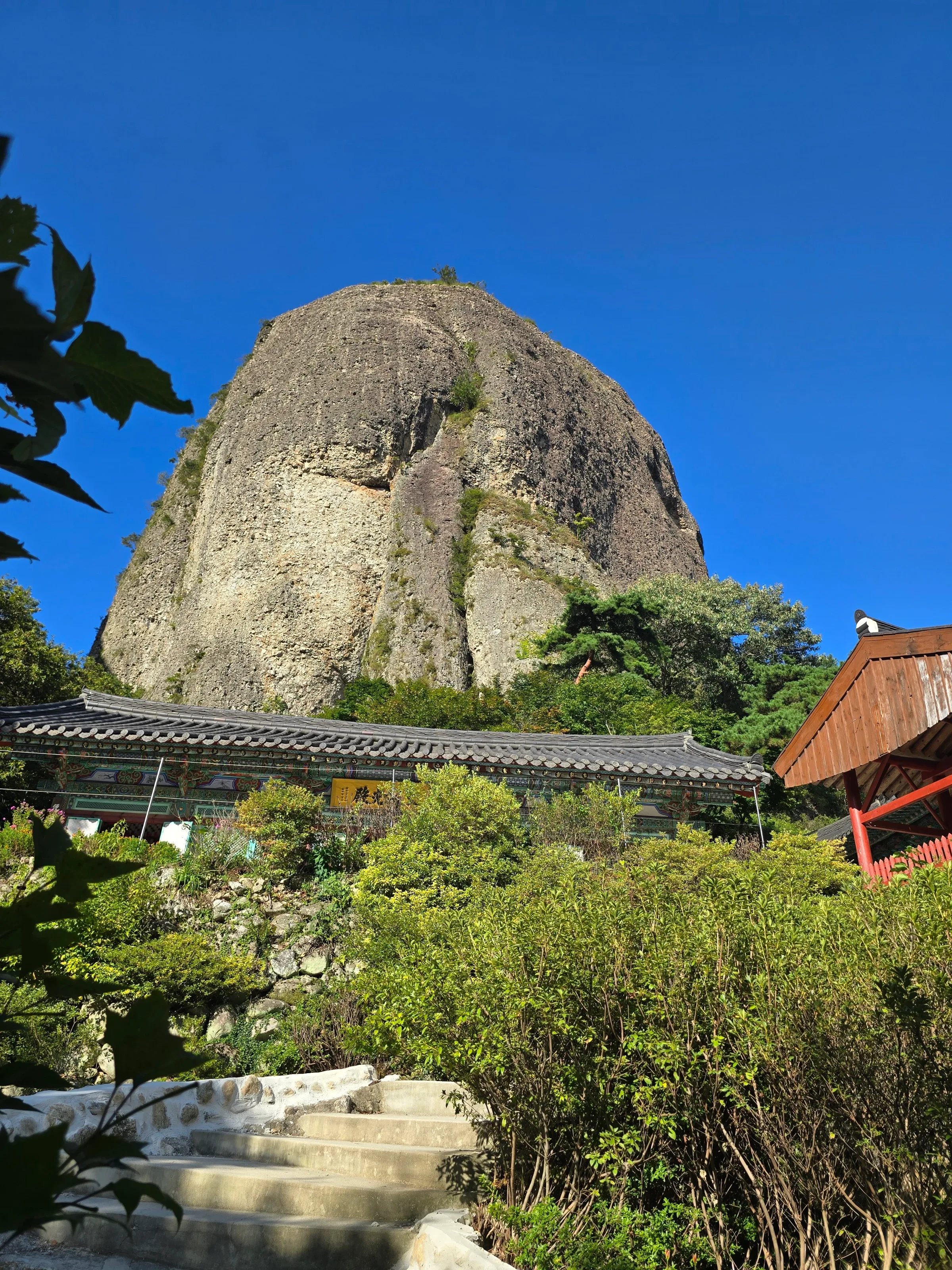
The first thing was the sky. It was cloudy at first, with two peaks standing up like horse ears over village roofs. Then the rock wall rose on my left, so tall it seemed to hide the sky. Down in the valley sat tile-roofed buildings and pointed towers, and the walls made them look small.
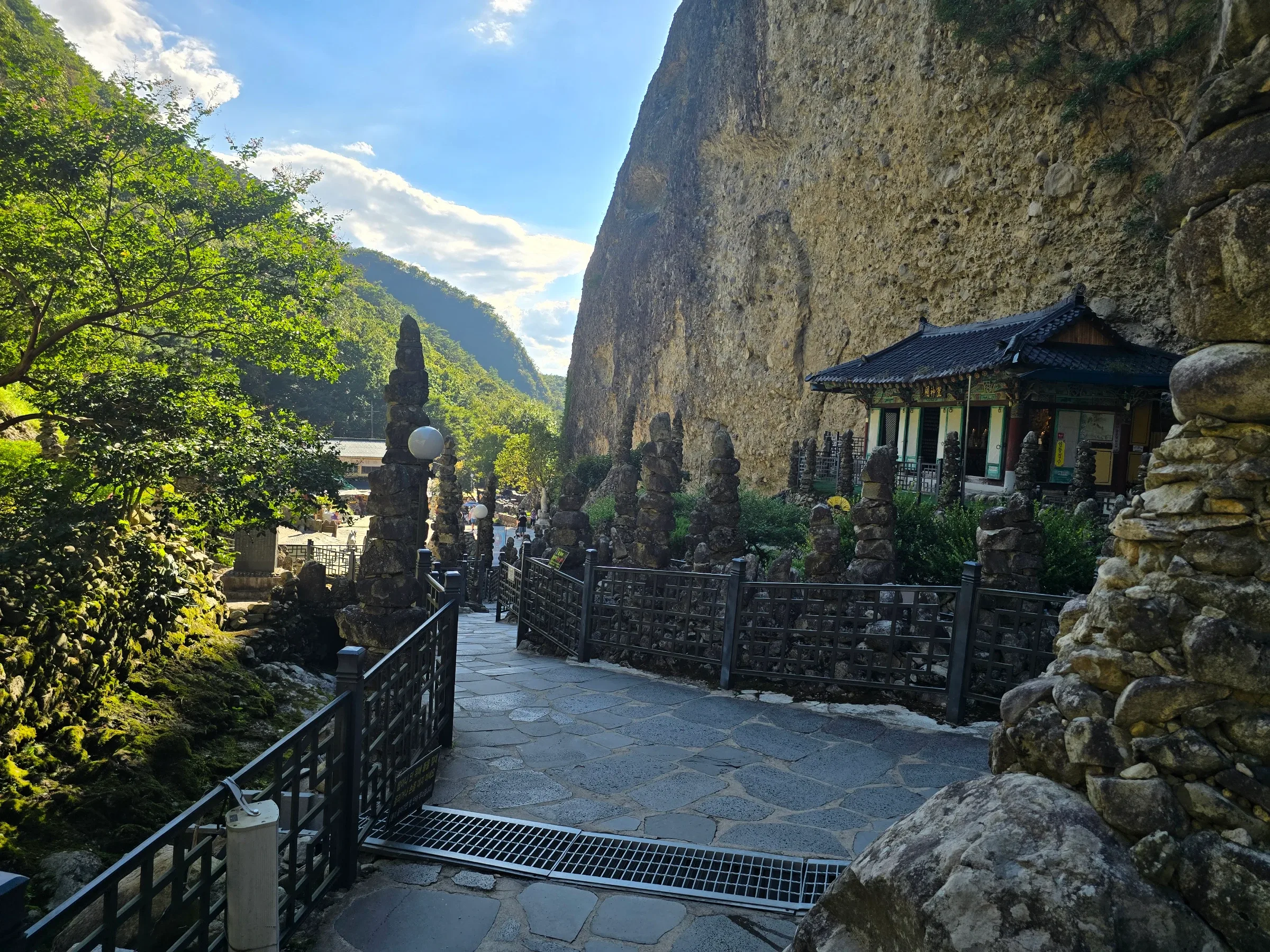
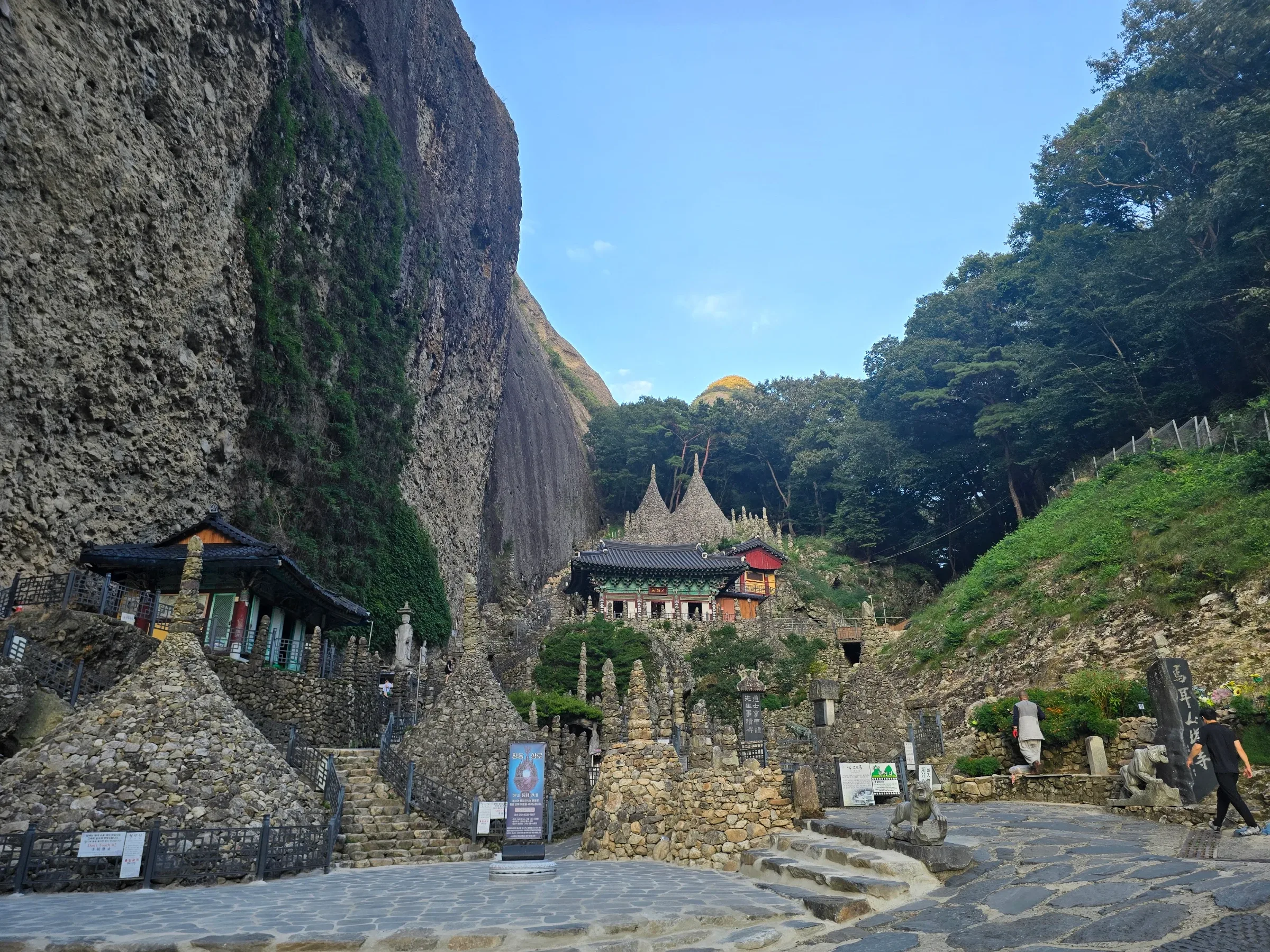
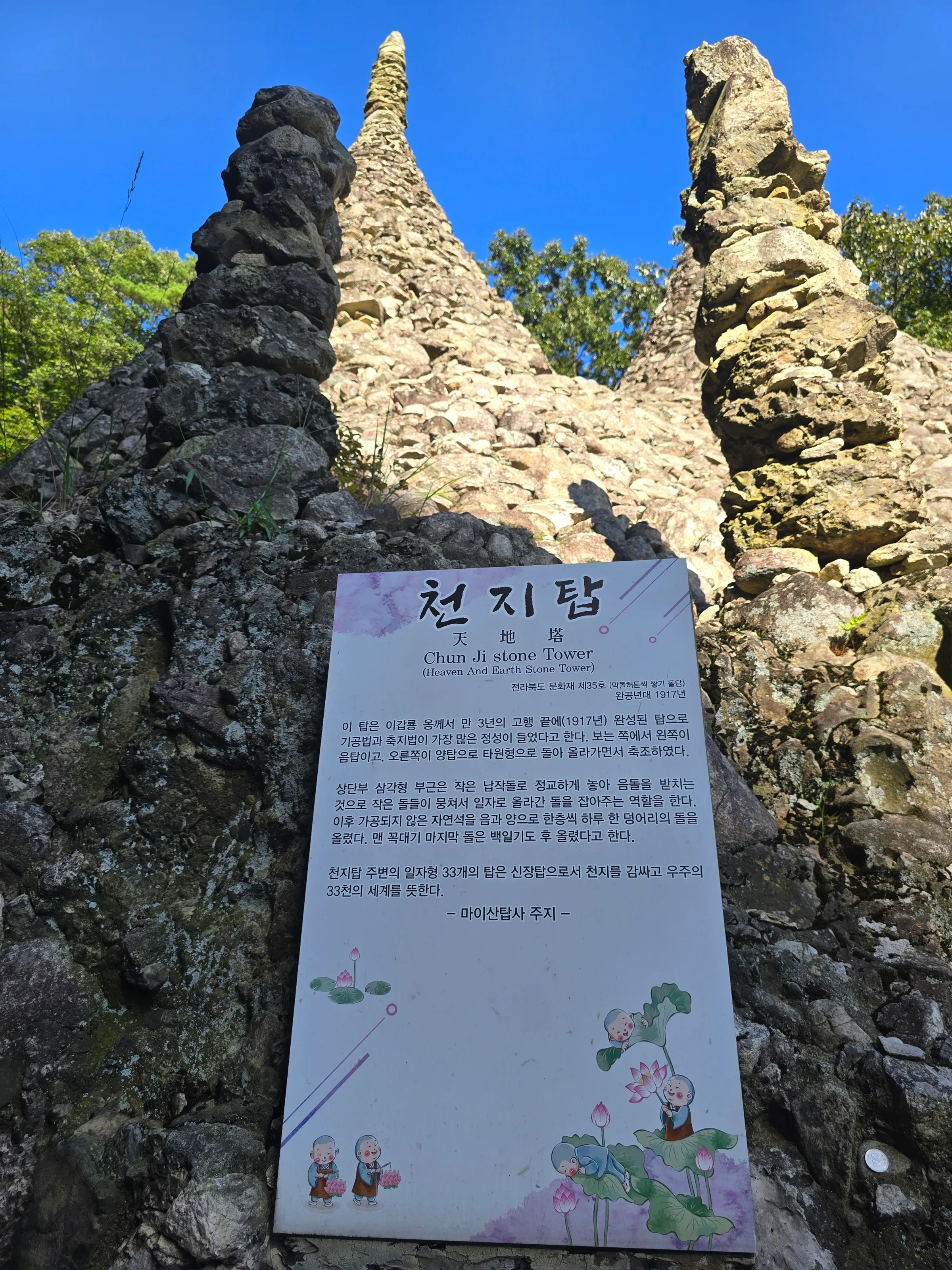
Then I followed the stone path along the railing, with slim towers lined up thickly beside it. Some stood in rows on both sides, with little stone animals out front. The sign at Cheonjitap gives its completion year as 1917, lists it as Jeonbuk Cultural Property No. 35, and says the 33 towers around it stand for the world of 33 heavens. I kept checking, politely, whether it would fall.
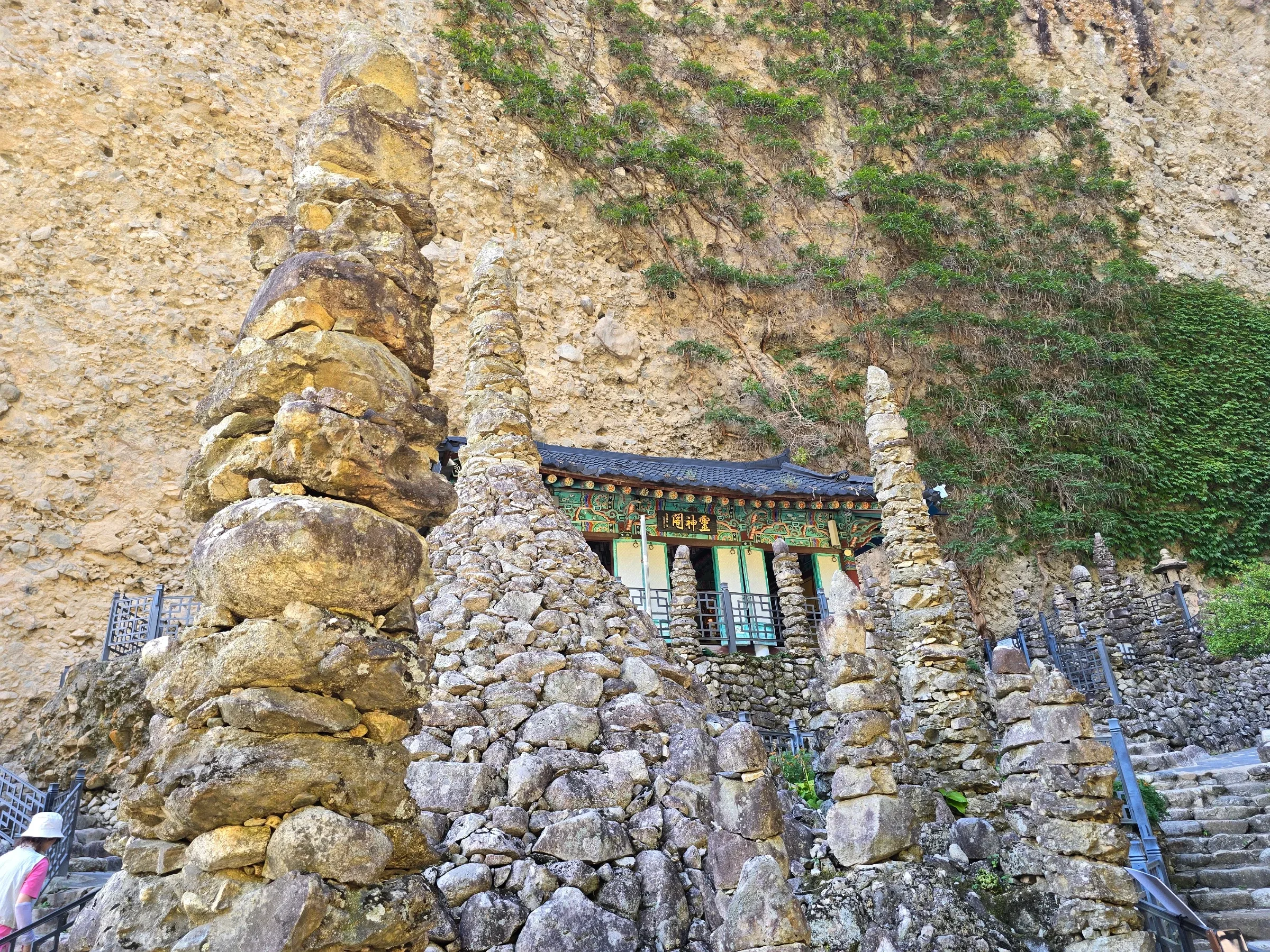
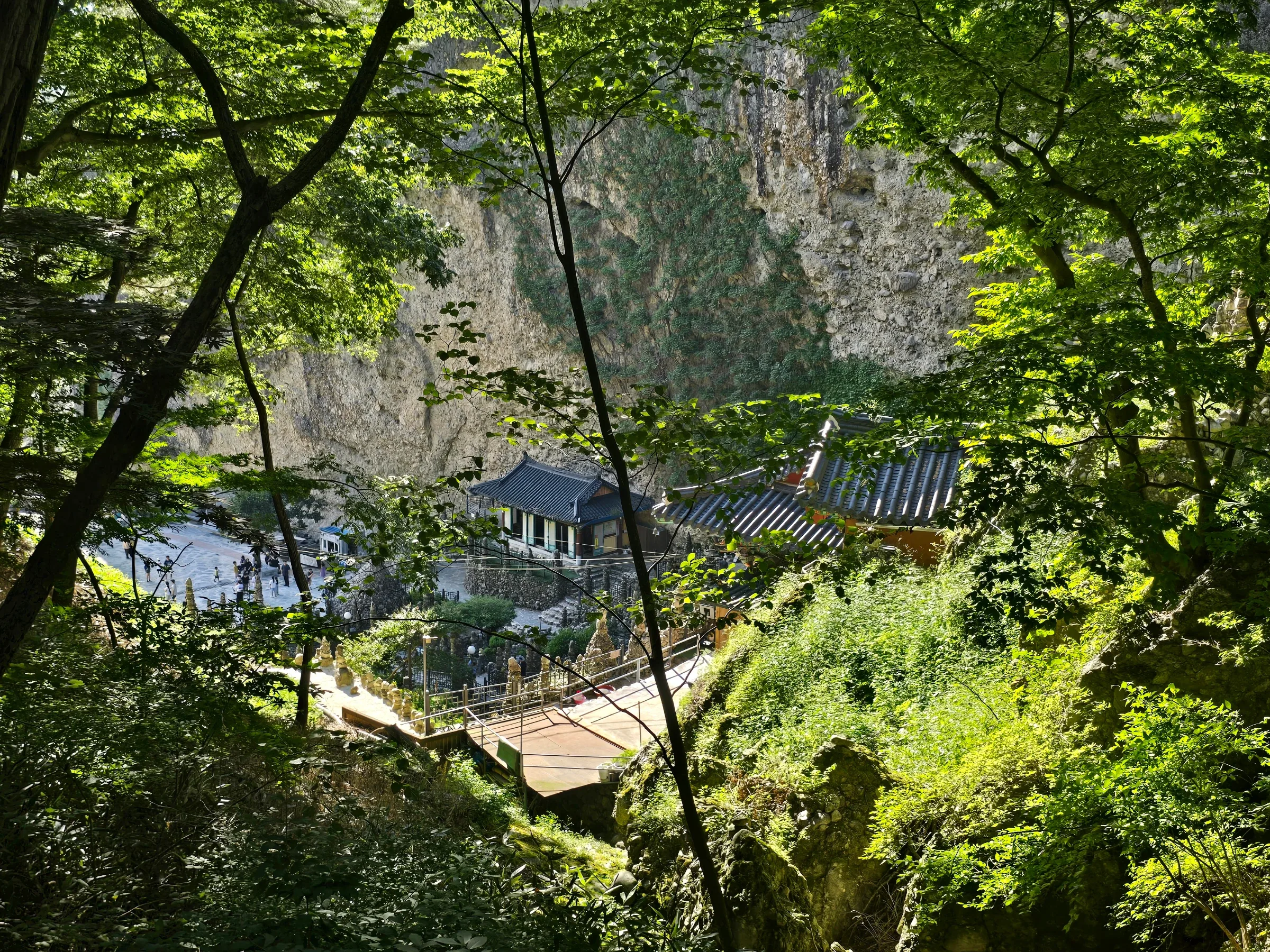
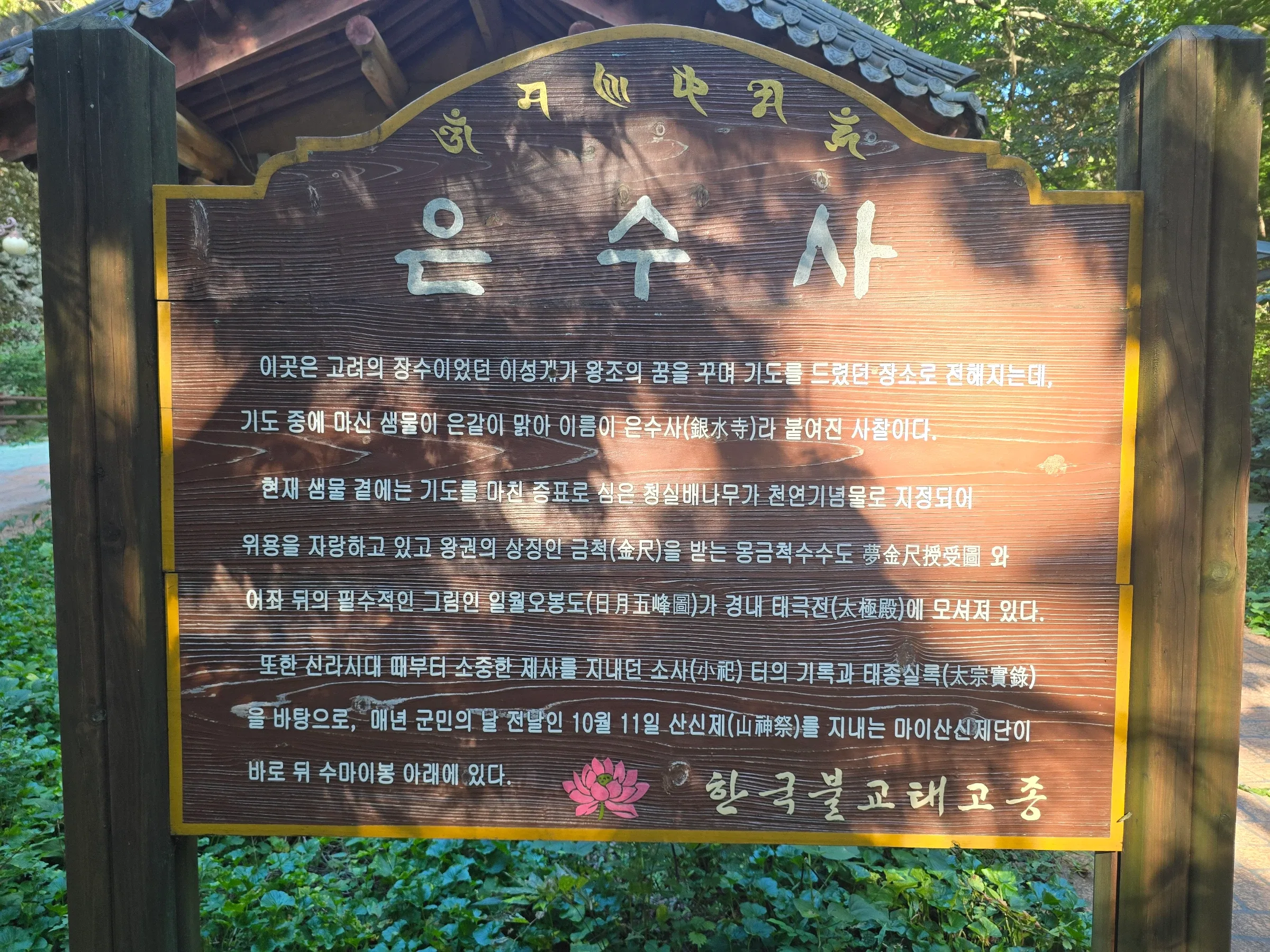
Further in is Eunsusa. A wooden sign says it is where the Goryeo general Yi Seong-gye prayed, dreaming of a dynasty. The spring water he drank was as clear as silver, hence the name. Climbing the steps, a round rock peak rose right behind the roof and loomed overhead.
Is the Amma-ibong climb worth it?
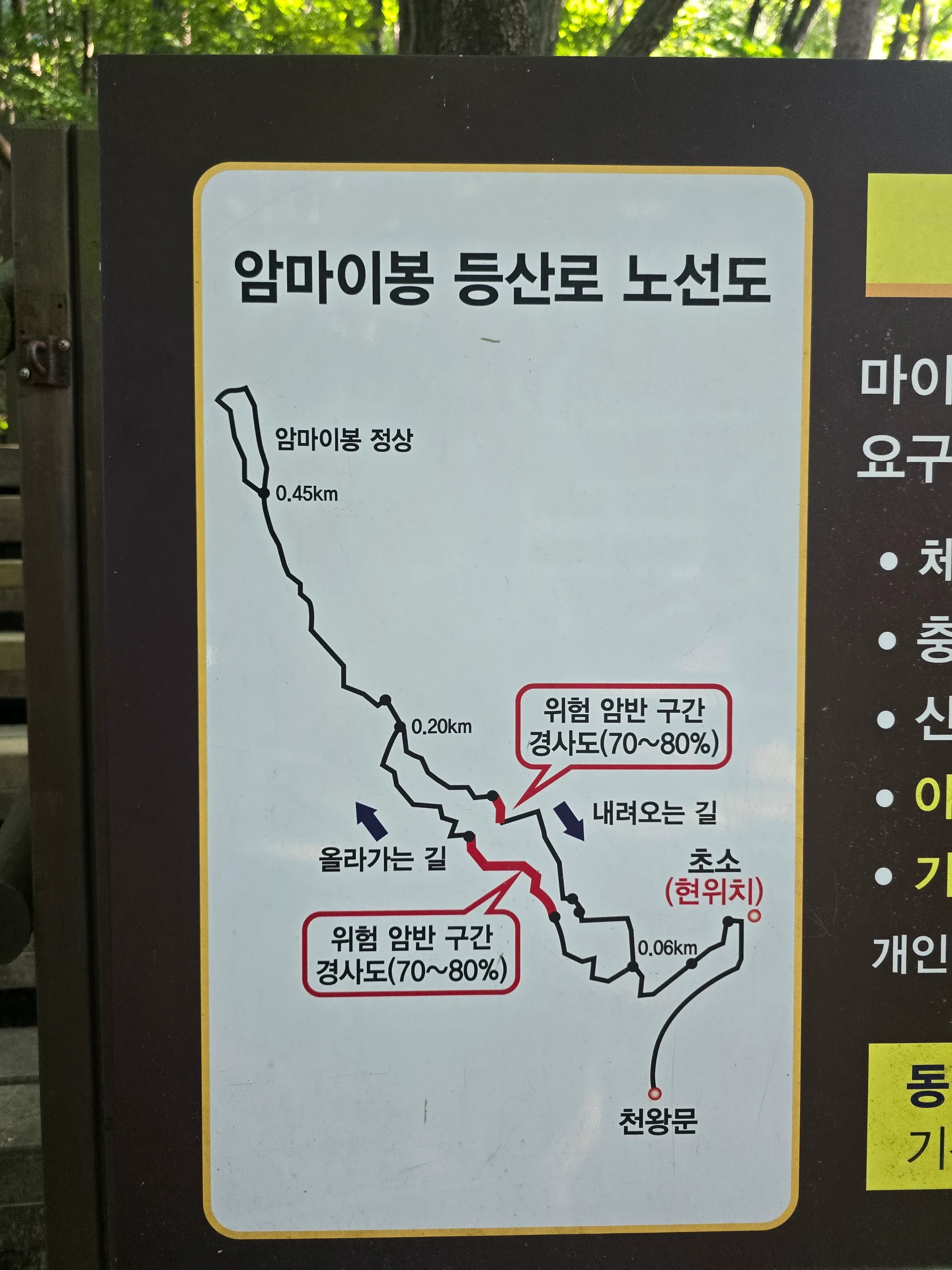
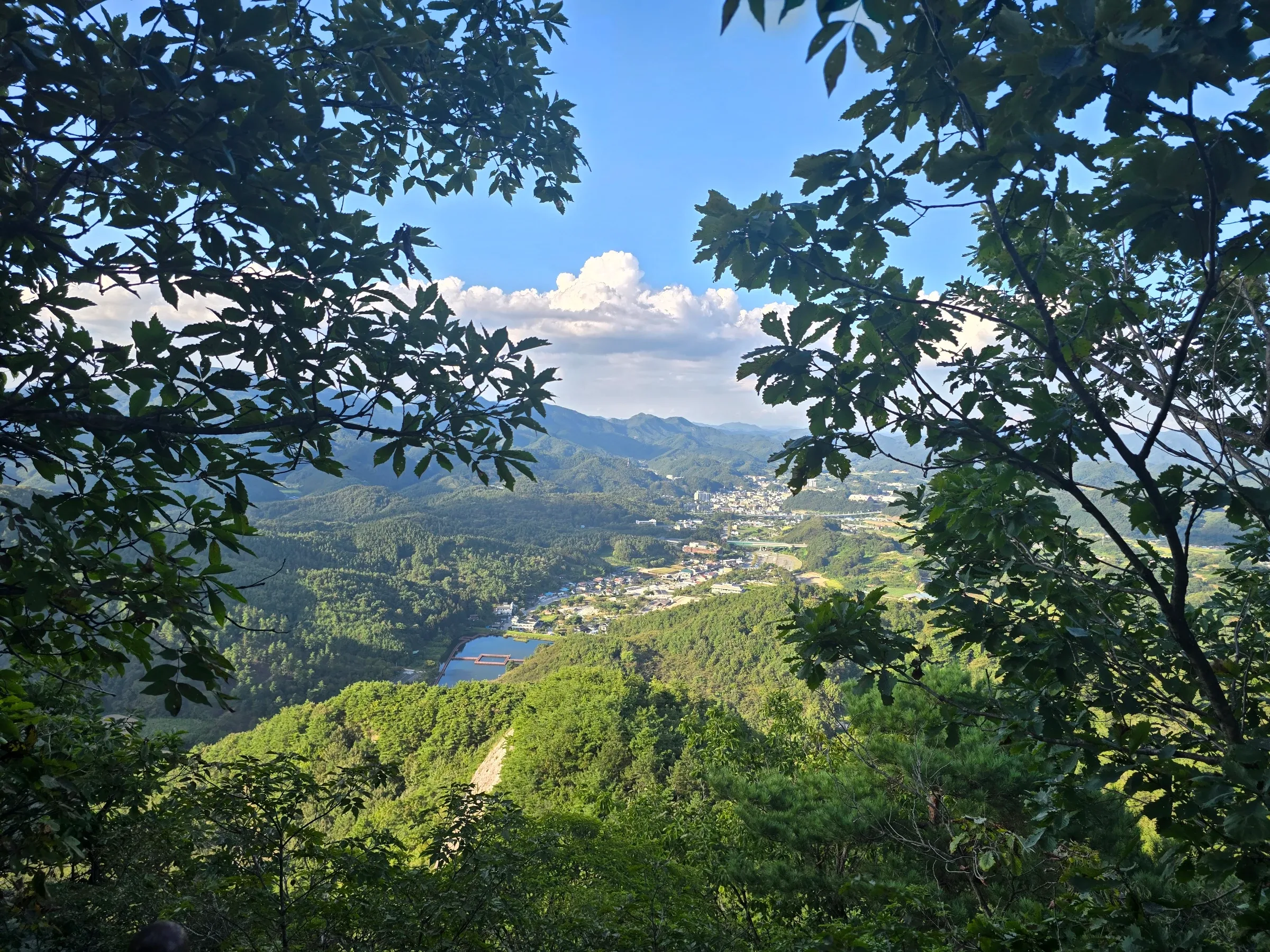
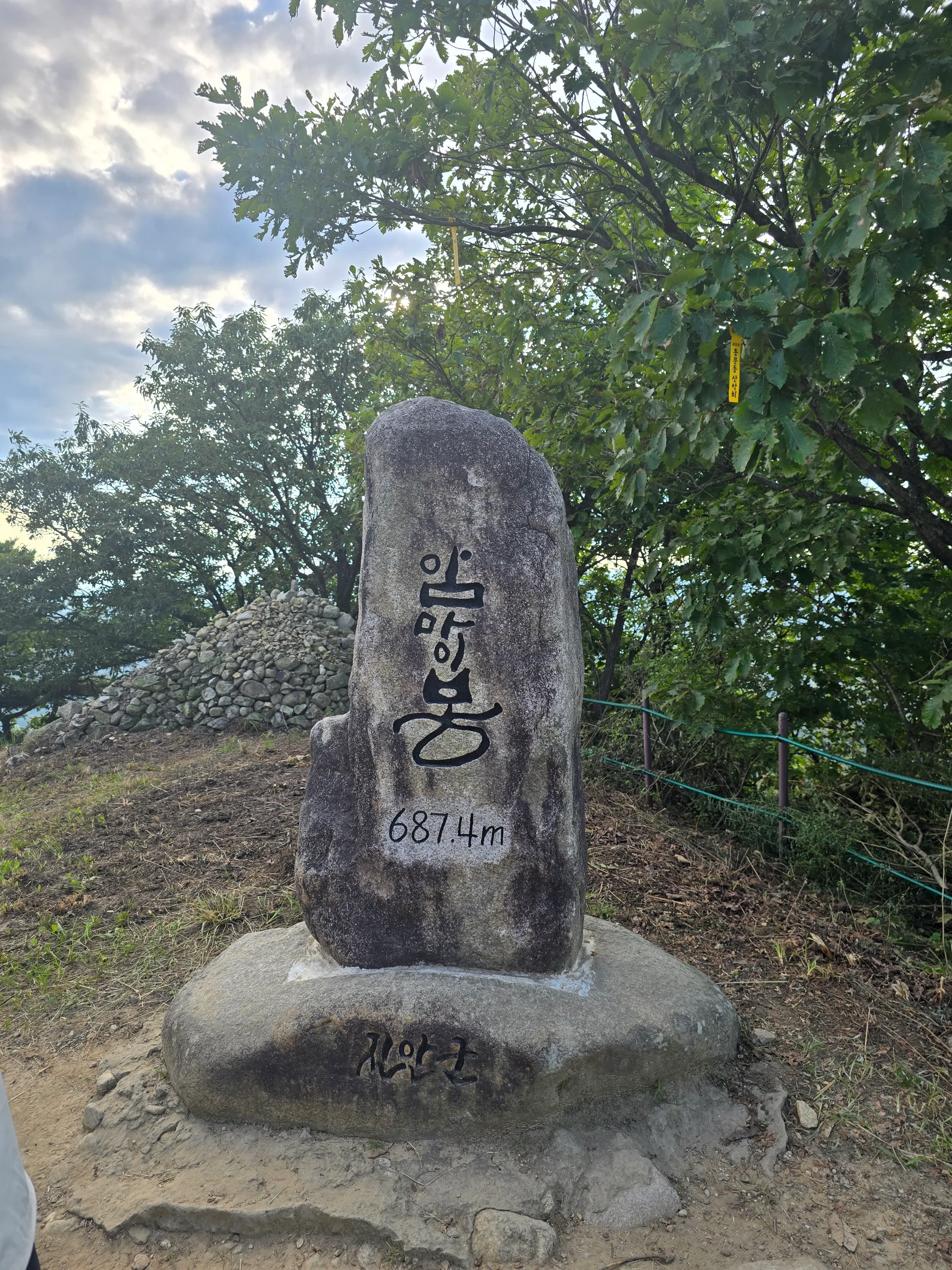
Near the temple is a trail marker for Amma-ibong. It says 0.45 km to the summit, with two red-marked steep rock sections at a slope of 70 to 80 percent. Short, but steep, so brace yourself. Through the leaves you see a village, water, and ridge after ridge of mountains, and the summit stone reads 687.4 m. I found the view paid for the effort.
When should you go, and is it crowded?
Cherry blossoms here are the latest in the country, thanks to the Jinan highland climate. A 2.5 km blossom road runs from Isanmyo to Tapsa, and on peak weekends tens of thousands come. Most comments call the place uncrowded, a few say crowded. My pick for peace is a regular day.
What else is nearby?
Tapyeongje pond reflects the peaks on still water. For a meal, Maisan Jayeon Bapsang is near. It is open 11:00 to 19:30 (a prep break 15:00 to 17:00 on weekdays) and known for duck bulgogi and black pork ssambap. I didn't eat there.
What I could not do
I didn't visit in blossom season. Skip the summit if your knees complain, as those rock sections are steep.
Who is this trip for?
It suits a day trip with a parent or friend who likes walking and photos, with the blossom road or a meal after. If you can't do stairs, the lower valley is still worth seeing.
I went with my wife, and my first impression was of amazing scenery where Maisan and the stone towers blend together. What stayed with me most was that mysterious view, which made me feel the greatness of nature all over again. I'd like to go again, either on a rainy day or in the autumn foliage season. I'd recommend it to families.
Comments
No comments yet.