
$100 US in Korean Won: What You Get at the Mid-Market Rate
 AI-generated image
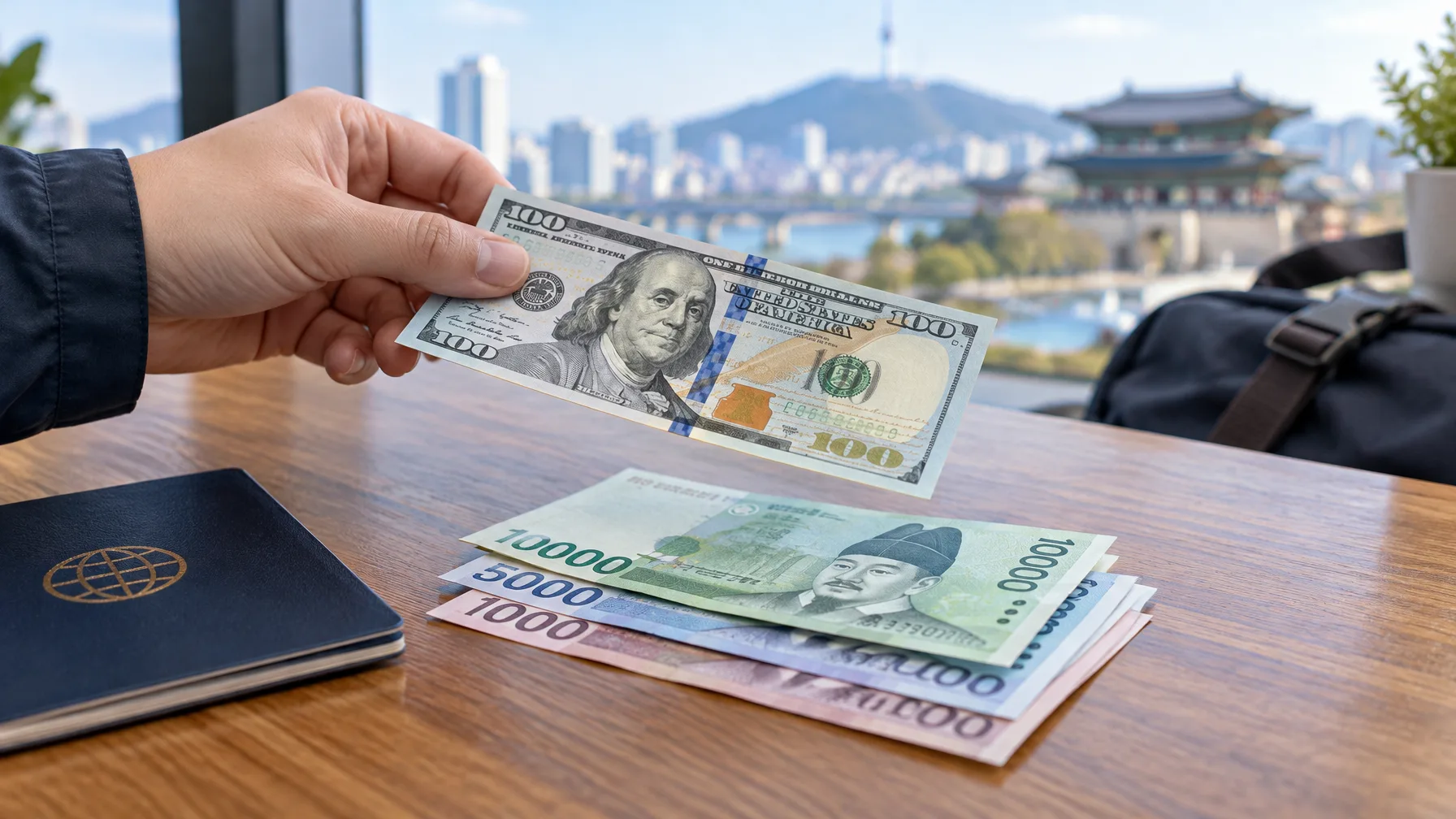
$100 comes to about ₩132,568 at the mid-market rate
 AI-generated image
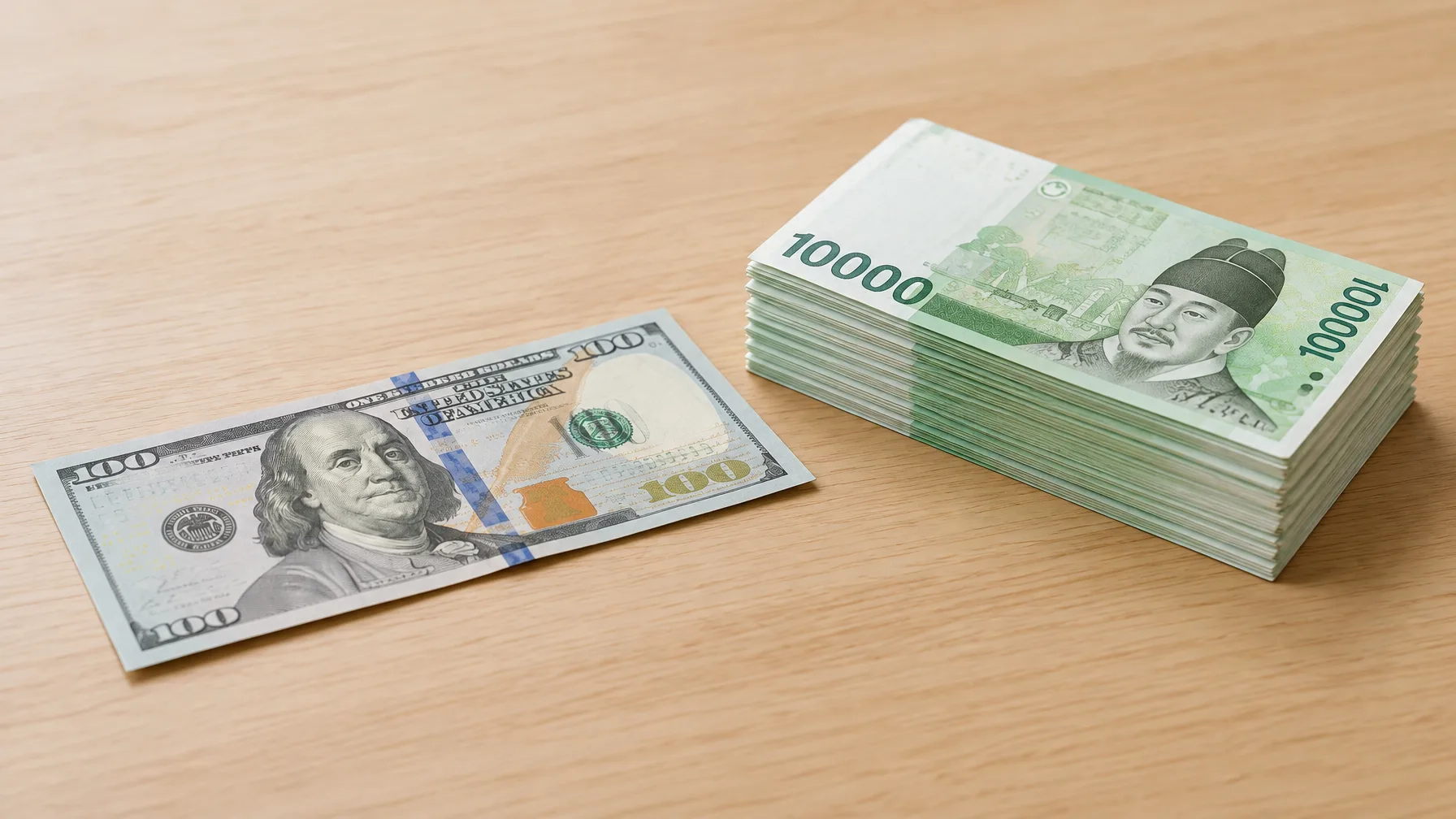
At the mid-market rate of ₩1,325.68 per US dollar, $100 converts to Korean won (KRW, symbol ₩). That is a reference rate, so the cash you actually get from an exchange will differ. If you have been wondering how much $100 US is in Korean money, the figure in the heading is your starting number. The sections below cover what moves it and why your real payout lands somewhere else.
Think of the mid-market rate as the number currency converters show you. It is there for information. That gap is what most of this article is about.
Korea's money is the won, and its symbol is ₩
 AI-generated image
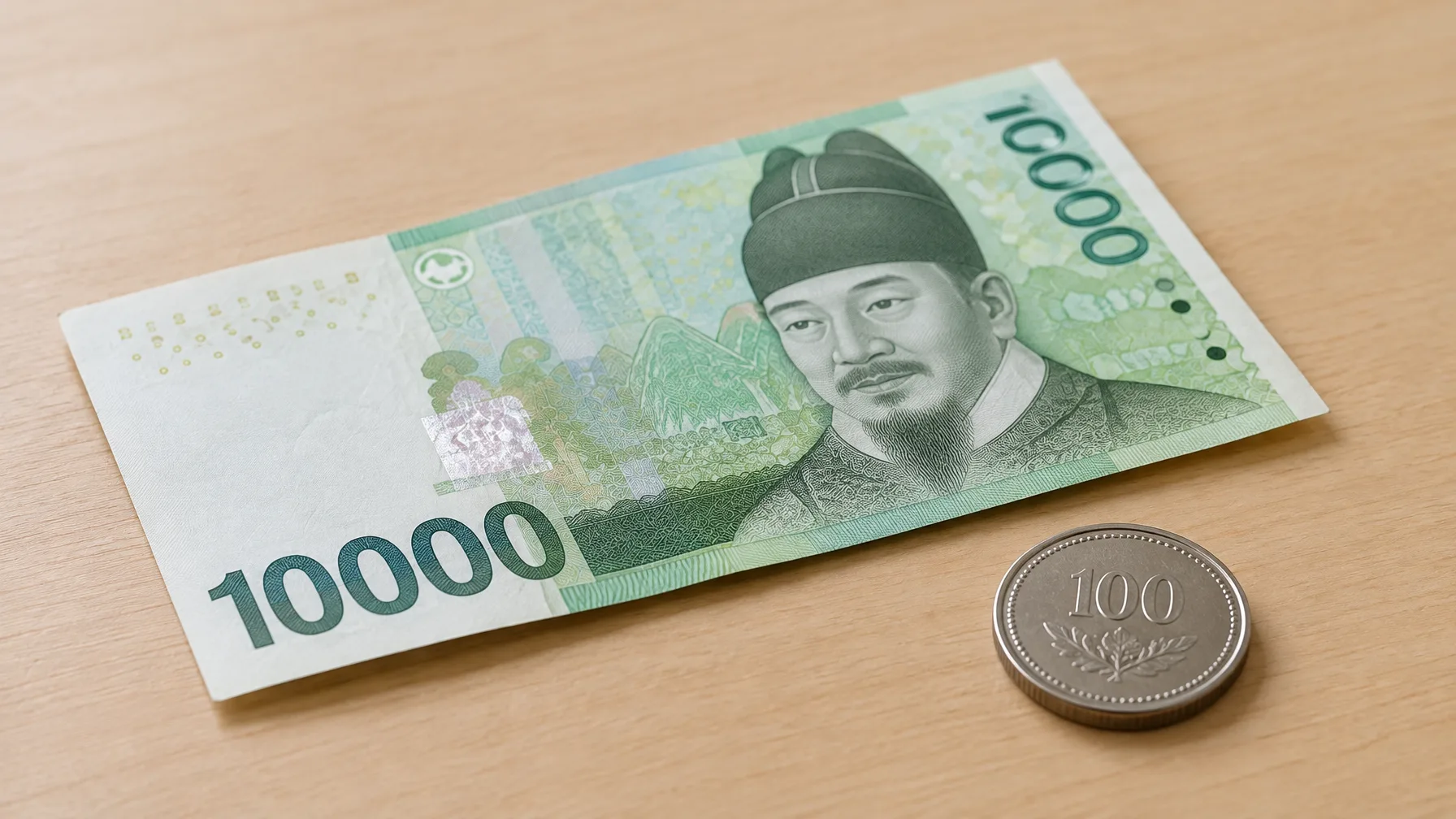
The Korean currency is the South Korean won. Its code is KRW and its symbol is ₩, so any price tag or exchange board you see will use one of those two marks.
Dollars show up in Korean sentences too. In one textbook-style example, a $20 amount is written with the Korean word for dollar plus a grammar particle, romanized as isip dalleoreul. For the bills and coins themselves, see our guide to the Korean currency name and its bills.
How much is $1 US in Korean money? The per-dollar rate does the work
 AI-generated image
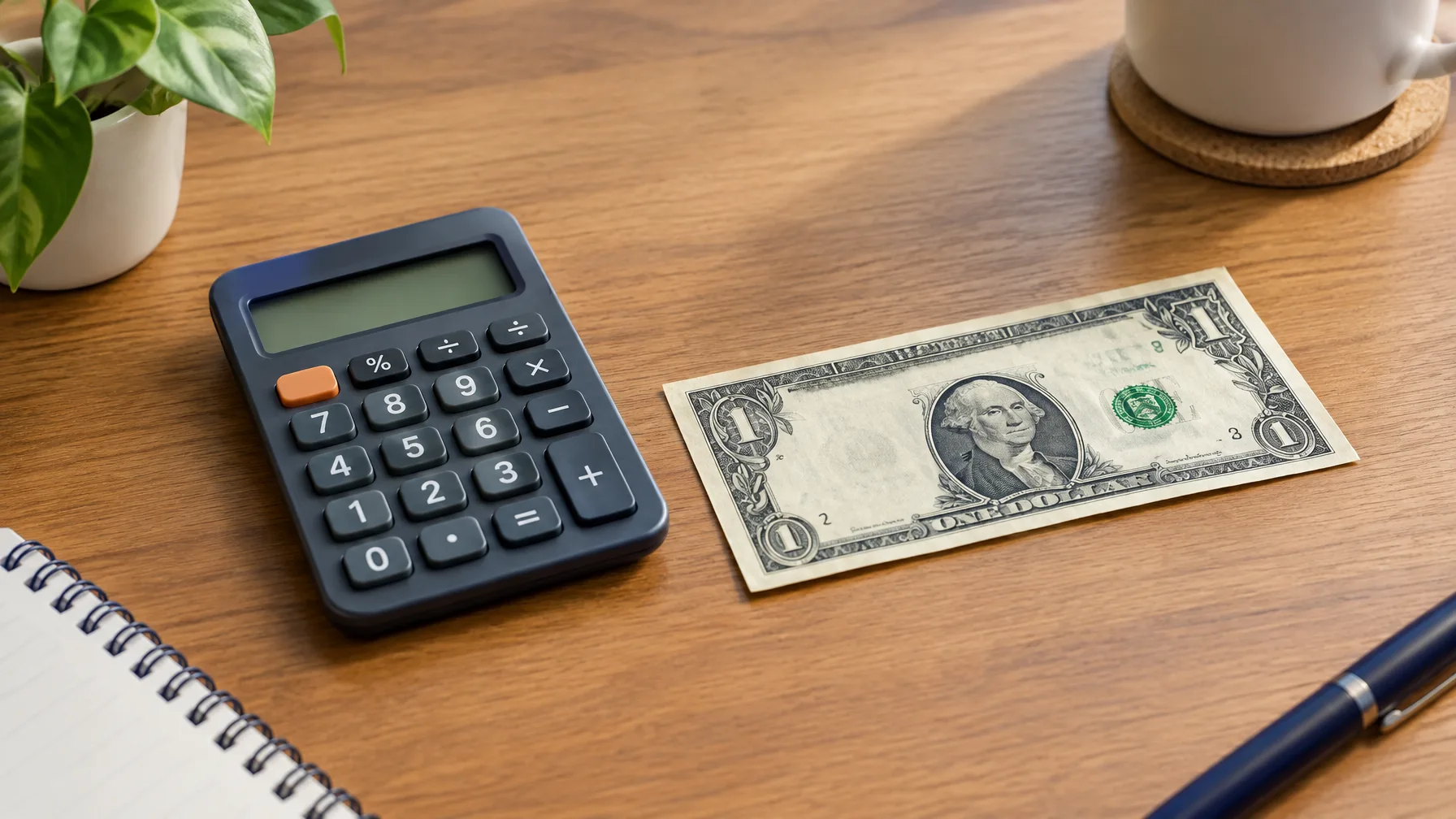
The per-dollar rate from the opening paragraph was captured at 05:32 UTC. Treat it as a snapshot of that moment, not a fixed price. One dollar is simply that rate, and every other amount is the same number multiplied.
That makes small checks easy. Whether it is $100 USD to KRW or any other amount, you multiply the dollars by the rate. Going the other way, converting Korean Won to USD means dividing by the rate. Any US dollar to Won figure from a dollar to Won calculator works exactly like this.
Over a month, the answer for $100 slides within a band
Over the last 30 days, the dollar's low against the won was 1,324.50, its high was 1,369.51, and its average was 1,344.0237. Running $100 through each of those shows how far the answer moves in a month.
| Rate point | Won per dollar | What $100 becomes |
|---|---|---|
| Today's mid-market rate | ₩1,325.68 | ₩132,568.47 |
Zooming in on the past week shows less movement. Over the latest seven days the rate ranged from 1,324.77 to 1,341.16 and averaged 1,333.25. A calm week can still be followed by a choppy one.
There is a reason not to lean too hard on today's math. Markets read capital outflows and repeated intervention as a sign the won could stay weak. Korea's central bank has pointed to larger swings in financial and currency markets. Either way, the figure you calculate today can change soon.
Cash from a currency exchange lands below the reference figure
Banks and other providers set their own exchange rates, and that can cost you more than the reference rate suggests. Fees and hidden costs shrink the payout further. The simple conversion is a ceiling for what you should expect, not a promise.
Comparison tools have limits too. Their results may not show your real savings and shift with the amount, the currency, and the date, so treat them as a guide. Several of these sites also sell transfer or account services, so their pages are not neutral.
- Note the mid-market rate for the day you exchange.
- Ask which rate the provider will use for dollars to won.
- Ask what fees apply on top of that rate.
- Divide the won you would receive by your dollars to see your real rate.
- Compare that real rate with the mid-market figure before you hand over cash.
Dollars are not widely accepted in Korea, and paying in them costs more
It is easy to assume a hundred-dollar bill spends like a hundred dollars anywhere. In Korea it does not. Dollars are not widely accepted, and paying with them gets you a worse exchange rate than the reference rate.
There is also a risk of being shortchanged when a seller makes change in won for a dollar payment. Swapping your dollars into won first keeps the math in your own hands.
More reading on Korean prices and money
If you are budgeting a whole trip, start with South Korea travel costs explained. It walks through flights, lodging, food, and transport. And if you are wondering about extra cash at dinner, see tipping in Korean restaurants.
What your $100 really means in won
So $100 is only a starting point, not a payout. The cash you actually receive can be lower once an exchange service's own rate and fees apply. Paying in dollars in Korea usually gets you a worse rate still, and dollars are not widely accepted there. The mid-market rate behind the conversion is for reference only, so the amount you actually get will differ from it.
Comments
No comments yet.