
Tipping Korea Restaurants: Skip It and Say Thanks Instead
 AI-generated image
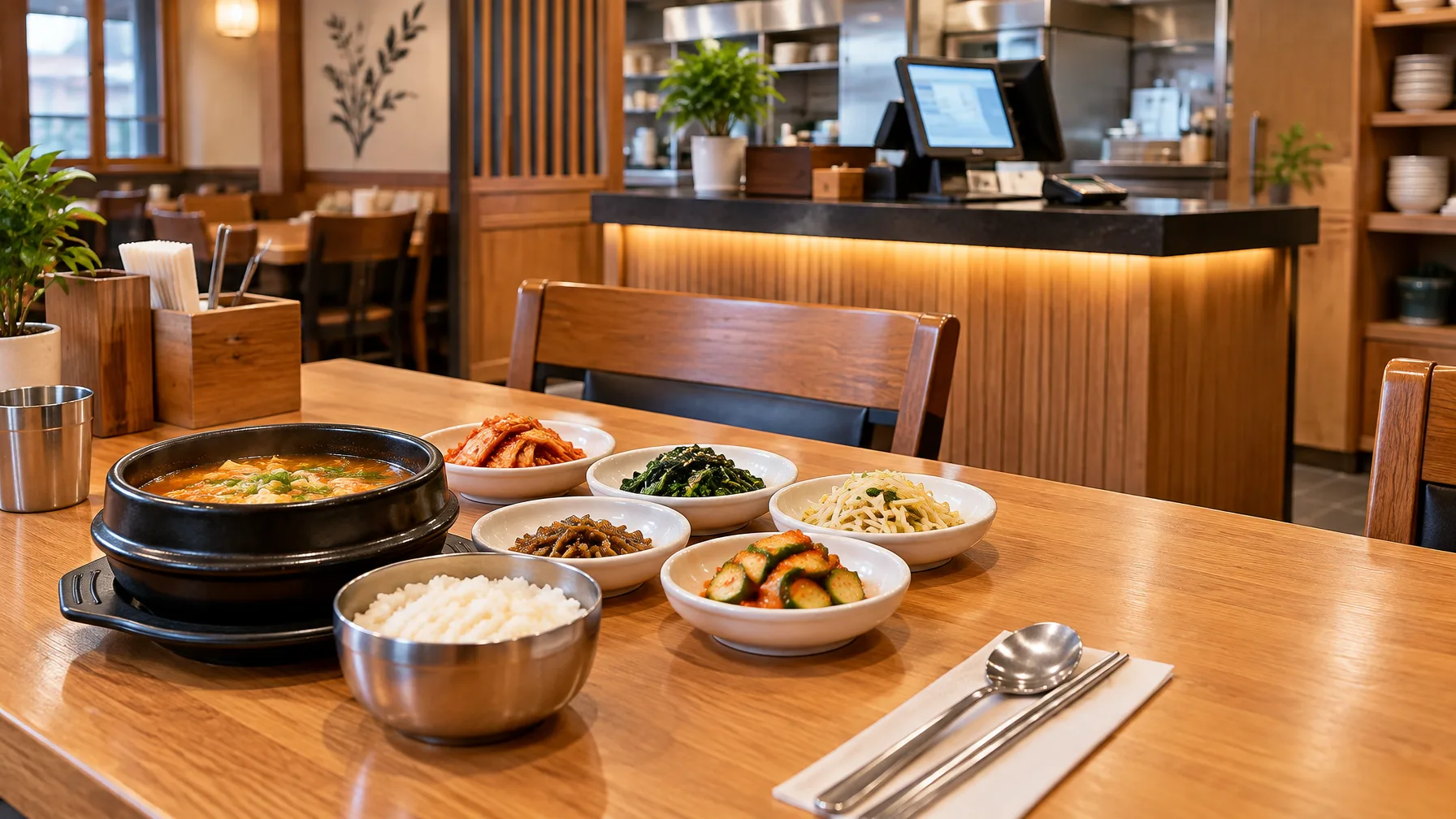
Tipping Korea restaurants comes down to one rule: don't tip, from street-food stalls to fine dining. The menu price is what you pay. The few upscale restaurants and hotels that add a service charge (about 10%) put it on the bill, so nothing extra is due. A warm thank-you on the way out does the job.
Pay the menu price, from street stalls to fine dining
 AI-generated image
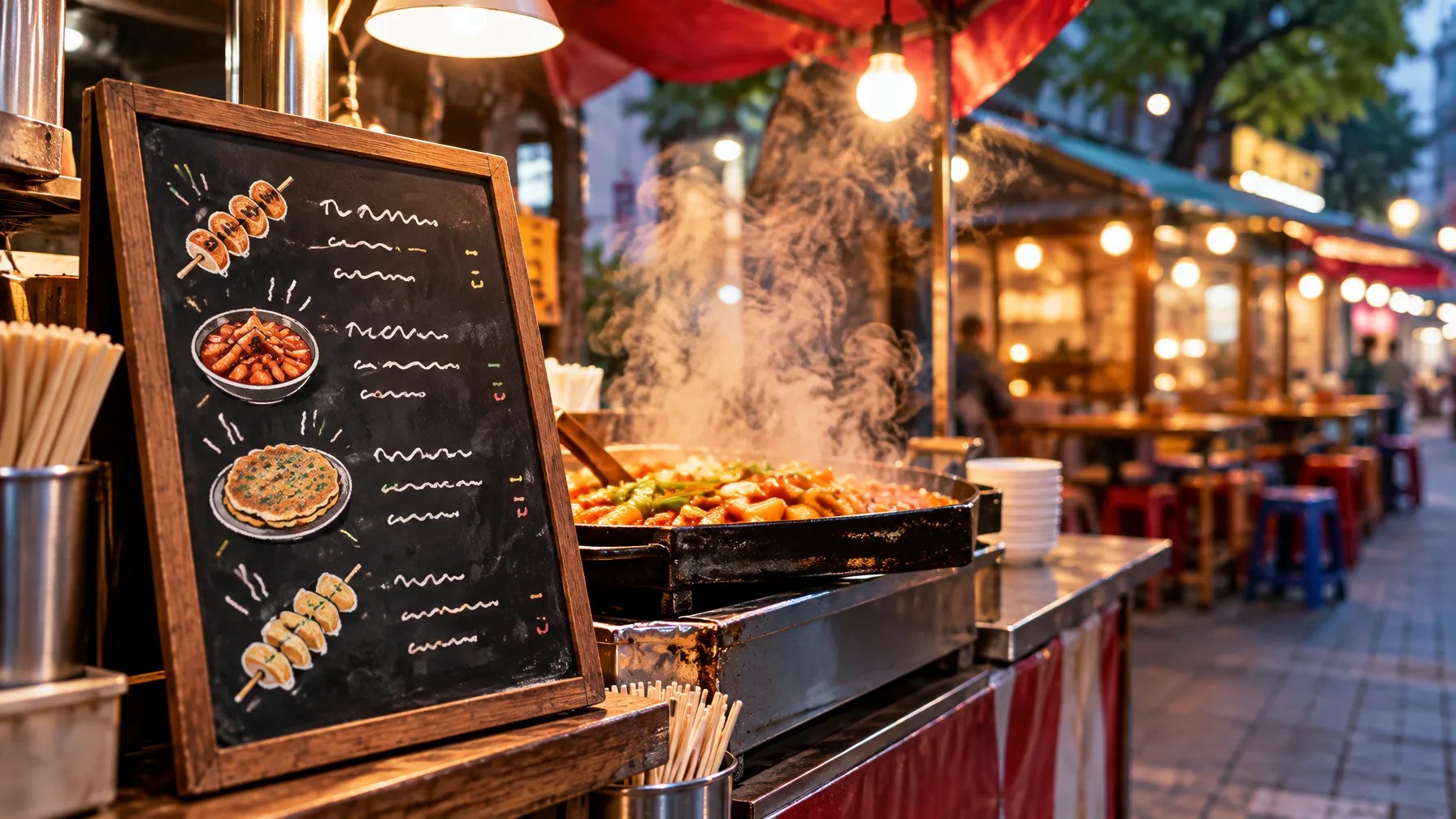
This holds for cafés and bars too. Tipping isn't a common practice in Korea, and in most places it isn't expected at all. Most Korean restaurants don't add a service charge to the bill automatically.
Staff earn a fixed wage, so a tip has no job to do
 AI-generated image
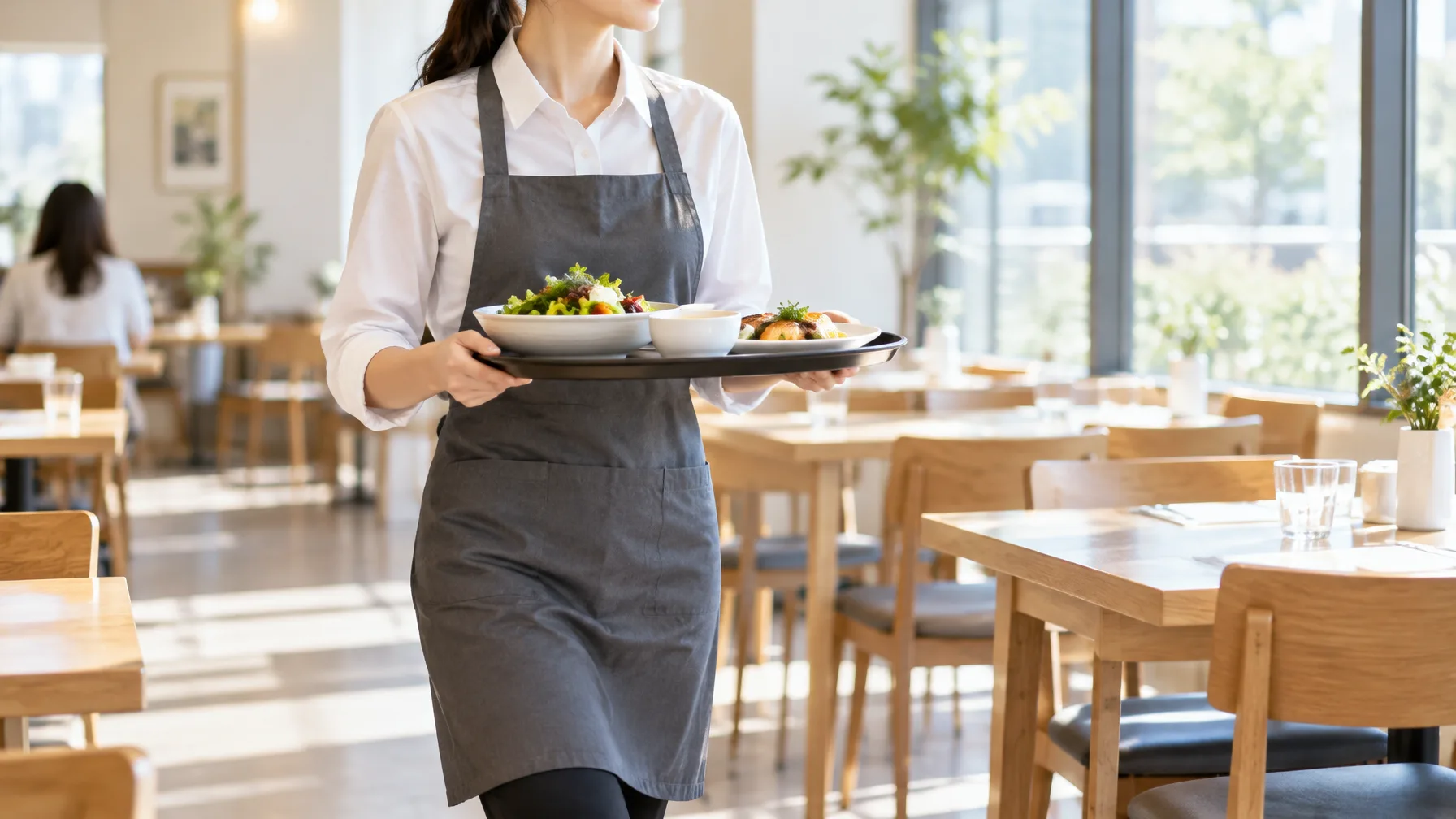
The reason lies in how the work is paid. Service staff in Korea earn a fixed wage from their employer, guaranteed at the legal minimum, so nothing in the system depends on tips.
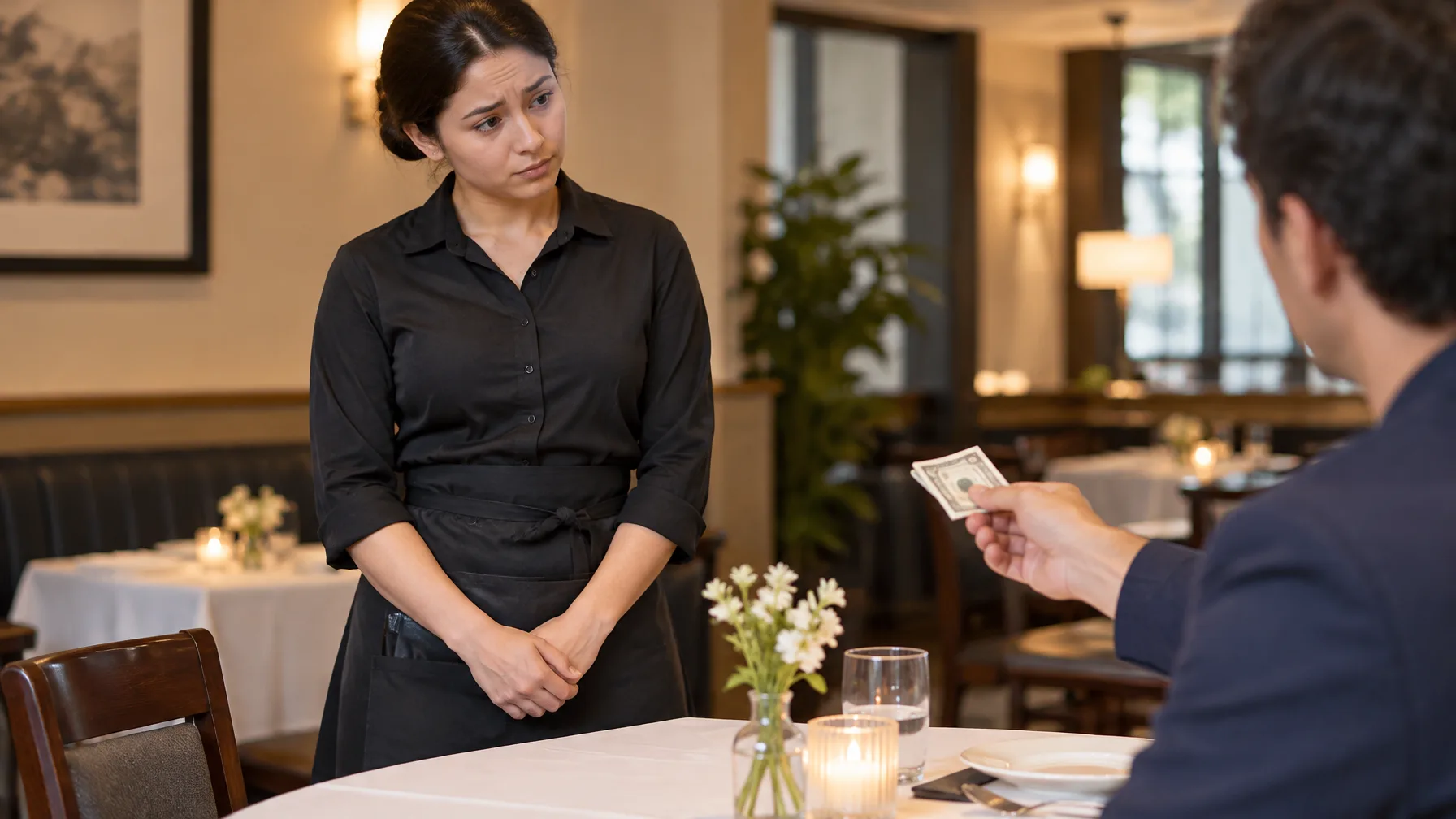
Good service is also treated as part of the job, and many customers simply expect it as the default. That is why people ask why tipping is rude in Korea, and the answer is mostly mismatch. Tipping can get a frown in restaurants and bars. A server handed extra money may look puzzled and try to give it back.
A tip of any size can land as awkward instead of generous
 AI-generated image
Is a 10% tip disrespectful? Not exactly an insult, but it isn't received the way you might hope. A tip of 5–10% would be considered generous, and the right moment for one almost never comes up. Pressing the point can look rude. Even when you mean to reward someone, they may refuse the money or feel very embarrassed.
There's one case where a tip can truly offend. Giving money to an elder or a respected person, such as the restaurant's owner, can offend. It can read as treating them like a servant instead of a professional.
Reading a service line on the bill
Some upscale restaurants, hotels and tourist-oriented places add a service charge, called bongsaryo, to the bill. When the bill arrives, glance for that line. If it's there, you've already paid for service and no additional tip is needed.
A spoken thank-you beats cash
When you leave, politely thank your server. A light nod works too, and spoken gratitude is often more welcome than money.
If you're unsure whether a tip is appropriate, skip it. The exception is a service aimed at tourists. Even then, a kind word costs nothing and lands well.
If you still want to tip, use an envelope and keep it quiet
A voluntary tip isn't illegal, and handing one straight to a staff member is allowed. Just do it the Korean way. Use local currency, and put the cash in a small envelope, which you can find at convenience stores and stationery shops. Hand it over with both hands, quietly and discreetly. Doing it openly in front of other people can read as rude.
Now and then, regulars at upscale restaurants tip staff they know well to say thanks personally. Visitors shouldn't take that as a model; it's an exception. Need notes in won? See Korean currency name: the won (₩, KRW) and its bills.
Take the bill to the counter, not the table
Paying usually happens at the counter, not at the table. That's one more reason leaving cash behind backfires. Extra money left on the table often leaves staff flustered. A tourist who hands money over on the way out may see it returned.
When you're done eating, follow this short flow:
- Check whether a service charge is already on the bill.
- Carry the bill to the counter and pay there, not at the table.
- Pay the amount on the bill and leave nothing extra behind.
- Say thanks to the staff on your way out.
- Only if you insist on tipping: cash in won, in a small envelope, handed over quietly with both hands.
Home habits that backfire, and the gray areas
| Habit from home | How it lands in Korea | Better move |
|---|---|---|
| Leaving cash on the table | Staff are often flustered and may hand it back | Pay at the counter |
| Tipping on top of a service charge already on the bill | Nothing extra is due | Check the bill first |
| Handing money to the owner in front of others | Can read as rude, as if the owner were a servant | Say thanks instead |
| Treating a tip jar as a rule | A gray area: implied, not required | Skip it unless the place clearly follows Western norms |
Tip jars and kiosk add-ons are where the rule gets blurry. Small jars labeled "free tip" sit by some registers. They aren't banned, but they make a tip feel expected. A growing number of places test tip boxes and extra kiosk options, yet many customers dislike them.
Skip the tip, keep the thanks
Skip the tip at Korean restaurants and pay the listed price. At an upscale place, a service charge of about 10% already covers service. Pay at the counter and say thanks on your way out.
Comments
No comments yet.