
Korean currency name: the won (₩, KRW) and its bills
 AI-generated image
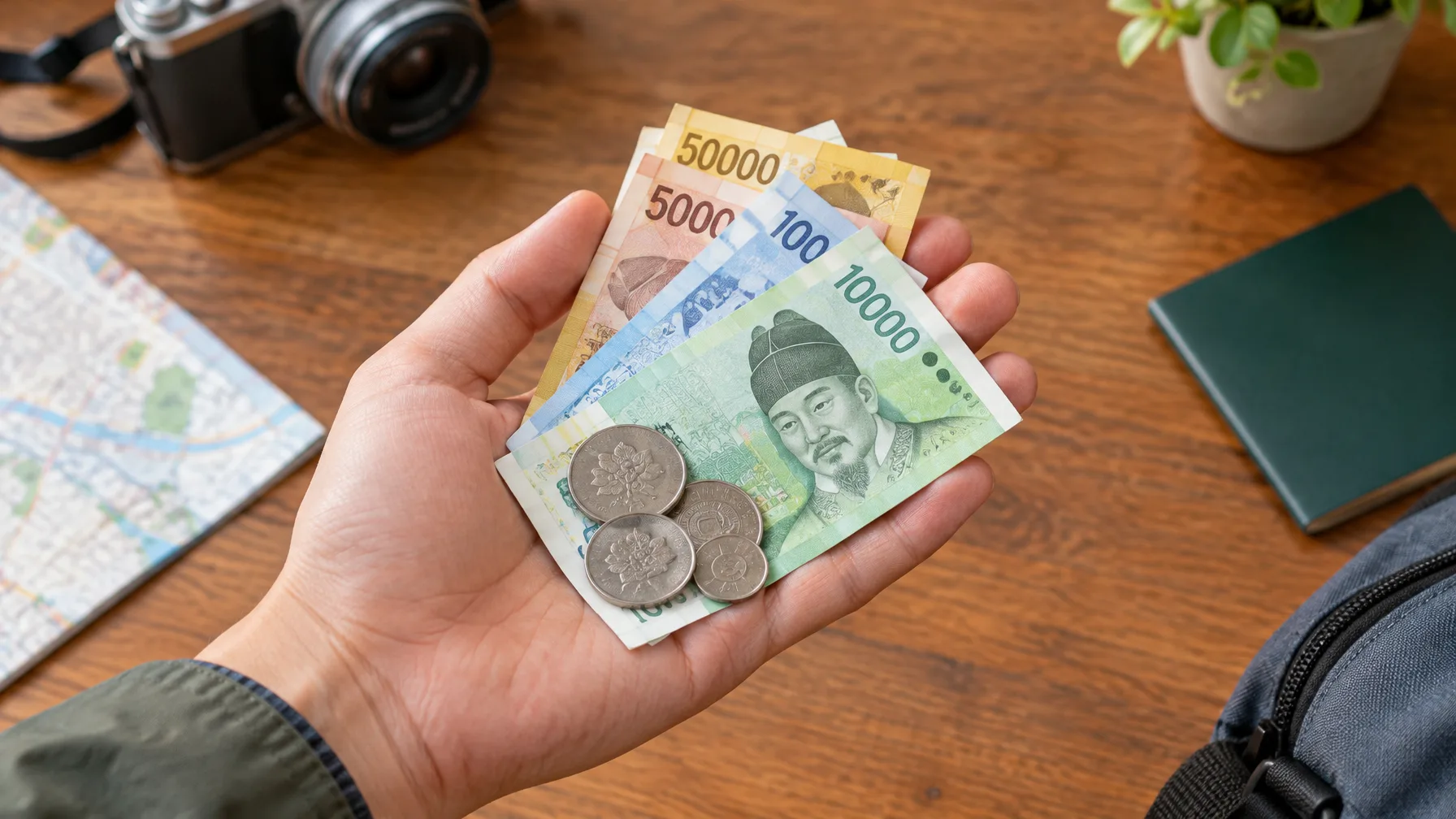
The Korean currency is the won, written ₩ and coded KRW. The Bank of Korea issues it, and its bills run from 1,000 to 50,000 won. This page gathers the name, symbol, code, bills and coins in one place, so you can read a price tag before you ever land. It also flags the coins you can ignore and the other "won" that is not this one.
South Korea's money is the won: ₩ on tags, KRW on screens, bills from 1,000 to 50,000
 AI-generated image
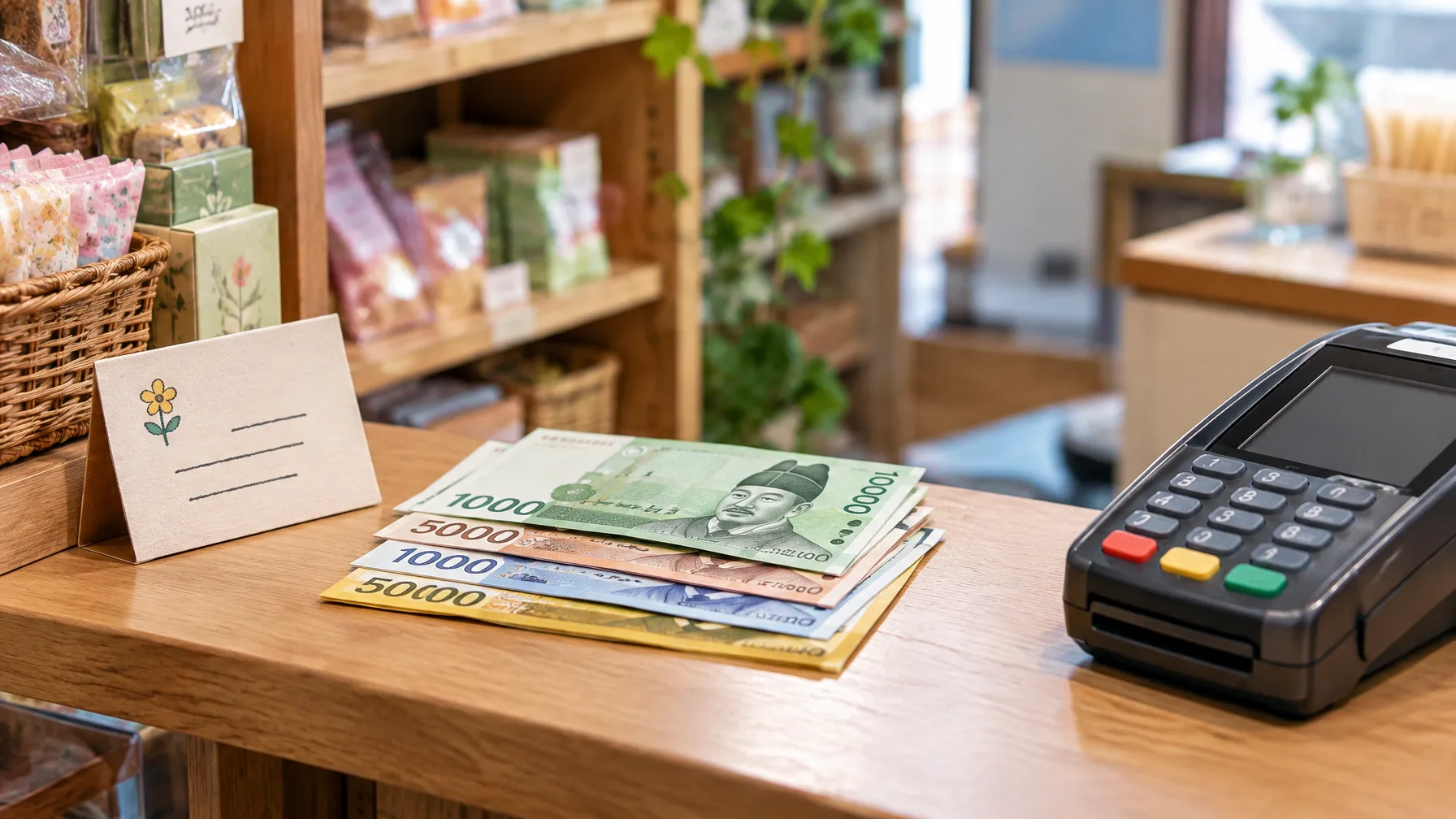
The full official name is the South Korean won, sometimes called the Republic of Korea won. In Korean script it is 원. ₩ is what you will see on price tags, while KRW is what banks, exchange boards and currency apps use.
The won is a fiat currency, like the dollar. The Bank of Korea is headquartered in Seoul. Here is the list of South Korean currency names in brief.
| Item | What to know |
|---|---|
| Name | South Korean won (원) |
| Symbol | ₩ |
| Code | KRW |
| Issuer | Bank of Korea, Seoul |
| Type | Fiat currency |
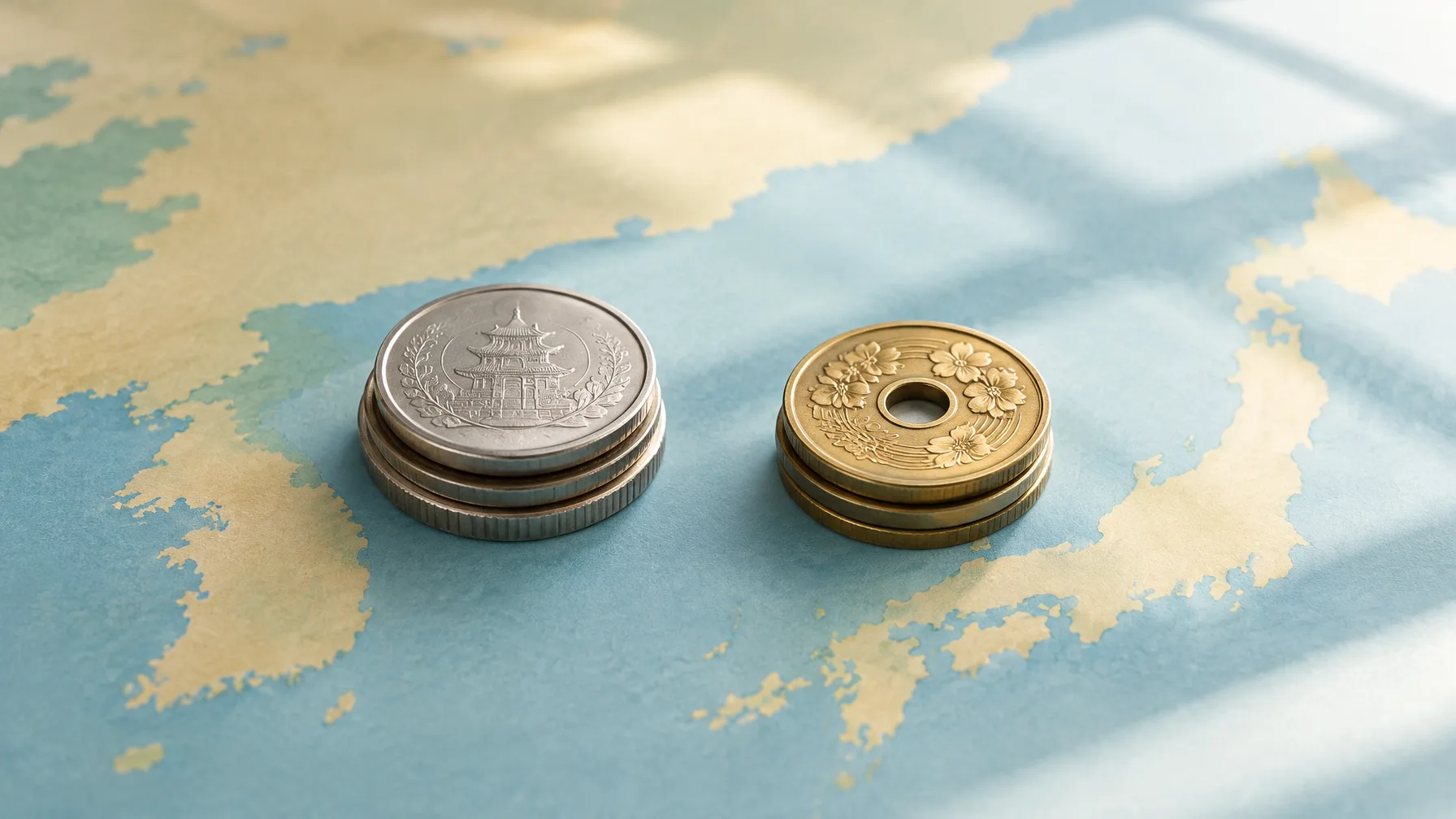
Koreans use the won, not the yen, though the two names share a root
 AI-generated image
If you mix up won and yen, you are in good company. The word won comes from the Chinese yuan (圓, 원 in hangul). It means "round shape." Japan's yen comes from the same word. Similar names, different money.
The link to that old character is only family history. Today's 원 has no officially associated hanja, so you will not find a Chinese character on modern money to match it.
The name has not always been the won, either. Over the centuries, money on the peninsula went by names like myeongdojeon, ryang and hwan. The won settled in as the name in 1962.
Its value has also moved. In the 1997 foreign exchange crisis the won lost nearly half its value. Against the major currencies it is still worth relatively little. That is why the numbers on Korean price tags look so big to a dollar-minded eye.
Bills and coins in your wallet, and the two coins you can skip
 AI-generated image
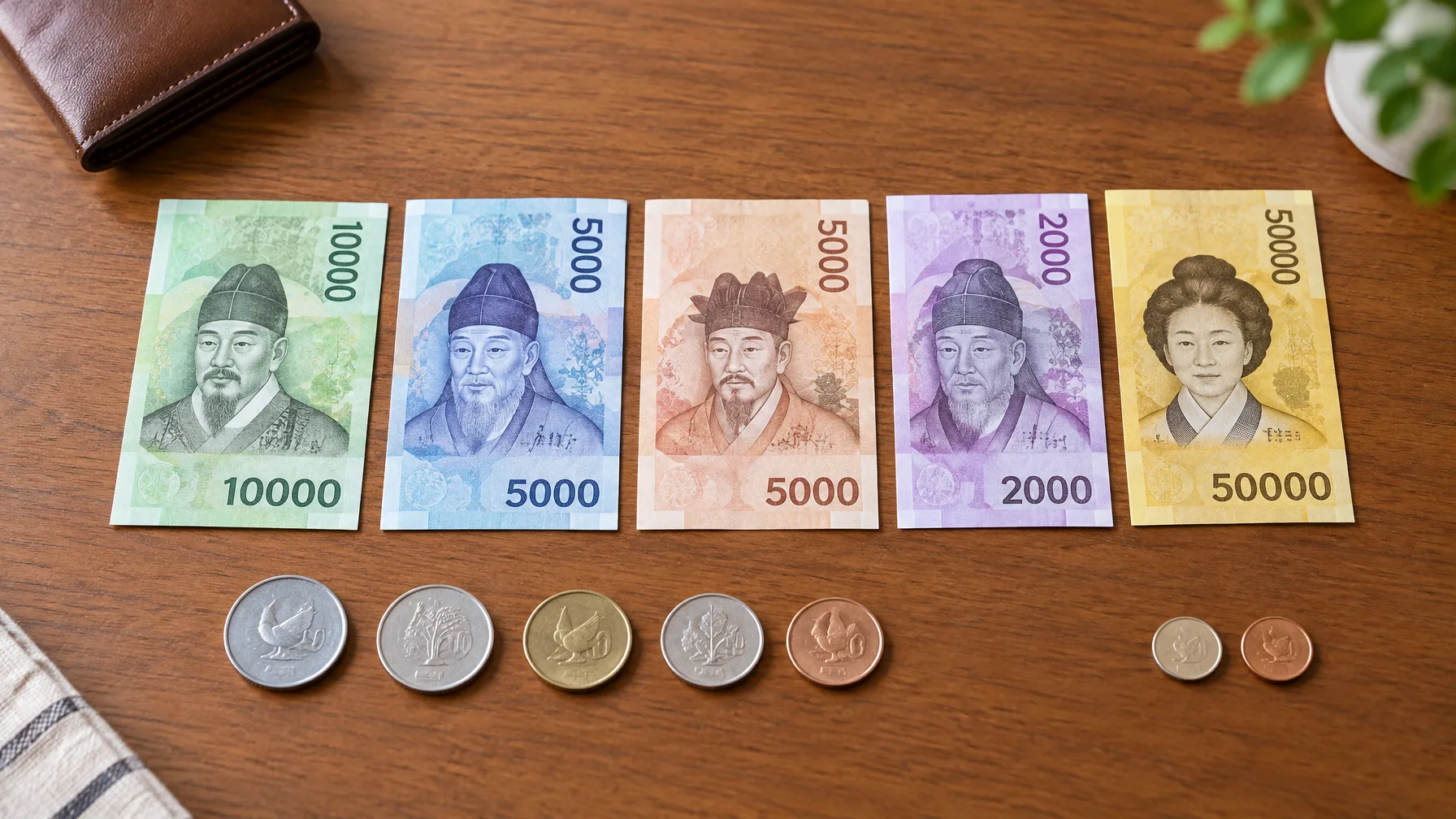
Here are the Korean won bills and coins in use. The bills come in five values. A 2,000 won bill also exists alongside the better-known four, so do not be surprised if one turns up in your change.
| Type | Value in won | Everyday use |
|---|---|---|
| Bill | 1,000 | Yes |
| Bill | 2,000 | Listed among current bills |
| Bill | 5,000 | Yes |
| Bill | 10,000 | Yes |
| Bill | 50,000 | Yes |
| Coin | 1 | Barely circulates |
| Coin | 5 | Barely circulates |
| Coin | 10 | Yes |
| Coin | 100 | Yes |
| Coin | 500 | Yes |
The coin list looks longer than it feels. The 1 and 5 won coins are on the books, but they have hardly circulated since 1992. Prices get rounded to the nearest 10 won, so the coins you will actually handle are the three larger ones.
Saying a price out loud: the "man won" bill
The name is short, a single beat, and in English it is written won. When someone says "man won," they mean the 10,000 won bill; that is the Korean pronunciation written in English.
If you are unsure what a clerk just said, point at the bill and repeat the number. That is a friendly way to check, and it usually works.
North Korea has a won too, and it is a different money
"Korea's money is the won" is true, but it does not say which Korea. North Korea's official currency is the Korean people's won, also called the North Korean won. It uses the same ₩ symbol, but its code is KPW.
It is issued by North Korea's central bank, headquartered in Pyongyang, and has been the only currency North Korea has issued since 1947. After liberation, both the North and South used the name won, so the name alone does not tell you which money is meant.
One more oddity: the won has a theoretical sub-unit called the jeon. It never shows up in daily transactions. You will only see it in foreign exchange quotes, so do not look for it at the register.
The Tax Free sign and the 30,000 won line
As a foreign visitor, you can claim a tax refund on purchases at a shop that displays a Tax Free sign. The purchase has to be above the refund threshold. The key word is "more than." A purchase that lands exactly on the line does not qualify.
The sign matters as much as the amount, since without it the shop is not set up for the refund. For a wider look at what a trip costs, see South Korea Travel Costs Explained.
The wallet version to remember
In your wallet, expect bills, plus coins from 10 to 500 won.
Comments
No comments yet.