
Cash Payment Korea: Carry Only a Little Won for Markets
 AI-generated image
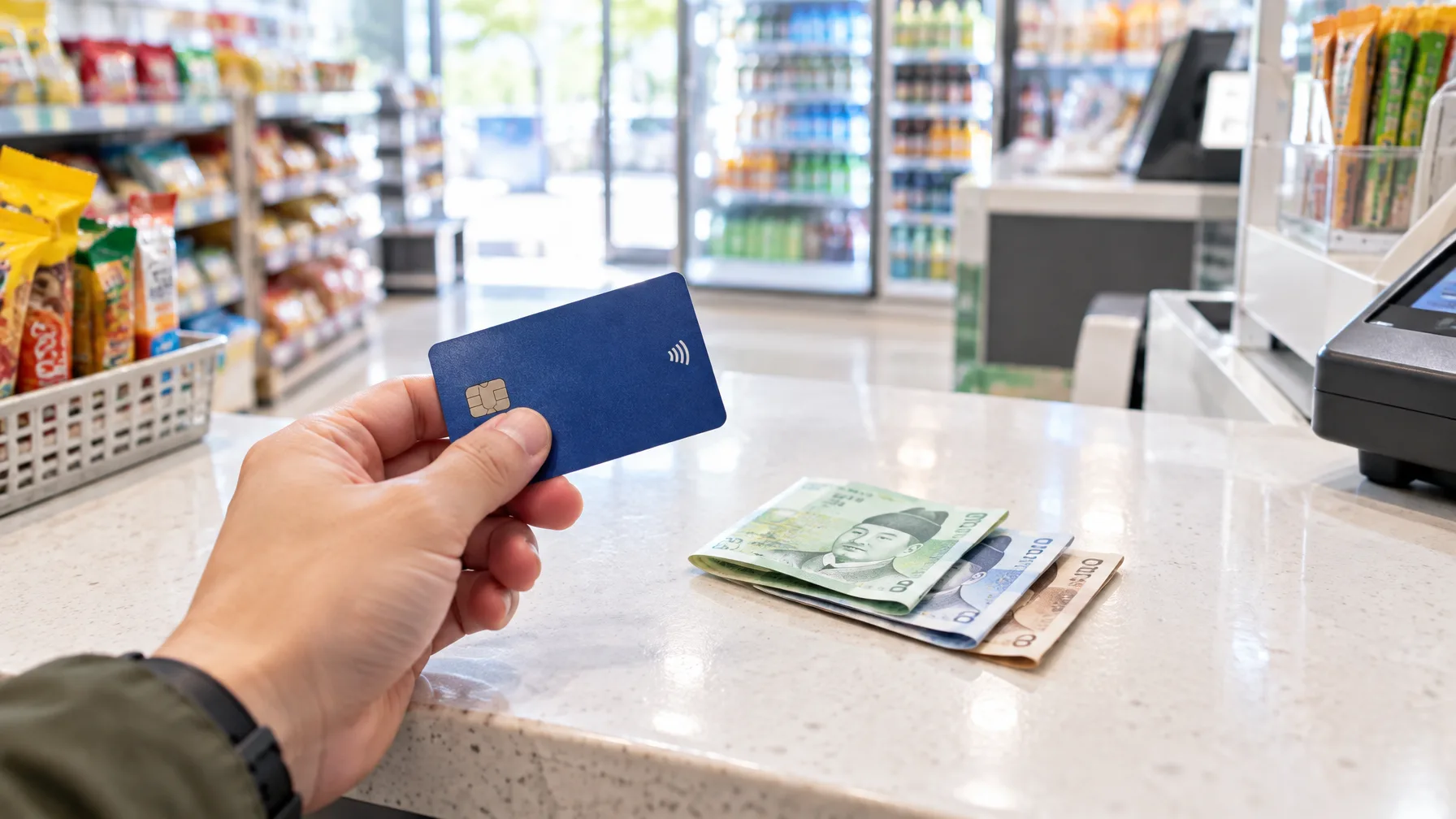
Cash still works in Korea, but its share of payments fell from 26.4% in 2019 to 21.6% in 2021 by transaction count. So a card is the main tool. You only need a little won for transit-card top-ups and markets like Gwangjang Market or street-food stalls. That is the whole story of cash payment in Korea for visitors. The sections below fill in the details for a first trip.
A card does most of the paying, and won is the backup
 AI-generated image
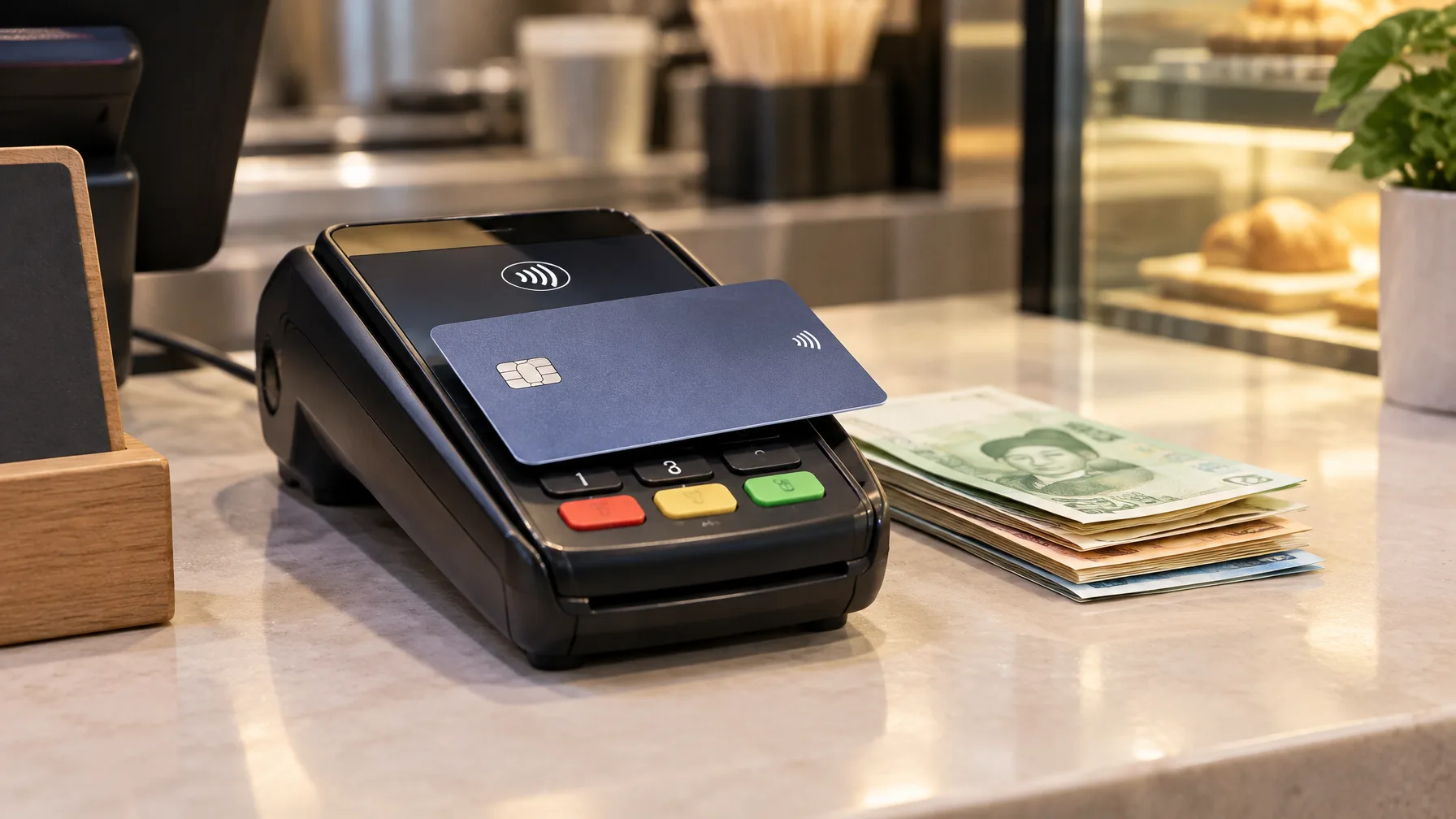
If you're torn between cash or card in Korea, pick the card. Most of the time it is faster and it simply works, so advice usually treats cash as a side tool. Hotels, convenience stores and franchises treat cards as the standard.
Cash earns its place in only a few spots. You need it to put money on a transit card. It also helps at traditional markets and at some street-food stalls, where small purchases are common. Keep a little won for those and let the card handle everything else.
Cash is still accepted, but not everywhere
 AI-generated image
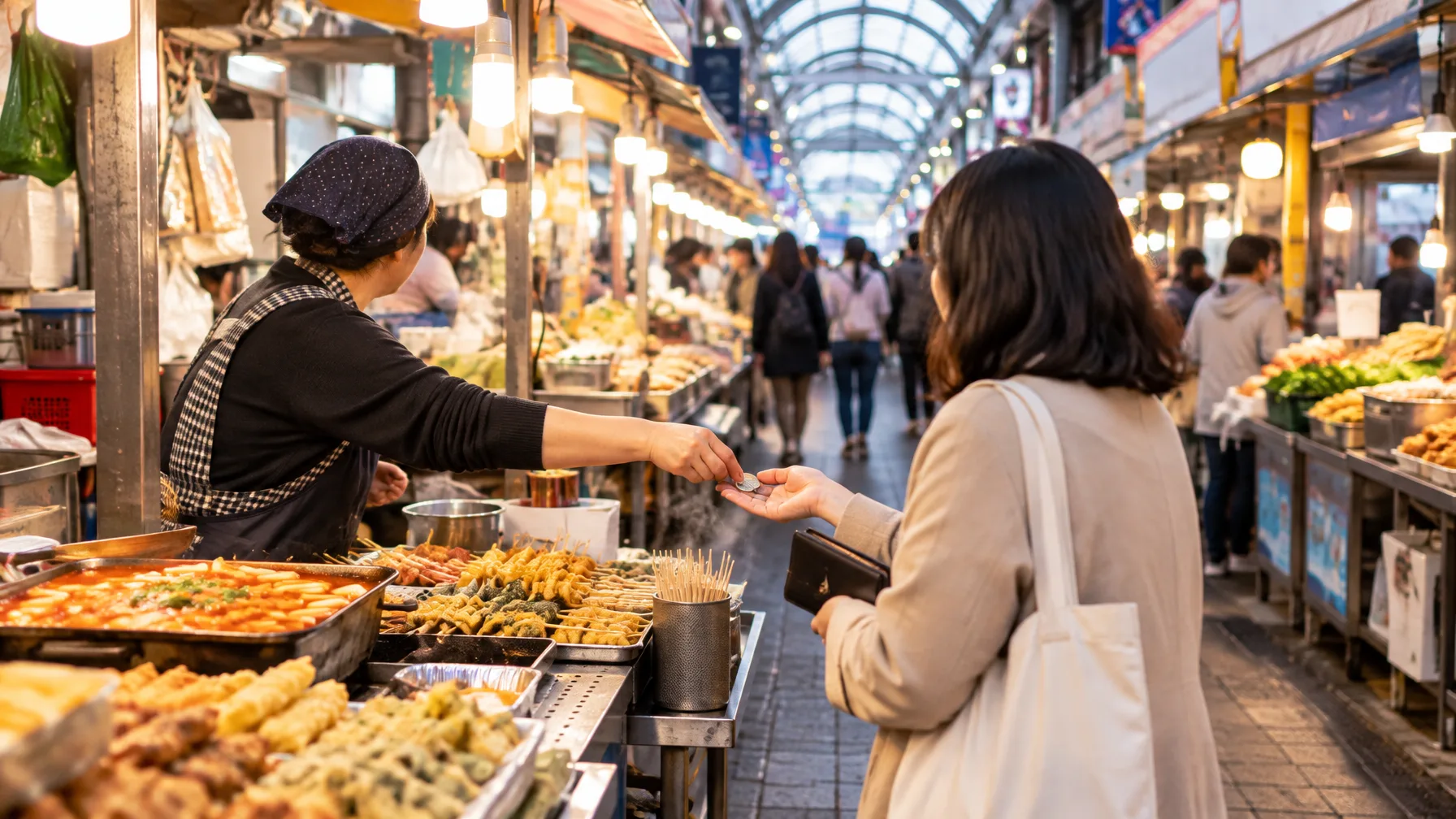
Korea hasn't banned cash, and plenty of places still take it. Small shops and street stalls may even prefer it. Outside the big cities, cashless options can also be thinner on the ground.
The reverse is true too. Some restaurants, cafes and retail shops no longer accept cash at all. If you walk around with only banknotes, a payment can fail. That is why the card has to come first.
| Situation | What to use |
|---|---|
| Transit-card top-up | Cash (a card can't recharge it) |
| Traditional market such as Gwangjang Market | Cash is handy |
| Street-food stall | Cash is handy |
| Hotel | Card |
| Convenience store | Card |
| Franchise restaurant or cafe | Card |
| Main sights in Seoul and Busan | Card works almost anywhere |
Why Korea settled on cards
 AI-generated image
Debit and credit cards are used in almost 60% of all transactions. Cards are the most popular way to pay for everyday spending. In a Bank of Korea survey, cash ranks second, right behind credit cards.
Measured by value, cash slipped from 17.4% to 14.6% of payments over the same two years. Seoul's buses show the trend clearly. Cash-paying riders dropped from 1.25% in 2018 to 0.6% in 2022.
A Seoul city official said bus companies struggled with the cost of handling fare boxes while cash faded away. When fewer people pay with coins, keeping a cash option gets harder to justify. For you, this means cashless is already the normal way to pay in the big tourist areas.
How much won a short trip really needs
On a short trip, a modest amount of won is enough. You don't need to carry much cash, and a thick wallet of banknotes is not recommended because of the risk of losing it.
There is a second reason to keep it small. Whatever won you don't spend has to be exchanged back or used up before you fly home. Paying by card avoids that chore.
- Put the card first at hotels, convenience stores and chain restaurants.
- Keep a small amount of won for a transit-card top-up.
- Add a little more if you plan to eat at a traditional market or street-food stalls.
- Spend or exchange the leftover won before you leave.
Tmoney and prepaid travel cards cover most of the rest
A Tmoney card Korea shop sells can't be topped up with a credit card, so loading it takes cash.
If you'd rather skip cash, a prepaid travel card is an alternative. WOWPASS is one example that bundles currency exchange, won payments and transit into a single card. Prepaid cards and mobile payment both cut down how often you reach for banknotes.
Where to get won, and what ATM fees look like
ATMs are easy to find in most Korean cities and towns, so withdrawing won is simple. The catch is cost. Korea ATM foreign card fees can stack up: a foreign transaction fee, a flat fee per withdrawal and an ATM owner fee.
If the machine asks which currency to charge, choose won. A less favorable exchange rate can add to the bill, so getting cash is never free. Because a flat fee applies each time, one reasonable withdrawal usually beats several tiny ones.
Bank ATMs can close at night and have withdrawal limits. Going over a monthly limit may bring fees and extra network charges. Plan to pull money out during the day.
Tips stay in your pocket
Tipping isn't part of daily life in Korea. At restaurants, cafes and in taxis, you usually pay just the amount shown. You don't need small bills tucked away for gratuities.
Where plans go wrong for first-timers
The biggest mistake is assuming a card covers everything. Foreign cards fail in a handful of places, so a few banknotes are your safety net. These are the spots travelers have run into trouble:
- A subway one-time pass for kids was cash-only.
- At Incheon Airport, no place took a card for an airport rail ticket. So exchanging money at the arrivals-floor counter came first.
- A restaurant in a mall basement near Gimpo Airport kept declining a card, and cash settled the bill.
- A chain hair salon couldn't process a foreign card.
- Booking a salon through Naver wouldn't accept foreign credit card details. The deposit went on a local card.
- Public parking lots and some gas stations have refused foreign cards.
The opposite mistake is carrying cash only. Some places refuse it, and cash is no longer the main way to pay in Korea. Cash isn't useless, though. It's a small tool for a few jobs, so plan on both.
Card first, a little won second
Use a card first in Korea, since cash's share of payments dropped from 26.4% in 2019 to 21.6% in 2021. Keep a small amount of won for transit-card top-ups and for market or street-food stalls. You don't need to carry a lot of cash. A few banknotes are enough.
Comments
No comments yet.