
What Does Cook Mean in Korean? Yorihada, Yorisa and More
 AI-generated image
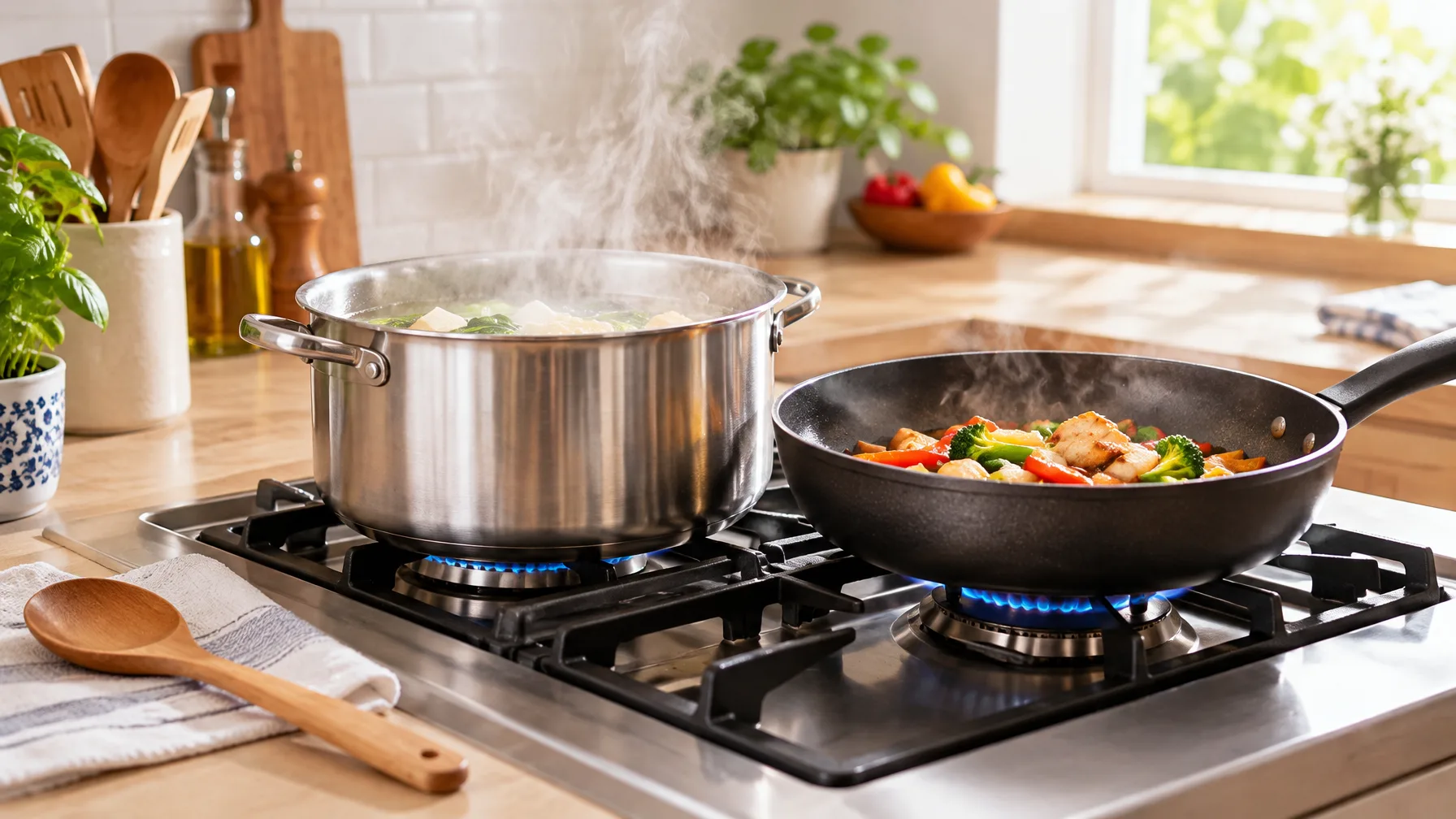
The verb cook is yorihada (요리하다) in Korean, and a person who cooks is a yorisa (요리사). A full sentence looks like this: Yorisaga bueokeseo yorihanda, 'The chef cooks in the kitchen.' Beyond those two words, there is a small family of method verbs for boiling, frying and grilling. This guide walks first-time learners through the plain verb and the tenses, then covers doneness and idioms like cook the books. A table near the end lines up every English cook word with its Korean match.
Yorihada is the verb and yorisa is the person
 AI-generated image
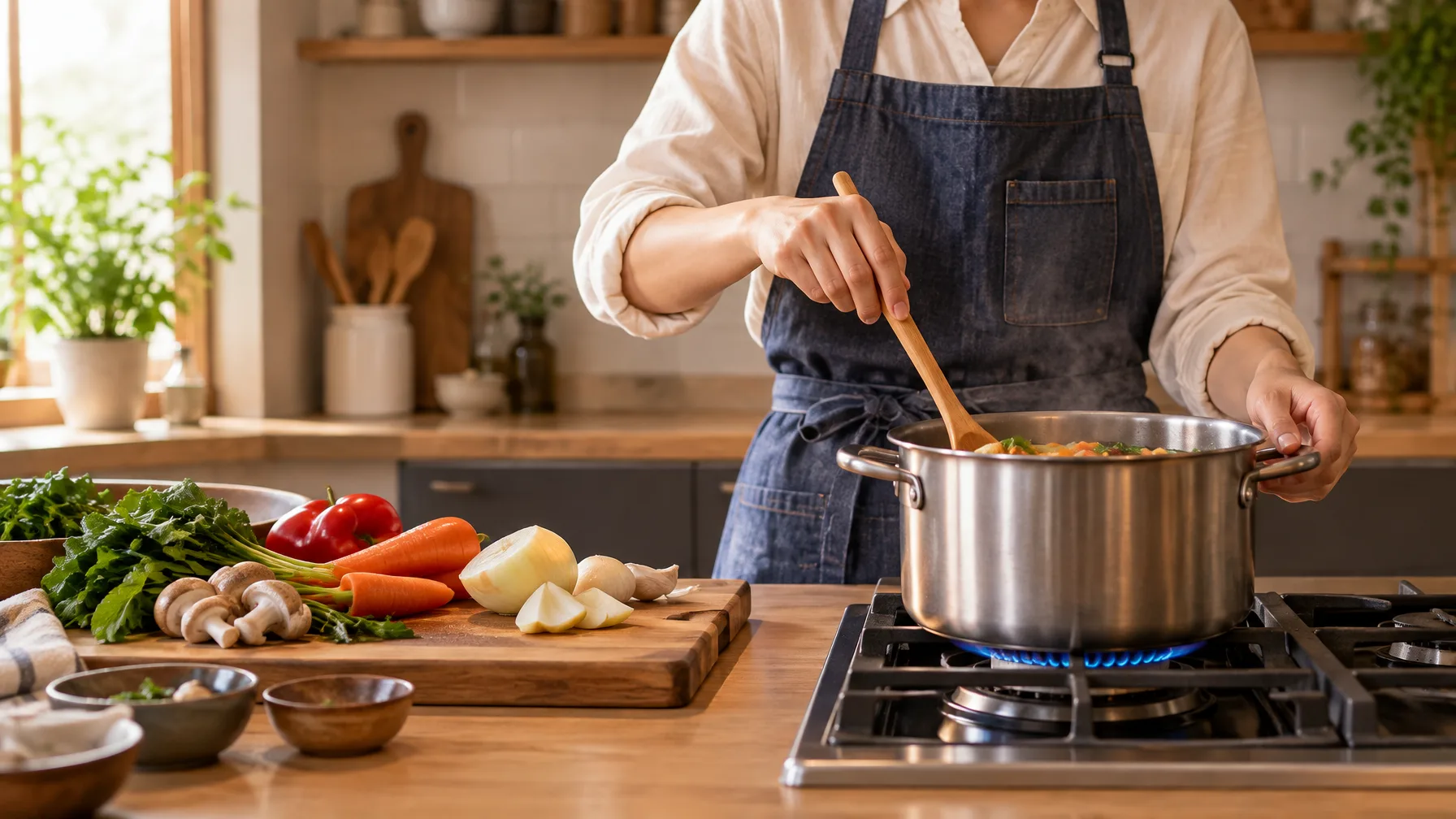
Dictionaries define the verb as preparing food so people can eat it. The chef sentence shows how to build a whole sentence from three small pieces.
- Yorisa-ga: the chef, plus the ending that marks the subject.
- Bueok-eseo: in the kitchen, with the ending that means 'at' or 'in'.
- Yorihanda: cooks, the plain present form of the verb.
Put them in that order and you have the whole sentence. Korean puts the verb last, so yorihanda always closes the line. Once you see that pattern, cook in Korean stops feeling like a single word to memorize. It starts feeling like a slot you can fill.
Cook as a noun: yorisa covers the person
 AI-generated image
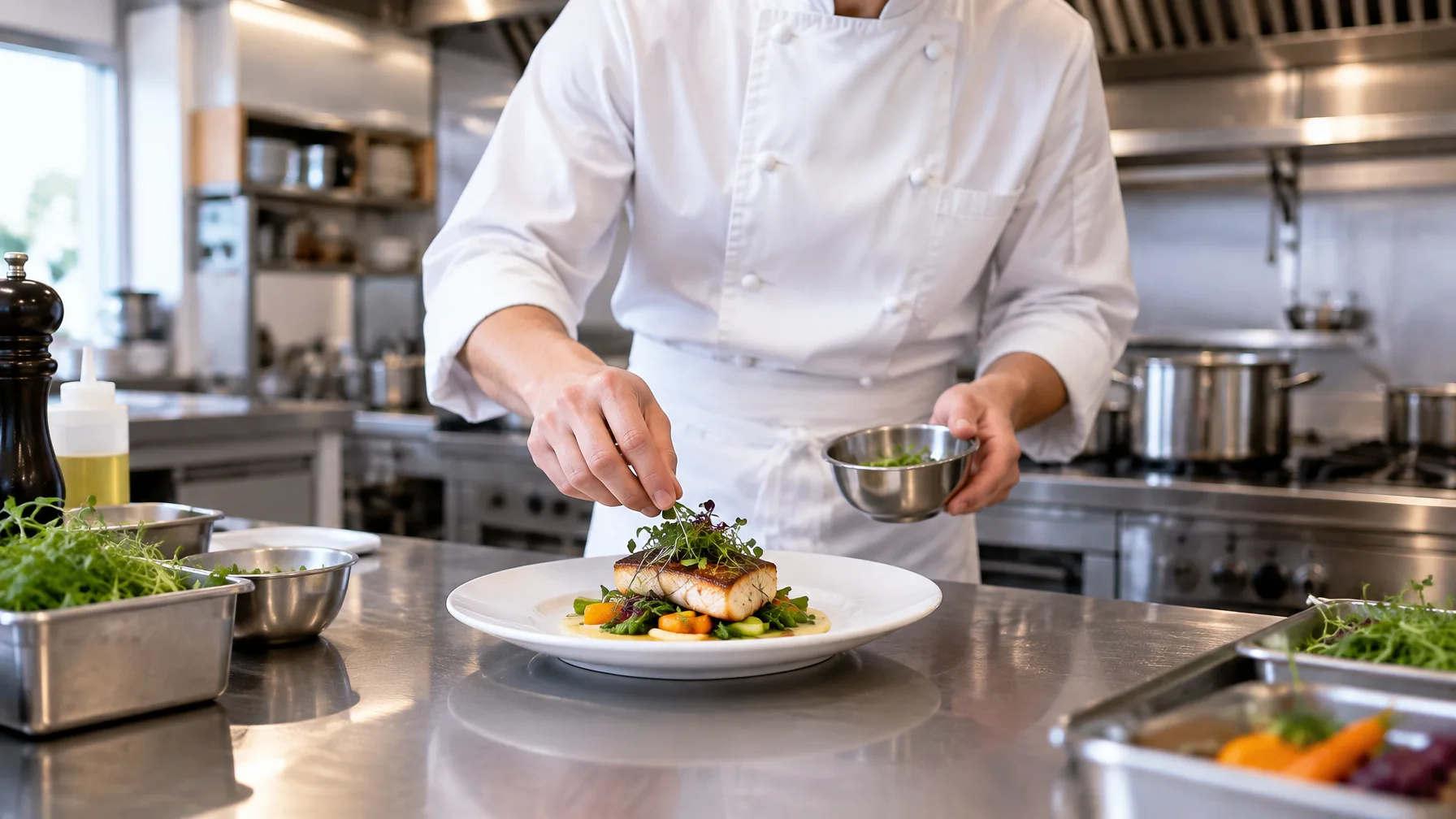
English uses the same word for the act and the person. Korean splits them. The noun cook, meaning someone who prepares food for other people, is yorisa.
The same word works when you want chef in the Korean language. The chef sentences above use yorisa for the person standing at the stove. So you don't need a separate word for chef in everyday talk. Notice too that yori sits inside both yorihada and yorisa. That shared start makes the pair easy to remember.
Want to thank whoever made the meal? The post on praising the meal and the cook has the phrases for it.
Cooks, is cooking and cooked: one verb, three endings
 AI-generated image
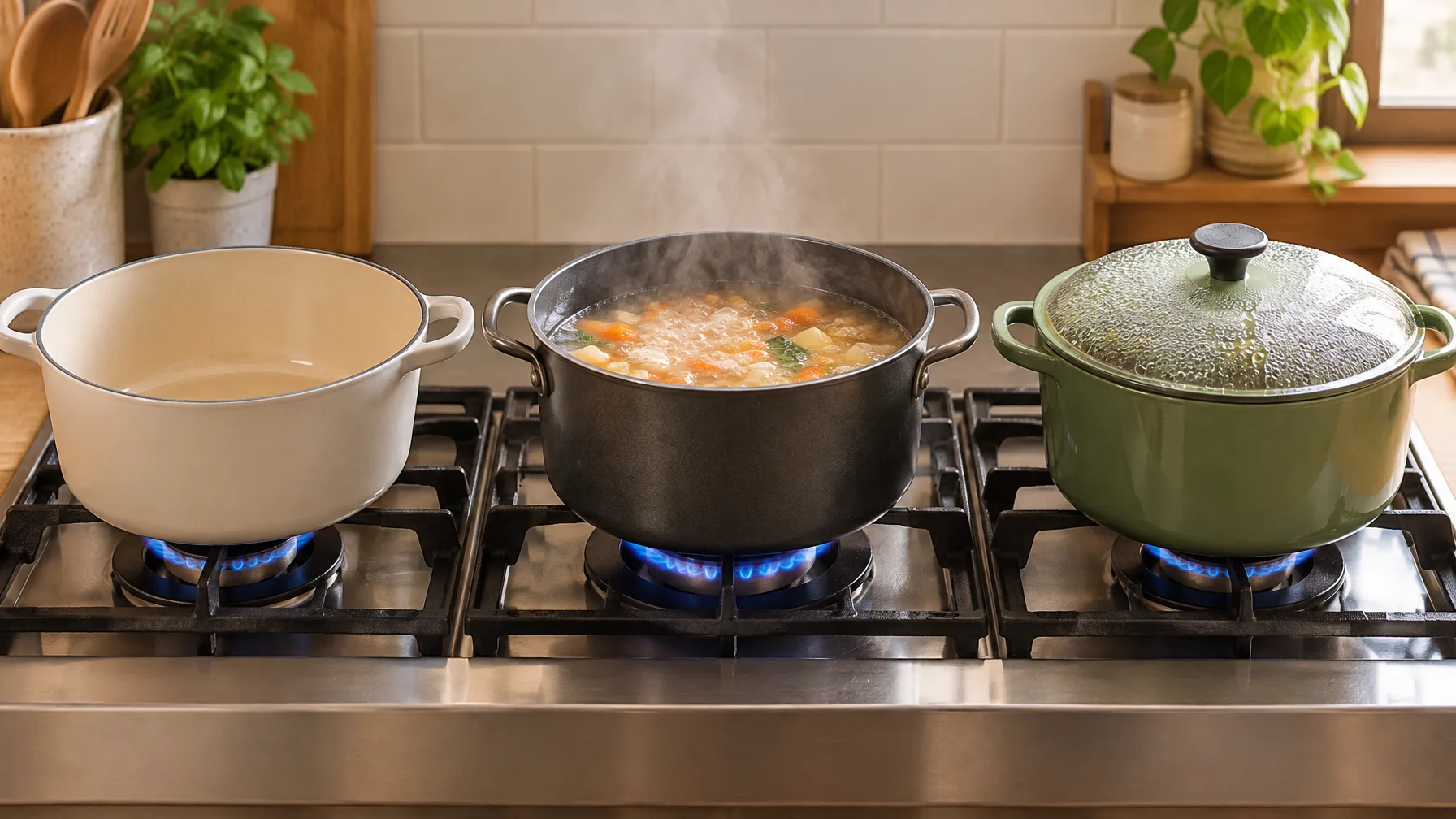
The verb stays the same and only the ending changes. That makes it one of the easier Korean verbs to start with.
- Present: the sentence above, 'The chef cooks in the kitchen.'
- In progress: Yorisaga bueokeseo yorihago itda, 'The chef is cooking in the kitchen.'
- Past: Yorisaga bueokeseo yorihaetda, 'The chef cooked in the kitchen.'
The yorihago itda ending carries 'is cooking' for any subject, so the same ending covers a first-person 'am cooking' too. Just change who is doing the cooking.
Two small phrases are worth keeping. Cook for someone is nugungareul wihae yorihada, and cook in a kitchen is bueokeseo yorihada. A warmer sentence puts them together. Chinguege jeonyeogeul yorihae juneun geosi johayo means liking to cook dinner for friends. The johayo ending is the polite style. The post on formal and informal basic words explains when to use it.
Boil, stir-fry, grill and steam each get their own verb
Yorihada is the general verb for making a meal. Once you want to say how, Korean reaches for a verb that names the method. Four are worth learning first.
- Kkeurida: to boil.
- Bokkda: to stir-fry.
- Gupda: to grill or roast.
- Jjida: to steam.
Even boil is not one word. Korean has kkeurida and also samda, and the situation decides which one fits. That is why no single Korean verb stands in for every kind of cooking.
Ikda and deol ikda describe food that is cooked or undercooked
Doneness is a state, not an action, so it gets different words. Ikda means 'to be cooked,' or to reach the cooked state, which makes it the closest Korean entry to the English idea of food being done.
Deol ikda means undercooked. The deol in front marks the food as not fully done. Learn the pair together, because they answer a question you will actually hear at a table: is this ready yet?
Cook the books and too many cooks lose the word cook in Korean
Idioms don't travel word for word. Cook the books in Korean is jangbureul jojakhada, which means to manipulate the ledger. It's what you say about dishonestly changing a company's accounting numbers, especially to steal money.
Too many cooks in Korean turns into a boat image: sagongi manheumyeon baega saneuro ganda. Literally, when there are many boatmen, the boat goes up the mountain. It's used when too many people work on the same task and the result gets ruined. Neither saying contains yorihada, so don't try to build them from it.
Why cook never maps one to one
The most common mistake is expecting one Korean word for every English cook. No such word exists, and the entries for the methods list their own verbs, from boiling to stir-frying.
A second slip is using ikda as if it were the verb, when it describes the food and not the person. A third is carrying English slang senses of cook into Korean, where those are separate meanings.
The reverse also matters. One short dictionary answer covers only the verb sense, while the noun, the doneness words and the idioms each need their own entry. The table below keeps them in one place.
Quick reference: every English cook word and its Korean match
| English | Korean | Romanization | When to use it |
|---|---|---|---|
| cook (verb) | 요리하다 | yorihada | Making a meal in general |
| cook (person), chef | 요리사 | yorisa | The person who cooks |
| boil | 끓이다 | kkeurida | Method matters: boiling |
| stir-fry | 볶다 | bokkda | Method matters: stir-frying |
| grill or roast | 굽다 | gupda | Method matters: grilling or roasting |
| steam | 찌다 | jjida | Method matters: steaming |
| be cooked | 익다 | ikda | Food has reached the cooked state |
| undercooked | 덜 익다 | deol ikda | Food is not fully done |
| cook the books | 장부를 조작하다 | jangbureul jojakhada | Falsifying accounts |
| too many cooks | 사공이 많으면 배가 산으로 간다 | sagongi manheumyeon baega saneuro ganda | Too many hands ruin the work |
Verdict: yorihada, yorisa, and a method verb when it counts
When the method matters, reach for a specific verb like kkeurida (boil), bokkda (stir-fry), gupda (grill or roast) or jjida (steam). Start with the chef sentence and swap in the endings.
Comments
No comments yet.