
Very Delicious in Korean: Praise the Meal and the Cook
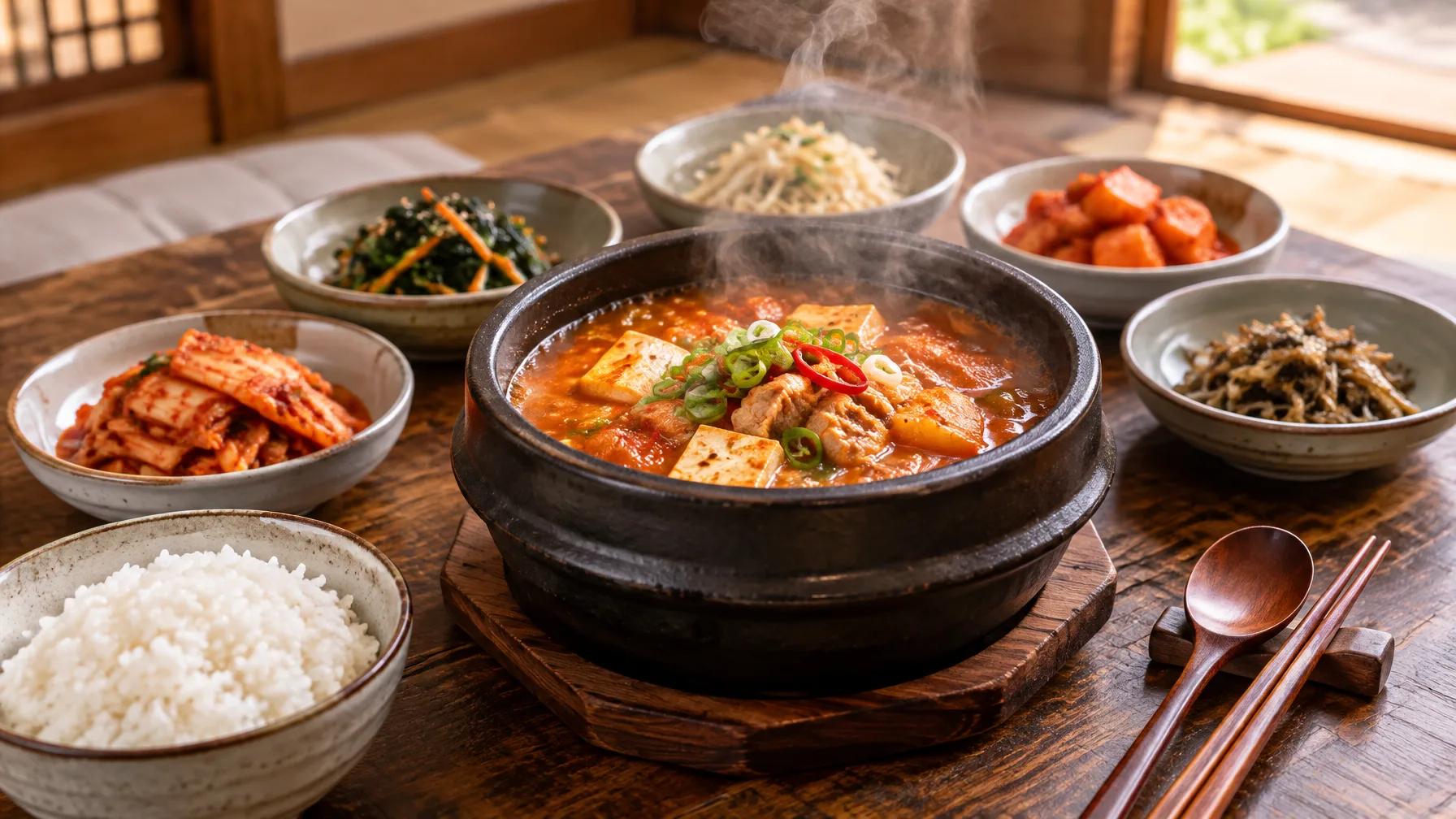 AI-generated image
To say very delicious in Korean while you eat, say jeongmal masisseoyo. It means 'It's really delicious!' The -yo ending keeps it polite, and with close friends you drop it. A meal has other moments too: a phrase before the first bite, one for the cook, one when you finish. This guide lines them up in meal order and labels each by who you are talking to.
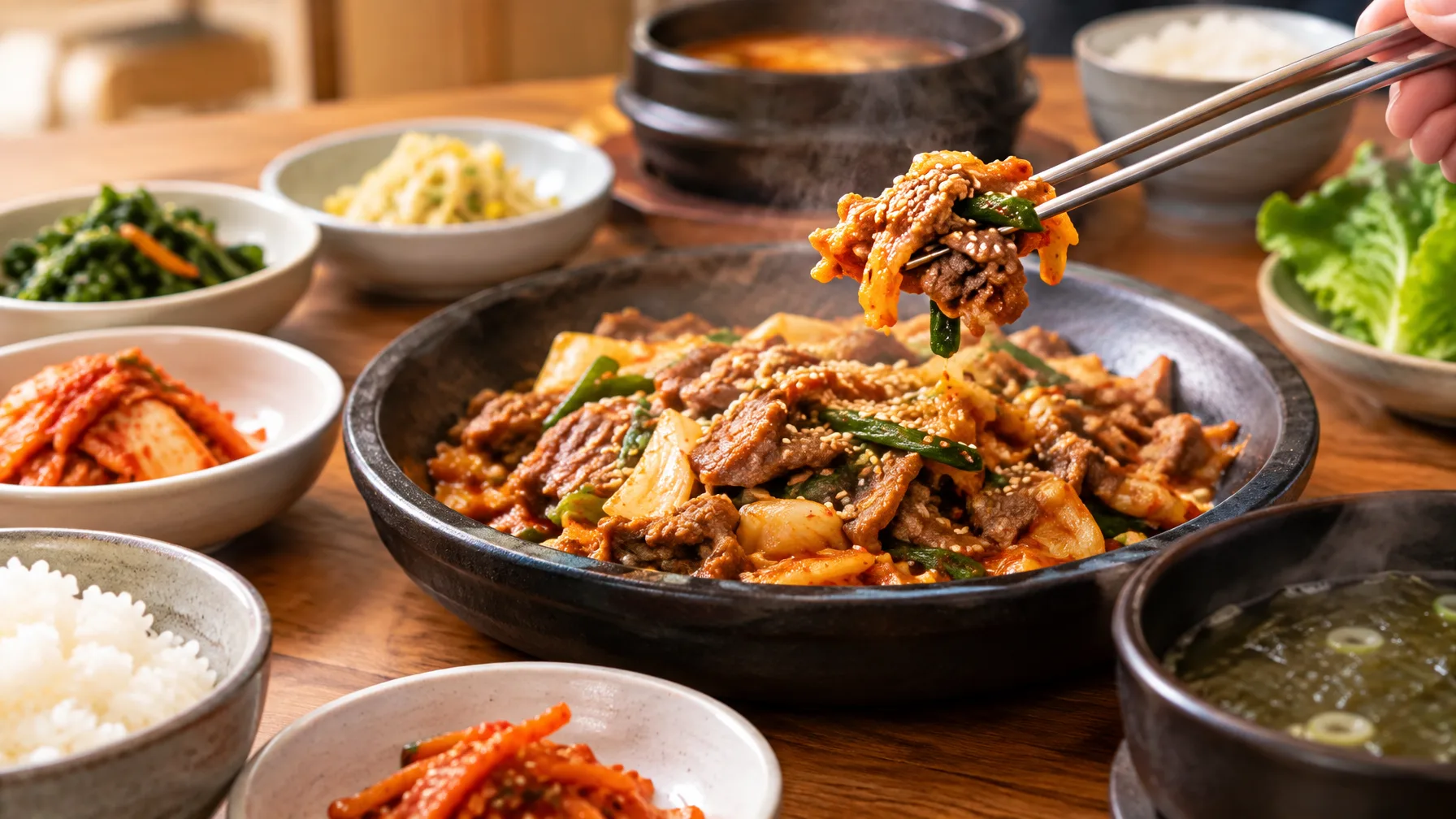
Jeongmal masisseoyo is the line to use while you eat
 AI-generated image
Split the phrase in two and it gets easy. Masisseoyo is the plain polite 'This is delicious.' Jeongmal adds 'really.' Together they give the warm, ordinary compliment you can say mid-meal.
Masisseoyo can do a second job. It can also check whether a particular dish is good, as in 'Is it delicious?' So the same word works as a question and as praise. That is why the extra jeongmal helps. 'It's really delicious!' can only be a compliment.
What you need: one polite level and a romanized cheat sheet
 AI-generated image
You do not need much. The polite -yo ending shows respect in most social situations, so it is the safe place to start, whether the setting is formal or everyday. Learners can begin at that single level and widen it later.
Everything here is written in romanization, so you can say the phrases without reading the letters. Want to read them on a menu or sign someday? Start with Hangul, the Korean writing system.
Neomu and jeongmal make delicious louder
 AI-generated image
Plain masisseoyo is the baseline. When you want more, put neomu ('very') or jeongmal ('really') in front of the adjective. Either one turns up the emphasis. That is the whole trick for going stronger than plain 'delicious.'
With close friends, drop the -yo
Friendship changes the ending, not the idea. For yummy in Korean informal speech, take the -yo off: jeongmal masisseo, or neomu masisseo when you are really pleased.
| Meaning | Polite (-yo level) | Close friends and family |
|---|---|---|
| It's really delicious | jeongmal masisseoyo | jeongmal masisseo |
| I ate well, thank you for the meal | jal meogeotseumnida | jal meogeosseo |
A meal-order ladder, from the first bite to the empty bowl
Here is the order of phrases, start to finish. Each one is polite, so it suits hosts, servers and anyone you do not know well.
- 2. Masitge deuseyo is another polite meal opener. It is literally 'Eat deliciously' and works like 'Enjoy your meal' or 'Bon appétit.'
- Mid-meal, praise the food with jeongmal masisseoyo. Add neomu if you want it stronger. 4. If someone cooked for you, add yorireul jeongmal jalhasineyo, 'You cook really well.'
Yorireul jeongmal jalhasineyo praises the cook, not just the dish
The compliment to the cook is yorireul jeongmal jalhasineyo. It means 'You cook really well.' It fits when someone has prepared a good meal or is showing off their cooking. It praises the person's skill rather than the taste of one dish.
Once the plates are empty, jal meogeotseumnida does the thanking. You can think of it as a polite 'compliments to the chef.' If you want to look back on the whole meal, say jeongmal masisseosseoyo. It means 'It was really delicious.' It works for a cook or for a restaurant.
At the register, the server's question has a short answer
If a server asks whether you enjoyed the food as you go to pay, that is the moment for a quick review phrase. Jeongmal masisseosseoyo is the friendly choice.
To praise the place rather than the food, the word is matjip, a delicious restaurant.
Where first-timers trip up
Neomu is not a praise word on its own. It only means 'very.' Neomu maewoyo is 'This is too spicy.' The adjective after it decides whether you are complimenting or complaining.
Two near-twins are easy to swap: masisseoyo fits while you eat, and masisseosseoyo is for looking back.
Jal meogeosseo is the casual one. Keep it for friends and family. With a host or a server, stay with the version that ends in -seumnida.
What a short ladder can and cannot do
The casual side of this ladder is short. Beyond dropping the -yo, jal meogeosseo is the only friend-level meal phrase here. The polite level is much better covered, and most meals call for it.
In city restaurants, servers may speak English, so you can get by without any of this. Think of these phrases as courtesy rather than necessity. A warm 'jeongmal masisseoyo' tends to land well anyway.
Three lines to carry to the table
In short: jeongmal masisseoyo while you eat, and jal meogeotseumnida afterward to thank the host or cook. With close friends, drop the -yo, and add jeongmal or neomu when you want more emphasis.
Comments
No comments yet.