
Korean Chopstick Etiquette: Never Stand Them in Your Rice
 AI-generated image
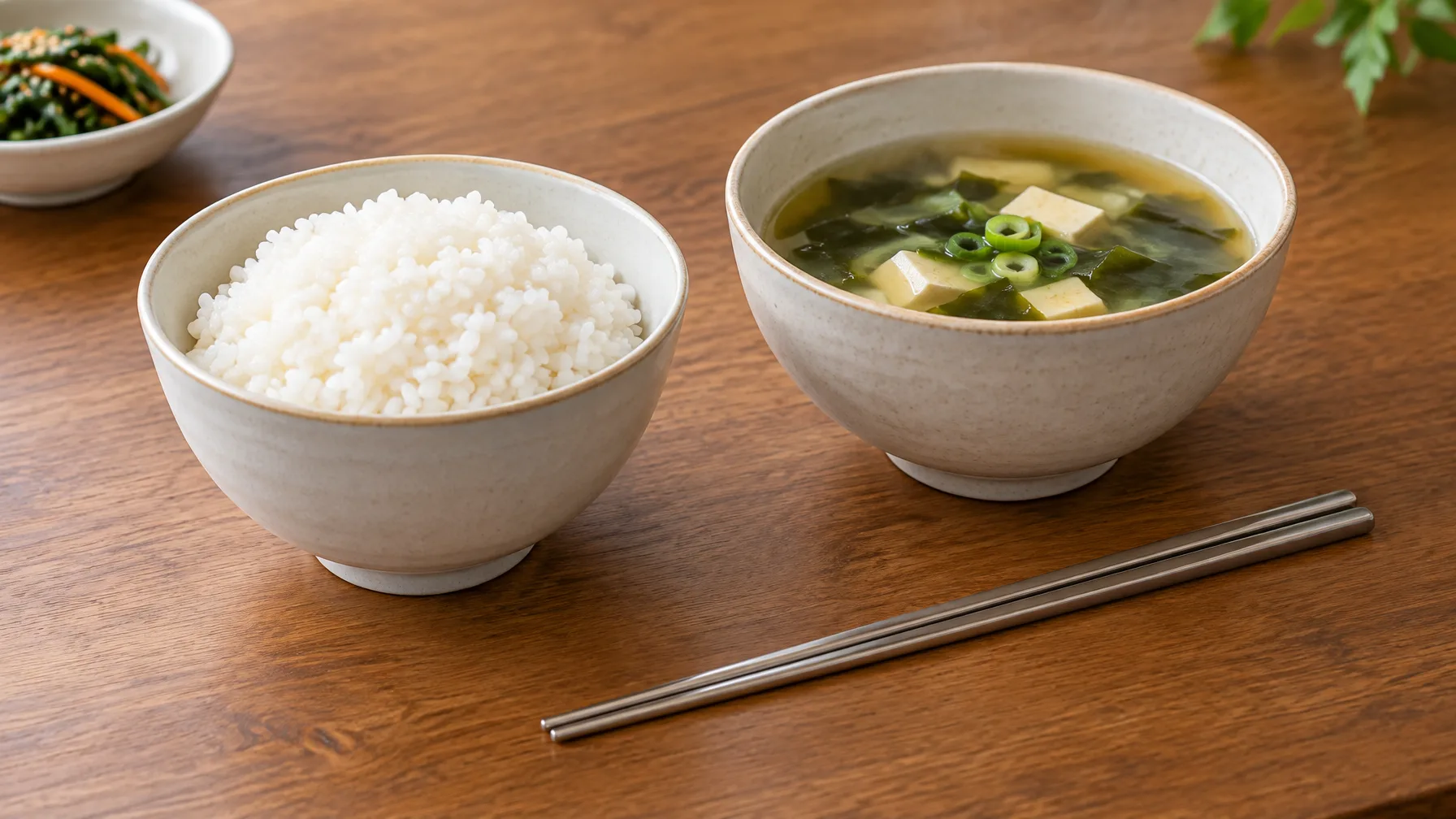
Never stand your chopsticks or spoon upright in your rice, and leave your rice and soup bowls on the table instead of lifting them. A first-time visitor can easily get both wrong without knowing it. The rest is simple to pick up: a phrase before the first bite, a matching pace, and some care when drinks come out. Here's the checklist in the order you will meet it.
Chopsticks stay out of the rice and bowls stay on the table
 AI-generated image
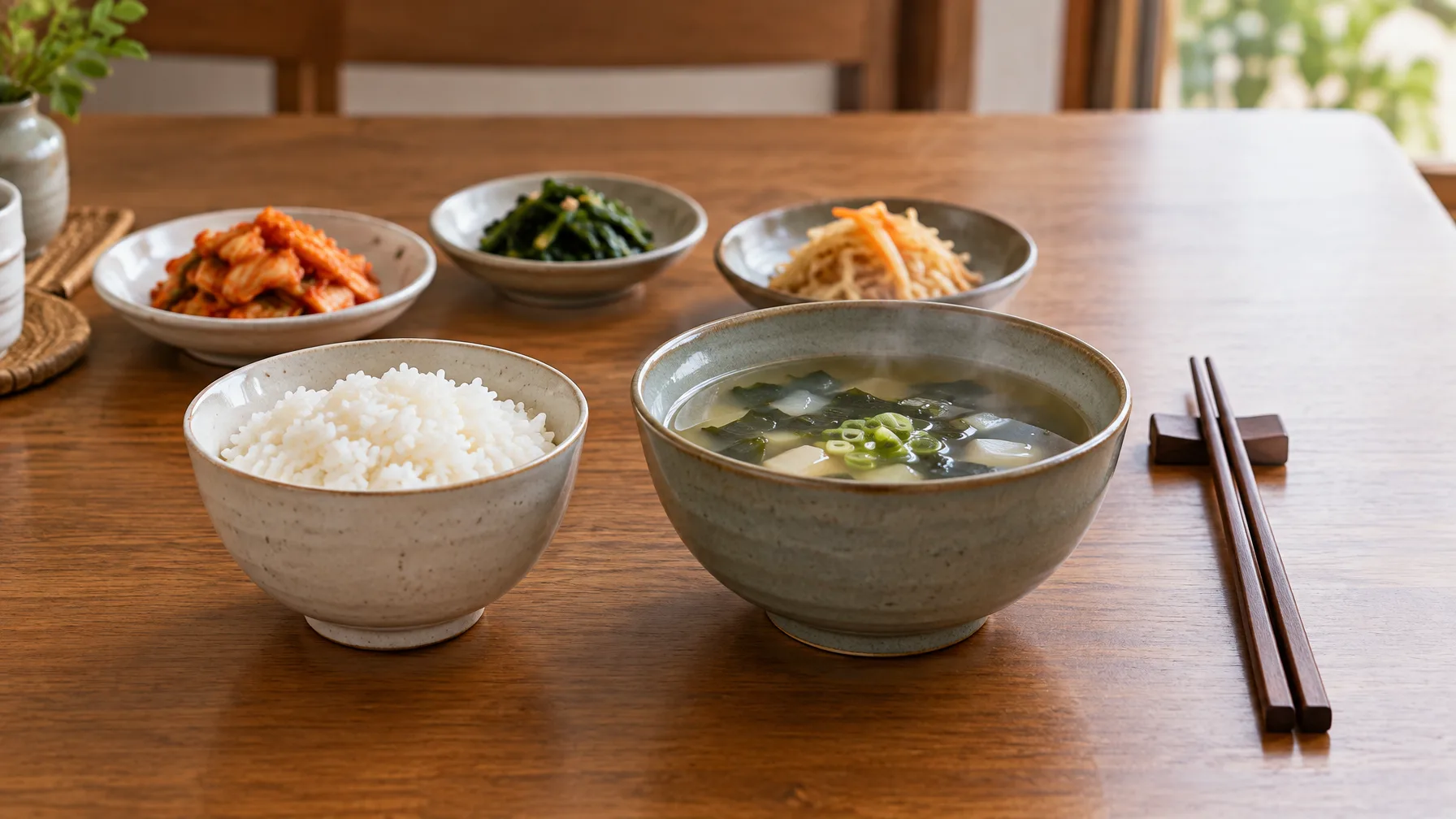
Start with your hands. In Korea the rice bowl isn't lifted to the mouth, and bowls and plates stay on the table while you eat. Even the soup bowl is rarely picked up. If you grew up tilting a bowl to get the last grains, this takes a little unlearning. Bring the food to your mouth with your spoon or chopsticks and let the bowl stay put.
Korean has a name for all of this: siksya yejeol, or meal etiquette. It comes down to one habit, paying attention to the table.
An upright spoon in rice looks like a memorial table
 AI-generated image
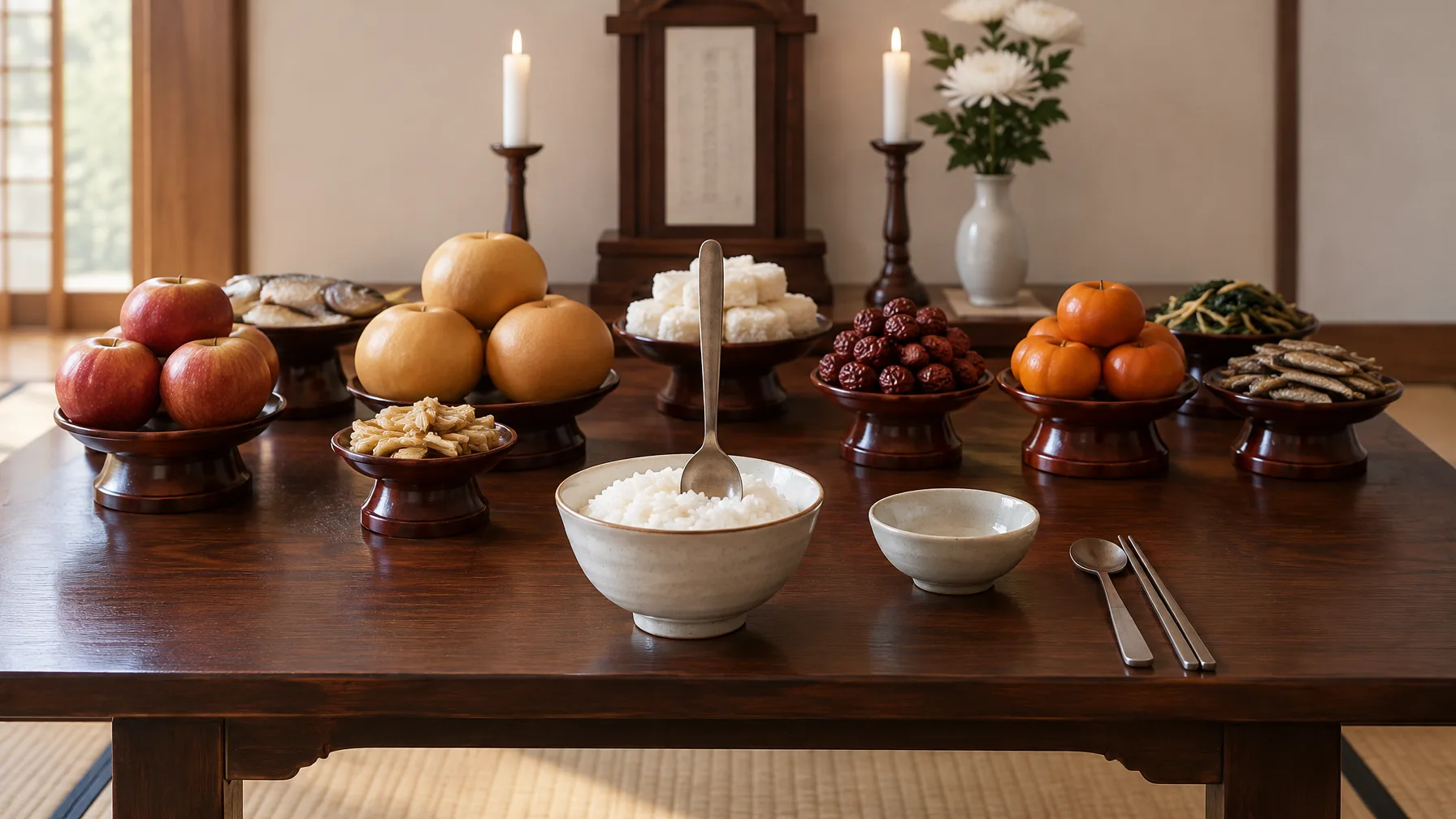
The rule has a reason behind it. Sticks or a spoon standing in food, rice above all, recall the food laid out at ancestral memorial rites. Koreans read that image as bad luck, and it feels out of place at an ordinary meal. When you pause, lay your chopsticks and spoon down flat beside your bowl.
A bigger idea sits under the small rules. In Korean culture a meal is more than eating: it shows respect for the ingredients, for the person who prepared the food, and for whoever is sitting next to you. Seen that way, most of the rules stop feeling random.
Say jal meokgesseumnida first, then match the pace
 AI-generated image
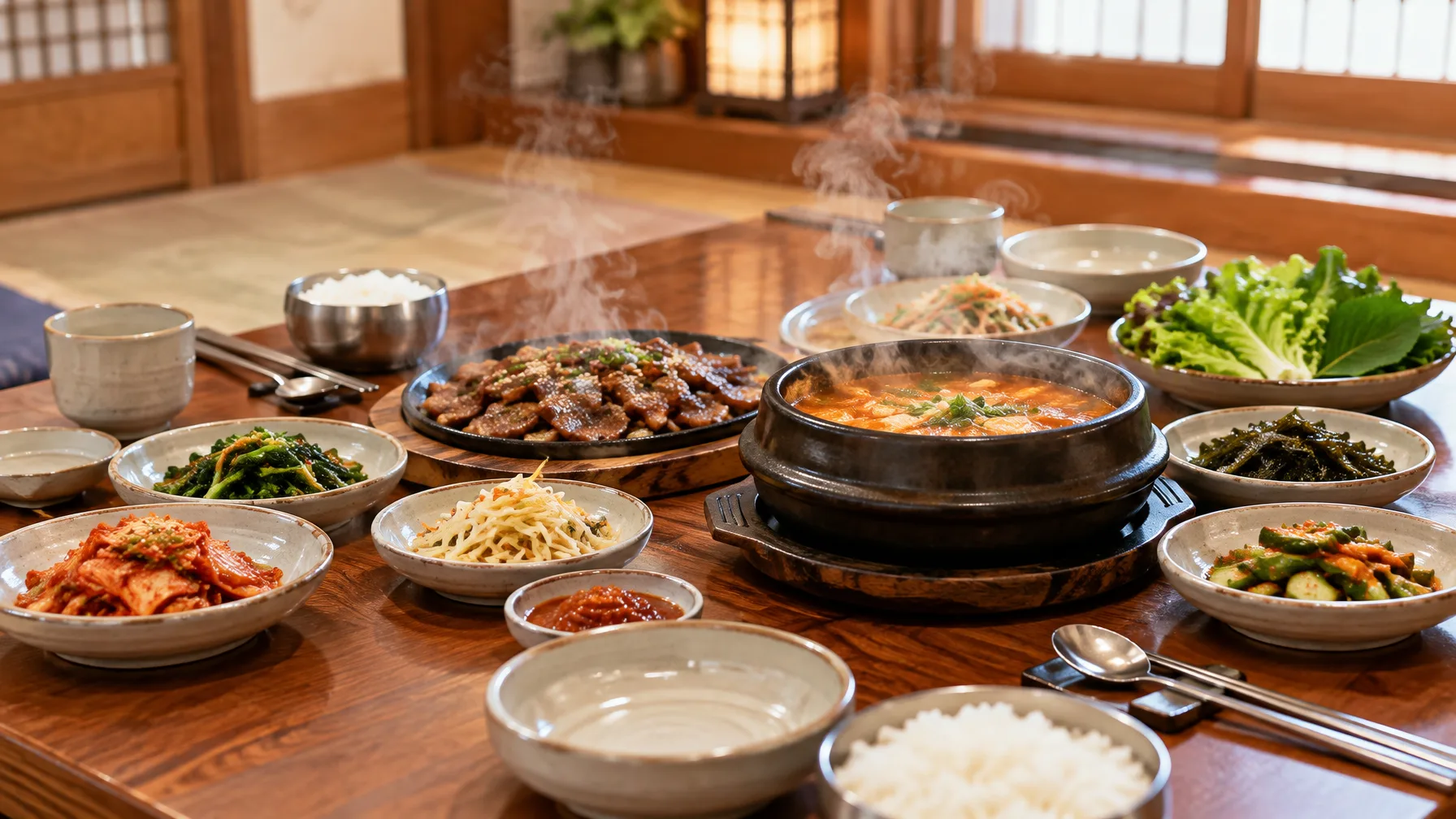
Say it once everyone has food in front of them and you're set for the first bite.
Then watch the table. Eating very slowly or very fast isn't accepted, so aim to move at about the same speed as the people around you. If you're a slow eater, keep picking at the food between sentences. If you're a fast one, put your spoon down now and then.
Drinks: never fill your own glass, and use two hands
Drinking alcohol in South Korean culture comes with its own small rules. At bars and restaurants, pouring your own drink is considered impolite. Instead the host and the people at the table fill each other's empty glasses.
Drinks are poured and received with both hands when an adult guest is involved. Never use your left hand alone when handing something over or taking it. Two hands on the glass also keep it from tipping or spilling. Here is the order in practice:
- Watch the glasses near you and fill any that are empty.
- When you serve an adult, pour with both hands.
- When someone pours for you, hold your glass with both hands.
- Don't pass or take anything with your left hand alone.
- Leave refilling your own glass to someone else.
Small habits that read as rude: reaching, blowing, and talk about dirt
Reaching with your arm across the table for food that sits far from you is seen as bad manners. Ask someone to pass the dish, or wait until it comes around. Blowing your nose at the table is also a little rude, even when spicy food makes your nose run. If you really need to, step away from the table or do it as discreetly as you can.
Mealtime conversation has limits too. Talking about smelly or dirty things while people are eating isn't accepted, so save those stories for later. Some people also worry that they must eat from shared dishes. If sharing from common plates is uncomfortable, you can ask for a personal bowl or plate. Many restaurants now give them out as a matter of course. Learn more in Korean Banchan Explained: What Are They and What's on the Table?.
Which rules are firm and which are loosening
Not every rule you read about is applied the same way today. Some are old customs that families and friends no longer follow strictly. Table talk was once forbidden during meals and is fine now. Waiting for the eldest person to lift a spoon first is a historical custom. Many families now start eating all at once.
Drinking rules bend more than food rules. Refusing a drink is traditionally rude, but this pressure to drink works less well with younger people. The two-hand rule for receiving a drink applies with elders or at formal tables. Turning your head away to drink in front of someone older is a traditional custom. So follow the lead of the people you're with.
| Rule | How firm it is. |
|---|---|
| Chopsticks or spoon standing in rice | Firm. |
| Lifting the rice or soup bowl | Firm: bowls stay on the table. |
| Saying jal meokgesseumnida before eating | Standard habit. |
| Matching the pace of the people around you | Standard habit. |
| Pouring your own drink | Considered impolite at bars and restaurants. |
| Two hands for pouring and receiving | Applies with elders or at formal tables. |
| Turning your head away to drink | Traditional custom. |
| Waiting for the eldest to lift a spoon | Historical custom, now often skipped. |
| No talking during meals | No longer applies. |
| Pressure to accept every drink | Fading among younger people. |
Bottom line: spoon out of the rice, bowls on the table
Don't worry too much if you slip up. People tend to warm to someone who is clearly trying, and a sincere effort matters more than getting every rule right.
Comments
No comments yet.