
Major Convenience Store Chains in Korea: What to Know First
 AI-generated image
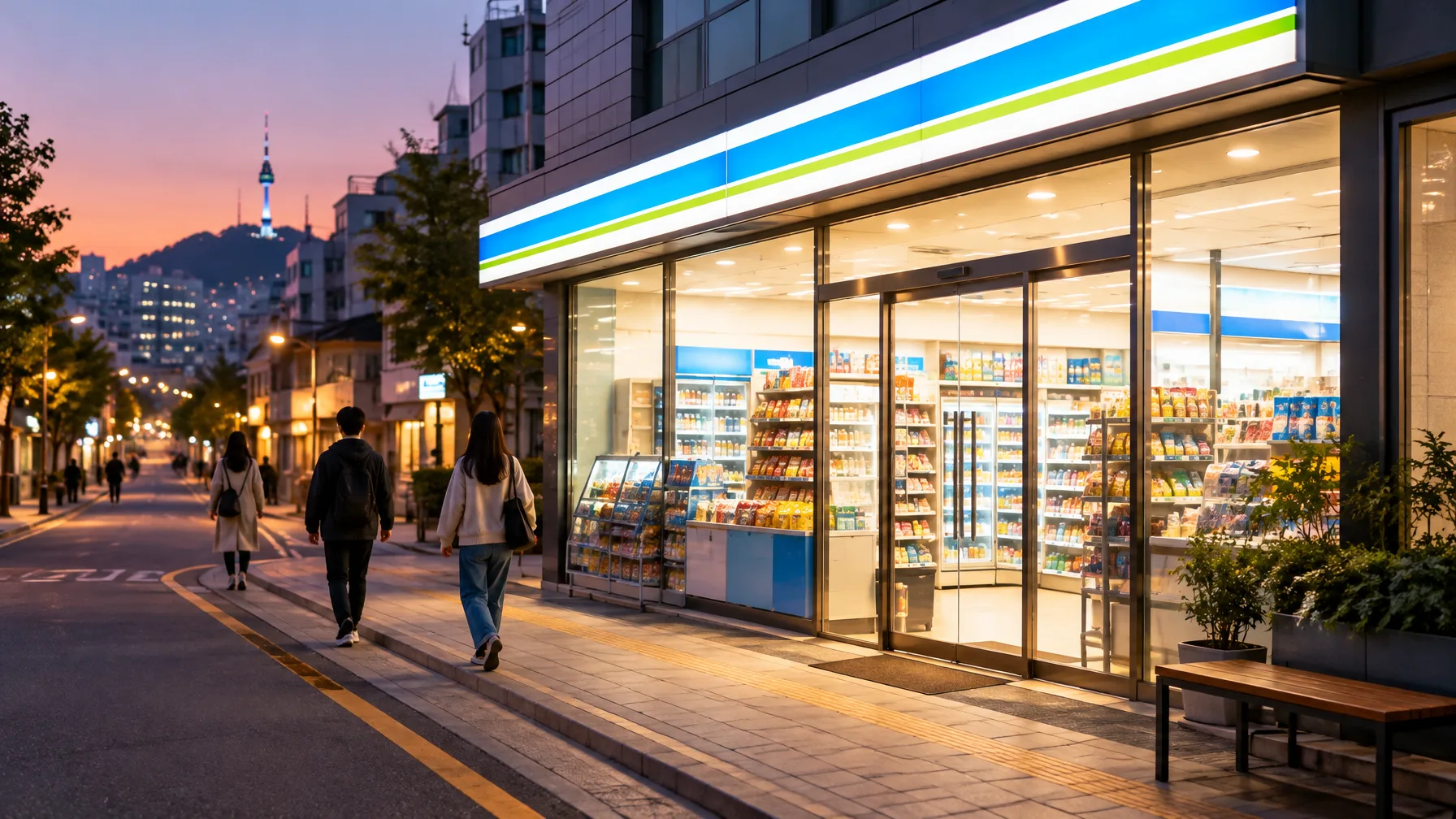
Korea's three biggest convenience store chains are GS25, CU and 7-Eleven. CU and GS25 each have more than 17,000 stores. Learn those three names and you've got the whole convenience store Korea list you need for a first trip. They're small shops with a big job: breakfast, a late snack, a drink, a quick lunch. Here's who is who, what each one offers, how to pay, and what trips up first-timers.
GS25, CU and 7-Eleven lead Korea, and two of them pass 17,000 stores
 AI-generated image
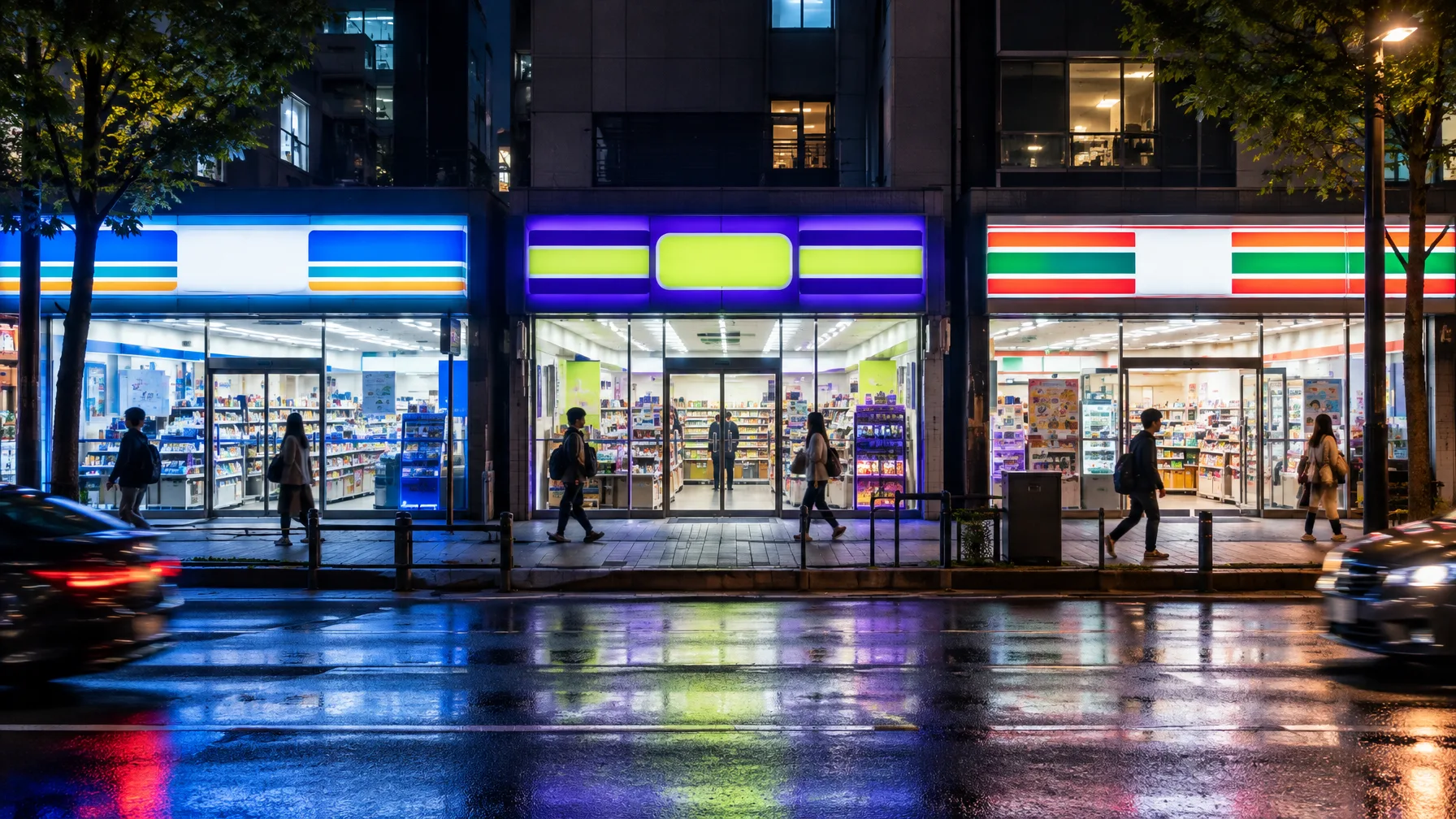
Here is the practical version. If you spot a sign for any of the three, you are in the right kind of shop. Stores sit on what feels like every block and keep the lights on day and night. Pick the nearest one and go in.
7-Eleven in Korea is simply 7-Eleven
 AI-generated image
Travelers sometimes ask what the equivalent of 7-Eleven is in Korea. There is no stand-in brand to hunt for. 7-Eleven itself operates there, under the same name you know from home.
It also has a place in history. The first Korean convenience store was a 7-Eleven that opened in 1982 in Sindang-dong, in Seoul's Jung-gu district. So the format started here with a brand you already recognize.
A quick Korean convenience store list: the Big 3 plus Ministop
 AI-generated image
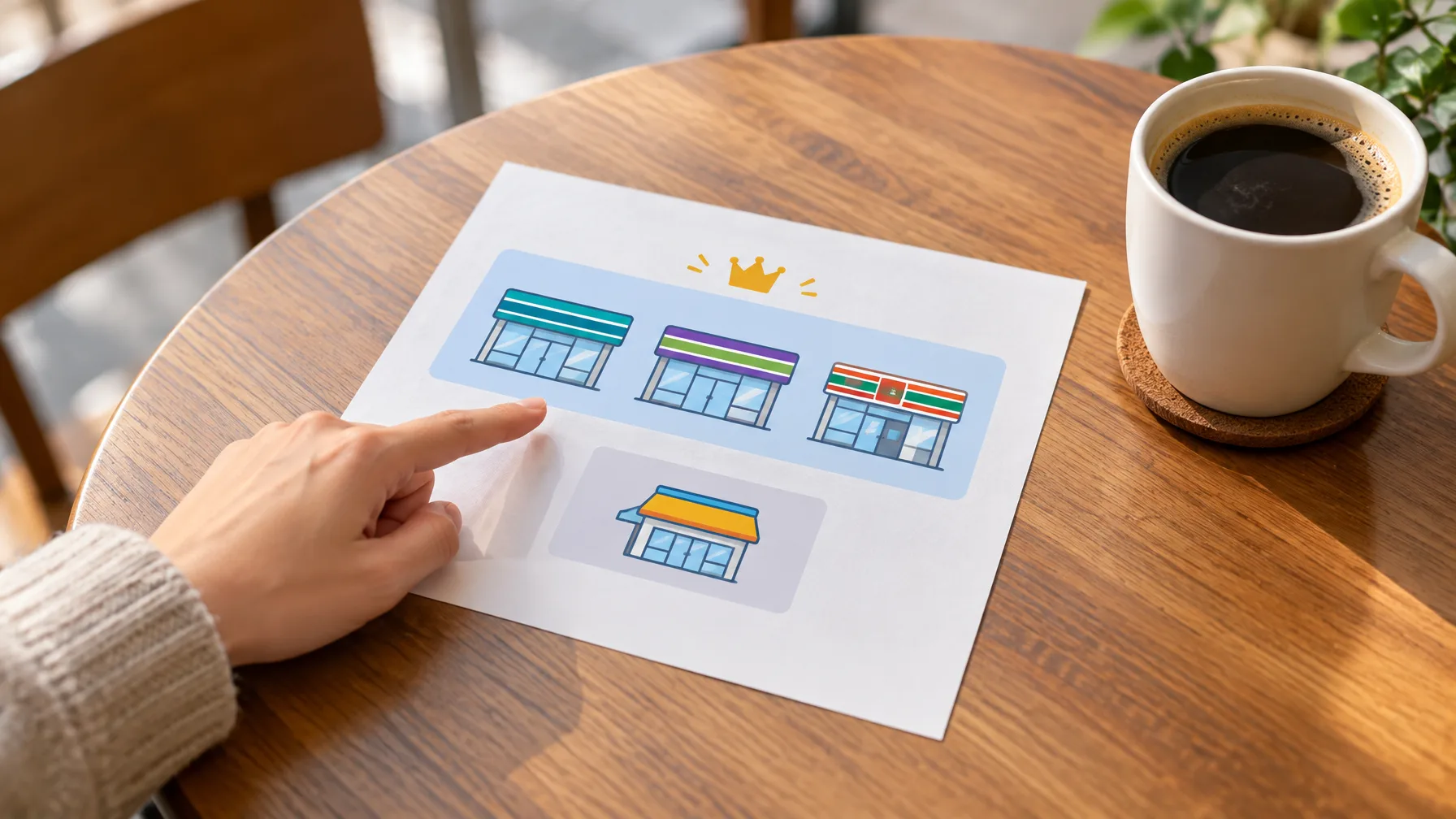
Korea has five major convenience store brands. The three largest, GS25, CU and 7-Eleven, get the nickname Big 3. Ministop shows up on lists of Korean convenience stores too, but it sits outside that top group. For a Korea convenience store Big 3 shortcut, remember the first three and treat Ministop as a bonus if you pass one.
| Chain | Big 3? | Store count | Membership app | Seating notes |
|---|---|---|---|---|
| GS25 | Yes | More than 17,000 | Yes | — |
| CU | Yes | More than 17,000 | Yes | Rated highest for seating and food-prep space (opinion) |
| 7-Eleven | Yes | — | Yes | — |
| Ministop | No | — | — | — |
In a big city, rival stores can share the same street
CU is introduced as the most popular and best-known chain in the country. GS25 is right beside it in size. That is why a GS25 convenience store in Korea and a CU convenience store in Korea feel equally easy to find.
Competition packs them in. In a convenience store in Seoul, or any large city, competing stores sometimes sit on the same street. If one chain has no branch nearby, another is probably a few steps away.
CU gets the nod for seating, but that is an opinion
There is no official ranking of which chain is best. One experienced eater rates CU highest for seating and food-prep space, but that is a personal view rather than a measurement, so take it as a friendly tip.
The more useful fact is that most convenience stores have chairs or a seating corner where you can eat on the spot. Small stores can be different. Some have only a narrow standing table, so if your food needs a seat, look before you buy.
Open all day, with a points app and a few payment quirks
Korean convenience stores run 24 hours a day, every day of the year. That makes them a safe fallback after a late flight or a long evening out. Many of the stores are staffed around the clock, though some are unmanned.
GS25, CU and 7-Eleven all have a membership or points app, which is handy if you stay in Korea for a while. Payment has two quirks. T-money, Korea's rechargeable transit card, can only be topped up with cash, even in modern stores that take cards. And foreign cards sometimes fail at self-checkout machines.
Instant ramyeon, triangle gimbap and more fill the shelves
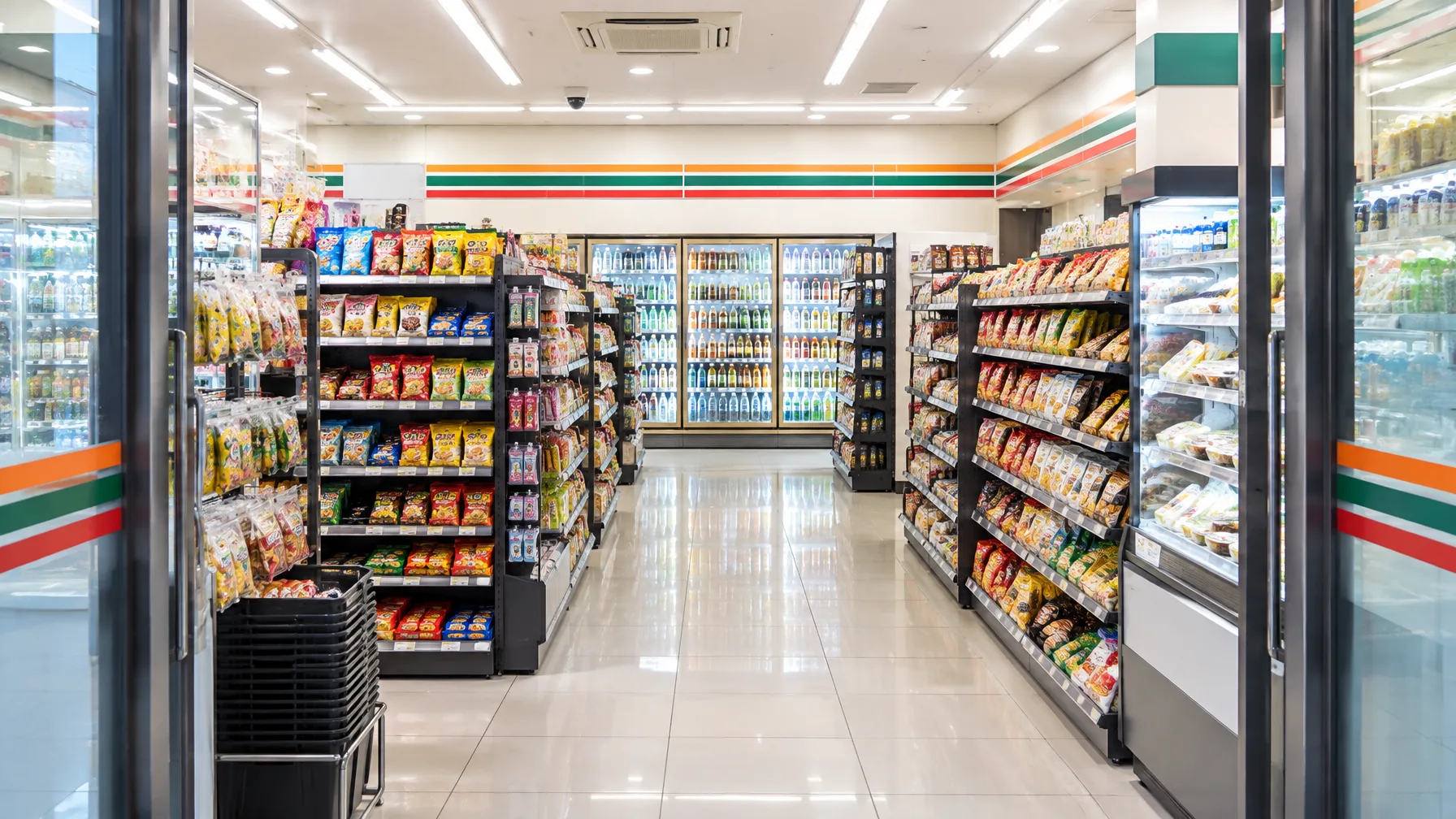
Korean convenience store food is a big reason people go in. The meal side includes instant ramyeon (packaged noodles), triangle gimbap (a triangular rice and seaweed snack), lunch boxes, hot bars, boiled eggs and corn. Snacks cover chips, Choco Pie and Pepero, bread, dried squid and candy.
Drinks run from coffee, tea and herbal drinks to pouch drinks, milk, yogurt and alcohol. Some vegan products turn up too if you read labels and hunt around. It is easy to put a full meal together without going near a restaurant.
Six first-visit habits that save you trouble
- Bring cash if you plan to top up T-money. Cards will not work for that.
- Check seating before you buy food that needs a table. Small shops may only have a narrow standing counter.
- Expect self-checkout to reject a foreign card now and then. Try the staffed counter, or walk to another shop if nobody is working.
- Do not count on buying alcohol or cigarettes at an unmanned store or late at night.
- Remember that opened food is generally not refundable. Unopened, defective or wrong items can be returned with a receipt.
- Do not assume every branch has an ATM, a restroom or a microwave. Many do, but small or older stores may lack them, along with seats and hot water.
One more misunderstanding is that chains are the only places to shop. Old-style neighborhood shops, called dongne shupo, still exist, but they've grown hard to find because of the chains. A chain-based list leaves them out, so don't be surprised if you stumble on one.
Three names to remember
Learn three names: GS25, CU and 7-Eleven. CU and GS25 each have more than 17,000 stores, and all of them are open 24 hours a day, every day, so you will almost always find one nearby. Grab a triangle gimbap and tap your phone to pay.
Comments
No comments yet.