
How Strict Are Korea Customs? Stay Under US$800 and Declare the Rest
 AI-generated image
How strict are Korea customs for a first-timer with a normal suitcase? Usually not very: officers clear travelers quickly without opening bags when nothing looks suspicious. Keep your goods under the US$800 duty-free limit and declare anything above it. Declaring voluntarily cuts the duty by 30%. An undeclared item that gets caught adds a 40% surcharge. Everything else in this guide is about staying on the easy side of that line.
Officers look at the purpose of your trip, how long you are staying, and the quantity and value of what you carry. If nothing stands out, you are cleared without a bag check. A value you state is accepted as long as it isn't unusually low. For a normal suitcase of clothes, toiletries and a few gifts, that is the whole experience.
The strict reputation comes from the other side of the system. Korean customs treats travelers who declare honestly leniently. The tough treatment is aimed at people who try to hide things. If you're the first kind of traveler, you don't have much to worry about.
Why the rules look stern on paper but feel relaxed at the counter
 AI-generated image
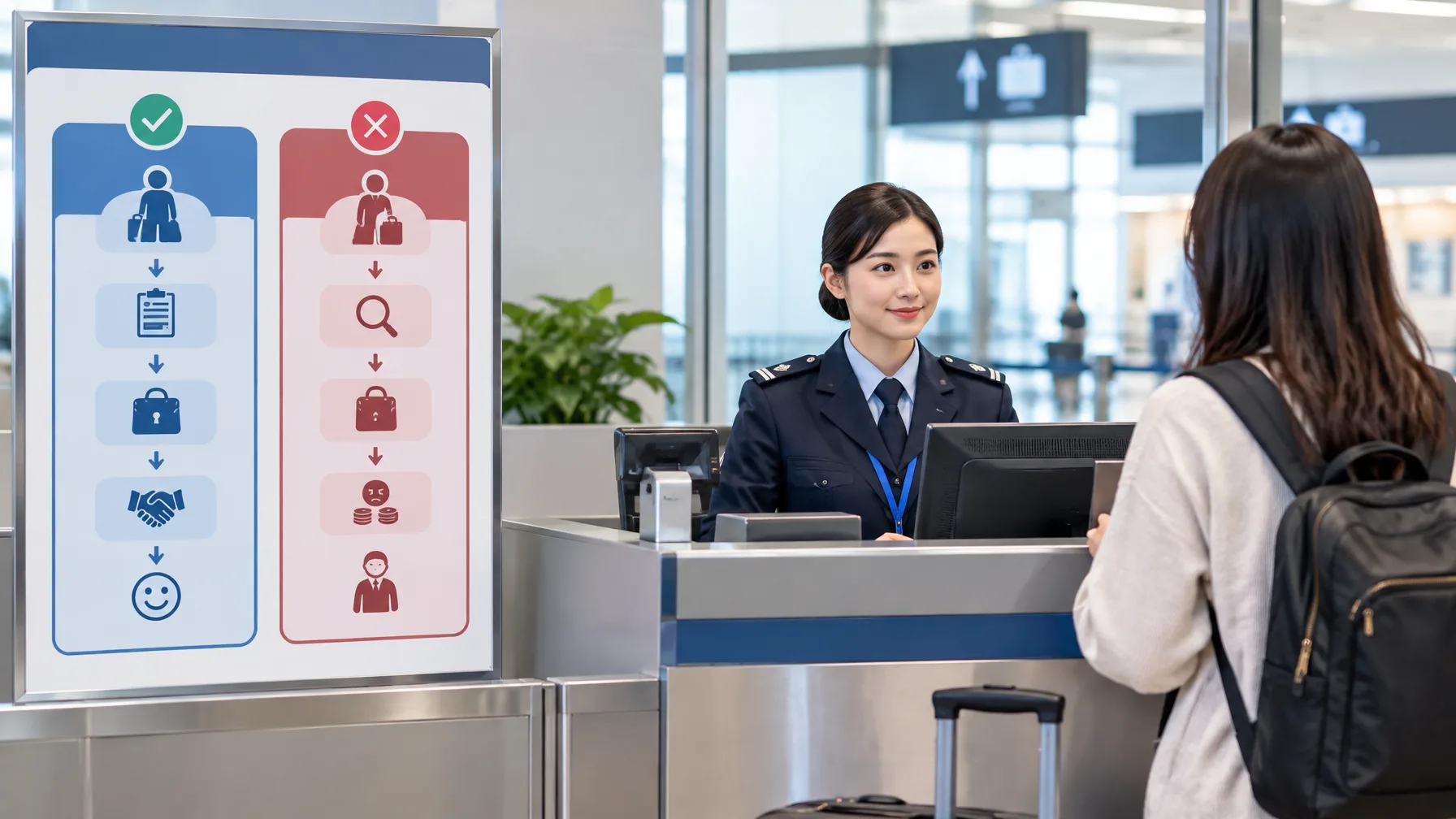
Think of the system as two tracks. One is a forgiving track for people who tell the truth. You state what you carry, the value you give is accepted unless it's oddly low, and going over the allowance is handled with a discount on the duty. The other is a costly track for people who are caught hiding goods or lying on the form.
The penalties are designed to push you onto the first track. Anyone caught with an undeclared item pays a surcharge on top of the normal tax. The surcharge climbs to 60% if you're caught two or more times within two years. That's why a single honest declaration is almost always the smarter choice than a gamble.
What the Korea duty free limit covers, and what has its own allowance
 AI-generated image
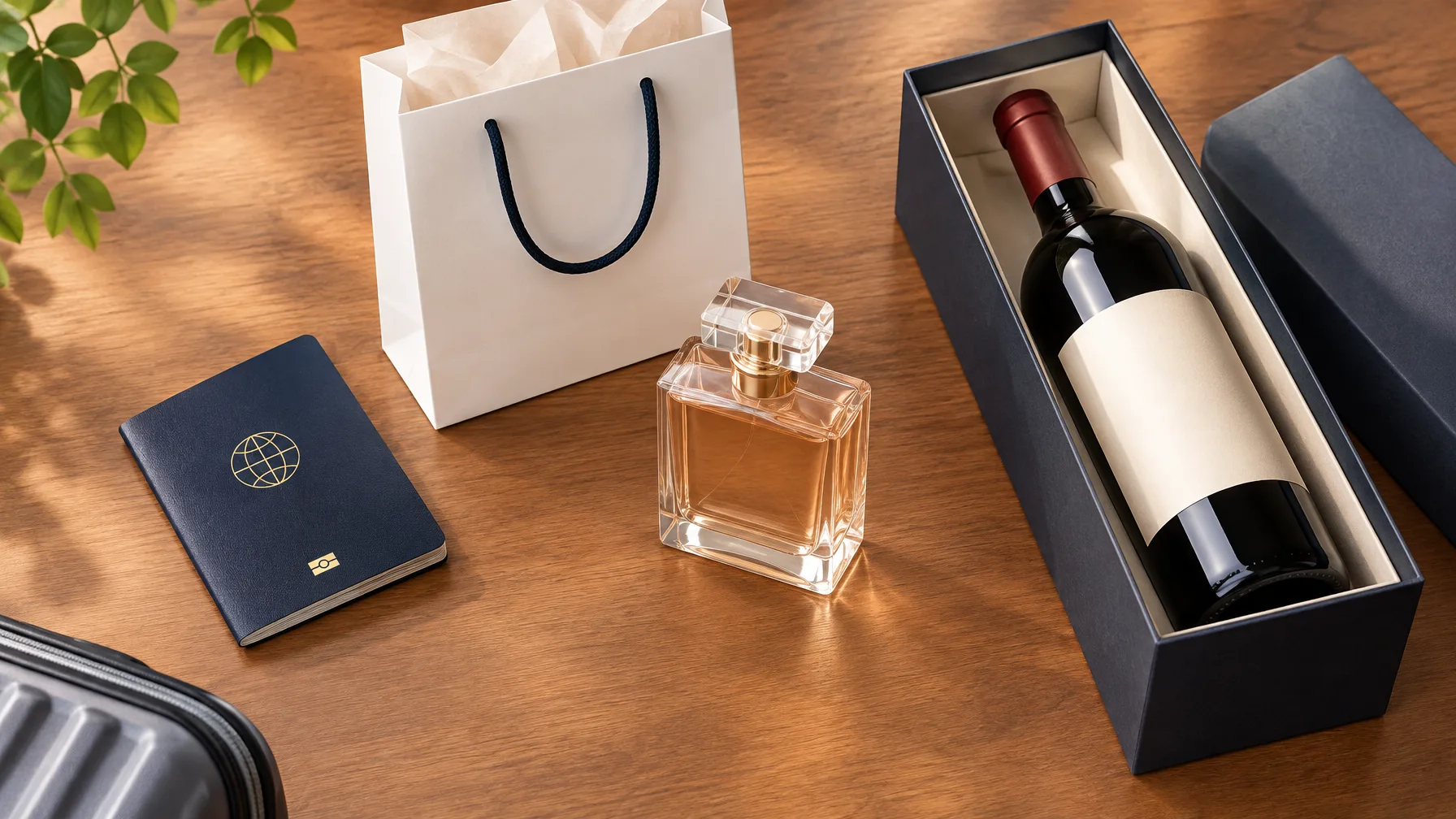
Alcohol, cigarettes, e-cigarette nicotine liquid and perfume are counted separately. They don't eat into the general limit. Farm and fishery products follow their own weight caps and a value cap of ₩100,000. Here's the whole picture in one place, next to what declaring and hiding cost.
| Item | What the rule says |
|---|---|
| General goods you carry in | US$800 total value, duty-free |
| Alcohol | 2 L total, up to US$400 |
| Cigarettes | 200 sticks |
| Nicotine liquid for e-cigarettes | 20 ml |
| Perfume | 100 ml |
| Farm products | 5 kg per product, 40 kg in total |
| Cash, checks and Korean won | US$10,000 |
| Declaring something over the limit | 30% off the duty |
| Getting caught hiding it | 40% surcharge on the normal tax (60% if caught twice within two years) |
One catch for younger travelers: anyone under 19, counted by birth year, gets no alcohol or tobacco allowance at all. Adults who travel together should keep that in mind when they split bottles or cartons between bags.
What is banned or restricted from entering Korea
 AI-generated image
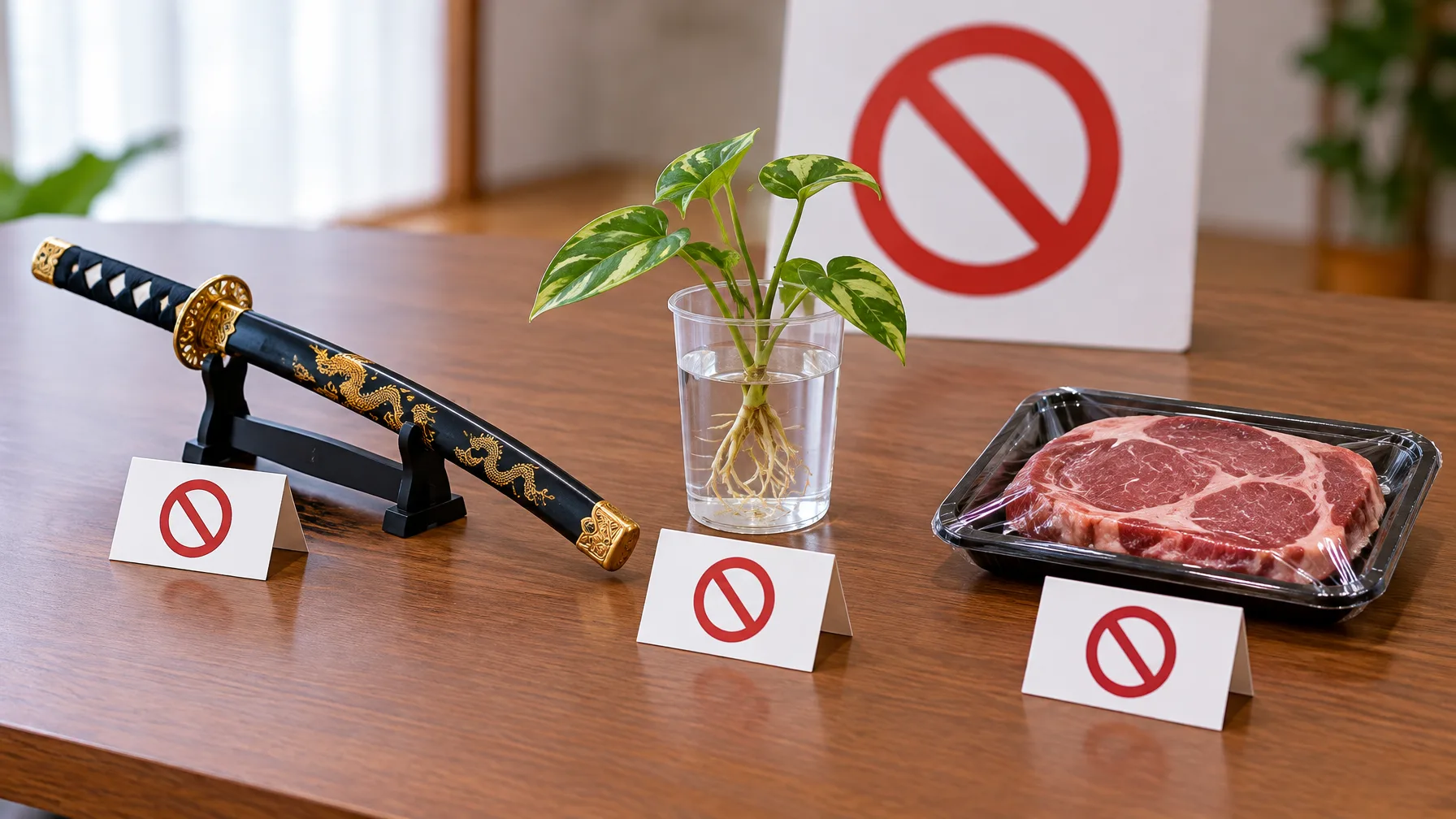
The banned list is easy to remember because most of it sounds obvious. Counterfeit money and products made from endangered wildlife belong on the list.
Don't pack plants, fruits and vegetables, or agricultural, poultry and forestry products. If customs finds a prohibited item in your bag, they confiscate it, and you can be punished under Korean customs law.
What hiding or misreporting something can cost
Suppose you skip a declaration or give a false one, and you get stopped in the duty-free lane. On top of the tax owed, a surcharge is added, and the customs law allows the goods to be seized. The penalty can reach up to five years in prison or a fine.
Even for restricted items, honest declaring is said to end in confiscation rather than a fine in most cases. The expensive outcomes are reserved for people who chose to hide something.
Food in your bag: packaged snacks are usually fine, meat isn't
Commercially packaged snacks, ramen and coffee that contain no meat are usually brought in without trouble. Fresh produce, plants and anything from the animal side of the restricted list are a different story.
If you do carry farm or fishery products, stay inside the per-product and total weight caps in the table. When you are not sure whether something counts, declare it instead of guessing.
Medication: personal and most prescription drugs come through
Over-the-counter medicine for your own use and most prescription drugs can generally be brought in without trouble. A prescription written in English is usually enough for common prescription medicine. Strict rules apply to drugs with psychotropic or narcotic ingredients, which is why medicines that can be misused or abused appear on the restricted list.
Cash, checks and Korean won have a ceiling too
Carrying more than US$10,000 in foreign-currency means of payment, checks, or Korean won? That's restricted from entry.
A quick five-step check before you land
- Add up the value of the new things in your bags, including gifts and shopping.
- Pull out meat, plants, fresh produce and anything that came from an animal.
- Check your alcohol, cigarettes, perfume and nicotine liquid against the allowances in the table.
- Count any cash or checks you carry.
- Declare anything over a limit instead of hoping nobody asks.
Three myths about Korean customs that cause needless worry
Myth one: every bag gets opened. It doesn't. When nothing looks suspicious, travelers are cleared without a check, and a stated value is accepted unless it looks unreasonably low.
Myth two: all food and all medicine are blocked. The real restrictions are narrower than that.
Myth three: declaring means getting in trouble. It's the opposite. Declaring is the cheaper and safer path, and the heavy outcomes come from getting caught hiding things.
Where to check the current rules before you pack
Limits can change, so a quick look at both before you pack is worth the two minutes.
Entry permission is a separate step from customs. Still sorting arrival paperwork? See K-ETA for US citizens: Do you need to apply in 2026?.
Pack normally, skip the meat, and declare the extras
For most visitors, Korean customs is a routine step. Declare anything that goes over the limit.
Comments
No comments yet.