
Gyeongbokgung Palace History: Why Changdeokgung Took Over
 AI-generated image
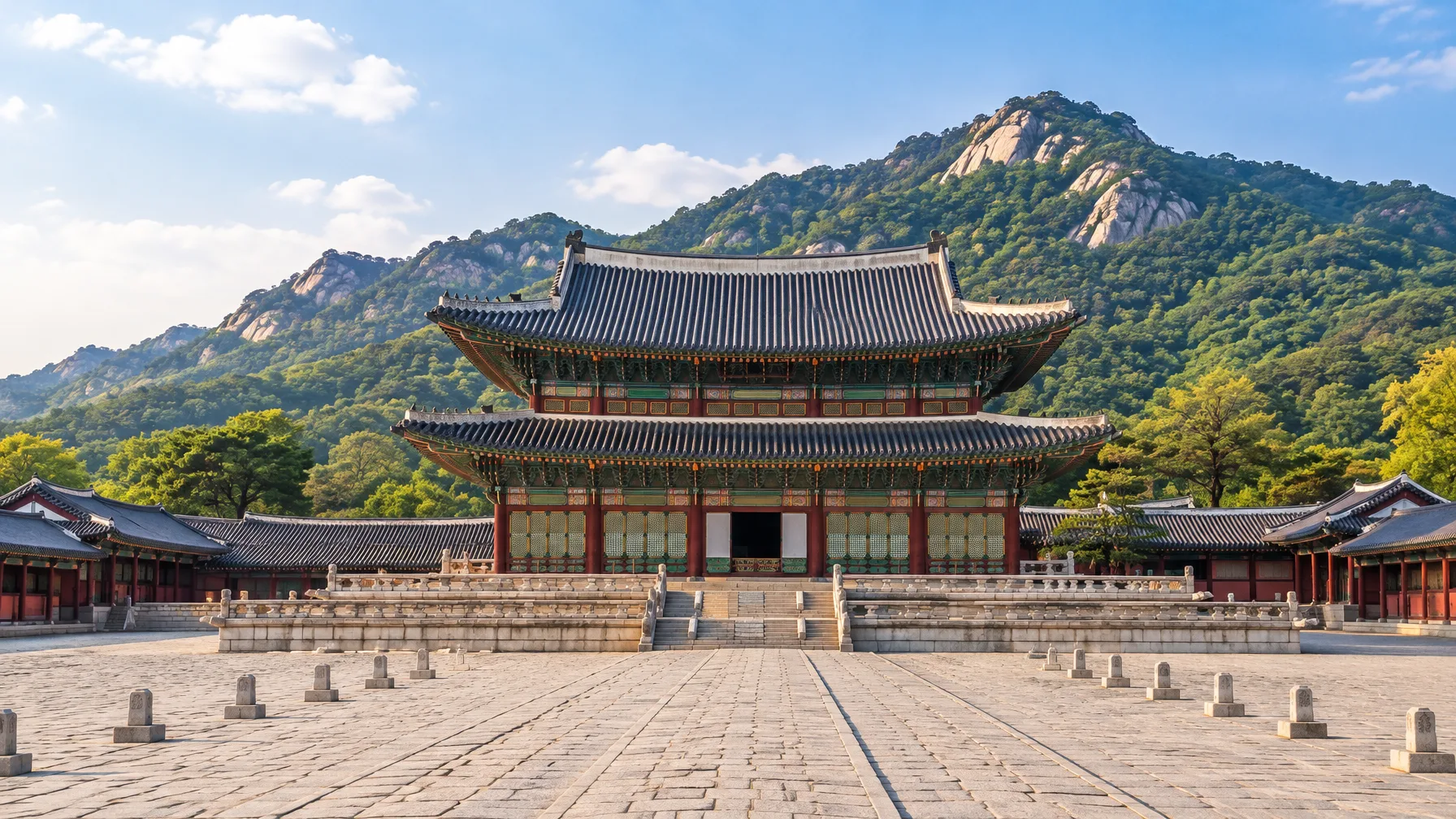
Gyeongbokgung, the first Joseon royal palace (1395), burned down completely in the 1592 Imjin War. Changdeokgung, rebuilt first in 1610, was the kings' main home for 270 years, until Gyeongbokgung rose again in 1867. That is the whole palace Korea history lesson in two lines. Today's Gyeongbokgung is not the palace as it first stood. Below is a simple timeline, what actually damaged the place, and what else is worth seeing in Seoul.
Burned in 1592, replaced by Changdeokgung for 270 years, rebuilt in 1867
 AI-generated image
Think of it as a relay. The palace that served as the kings' main home changed hands twice, and this table shows who was holding it when.
| Year | Main royal residence | What happened |
|---|---|---|
| 1395 | Gyeongbokgung | Built as the first royal palace of the Joseon dynasty |
| 1610 | Changdeokgung | Rebuilt before any other palace |
| Next 270 years | Changdeokgung | The kings' main residence |
Three different things hurt Gyeongbokgung: the fire, the long disuse and the colonial-era demolition. They are easy to blur together, so each gets its own explanation below.
Sejong's palace, and the older palaces behind it
 AI-generated image
Gyeongbokgung had its best years under King Sejong, who reigned from 1418 to 1450. The palace thrived then, and Sejong led the creation of Hangul, the Korean alphabet, here. That is the high point of Gyeongbokgung Palace history, and it is the main reason the name carries so much weight.
Royal palace Korea history goes back much further than Joseon, though the early chapters are thin. The palaces of Gojoseon (2333 to 250 BC) cannot be traced at all.
Later kingdoms left clearer names. Goguryeo built Anhakgung in 427 AD, after it moved its capital to Pyongyang and needed a new palace. Baekje kept palaces at Sabi (today's Buyeo) and Gongju, and Silla's palace was Banwolseong in Gyeongju. Balhae's palace, Sanggyeong, is remembered as one of the largest in Korean history.
The war fire, long neglect and colonial demolition each took a toll
 AI-generated image
The war that took the palace ran from 1592 to 1598, and Gyeongbokgung burned down completely during it. Changdeokgung was lost to the same Japanese invasion in 1592. After that, the damage came in two more waves, and each had a different cause.
- The war fire (1592 to 1598): Gyeongbokgung burned down completely, so none of the first buildings stand today.
- The long disuse: after the war the palace sat largely unused and undeveloped for generations, while the kings lived elsewhere.
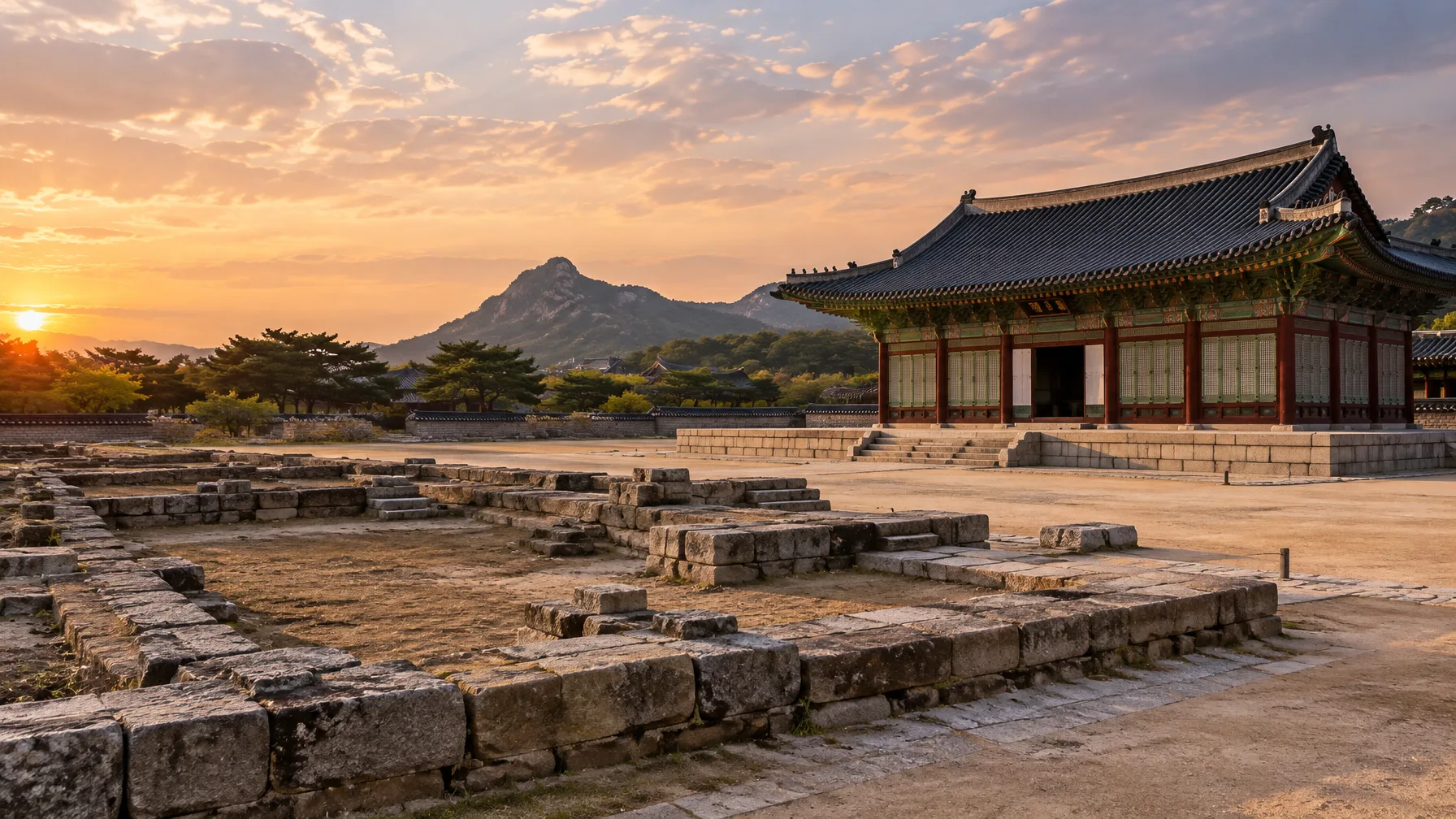
- The colonial-era demolition: during Japanese colonial rule, over 90% of the palace's buildings were torn down. Only the main ones were left.
So Japanese forces did shape the palace's fate twice, once in the war and once under colonial rule. The long gap in between was no single event. It was a slow stretch of neglect.
Even after the rebuilding, the palace had a short second career as a royal home. After Queen Myeongseong was killed in 1895, the royal household never moved back to Gyeongbokgung.
Changdeokgung, the East Palace, was already the kings' favorite
The kings did not have to learn to love Changdeokgung. Taejong repaired and expanded Gyeongbokgung, yet he barely used it and stayed mainly at Changdeokgung. By the time the war was over, the kings already had a palace they preferred, and it kept the main role for 270 years.
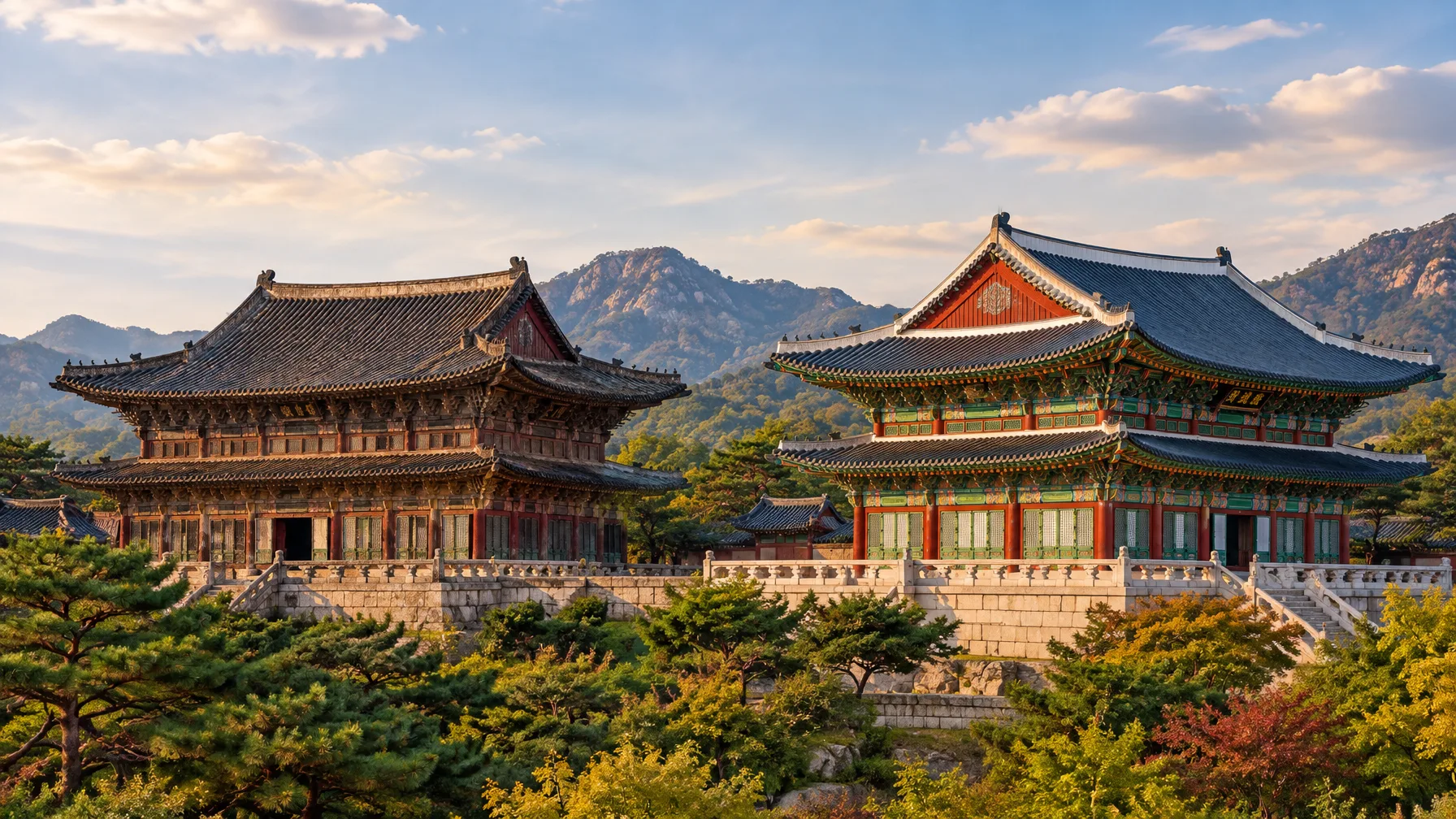
Changdeokgung is often called Donggwol, the East Palace. No boundary separated it from the neighboring Changgyeonggung, so the two read almost as one ground. It is often called the most Korean of the palaces, and its buildings sit in harmony with the natural scenery.
It also holds a heavy chapter. In 1910 the Japan-Korea annexation treaty was signed at Heungbokheon. It was an annex of Daejojeon hall inside Changdeokgung.
A rebuilt palace never matches the original, and some repairs are debated
The biggest mix-up is treating Gyeongbokgung as untouched. Once it burned, even the rebuilt palace could not match the original. Its original size is also hard to pin down because estimates differ. Some restoration work has also drawn debate. The rebuilding of Gwanghwamun and other structures in the Park Chung-hee years used reinforced concrete. They were also not put back on their original spots.
- Gyeongbokgung was not Joseon's center the whole time. After the war, Changdeokgung held that role.
- The buildings are not from 1395. They were rebuilt after the original palace burned down.
- Restoration is not finished everywhere. Parts of the palace can be under repair, so a few areas may be closed.
Four more palaces fill out the story if you have a second day
Palaces in Korea are not a one-stop story. Here is what visitors tend to mention about each.
| Palace | Highlights |
|---|---|
| Changdeokgung | The East Palace; buildings blend with the natural scenery |
| Changgyeonggung | Plenty of lawn, fewer crowds, a relaxed feel |
| Deoksugung | A night visit called the Moonlight Palace Tour. Light falls on the buildings after dark. A two-tier stone path lies in front of the main hall. |
| Gyeonghuigung | Steps where people sit and look out toward N Seoul Tower |
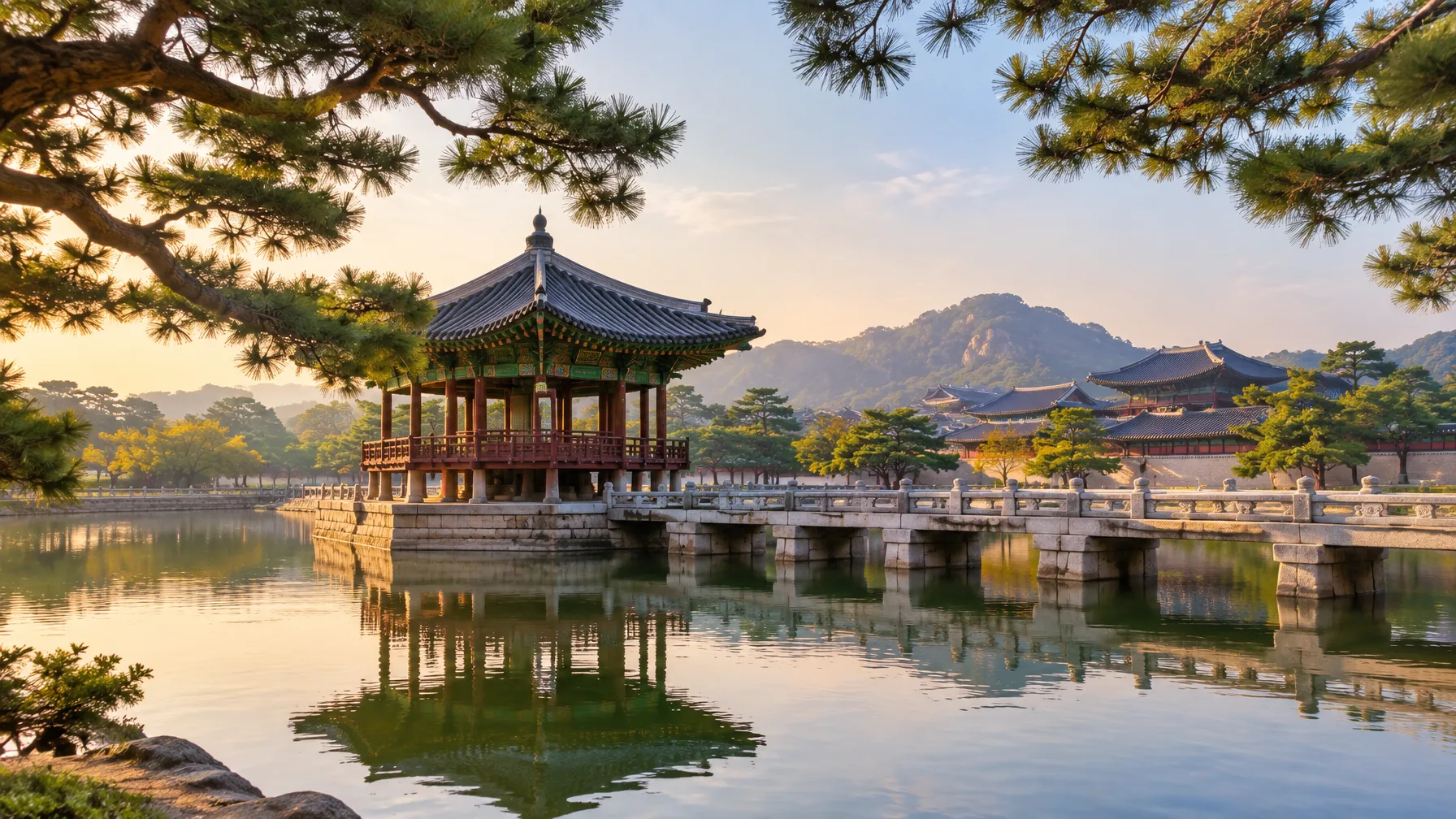
Deoksugung's night visit is a highlight. After sunset, the light on the buildings and old objects recalls night scenes from Korean historical dramas. A guide can point out architectural details most people would miss. Seoul Museum of History is another stop, and a surprisingly good museum.
Plan about two and a half hours at Gyeongbokgung, not one
Plenty of first-timers expect Gyeongbokgung to take under an hour, but a visit with lots of photo stops can run about two and a half hours. If you like pictures, leave room for that. These days many people walk the palaces in hanbok, the traditional Korean clothing, and that adds to the photo stops.
Since parts of the grounds can be under repair, keep your schedule loose. For ticket prices and free entry, see Gyeongbokgung Palace Entrance Fee: Is It Free for You?.
The first palace was lost, and its replacement hosted the kings for 270 years
Gyeongbokgung is the first Joseon palace (1395), but it burned in 1592, and Changdeokgung, rebuilt in 1610, was the kings' main home for 270 years. What you walk through today is a rebuilt palace, not the original. Visit both if you can.
Comments
No comments yet.