
Korean Street Food Prices: Gimbap 1500 Won, Dakkochi 2000 Won
 AI-generated image
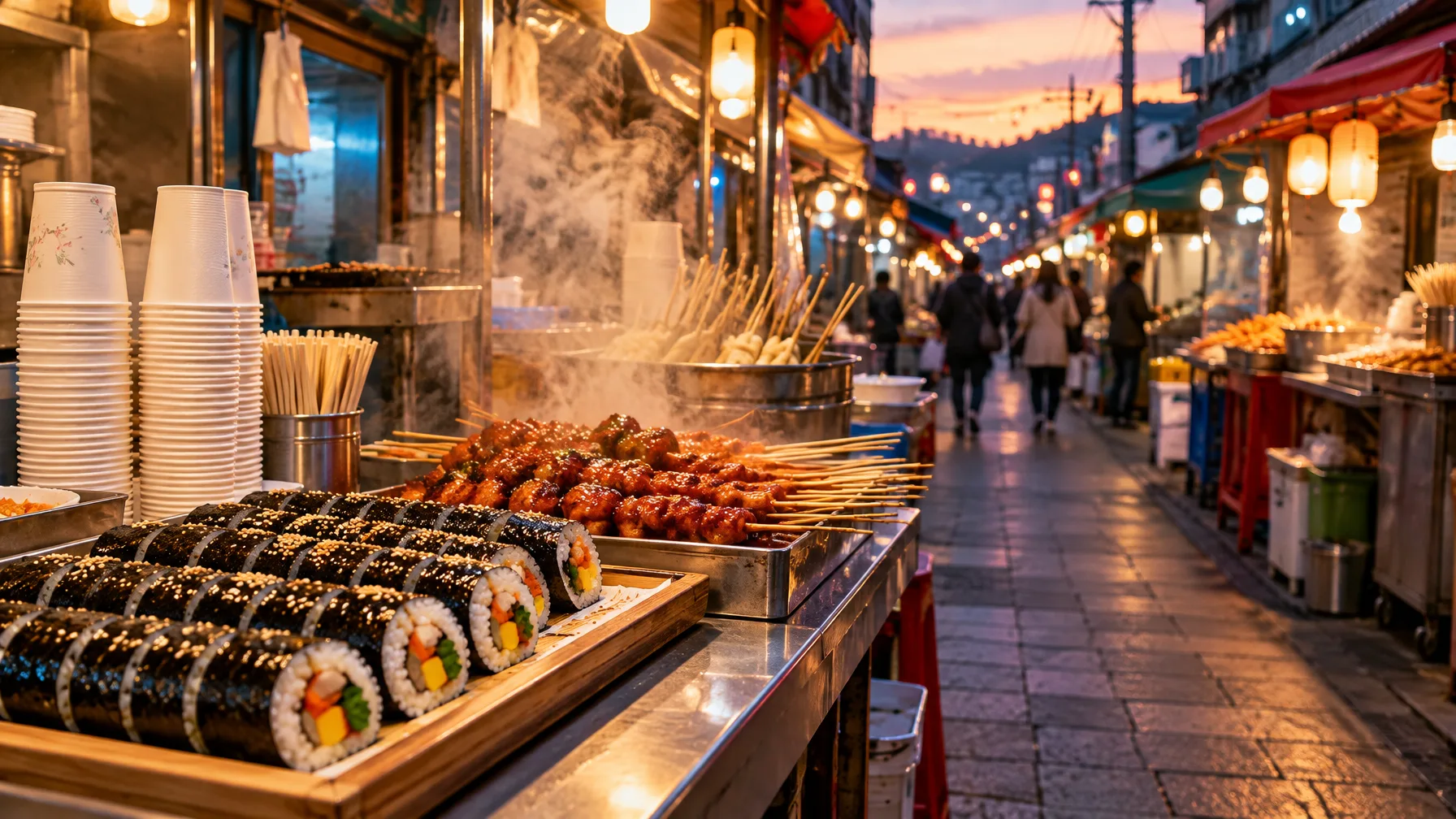
At Korean street stalls, a roll of gimbap costs 1,500 won (about $1.32). A dakkochi chicken skewer costs 2,000 won (about $1.75). A bag of mandu dumplings costs 3,000 won at a small shop in Namwon. Prices that low make it easy to sample a whole row of stalls in one go. This works as a Korean street food menu guide for first-timers. It covers what the dishes are, how they taste, and which ones to skip if they aren't for you.
Gimbap, dakkochi and a bag of mandu keep a street-food walk cheap
 AI-generated image
The short answer: a street snack costs a couple of dollars. Three or four of them add up to a light meal without much damage. For famous street food in Korea, start with gimbap, dakkochi, tteokbokki and mandu. Sundae is the one to try with curiosity rather than expectation.
Pojangmacha are the stalls, and they stay busy day and night
 AI-generated image
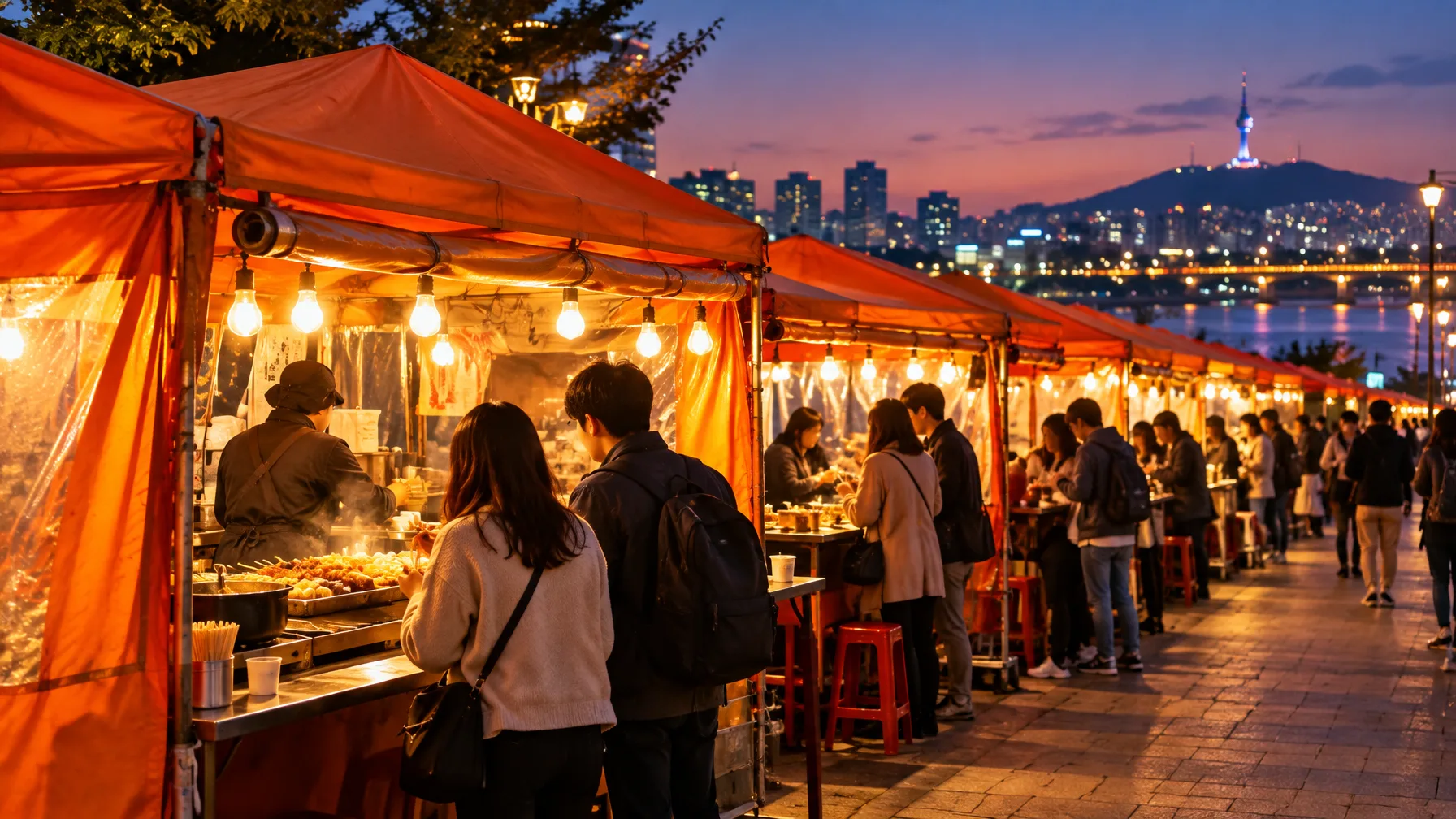
Korean street food stalls are called pojangmacha. They are found in Seoul and in towns all over the country. They fill with locals and tourists both by day and by night. The tradition is old. Street food in Korea goes back more than 600 years, to the Joseon era, when people set up food stalls near markets.
Eating is casual. Gimbap, for one, can be eaten standing up under a roadside tent. Tteokbokki is the snack Koreans themselves file under street food. If you want to plan a wider walk around Seoul, two other pages cover places to eat. One is Namdaemun Market Food: Guksu Alley and Galchi Alley, Where to Eat. The other is Myeongdong Street Seoul: What It's Famous For, Day or Night.
Tteokbokki, gimbap, dakkochi, mandu and sundae: what each one tastes like
 AI-generated image
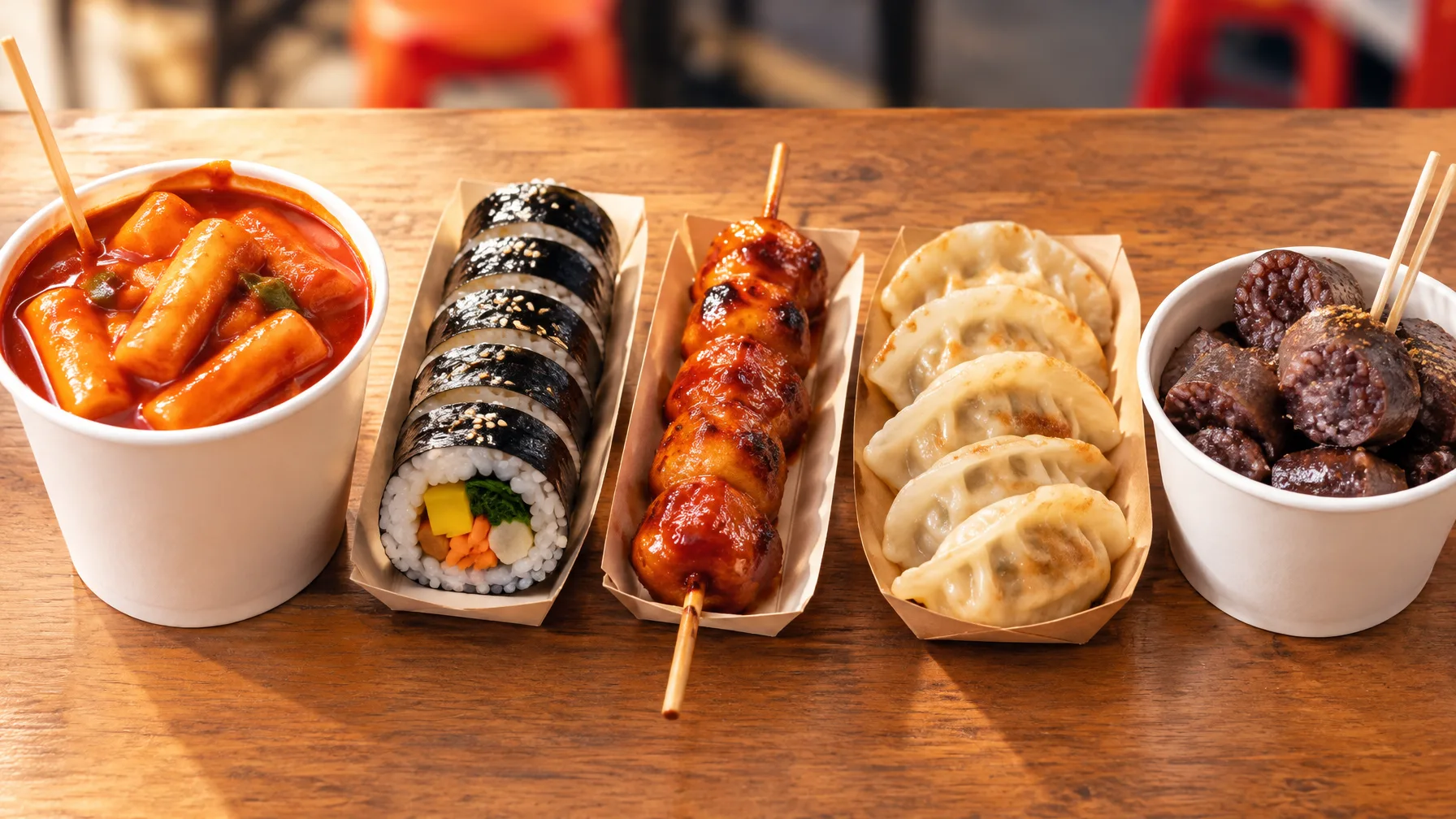
Tteokbokki is the classic. Cylinder-shaped rice cakes are stir-fried in a sweet, spicy chili sauce with sugar, soy sauce and garlic. They're often served in a paper cup. The texture is what Koreans call jjolgit, a chewy, springy bite that isn't tough and isn't undercooked. Some compare it to gnocchi. Seoul even has a Sindang-dong Tteokbokki Town.
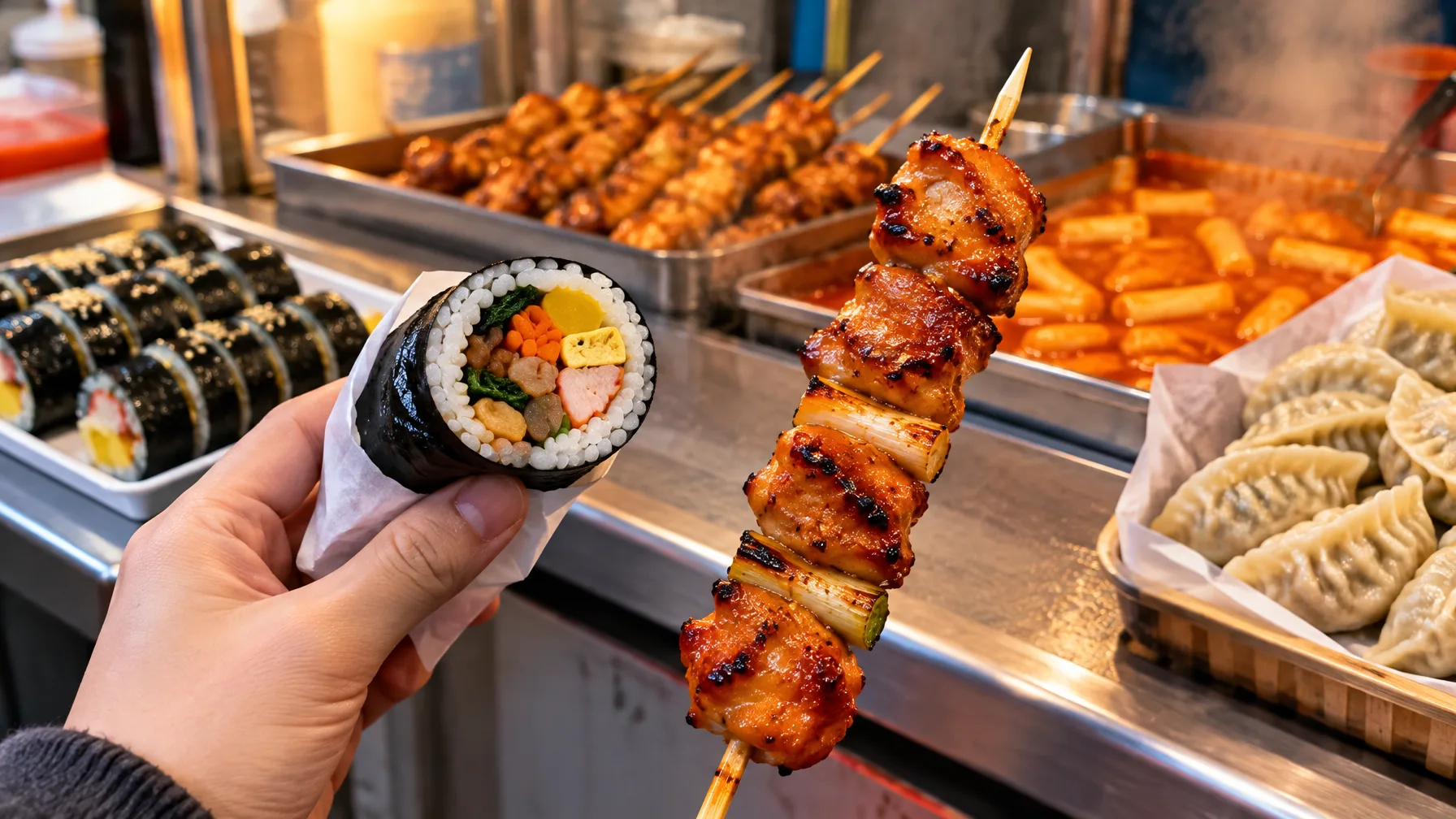
Gimbap is rice rolled in seaweed. It looks like sushi but is bigger, and it is the Korean answer to a maki roll with no raw fish. Traditional fillings are pickled vegetables, egg and meat, with sesame oil for flavor and sesame seeds on top. At lunch it often comes with kimchi, the spicy pickled cabbage found at nearly every Korean meal.
Dakkochi is the easy one to love. It is a grilled chicken skewer brushed generously with a red chili sauce, and it is very tasty. That is the simplest order at a stall, because you hold it and eat it right there.
Mandu are round, plump dumplings that can be steamed, boiled or fried. The traditional filling is minced meat, usually pork, with scallion, garlic and tofu. Boiled ones are called mul mandu. Jjinppang mandu is closer to a steamed bun, and it's very filling as a snack. A shop near Seongdong Market in Gyeongju steams it to order. Its wrapper is not especially thick or heavy.
Sundae is the one that surprises first-timers. It's a blood sausage stuffed with glass noodles, made from cow or pig intestine, pig blood, vegetables and sticky rice. The flavor is mild and the texture is firm and chewy. You dip it in a mix of salt and chili powder. It isn't vegetarian.
All three priced snacks side by side, in won and dollars
| Snack | Price in won | About in dollars | How it tastes |
|---|---|---|---|
| Gimbap, one roll | 1,500 won | $1.32 | Rice roll with sesame-oil flavor, egg, pickled vegetables |
| Dakkochi, one skewer | 2,000 won | $1.75 | Grilled chicken in a generous red chili sauce |
| Mandu, one bag at a small shop in Namwon | 3,000 won | $2.64 at the same rate | Plump dumplings, steamed, boiled or fried |
The mandu dollar figure uses the same exchange rate as the gimbap price, so treat it as a rough guide. Prices shift from stall to stall, so use the table to judge what is fair, not as a fixed price list.
If sundae, live nakji or a crowded stall isn't for you
Sundae divides people. Many places serve it with pig ear, lung and liver, so anyone who dislikes organ meats or blood should skip it. Nothing is lost: tteokbokki, dakkochi and mandu cover the same ground without it.
Live seafood is a bigger step. Sannakji is live nakji (small long-arm octopus), and the suckers cling to your teeth, which startles many first-timers. Some people also feel uneasy about eating a half-alive octopus. Gaebul, an unfamiliar seafood sold from tanks at markets, puts others off just by how it looks. Saying no is fine.
Crowds and closing times are the other trap. A famous stall can be so packed that a seat is out of reach. At Gwangjang Market, a TV-famous kalguksu (knife-cut noodle soup) shop is one such place. A nearby eatery serving mandu and mung bean pancake works as a fallback. Late in the evening, most market stalls close and the alleys go quiet.
Two small myths are worth clearing up. Korean menus usually have no item descriptions, and photos exist only for some dishes. So pointing at what you see works better than reading. And gimbap isn't only a stall food: you can also buy it at convenience stores and restaurants.
Budget a few dollars per snack, and arrive before the evening rush
Budget a few dollars per snack and pick gimbap, a dakkochi skewer or a bag of mandu. Stalls get crowded and many close late in the evening, so go earlier. Come hungry and point at whatever looks good.
Comments
No comments yet.