
What Are the Rules for Wearing a Hanbok? What Counts
 AI-generated image
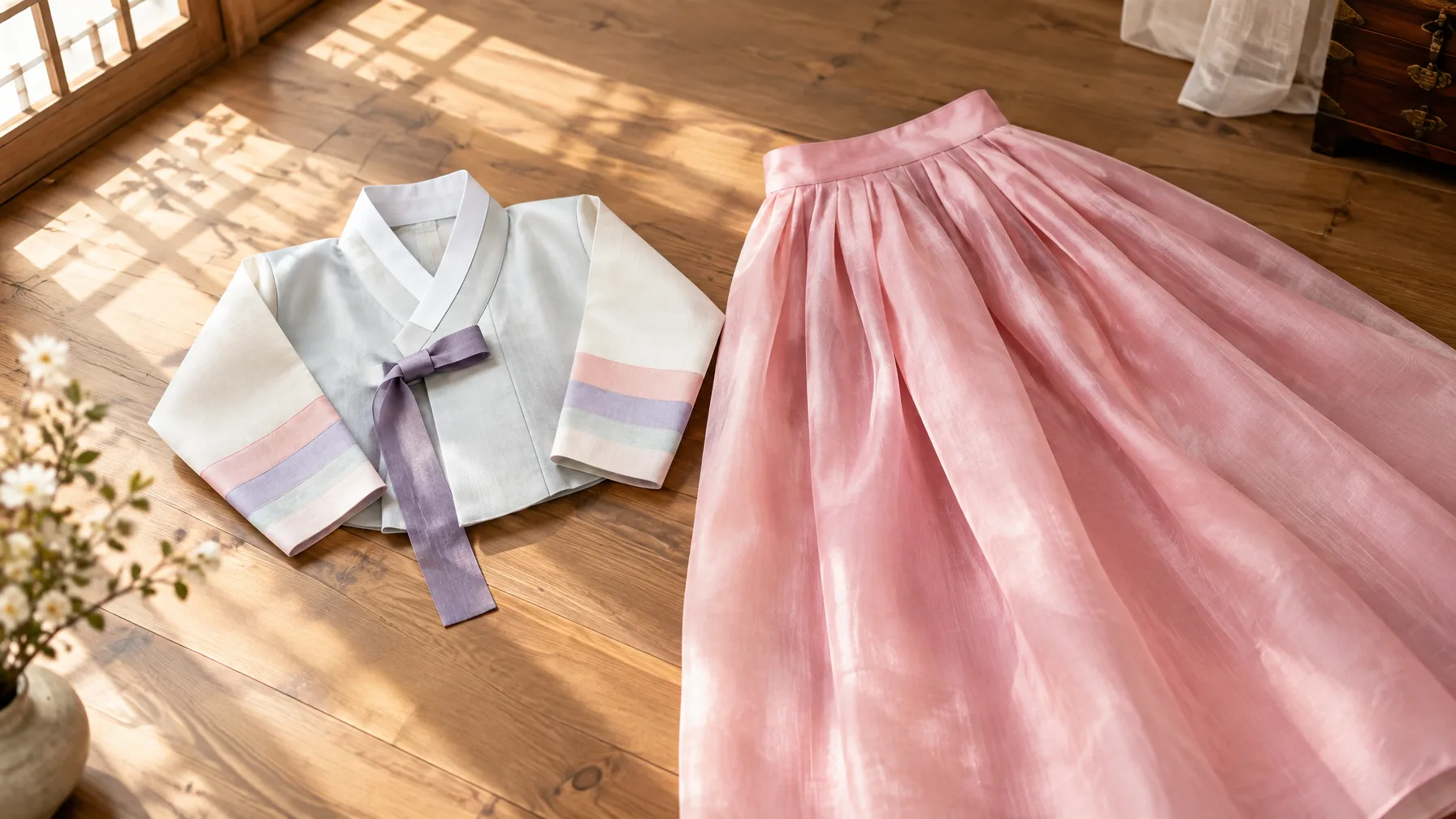
You need a jeogori (the short jacket top) plus a bottom, either a skirt or pants that covers your legs. The goreum (the cloth ties) must be knotted and any buttons fastened. A durumagi (a long overcoat) alone, a T-shirt-style hanbok, or a jeogori over jeans does not count. Everything else, from layers to accessories, is detail you can pick up in a few minutes. Below is a counts / doesn't-count checklist, then the layering order for women and men.
A hanbok counts only as a full set: jeogori plus a leg-covering bottom
 AI-generated image
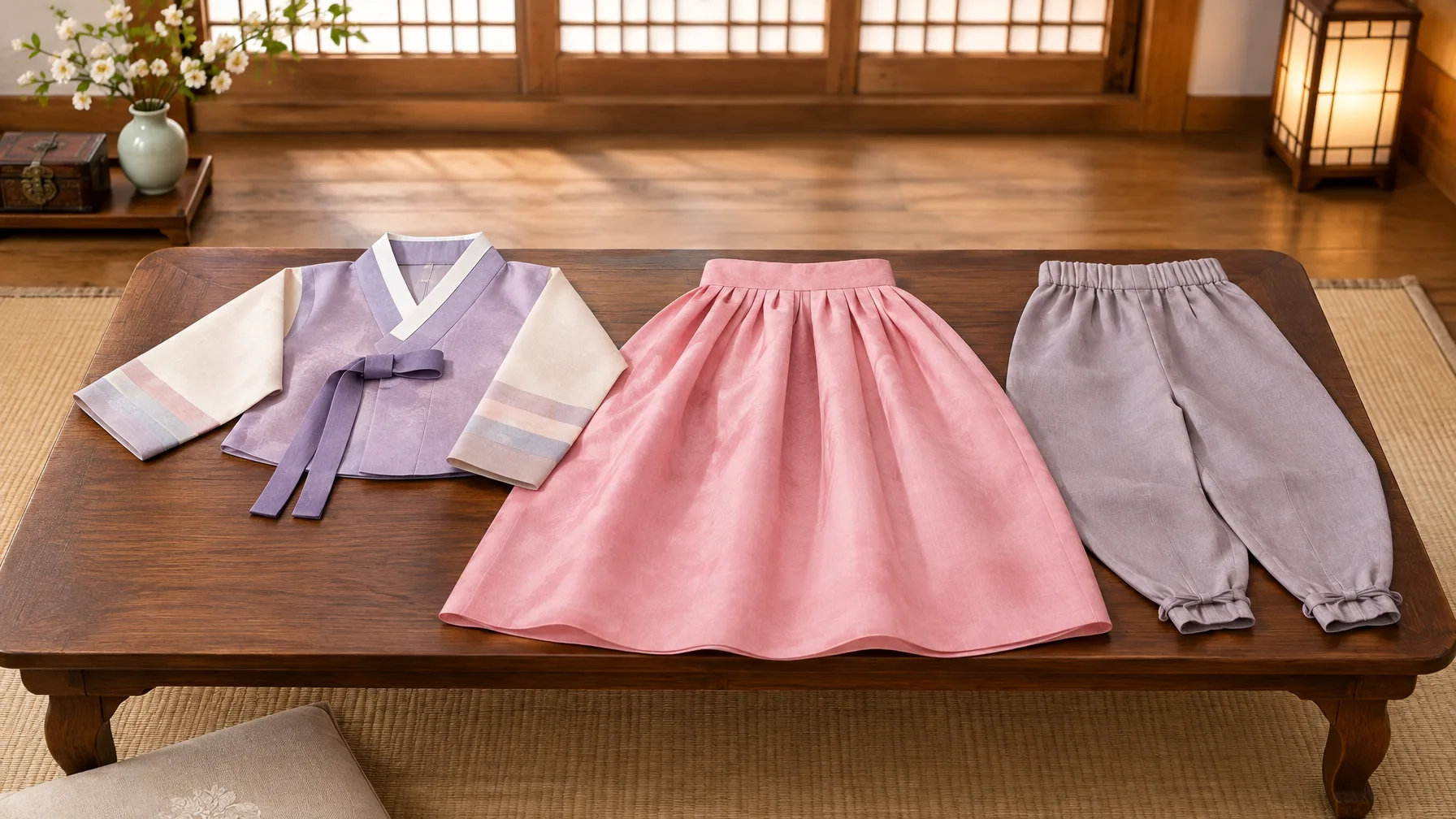
A hanbok is made of two halves that always go together. The traditional outfit is built from a jeogori, pants, a skirt and a po, the outer coat. The coat is an extra layer on top of the set. It never stands in for either half.
| Counts as a hanbok | Does not count |
|---|---|
| A jeogori with a hanbok skirt | A durumagi coat worn alone |
| A jeogori with hanbok pants | A T-shirt-style hanbok |
| Any skirt or pants that covers your legs | A bottom that leaves your legs uncovered |
| Goreum tied and buttons fastened | Goreum left hanging or buttons undone |
| Traditional or modernized hanbok | A jeogori over jeans |
| A complete top-and-bottom outfit | A hanbok skirt or pants under a regular T-shirt |
Keep the table on your phone if you are renting. It is short enough to check in the fitting room.
Where the checklist comes from: palace free-admission guidelines
 AI-generated image
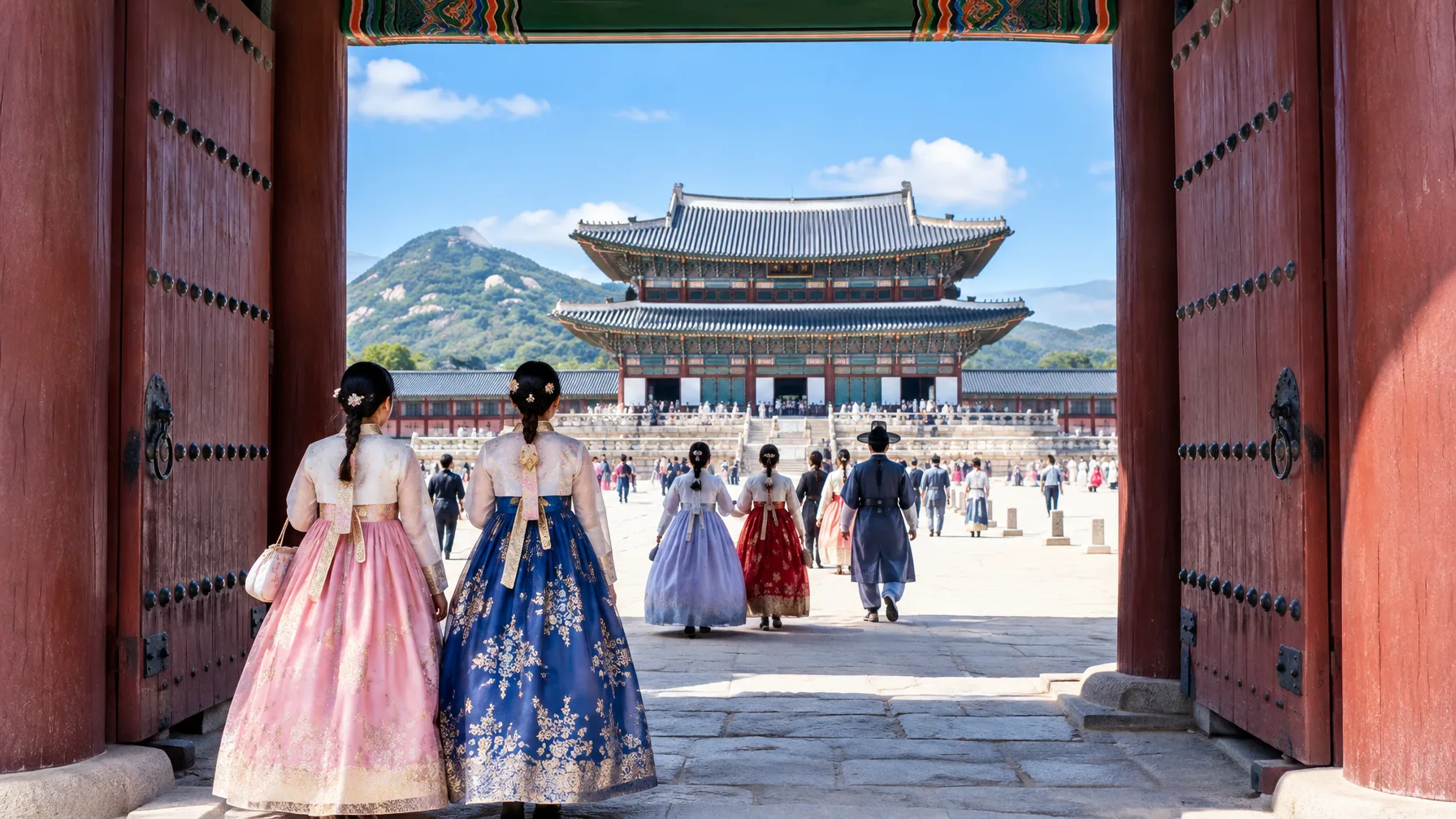
Those guidelines govern free entry to Korea's royal palaces. Both traditional and modernized hanbok qualify. Gyeongbokgung normally charges ₩3,000, so the perk is real.
Day to day in Korea, hanbok is mostly worn for an occasion. Weddings, festivals, commemorations, ceremonies and other formal or semi-formal gatherings are where people wear it. For a comparison of modern designs with older ones, see Modern Hanbok vs Traditional: What Actually Changes.
What counts as a full hanbok for women and for men?
 AI-generated image
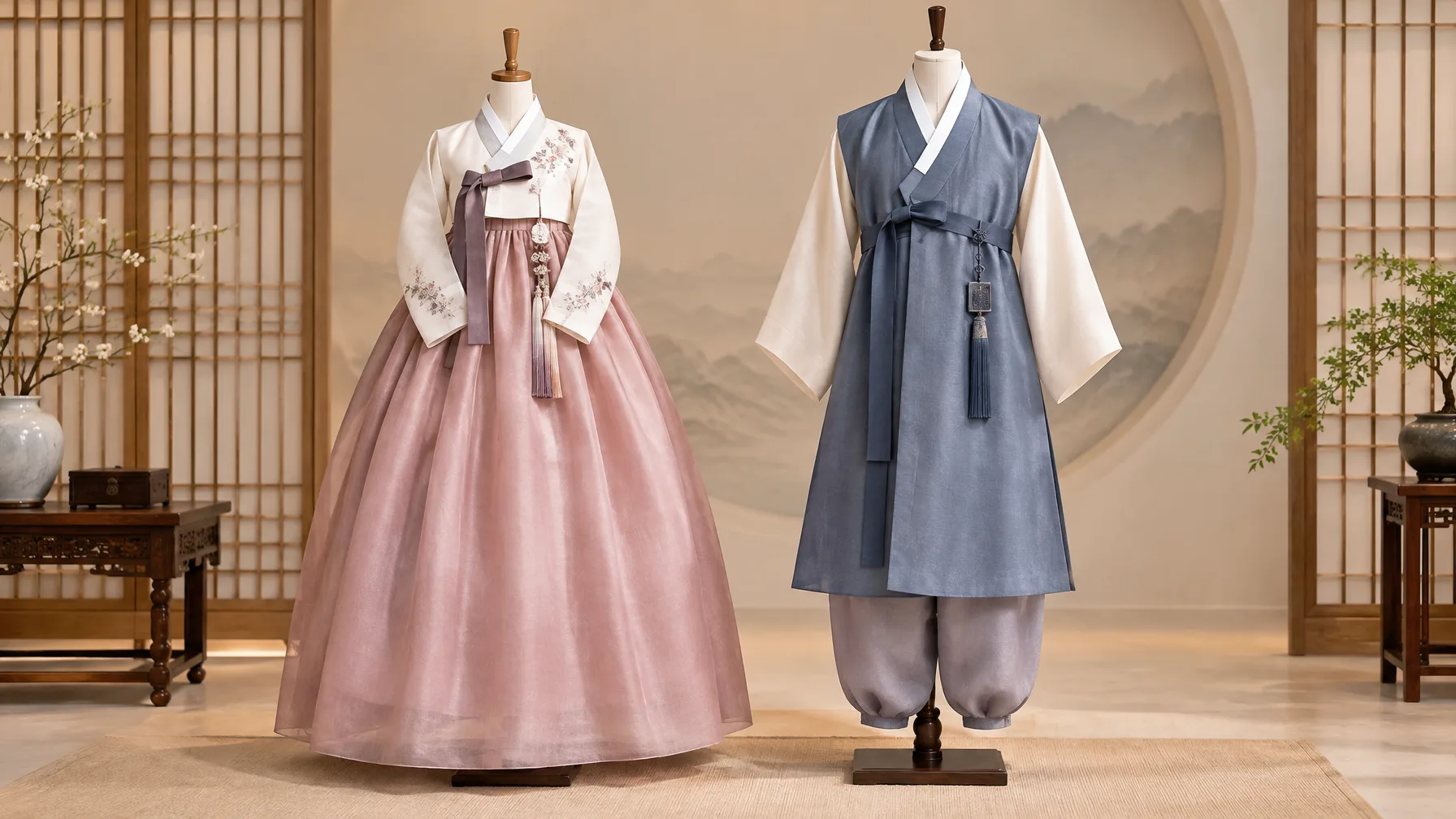
For women, the traditional hanbok is a jeogori and a chima, the wrap skirt. Any style of hanbok skirt works, but it always goes with its own separate jeogori. The skirt is full and wraps around the body, and its ties usually sit near the chest. Women's accessories include norigae, daenggi, binyeo, jokduri and ayam, though none of them is needed for a basic set.
A hanbok male outfit is a jeogori, a long-sleeved jacket, with roomy pants called baji. In cold weather men can add a jokki (a vest) or a durumagi coat. Men traditionally top the look with a gat, the classic hat. For a closer look at each piece, see Male Hanbok Explained: Jeogori, Baji and Durumagi in Plain English.
What do you wear underneath a hanbok?
Start with underwear for the top and the bottom, plus beoseon, the traditional socks. Women add an underdress next, and the skirt goes over it. Men wear a white T-shirt inside and white socks. That T-shirt is only an inner layer and never the outfit itself.
Men's pants are secured at the ankle. The ankle ties wind twice around the fabric so the cuffs stay put. It takes a second to do and keeps the baggy legs tidy for a day of walking.
In what order do you put on a hanbok, and how do you tie the goreum?
How to wear hanbok comes down to working from the inside out. The women's order looks like this:
- Put on the inner layers first: underwear for top and bottom, plus beoseon socks.
- Put on the underdress, then wrap the skirt over it and raise it to chest height.
- Tie the skirt strap neatly. It usually lands near the chest.
- Drape the jeogori over your shoulders and fasten the hooks or buttons.
- Let the two ribbons hang down, then tie them.
- Add the durumagi last, if you want the coat.
Men follow the same inside-out idea with simpler layers: socks and inner shirt, pants, then the jeogori. A vest or coat goes over it if the day is cold.
The goreum is the cloth strap that ties the jeogori shut. Every hanbok top closes with a single-loop knot made from these ties. On men's and women's hanbok alike, the V-collar jeogori has two goreum that must be tied in a set way. This is considered the trickiest step. Here is how to tie goreum in the half-ribbon knot:
- Hold one goreum in each hand.
- Lay the short right goreum over the long left one and make a knot.
- Fold the long goreum and pass it through the loop made by the short one.
- Pull the long one up and the short one down to tighten.
Do the colors on a hanbok mean anything?
In the Joseon era, yes. Variations in the hanbok told people a wearer's gender, social class, marital status and age. During some periods, commoners were banned from wearing bright colors in daily life. Finely woven patterns and the best silk were kept for royalty and people of high rank.
Pattern rules could be strict. Inside the court, the dragon motif belonged only to the king and the crown prince. There was one big exception. Everyday dress was supposed to be plain. At events like weddings, though, commoners were officially allowed to dress as lavishly as they liked.
Can I wear a hanbok if I'm not Korean?
Yes, and visitors often say it is received warmly. Foreign women have been spotted in hanbok around the palaces. Local girls and boys have asked to take photos together. That reaction suggests wearing hanbok does not offend people there.
Most travelers rent. A typical rental runs about four hours and can be extended. At one shop, getting dressed took only 10 to 15 minutes per person. Some shops hold your passport as a deposit, which not everyone likes. Taller guests may be led to a large-size corner. Because the skirt ties at the chest, measure its length from your armpit, not your waist.
Bukchon Hanok Village gets very crowded. Visitors suggest going in the very early morning, hanbok or not.
Beyond the one rule, hanbok is not one-size-fits-all
One common mistake is looking for a single rulebook that covers every situation. There isn't one. Hanbok varies with age, gender and occasion, and its shape has kept changing with each era's way of life and taste. Seasons change the fabric and the sewing. Even the look shifts with the wearer's build and how it is worn.
Weather matters more than most first-timers expect. Summer in hanbok is hot, and few palace spaces have air conditioning. Rental hanbok is usually synthetic rather than silk or hemp, so it breathes poorly on humid days. In winter the fabric is thin, and hanbok alone can feel quite cold. Rental stock also varies. Some pieces are in less than perfect shape, sizes can be limited for tall or larger visitors, and shops can get crowded.
Shoes are the other open question. The traditional shoes at rental shops look right but are not the most comfortable. Some people wear white sneakers with hanbok, and the look is no stranger than sneakers with a suit.
Wear the whole set, then let the day decide the rest
Wear a complete set: a jeogori with a skirt or pants that cover your legs, goreum tied and buttons fastened. That is the one rule firmly laid out. Beyond it, how a hanbok is worn varies with the occasion, age, gender and season.
Comments
No comments yet.