
Korean Baek-il 100 Day Celebration: Why Rice Cakes Matter
 AI-generated image
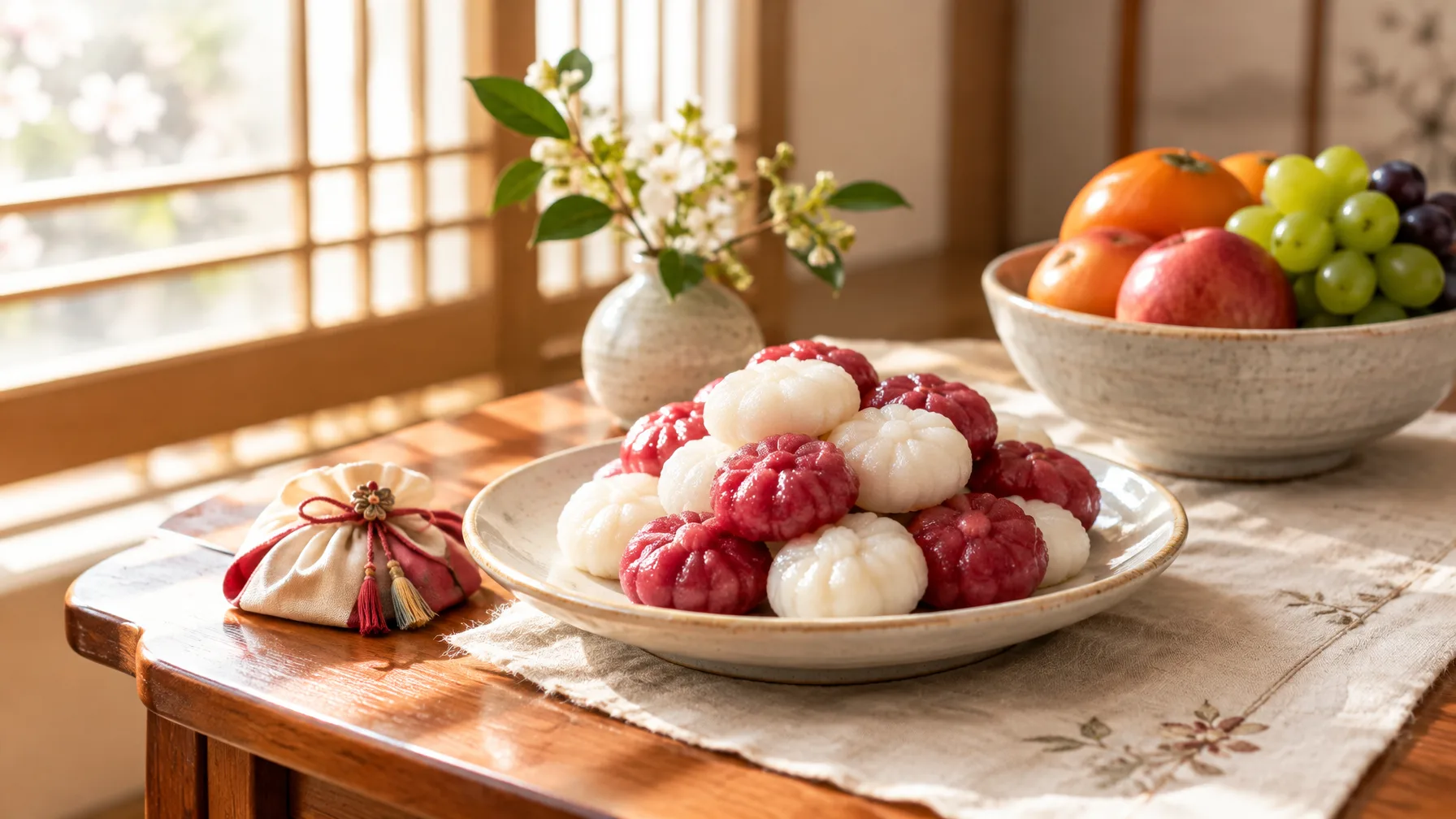
Baek-il is a Korean celebration of a baby's 100th day of life. In the past, many newborns died young, so once a baby passed 100 days, families held a 100th-day feast, a baek-il janchi. They shared red and white rice cakes with neighbors to give thanks. This guide to the Korean Baek-il (100 Days) Celebration covers four topics: traditions, meaning, food, and what to give as a gift. It also covers the second meaning that trips up first-timers: a couple's 100th day together.
A baby's 100th day was once a reason to give thanks
 AI-generated image
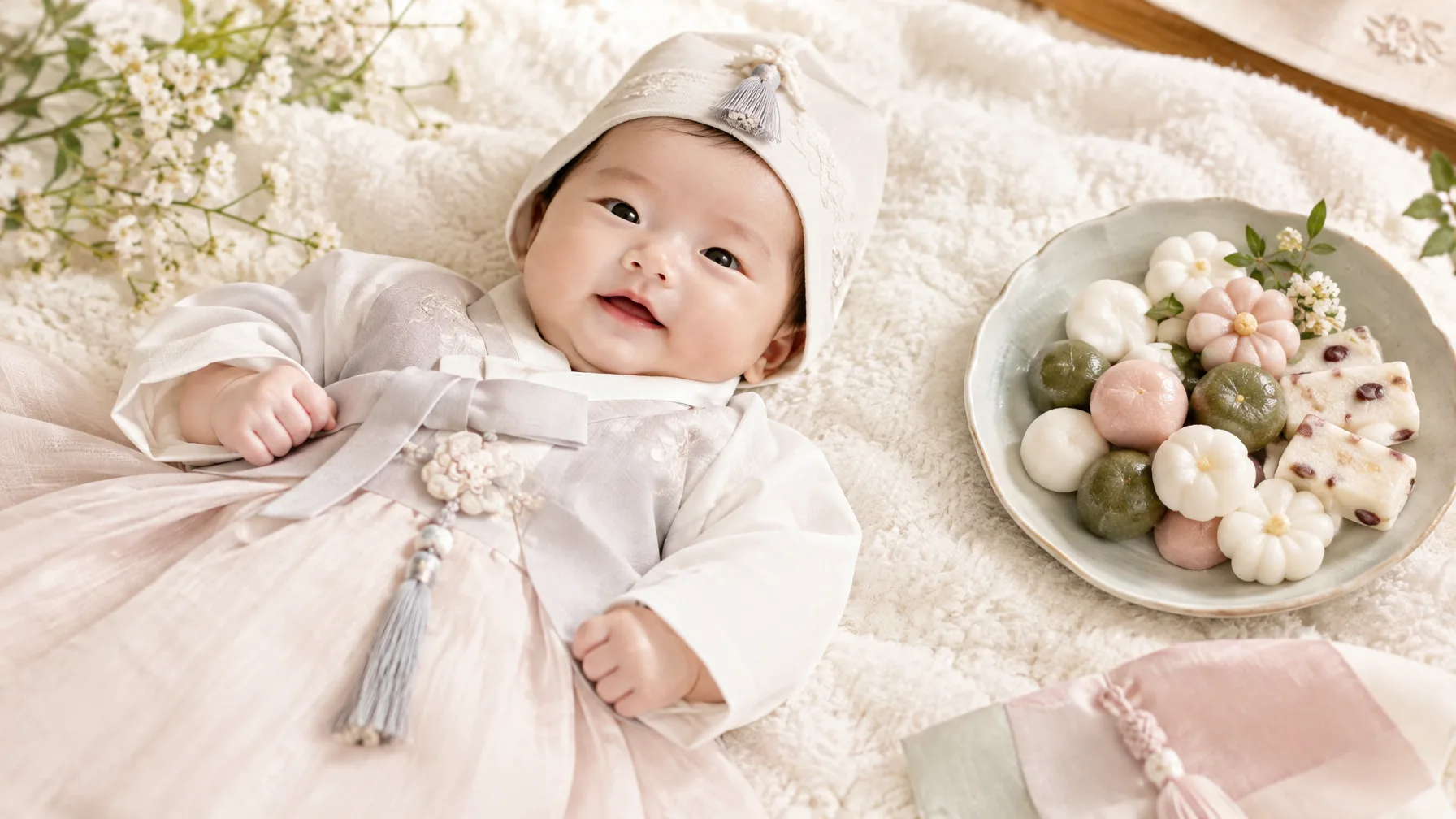
The word baek-il comes from "hundred days," and it names two different things, which is where the confusion starts. One is the baby's celebration. The other is a couple's marker: the 100th day since they officially started dating.
The baby's version came first. The day count is the whole rule: you wait for day 100, then you celebrate. Couples borrowed the same number later and made it their own small anniversary. If an invitation or a social post says baek-il, check who it is about before you pick a gift.
Why 100 days: getting through them was no small thing
 AI-generated image
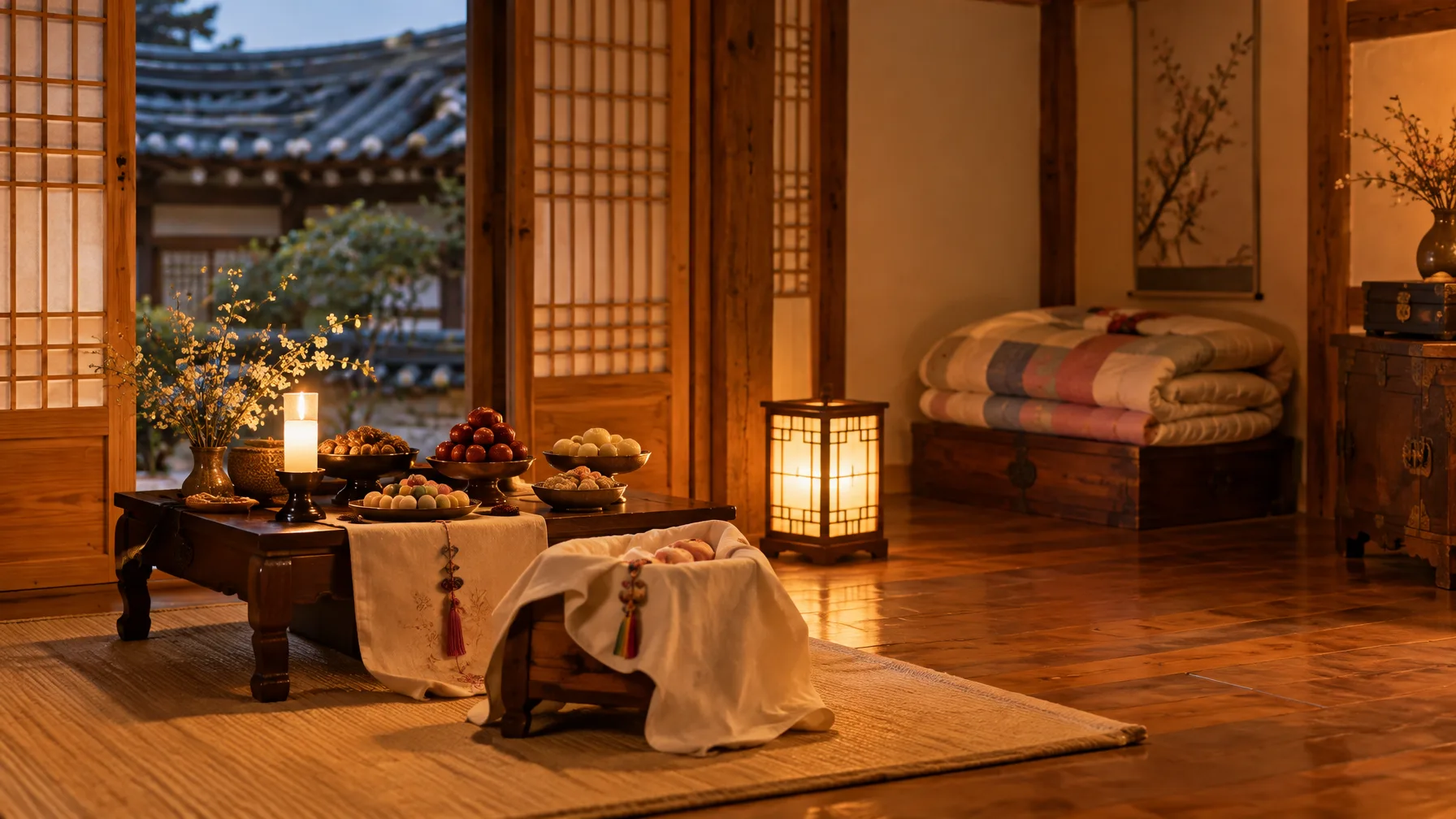
The tradition began with babies. Infant mortality was high in the past, so a newborn who made it past 100 days gave the family real cause to celebrate. The feast was a way to say the baby had made it through the most fragile stretch.
That reason belongs to the past. Today most families keep baek-il as a milestone and a good excuse to gather and take photos. The thankfulness is still there, even if the worry behind it has faded.
Red and white rice cakes anchor the baek-il table
 AI-generated image
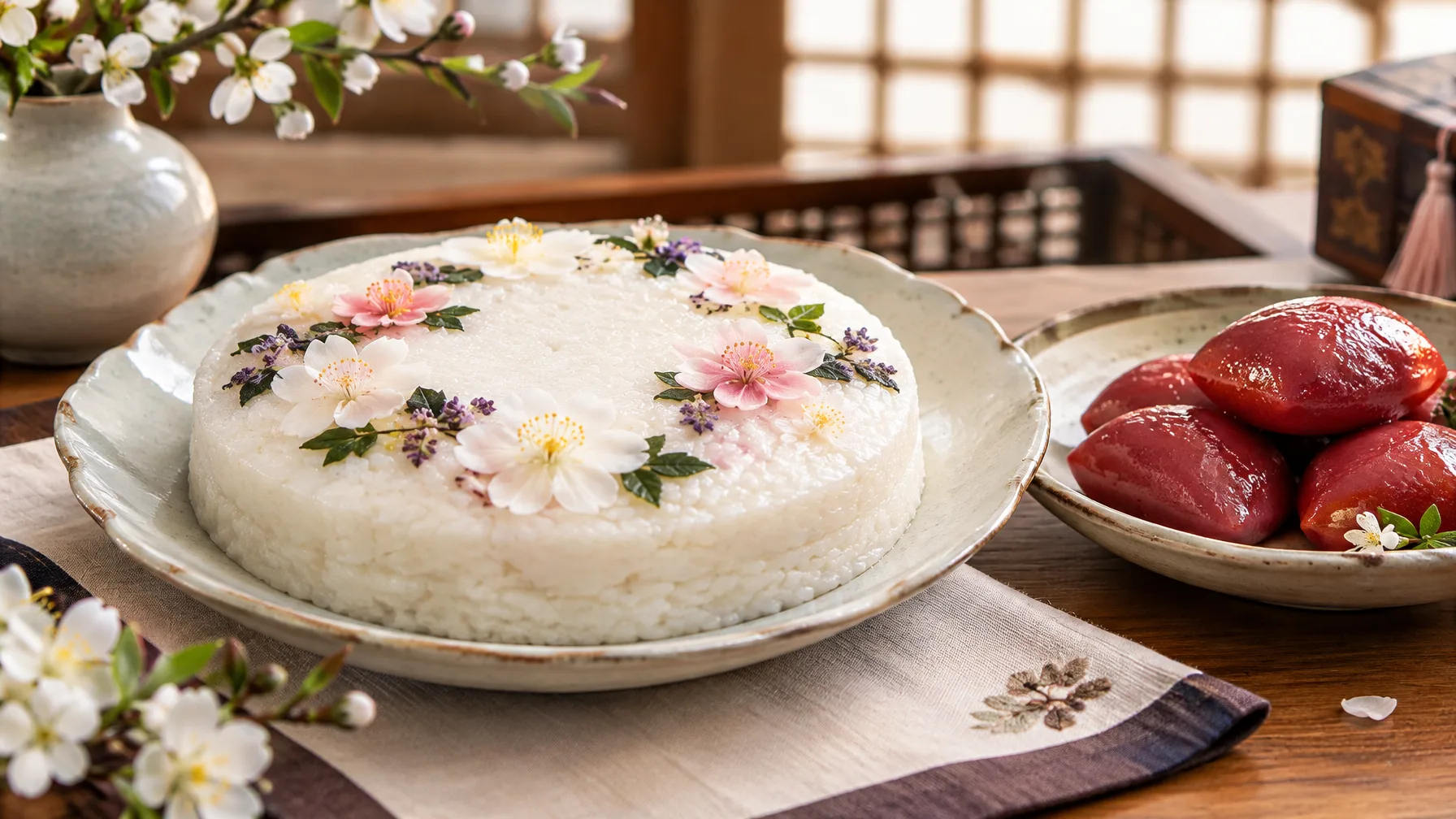
Food is where baek-il looks most Korean. In the old custom, the signature food went out to neighbors rather than staying at home. One common choice is baekseolgi, a plain steamed white rice cake. A family can order one with a black sesame filling instead of making it.
Some bakeries decorate the rice cake with flowers so finely that it feels a shame to cut it. It can also sit in the middle of the main table as a centerpiece.
A fully traditional table holds more than rice cakes. Fruit, foods in several colors, toys, and a thread that stands for a long life all belong there. Plenty of modern tables hold only a few of these, and that is normal.
Gifts for the baby: cash, gold, and baek-il rings
Guests bring cash and gold. Family gives a baek-il ring (a baby ring) either before the party or by courier on the day, often with cash alongside. Gold and rings are the keepsake side of the gift. The cash is the practical side.
If you are a guest, cash in an envelope or a small gold item is the safe route. Family members may already be covering the ring. How much to give is hard to put a number on, so ask a relative or a friend close to the family.
A couple's baek-il is a different party with different gifts
Couples mark their 100th day together by swapping gifts. Many trade the rings they usually wear for matching couple rings. Other gifts include couple watches, necklaces, and AirPods cases. The cake usually comes from a bakery chain like Tous Les Jours or Paris Baguette.
| Baby's baek-il | Couple's baek-il | |
|---|---|---|
| What it counts | The baby's 100th day of life | The 100th day of officially dating |
| Why it exists | Babies often died young in the past | A romantic anniversary marker |
| Signature food | Red and white rice cakes shared with neighbors | A bakery cake reading "100일 사랑해" |
| Typical gifts | Cash, gold, baek-il rings from family | Couple rings, watches, necklaces, AirPods cases |
| Who gives | Guests and family | The two partners swap gifts |
A small baek-il at home still counts
The biggest misunderstanding is that it must be a big, formal feast. The old custom called for sharing rice cakes with a hundred people. Real baek-ils today often go only to the family and relatives who attend. A home gathering with just the parents and their kids is a perfectly real baek-il.
Families who keep it small often skip things on purpose. The ritual table, called samsin-sang, can be replaced by a quiet private prayer. Some families rent a ready-made baek-il table, which can include a hanbok, and order the rice cake separately. Others dress it up with gold name letters from the nursery, a green garland, and a few plants. Prepping everything the night before leaves the day itself free for photos.
A few practical surprises are worth knowing. A baby may cry at the table, and one workable fix is to let the baby nap and then come back for round two. Rented hanbok can run big, and an outer layer can be taken off if the fit is too loose. For more on what counts as hanbok, see Modern Hanbok vs Traditional: What Actually Changes.
If you get an invitation, here is what to remember
A baek-il marks a baby's 100th day, which families once celebrated because reaching it was no small thing. Its signature treat is shared with neighbors. For gifts, cash, gold, and baek-il rings from family come up most often. How much to give is hard to pin down. If a couple says baek-il, they mean a dating anniversary with swapped gifts and a cake. Whichever one it is, show up warm and bring something small. That goes further than any rule.
Comments
No comments yet.