
Modern Hanbok vs Traditional: What Actually Changes
 AI-generated image
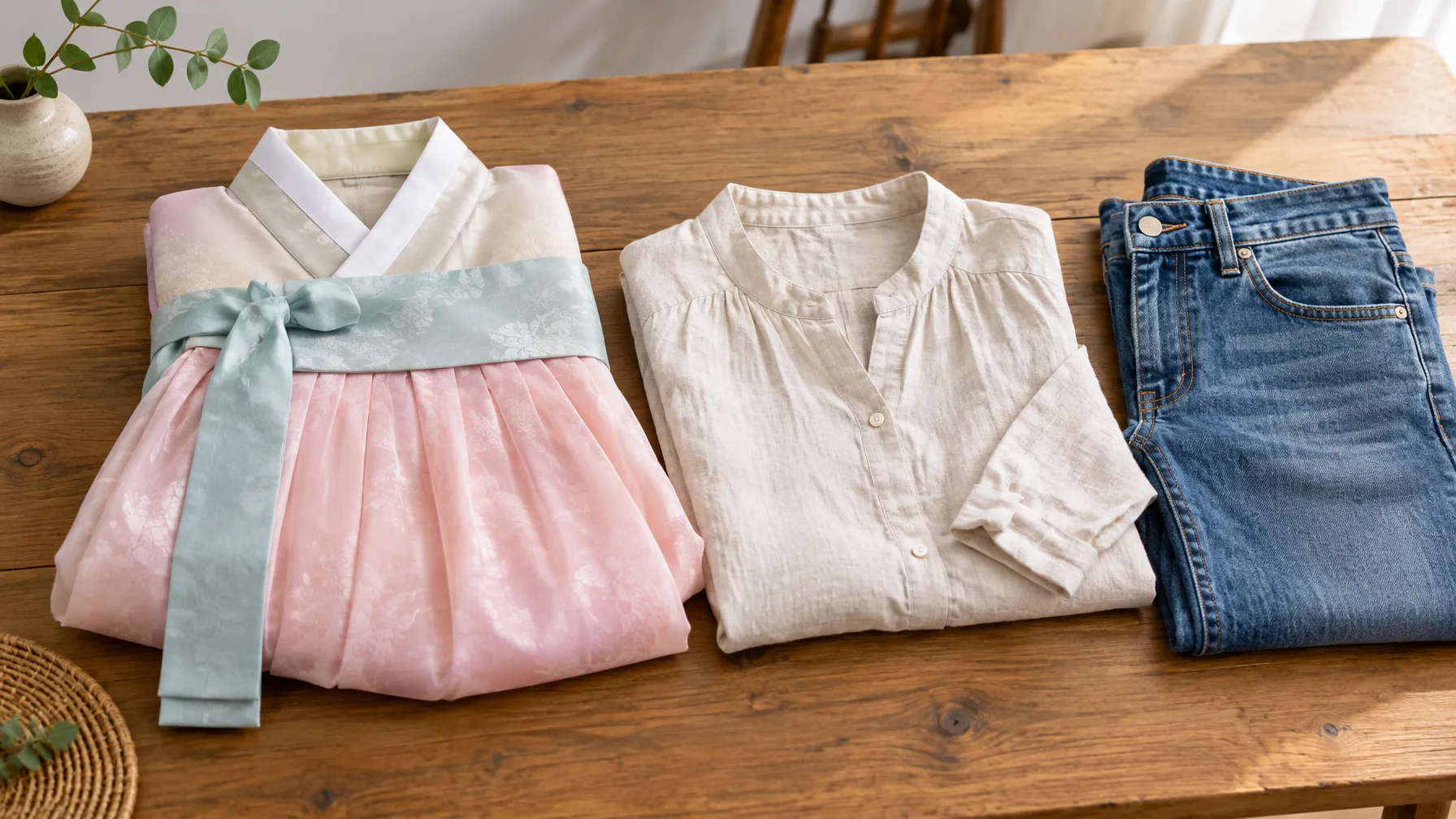
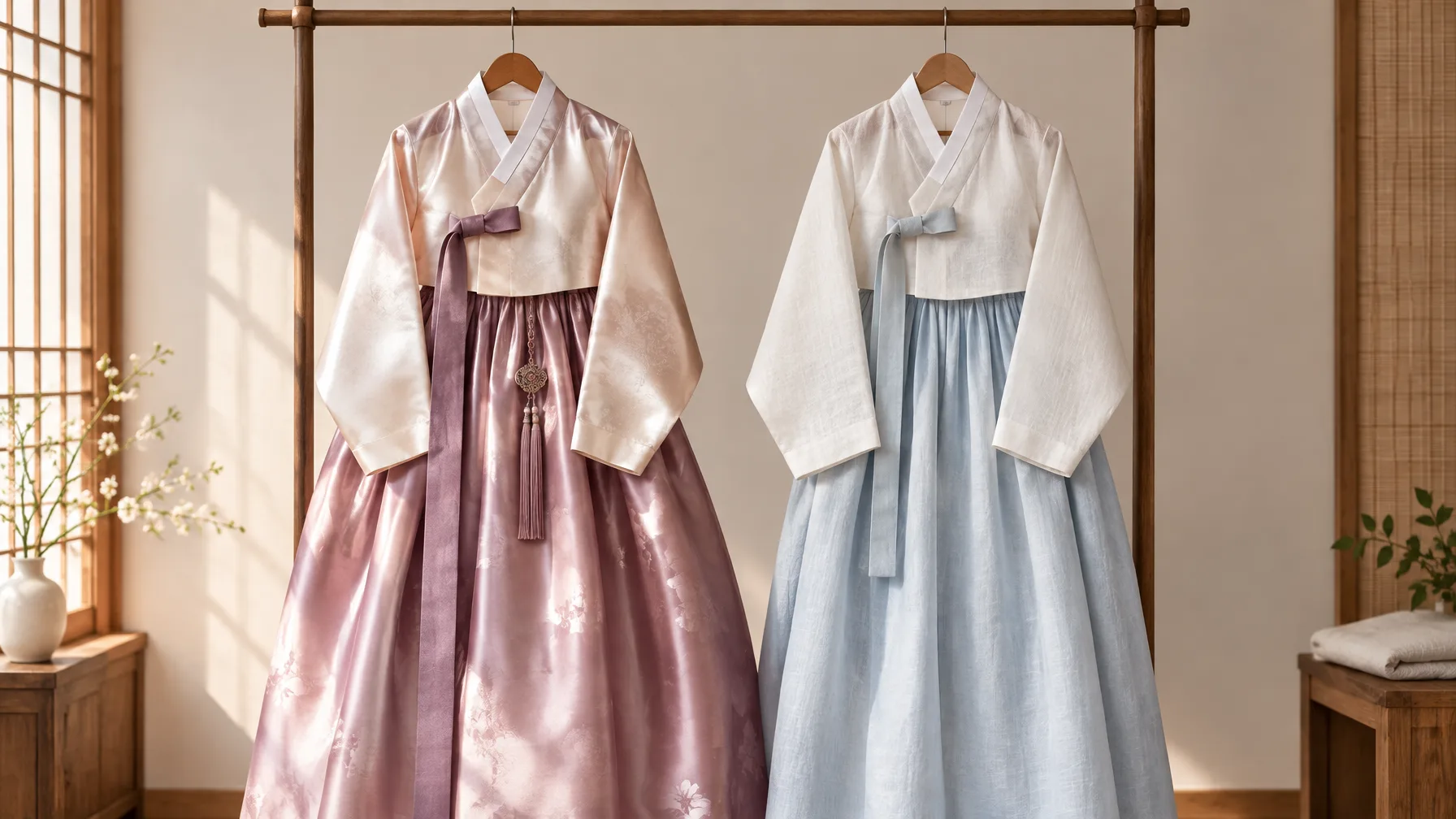
Modern hanbok, also called daily hanbok (saenghwal hanbok), is a modern version of traditional Korean clothing. It is made to be worn every day. It uses lighter, more breathable fabric and a simpler structure. The silk, historically shaped hanbok is the kind saved for special days. If you have only seen hanbok in palace photos or at festivals, that is the one thing to know.
Lighter fabric and a simpler cut turn hanbok into daily wear
 AI-generated image
The table below lays the difference out at a glance.
|Traditional hanbok|Modern hanbok Fabric|Silk or a silk-like material|Lighter, more breathable fabric Structure|Follows the historical silhouette|Simpler structure When you wear it|Special days|Ordinary days, as everyday clothing
The two share a name and a heritage. What changes is the material, the shape and the occasion.
The modern version has a traceable starting point. In 1981, the Korean fashion icon Lee Young Hee led a major change in contemporary hanbok and researched new materials. Today some designers pair Korean garment-making knowledge with a Western fashion design education. That is how hanbok ends up with skirts, blouses and dresses.
There is a trade-off. As modern hanbok became popular, many people started to see it as a fashion style rather than a traditional garment. If you care about the ceremonial side of hanbok, that shift is worth knowing about.
Skirts, blouses, dresses and men's sets are the main pieces
 AI-generated image
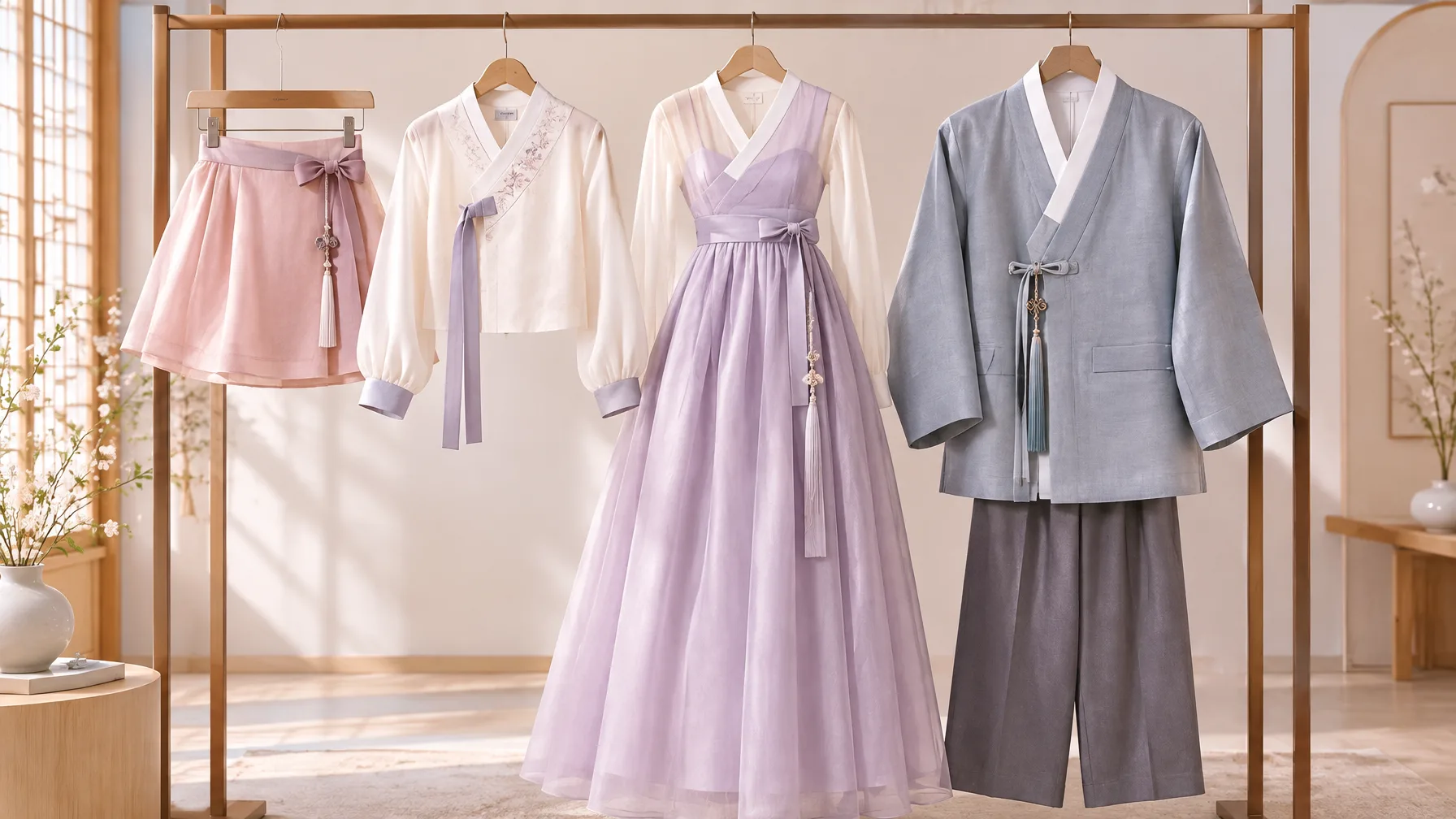
Women's pieces offer the widest range, so start there. The dress comes in a long version and a mini version. The skirt is shorter than the traditional chima and easy to wear. The chima can also wrap around the waistline of a one-piece dress.
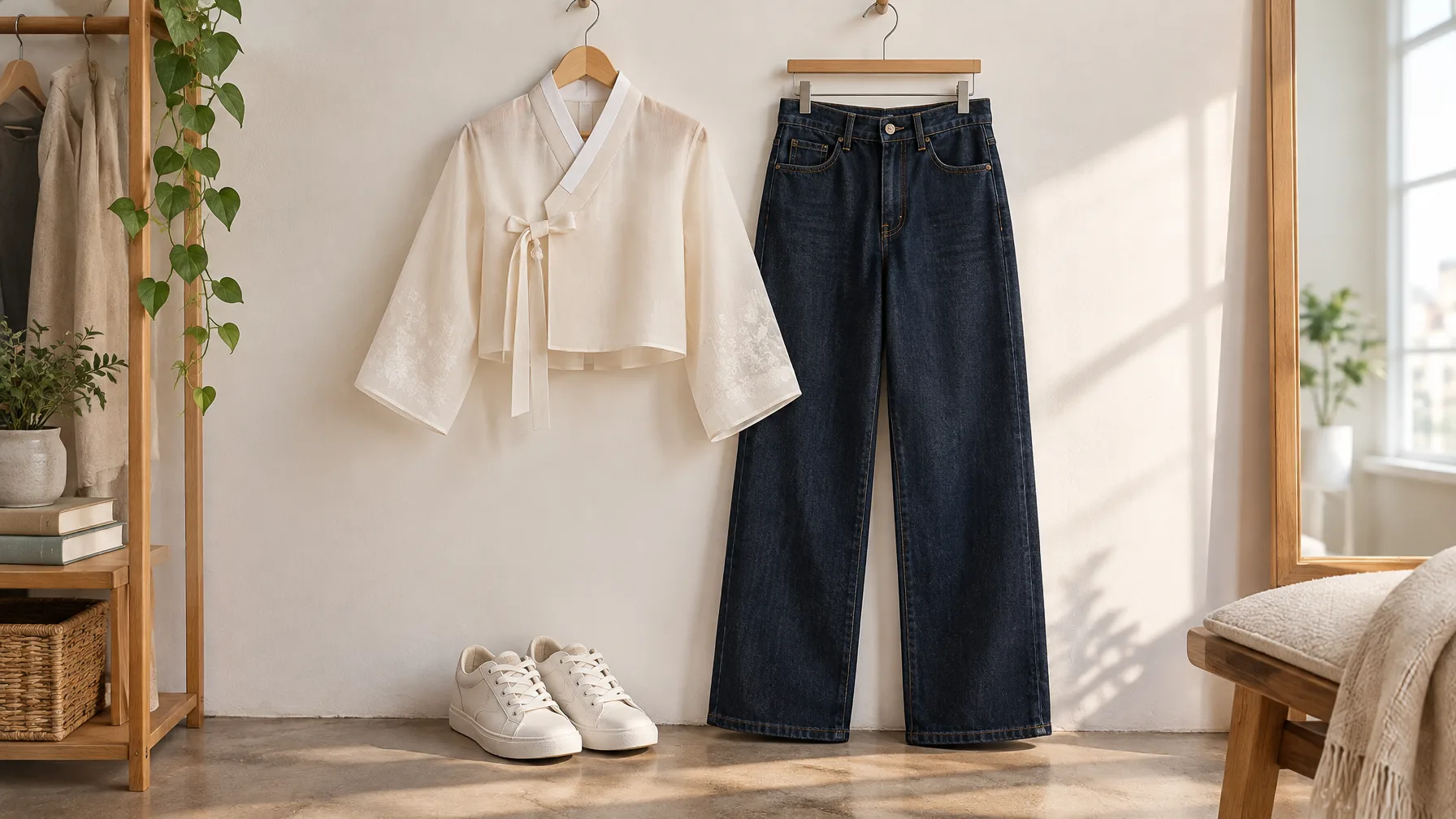
Blouses keep some features of the jeogori, the short traditional top. They come in many colors. Because they are not full hanbok, you can wear them with dress pants or jeans. A modern hanbok jacket is a separate piece you can layer over other clothes.
Modern hanbok male sets are built from three things: a jacket worn as outerwear, a shirt and pants. For the traditional men's pieces, see Male Hanbok Explained: Jeogori, Baji and Durumagi in Plain English. It covers them one by one.
People pick it because it mixes with jeans and trousers
 AI-generated image
The appeal is mostly practical. A blouse with jeogori details works with the pants already in your closet. A short skirt is simpler to move in than a long traditional one. Some wearers combine a modern hanbok top with a waist skirt from another brand they already own.
Weight matters too, since lighter clothing is easier to carry around, and that is why some people reach for modern pieces over a heavy ceremonial set. Fabric varies, though: one buyer found a piece slightly thicker than expected and thought it would suit fall and winter. A sheer top is another look people choose on purpose, and a one-piece dress can look neat worn alone.
A skirt, a dress and a men's shirt each sit at a different price
Prices in the listings run in US dollars. A modern hanbok skirt is $74.80. Dresses start from $103.40, and men's shirts start at $154.00, which is the lowest price in the men's range. Some items are discounted, and one lace dress is listed as sold out, so stock changes.
| Piece | Listed price |
|---|---|
| Modern hanbok skirt | $74.80 |
| White Flower dress | from $103.40 |
| Black Lace dress (sold out, 10% off $125.00) | from $112.50 |
| Shine Flower Embroidered dress (10% off $186.89) | from $168.20 |
| Black Linen men's shirt | from $154.00 |
| Solid green men's shirt | from $165.00 |
| Layer Line men's shirt (navy or gray) | from $187.00 |
| SaeByeok Glow Pattern shirt | $200.35 |
Korean sizing runs small, so read the size chart first
This is where first-timers get caught. Most Korean brands use Korean sizes, which come out smaller than Western ones. Before you order, check the size chart and measure yourself instead of guessing from your usual size.
Women's sizes run FREE (S to L), then S, M, L, XL and XXL. FREE is meant for women who wear S, M or L. Jackets come in FREE, LARGE and XL. Men's modern hanbok can be made to size. One buyer who wears a 66 top found the fit comfortable and not tight.
Ikseon-dong, Bukchon and Hongdae are the Seoul spots, plus online
If you plan to shop in person, the best areas in Seoul are Ikseon-dong, Bukchon Hanok Village and Hongdae. Buying in a shop lets you try a piece on and get measured, and some buyers pick up one piece that way and order the rest online.
Online is the other route. Delivery can be quick: one order is reported to have arrived in a single day. Since you cannot try the piece on, getting the size right matters even more.
Where modern hanbok falls short
There are a few limits worth knowing before you buy. Comfort is what the maker intended, not something confirmed by wear tests, so look at the fabric first. "Everyday wear" also depends on where you are. Hanbok draws attention, and you may end up posing for photos with tourists, which can make it a lot to wear as ordinary clothing.
Sizing is the most common mistake. FREE size in Korean clothing effectively means a size 2, so it may not fit if your build differs. Adjusting a modern hanbok top also works only if the shoulders already fit reasonably well. Check the shoulder measurement first, not just the waist.
Availability is limited. Shops selling modern hanbok are mostly small ones in Seoul and online. It can take some searching to find a piece you like. Keep eco claims in perspective as well. Some makers use fabric from recycled plastic bottles. Traditional hanbok gets its green reputation from natural fibers that biodegrade. That reasoning does not automatically carry over.
Wear modern hanbok on ordinary days and keep traditional for the big ones
Before you buy, check the size chart. Korean sizes run smaller than Western ones. For a first piece, pick one you can wear with jeans.
Comments
No comments yet.